
Skip to content
Skip to content
Wednesday, May 27, 2026
  • Home
  • WHO WE ARE
  • Terms of Use and Disclaimer
  • Our Editorial Policy
  • Privacy Policy
FreeAstroScience logo with a glowing star, open book, and Earth on a space-themed circular badge with the tagline Igniting Curiosity for free astronomy science education

FreeAstroScience

  • Home
  • Astronomy
    • AstroPhysics
    • Cosmology
    • Exploration
  • Physics
  • Hi-Tech
    • A.I.
    • Robots
  • Healh
  • Lifestyle
    • Sport
    • Music
  • Environment
    • ClimateChange
  • Biology
  • Gerd’s
FreeAstroScience logo with a glowing star, open book, and Earth on a space-themed circular badge with the tagline Igniting Curiosity for free astronomy science education

FreeAstroScience

  • Home
  • Astronomy
    • AstroPhysics
    • Cosmology
    • Exploration
  • Physics
  • Hi-Tech
    • A.I.
    • Robots
  • Healh
  • Lifestyle
    • Sport
    • Music
  • Environment
    • ClimateChange
  • Biology
  • Gerd’s
  • Latest
  • Popular

Galaxies shaped by cosmic location just 1.2 billion years after the Big Bang

May 27, 2026May 27, 2026

Mercury’s polar water ice: new models suggest a larger, slower impact source

May 26, 2026May 26, 2026

New Cell Therapy Offers Hope for Advanced Liver Disease Patients

May 25, 2026May 25, 2026

Dark matter investigations: quantum limits and the classical field behavior of axions

May 25, 2026May 25, 2026

Astronomy

  • Astronomy
  • Exploration

Jupiter in Infrared: What the James Webb Space Telescope Revealed About the Solar System’s Giant

Gerd DaniMay 10, 2026May 10, 20260

Jupiter Through Infrared Eyes: A Planet You’ve Never Truly Seen Before Introduction Have you ever wondered what Jupiter would look…
Read More
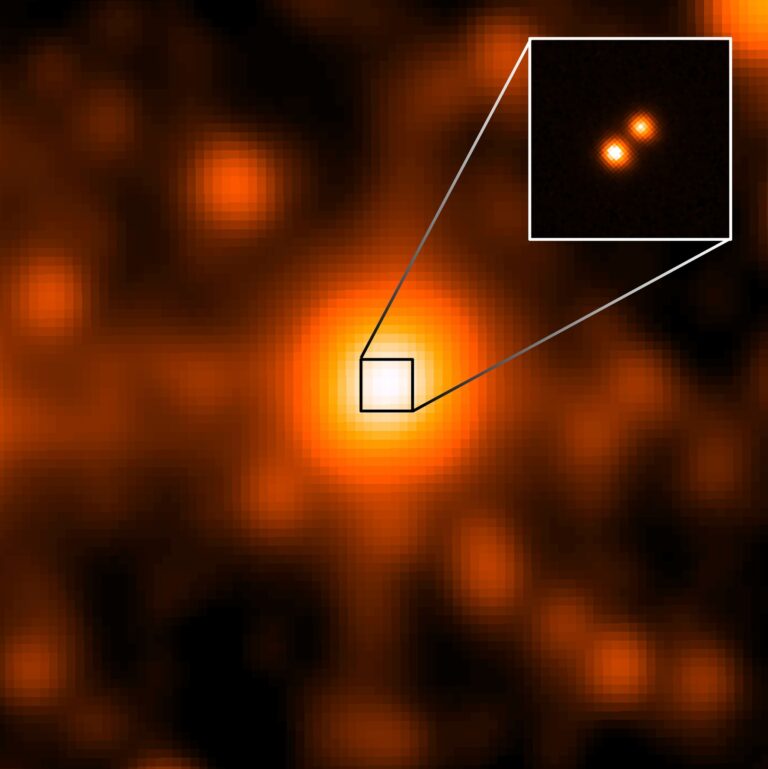
Infrared WISE telescope image of Luhman 16, the closest binary brown dwarf system to Earth, with Gemini inset resolving both components.
  • Astronomy
  • AstroPhysics

Are the Closest Neighbors to Earth Not Stars, but Brown Dwarfs?

Gerd DaniMay 9, 2026May 9, 20260

Luhman 16: The Two Closest Brown Dwarfs to Earth What if the closest neighbors to our Sun aren’t stars at…
Read More
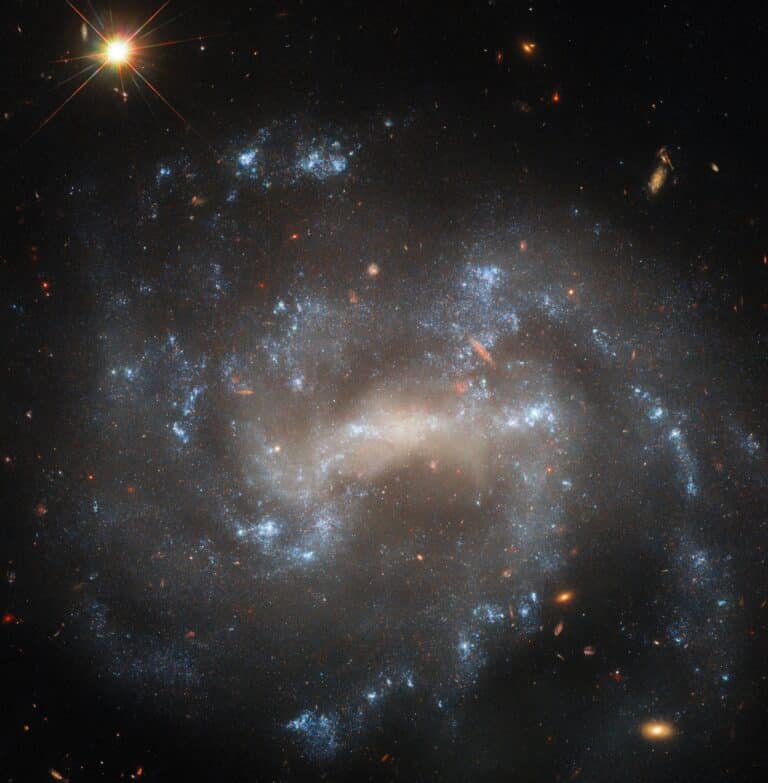
Hubble image of UGC 5460, a face-on barred spiral galaxy in Ursa Major, showing bright star clusters, spiral arms, and an active galactic nucleus.
  • Astronomy

Is UGC 5460 Hiding Secrets of Black Holes and Supernovae?

Gerd DaniMay 8, 2026May 8, 20260

What Secrets Does UGC 5460 Hide? Discover the Face-On Barred Spiral in Ursa Major Have you ever wondered what stories…
Read More
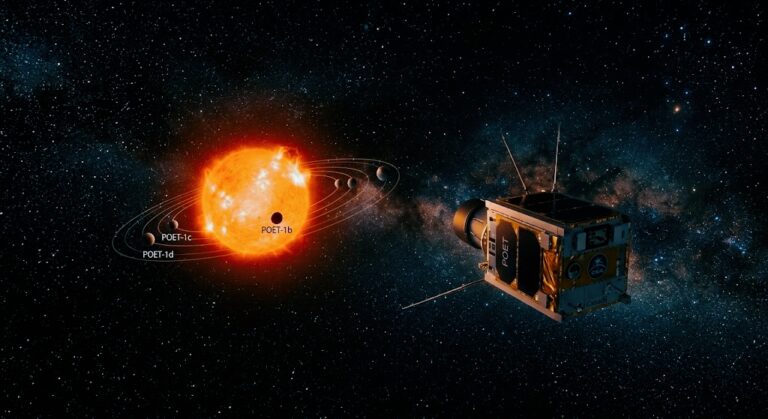
The POET mission: expanding the horizons of exoplanetary science
  • Exploration
  • Research

The POET mission: expanding the horizons of exoplanetary science

Denise MeloniMay 4, 2026May 4, 20260

The discipline of exoplanetary science and the pursuit of life beyond our solar system are advancing at an extraordinary pace….
Read More
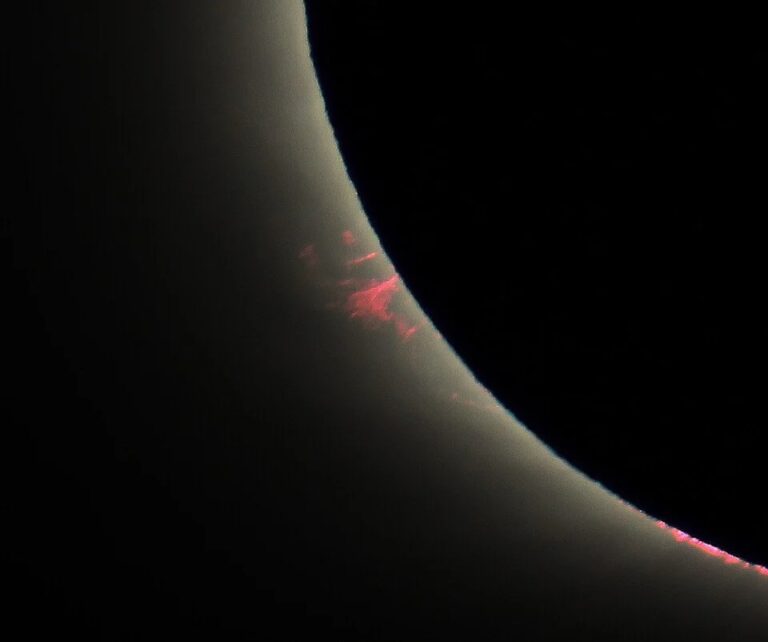
Solar prominence seen in true colour during totality of a solar eclipse
  • Astronomy
  • AstroPhysics

How Do Solar Prominences Survive Weeks Above the Sun?

Gerd DaniApril 29, 2026April 29, 20260

How Do Solar Prominences Stay Alive Inside a Million-Degree Furnace? What if we told you there’s a mountain range bigger…
Read More
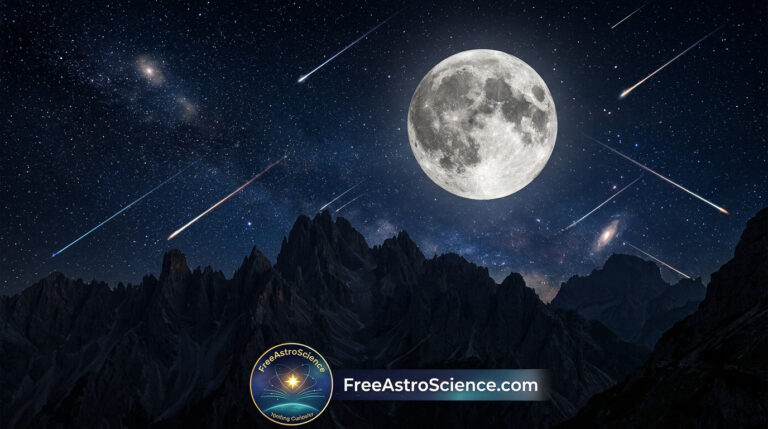
A full moon and a starry night sky with many shooting stars over a dark mountain landscape
  • Astronomy

Will You Catch May 2026’s Blue Moon and Eta Aquarids?

Gerd DaniApril 29, 2026April 29, 20260

What Makes May 2026 a Month of Rare Lunar Magic? Have you ever wondered why, once in a while, the…
Read More
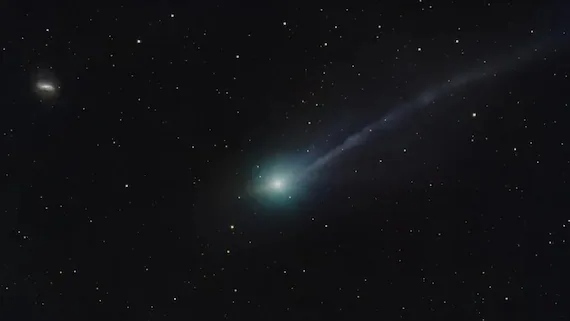
3i/atlas
  • Astronomy
  • Research

Why Is 3I/ATLAS’s Water 40× Stranger Than Earth’s Oceans?

Gerd DaniApril 29, 2026April 28, 20260

An Alien Recipe for Water: Why Comet 3I/ATLAS Is Rewriting the Story of Planet Formation A new study with the…
Read More
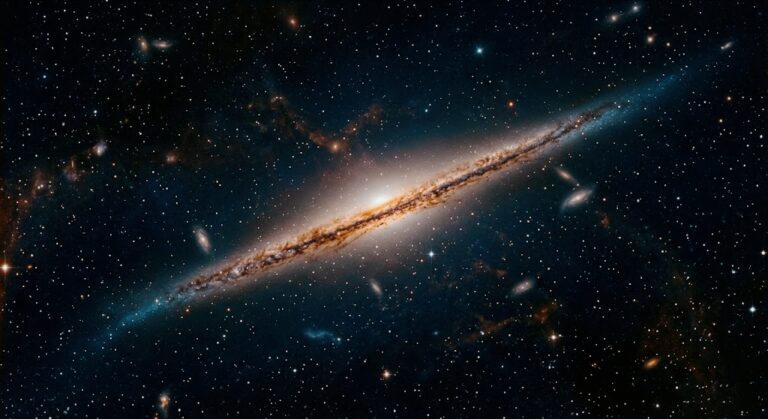
Needle Galaxy: mapping molecular gas and galactic properties
  • Astronomy

Needle Galaxy: mapping molecular gas and galactic properties

Denise MeloniApril 28, 2026April 28, 20260

An international team of astronomers has recently utilized the Atacama Large Millimeter/submillimeter Array, commonly known as ALMA, to conduct a…
Read More
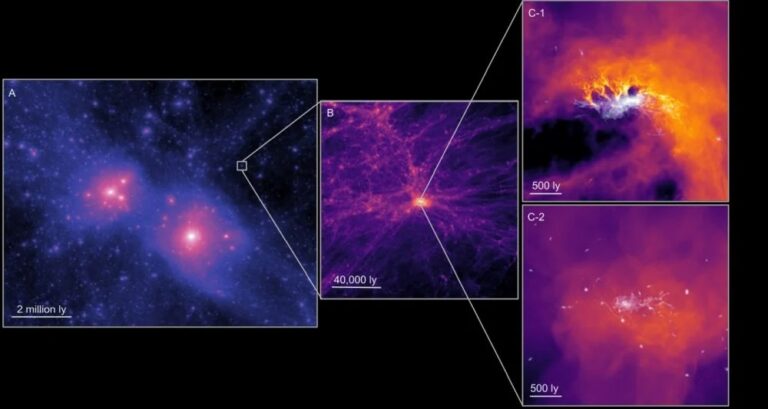
These screenshots are from simulations aimed at understanding ultra-faint dwarf galaxies in the early Universe. (A) Dark matter distribution in our neighborhood in the Universe, the so called Local Group of galaxies. The two large dark matter halos correspond to those of the Milky Way and Andromeda galaxy; (B) zoom-in on the dark matter in and around a small halo ~700 million years after the Big Bang; (C) stars and gas in the centre of the small dark matter halo in one of our simulations.
  • Astronomy
  • AstroPhysics

Can Tiny Galaxies Reveal the Universe’s First Moments?

Gerd DaniApril 28, 2026April 28, 20260

— Article written for you by FreeAstroScience.com — where we break complex science into simple words, so you never switch…

Read More
JWST mid-infrared image of the W51A star-forming region showing swirls of ionized gas, warm dust filaments, and massive newborn stars. Credit: NASA, ESA, CSA, Yoo & Ginsburg.
  • Astronomy

What Is Astronomy Day 2026 and Why Should You Care?

Gerd DaniApril 25, 2026April 8, 20260

The Stars Are Calling: Celebrating Astronomy Day 2026 Have you ever looked up at the night sky and felt, just…

Read More
  • 1
  • 2
  • 3
  • 4
  • …
  • 247
FreeAstroScience – Donation Widget (WordPress)
Support FreeAstroScience

Help us keep astronomy & science education free for everyone. Every contribution fuels open-access knowledge.

Donate with PayPal
100% goes to free science education & open-access research
Secure via PayPal

Sports

Free AstroScience - All rights Reserved
  • Privacy Policy
  • WHO WE ARE
  • CONSTITUTION OF FREEASTROSCIENCE
  • Contact Us
  • Work With Us
  • Our Editorial Policy
  • Comprehensive AI Policy for FreeAstroScience.com
Back To Top