Luhman 16: The Two Closest Brown Dwarfs to Earth
What if the closest neighbors to our Sun aren’t stars at all, but something stranger—objects that blur the line between star and planet?
Welcome to FreeAstroScience.com, where we break down the universe’s most complex wonders into simple, clear ideas. Here, we believe in keeping our minds sharp—because when reason sleeps, monsters wake.
Today, we’re exploring Luhman 16, the two closest brown dwarfs to Earth. These “failed stars” are cosmic oddballs, hiding in plain sight just 6.5 light-years away. Stick with us to the end, and you’ll see why these faint neighbors are rewriting what we know about the cosmos—and maybe even about ourselves.
Table of Contents
- What Is a Brown Dwarf?
- How Are Brown Dwarfs Classified?
- Brown Dwarfs vs Stars vs Planets
- How Common Are Brown Dwarfs?
- Why Are Brown Dwarfs So Hard to Find?
- How Was Luhman 16 Discovered?
- How Far Is Luhman 16 from Earth?
- What Are the Physical Properties of Luhman 16A and 16B?
- How Do the Two Brown Dwarfs Orbit Each Other?
- What’s the Weather Like on Brown Dwarfs?
- The Math: Where Does a Brown Dwarf Begin?
- Are There Planets Around Luhman 16?
- Who Are Luhman 16’s Neighbors?
- Why Does Luhman 16 Matter?
- Conclusion: What Do These Faint Neighbors Teach Us?
- References
The Closest Brown Dwarfs: Luhman 16 and the Mystery of Failed Stars
What Is a Brown Dwarf?
Brown dwarfs are cosmic in-betweeners. They’re not quite stars, not quite planets. Think of them as the universe’s “almosts”—objects with masses between about 13 and 80 times that of Jupiter. That’s enough to briefly fuse deuterium (a heavy form of hydrogen), but not enough to keep the fires of hydrogen fusion burning like a true star .
We call them “failed stars” because they start life like stars, collapsing from clouds of gas and dust. But they just don’t have the muscle—meaning mass—to keep their cores hot enough for hydrogen fusion. Instead, they glow faintly, cooling and fading over time. Some can burn lithium for a while, but even that doesn’t last. Over millions of years, brown dwarfs slip quietly into the background, radiating mostly in infrared.
Key terms:
- Substellar object: Not massive enough to be a star
- Deuterium fusion: Brief, low-temperature nuclear burning
- Hydrogen fusion limit: The mass needed to become a true star
How Are Brown Dwarfs Classified?
Astronomers sort brown dwarfs by their temperature and what’s in their atmospheres. We use three main spectral classes:
- L dwarfs: The warmest, glowing at 1,300–2,200 K. Their skies are dusty, with metal hydrides and alkali metals.
- T dwarfs: Cooler, at 500–1,300 K. Methane dominates their spectra, making them look more like giant planets.
- Y dwarfs: The coldest, below 500 K. Some are barely warmer than Earth’s North Pole, and their spectra show ammonia.
These classes help us track how brown dwarfs cool as they age. Luhman 16A is an L7.5 dwarf, while Luhman 16B is a T0.5—right at the L/T transition, where clouds and weather get wild.
Brown Dwarfs vs Stars vs Planets
Let’s clear up the confusion. Here’s how brown dwarfs stack up against stars and planets:
| Property | Star (Red Dwarf) | Brown Dwarf | Gas Giant Planet |
|---|---|---|---|
| Mass (Jupiter masses) | >80 | 13–80 | <13 |
| Fusion Process | Hydrogen | Deuterium (briefly), sometimes lithium | None |
| Surface Temperature (K) | >2,700 | ~250–2,200 | ~100–200 |
| Atmosphere | Hydrogen, helium, metals | Methane, water, ammonia, silicate clouds | Hydrogen, helium, ammonia, water |
| Light Emission | Visible & Infrared | Mostly Infrared | Reflects sunlight |
How Common Are Brown Dwarfs?
Brown dwarfs are everywhere, but you’d never know it by looking up. Astronomers estimate there are between 25 and 100 billion brown dwarfs in the Milky Way. In our solar neighborhood, there’s about one brown dwarf for every six stars. They’re not rare, just shy—hiding in the dark, waiting for us to find them.
Why Are Brown Dwarfs So Hard to Find?
Brown dwarfs don’t shine like stars. They’re faint, especially in visible light. Most of their energy comes out in infrared, which our eyes can’t see. That’s why we missed Luhman 16 for so long, even though it’s right next door.
The game changed with the WISE telescope. Launched in 2009, WISE scanned the whole sky in infrared, picking up the telltale glow of brown dwarfs. It was WISE that spotted Luhman 16, thanks to its unique color and fast movement across the sky.
How Was Luhman 16 Discovered?
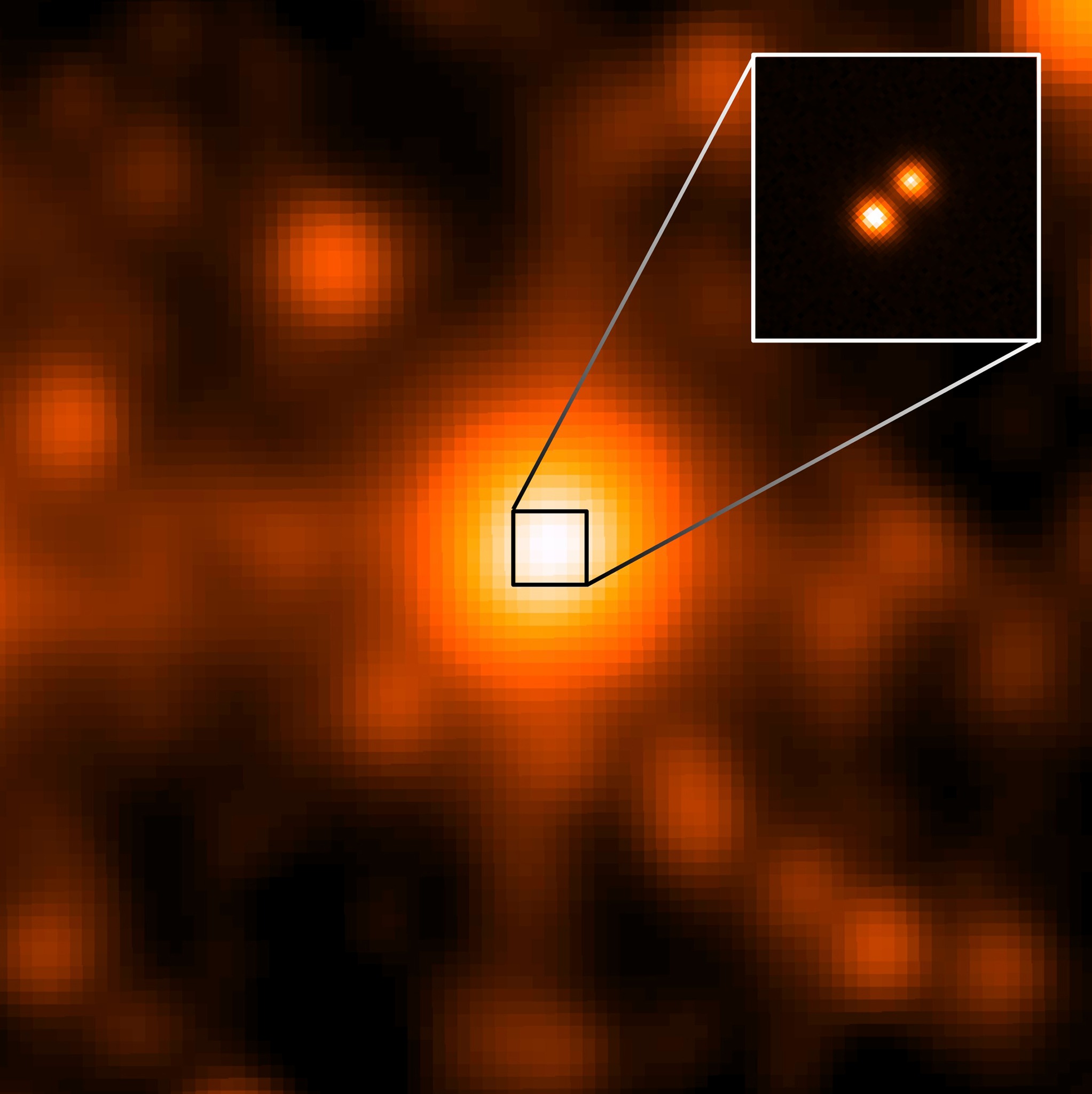
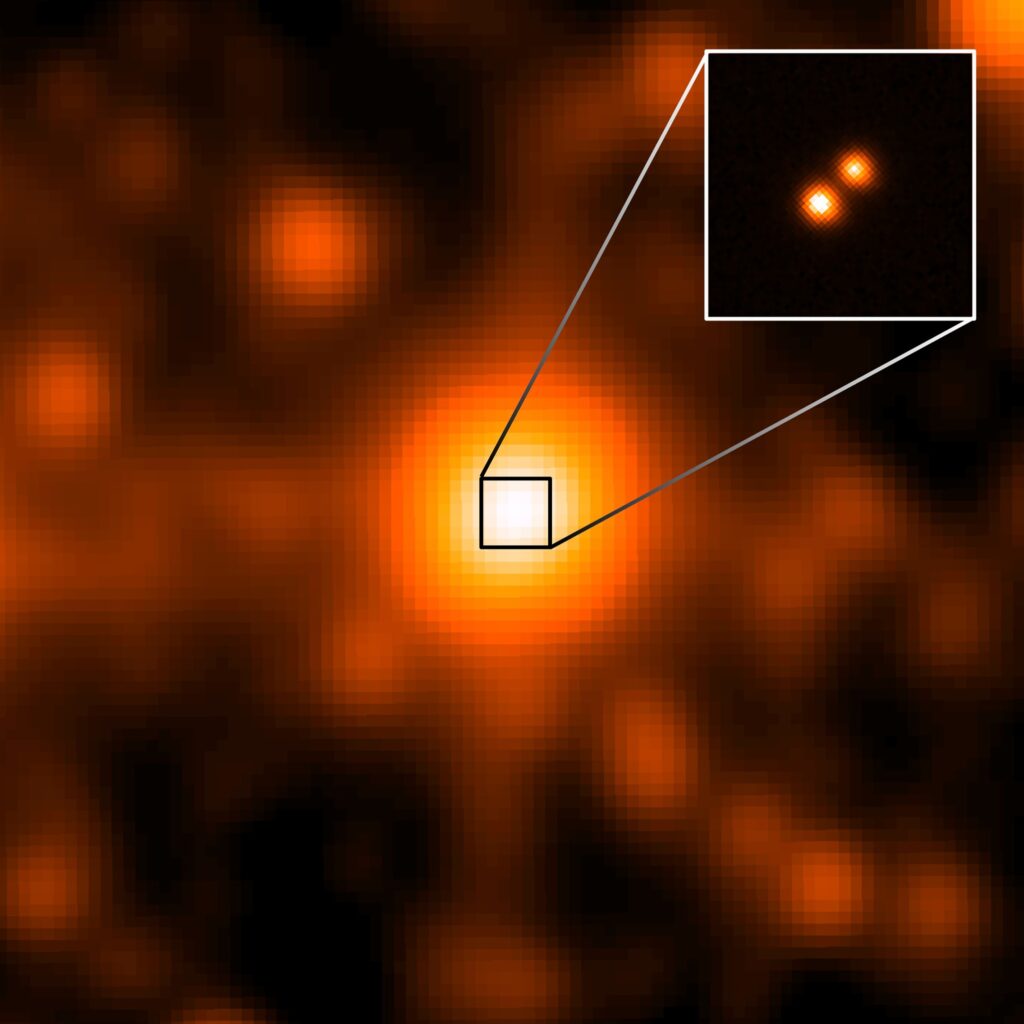
In March 2013, astronomer Kevin Luhman at Penn State found something odd in WISE data from 2010–2011. A faint object in the constellation Vela was moving quickly—too fast to be a distant star. Follow-up observations showed it was actually two objects: a binary brown dwarf system, now known as Luhman 16 or WISE J104915.57−531906.1.
This discovery made headlines. Luhman 16 became the third-closest system to the Sun, after Alpha Centauri and Barnard’s Star. It’s a reminder that even in our cosmic backyard, there are surprises waiting.
How Far Is Luhman 16 from Earth?
Luhman 16 sits just 6.52 light-years away, according to the latest Gaia measurements. That’s about 62 trillion kilometers—practically next door in galactic terms. In visible light, it’s a ghost, shining at 16th magnitude. But in the infrared J-band, it’s much brighter, at magnitude 8.87. You’d need a big telescope to spot it, but it’s there, quietly orbiting in the Vela constellation.
What Are the Physical Properties of Luhman 16A and 16B?
Let’s break down the details of these two cosmic neighbors:
| Property | Luhman 16A | Luhman 16B |
|---|---|---|
| Spectral Type | L7.5 | T0.5 |
| Mass (Jupiter masses) | 35.2 ± 0.2 | 29.4 ± 0.2 |
| Rotation Period (hours) | 6.94 | 5.28 (equator) |
| Atmospheric Variability | Moderate | High (>20%) |
| Key Molecules Detected | H2O, CO, CH4, NH3, H2S, HF | H2O, CO, CH4, NH3, H2S, HF |
| Cloud Features | Patchy, silicate clouds | Patchy, dynamic clouds |
How Do the Two Brown Dwarfs Orbit Each Other?
Luhman 16A and 16B are locked in a cosmic dance. They’re separated by about 3.5 astronomical units (AU)—a bit less than the distance from the Sun to Jupiter. Their orbit takes about 27.5 years to complete, with a moderate eccentricity (0.344) and an inclination of nearly 80°, so we see their orbit almost edge-on. Astronomers think they’re 400–800 million years old, possibly part of the Oceanus moving group—a family of stars and brown dwarfs moving together through space.
What’s the Weather Like on Brown Dwarfs?
If you think Jupiter’s storms are wild, wait until you hear about Luhman 16B. Its brightness can change by more than 20% in just a few hours. That’s thanks to patchy silicate clouds, fast winds, and rapid weather changes. Hubble and JWST have mapped these clouds, revealing dark spots, bright poles, and equatorial stripes—much like Jupiter’s bands, but even more chaotic.
Both brown dwarfs show water vapor, carbon monoxide, methane, ammonia, hydrogen sulfide, and hydrogen fluoride in their atmospheres. Luhman 16B, being cooler, has more methane and ammonia. Their metallicity is slightly higher than the Sun’s, hinting at a shared origin.
Fun fact:
Luhman 16B’s weather changes so quickly that astronomers can watch storms form and fade in real time—a first for objects outside our solar system.
The Math: Where Does a Brown Dwarf Begin?
Let’s get technical for a moment. The minimum mass for deuterium fusion—the line between planet and brown dwarf—is about 13 Jupiter masses. Here’s a simple formula, styled for clarity and accessibility:
Minimum Mass for Deuterium Fusion:
Mmin ≈ 13 MJupiter
Where Mmin is the minimum mass for deuterium fusion.
Are There Planets Around Luhman 16?
When Luhman 16 was first discovered, some astronomers thought they saw a wobble—maybe a planet tugging on one of the brown dwarfs. But after years of careful watching with Hubble, Gemini South, and JWST, no planets have turned up. We can rule out any planet bigger than 1.5 times Neptune’s mass in orbits of 400–5,000 days. For now, Luhman 16 is a binary system with no confirmed planets.
Who Are Luhman 16’s Neighbors?
Luhman 16 isn’t alone. Other nearby brown dwarfs include:
- WISE 0855−0714: About 7.2 light-years away, one of the coldest known brown dwarfs (below 300 K).
- Epsilon Indi Ba/Bb: A binary brown dwarf system 12 light-years away, orbiting the star Epsilon Indi.
These objects help us map the population of brown dwarfs close to the Sun.
Why Does Luhman 16 Matter?
Luhman 16 is more than just a cosmic curiosity. It’s a benchmark for brown dwarf science—a natural laboratory for studying atmospheres, weather, and binary dynamics. With JWST, TESS, and ground-based telescopes, we’re learning how clouds form, how winds blow, and how these “failed stars” evolve. Every new discovery at Luhman 16 helps us understand not just brown dwarfs, but also giant exoplanets and the boundary between stars and planets.
Conclusion: What Do These Faint Neighbors Teach Us?
Luhman 16, the two closest brown dwarfs to Earth, remind us that the universe is full of surprises. These “failed stars” challenge our ideas about what it means to be a star or a planet. They’re faint, stormy, and hard to spot—but they’re right next door, teaching us about the hidden side of the cosmos.
At FreeAstroScience.com, we believe in keeping our minds awake and curious. The sleep of reason breeds monsters, but the spark of curiosity lights up the universe. Come back soon—there’s always more to discover, and we’ll be here to guide you, one cosmic mystery at a time.