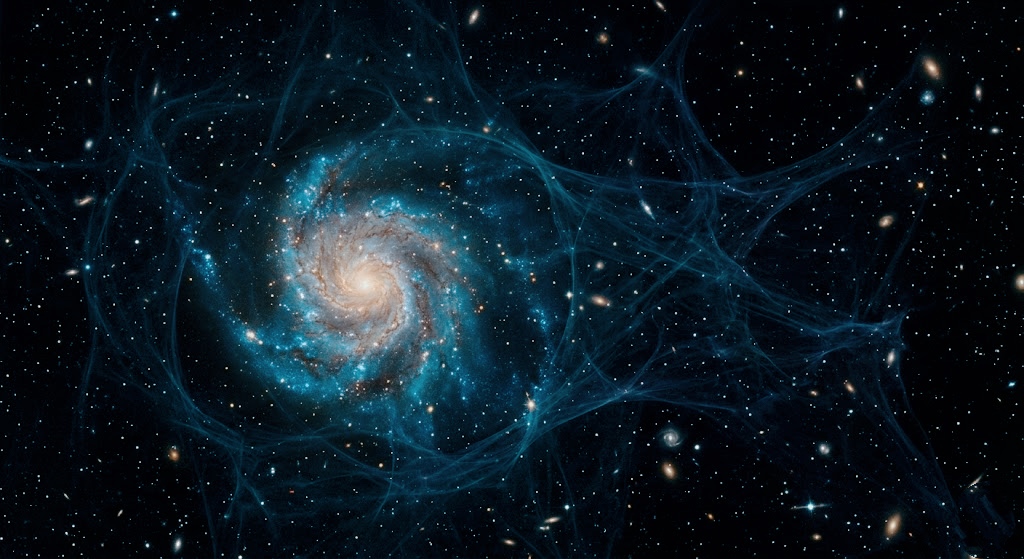
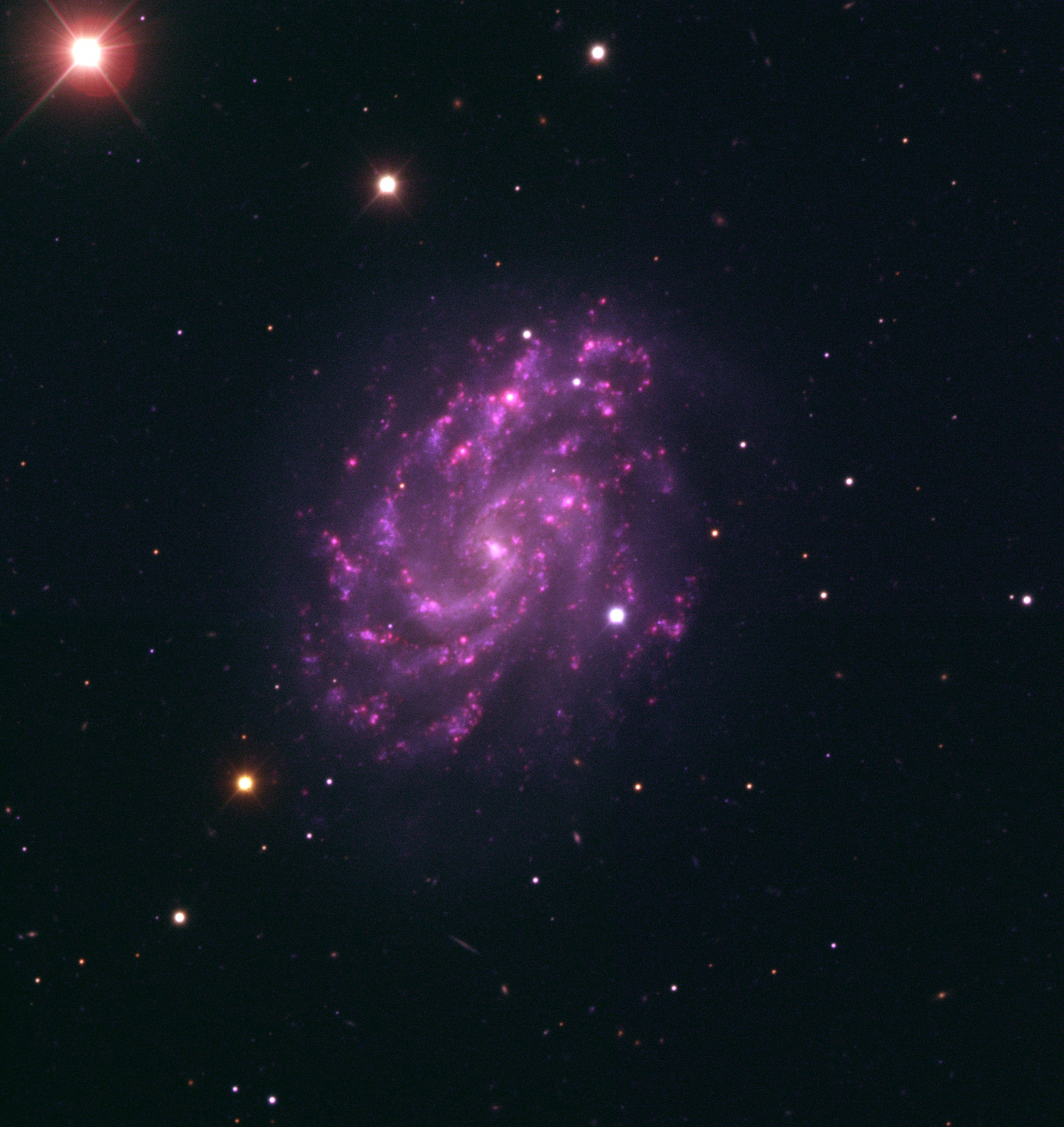
The structural evolution of galaxies remains a foundational question in modern astrophysics, particularly concerning when and how dense cosmic environments began to alter galactic development. In the contemporary universe, galaxies are not uniformly distributed but are instead locked within massive clusters that formed over billions of years through gravitational accretion. Recent observations of the early universe have begun to illuminate the origins of these structures, revealing that the seeds of modern galaxy clusters, known as protoclusters, were already actively shaping their constituent galaxies much earlier than previously assumed.
Discovery and architecture of the Loktak protocluster
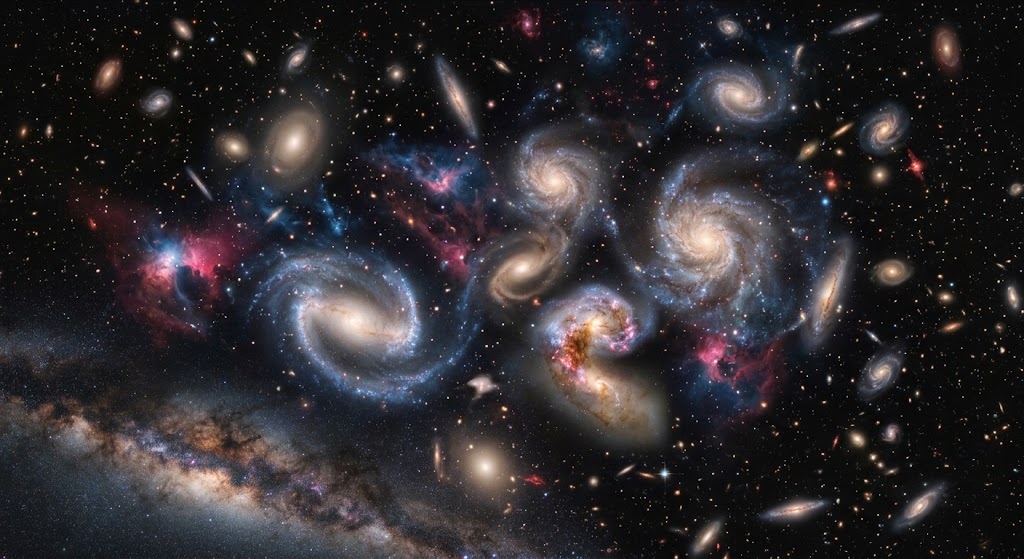
In the present-day universe, which spans an age of 13.8 billion years, galaxies reside within vast, interconnected webs and dense clusters containing thousands of individual stellar systems. This complex distribution did not exist in the immediate aftermath of the Big Bang, as the early universe was remarkably uniform. Over cosmic time, regions characterized by slightly higher densities of matter gradually accumulated additional mass under the relentless influence of gravity, eventually developing into the precursors of modern galactic clusters.
To locate these ancient cosmic structures, an international research team, including astronomers from the National Astronomical Observatory of Japan, utilized the Hyper Suprime-Cam on the Subaru Telescope to conduct an expansive deep-sky survey. Their efforts successfully uncovered a massive protocluster dating back 12.6 billion years, a period when the universe was merely 1.2 billion years old. This newly discovered entity represents one of the most massive structural assembly sites known in the early epoch of cosmic history.
This immense cosmic structure was formally designated as the Loktak protocluster, a name inspired by Loktak Lake in Manipur, India. The nomenclature directly reflects the unique architecture of the system, which consists of four distinct galactic concentrations bound together into a single, cohesive macrostructure. Much like the floating islands that characterize the natural lake, these dense galactic sub-regions are interconnected, providing astronomers with a clear, organized laboratory to study environmental influences in the infancy of the cosmos.
Galactic tracers and advanced infrared observations
Young, distant galaxies characterized by intense starburst activity frequently emit a specific wavelength of ultraviolet light known as Lyman-alpha emission. This distinct signature is produced when intense radiation from hot, newly formed stars continuously excites the surrounding primordial hydrogen gas. Space systems identified through this particular signature are classified as Lyman-alpha emitters, serving as highly effective cosmic beacons for mapping large-scale structures in the deeply recessed early universe.
By employing a specialized narrow-band filter precisely tuned to detect this delicate light signature, the research team mapped an extensive region of the sky to isolate anomalous concentrations of matter. This methodology allowed them to pinpoint the exact boundaries of the Loktak protocluster by tracing the dense distribution of its emission-rich constituent galaxies. While the Subaru Telescope was exceptional for identifying the macro-structure, a detailed look into the structural morphology of the individual galaxies required a more powerful instrument.
The international team subsequently directed the advanced infrared imaging capabilities of the James Webb Space Telescope toward the Loktak protocluster to analyze these distant systems. The astronomers conducted a comparative analysis, measuring the structural properties of the protocluster galaxies against control galaxies residing in average, lower-density cosmic environments during the same historical epoch. This dual-telescope approach allowed the researchers to isolate environmental variables from generic cosmic evolution.
Environmental acceleration of structural development
When observed through ultraviolet light, which specifically highlights the regions where active star formation is occurring, the two galactic populations exhibited negligible differences in size. This indicated that the core engine of star formation within the central regions of these galaxies operated uniformly, regardless of environmental density. The internal mechanism responsible for igniting new stars appeared completely unaffected by the broader cosmic neighborhood at this early stage of development.
However, when the researchers analyzed the systems using optical light wavelengths, which trace the overall distribution of older, pre-existing stellar populations, a stark contrast emerged. The galaxies embedded within the dense protocluster environment were, on average, approximately 1.4 times larger than their counterparts situated in isolated fields. This significant structural variance indicated that while the internal star-forming cores were identical, the peripheral stellar distribution differed dramatically.
These findings strongly imply that galaxies situated within high-density environments accelerated the development of their outer stellar structures much faster than isolated systems. This provides definitive evidence that environmental mechanisms were actively molding galactic morphology long before fully mature galaxy clusters took shape. Consequently, galactic evolution is dictated not merely by internal mass and innate properties, but also by external geographical positioning within the cosmic web.
Cosmic implications and prospective investigations
The realization that a galaxy is shaped by its geographical location as early as 1.2 billion years after the Big Bang fundamentally shifts current understanding of cosmic history. It indicates that the appearance and structural boundaries of a galaxy are dictated by a complex interplay of nature and nurture from the earliest chapters of cosmic time. The discovery proves that localized environmental density can force accelerated growth, creating structural maturity long before the macro-environment itself stabilizes.
Despite the clarity of these results, a pivotal question remains regarding whether this accelerated growth is a universal rule or an anomaly. Scientists must determine if these pronounced environmental effects were widespread throughout the early universe or if they represent a unique characteristic exclusive to the Loktak protocluster. Resolving this ambiguity is essential for constructing accurate cosmological models regarding how the modern universe transitioned into its current clustered state.
Looking forward, the research team aims to resolve these questions through upcoming observational campaigns using advanced next-generation astronomical instrumentation. Future investigations will utilize the Prime Focus Spectrograph on the Subaru Telescope alongside the ultra-wide field laser guide star adaptive optics system, known as ULTIMATE. These advanced systems, combined with ongoing targeted follow-up observations from the James Webb Space Telescope, will definitively map the prevalence of environmental modification in the ancient cosmos.
The study is published in The Astrophysical Journal Letters.