Dirac’s Bold Answer: Could Invisible Neutrinos Fill Every Room You Enter?
What if the answer to one of physics’ strangest puzzles has been hiding in plain sight — or rather, hiding in plain invisibility? What if particles exist all around us, right here, right now, and no instrument we’ll ever build can detect them?
Welcome back to FreeAstroScience.com, where we break down complex scientific ideas into language that actually makes sense. We’re Gerd Dani and the Free AstroScience team, and this is Part 3 of our series on neutrinos, antimatter, and one of the deepest open questions in modern physics. If you missed the earlier installments, we covered why all neutrinos are left-handed in Part 2 and explored the strange world of matter and antimatter in Part 1.
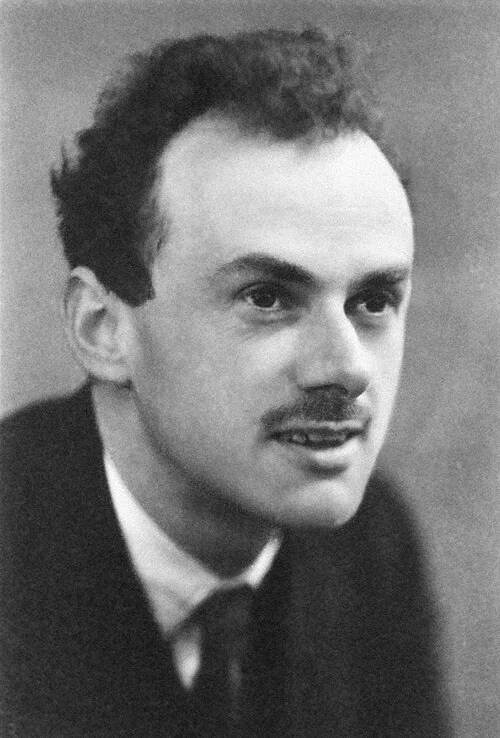
Today, we’re tackling Paul Dirac’s elegant — and slightly unsettling — solution to the neutrino mass problem. Stick with us to the very end. This one will change how you think about what “invisible” really means.
📑 Table of Contents
- 1. A Quick Recap: Why Do Neutrinos Break the Rules?
- 2. How Does the Electron Keep Its Identity?
- 3. What Is the Dirac Picture for Neutrinos?
- 4. Why Can’t We See Right-Handed Neutrinos?
- 5. What Is the Seesaw Mechanism — and Why Does It Matter?
- 6. Where Does the Dirac Solution Crack Open?
- 7. What Comes Next? The Door Majorana Walked Through
A Quick Recap: Why Do Neutrinos Break the Rules?
Let’s rewind for a moment.
We established something in Parts 1 and 2 that sounds simple but carries enormous weight: all massive particles flicker between left-handed and right-handed states . That flickering is the mass. It’s the constant handshake with the Higgs field — left, right, left, right — an endless switch that gives a particle its heft.
Every massive particle we know follows this rule. Electrons do it. Quarks do it. The top quark, the heaviest fundamental particle ever measured, does it.
But neutrinos? They don’t .
Left-handed neutrinos stay left-handed. Right-handed antineutrinos stay right-handed. No flickering. No switching. Nothing . And yet — and here’s the part that keeps physicists up at night — neutrinos have mass. We confirmed this through neutrino oscillation experiments decades ago.
So we’re stuck with a contradiction. Either our entire understanding of how mass works is wrong (it isn’t), or something genuinely strange is happening with the neutrino .
How Does the Electron Keep Its Identity?
Before we get to Dirac’s solution, we need to understand how a “normal” particle handles its identity. The electron is our best teacher here.
An electron has two completely independent labels :
Label 1: Handedness. Is it left-handed or right-handed? For a massive particle like the electron, this label keeps changing. It flickers. It’s transient. Handedness for an electron is almost incidental — it doesn’t define what the electron is at its core .
Label 2: Particle vs. antiparticle. Electron or positron? Now this label is permanent. It’s locked in place. And the lock has a name: electric charge .
An electron carries negative charge. A positron carries positive charge. When they meet, they annihilate in a burst of pure energy. The universe treats this distinction as sacred because charge is conserved — and nature does not mess around with conserved quantities .
Think of it like this. Handedness is like which hand you’re holding your coffee with — you switch all the time, and it doesn’t change who you are. But particle vs. antiparticle? That’s more like your DNA. It defines you. And electric charge is the lock that keeps that definition safe.
Two Labels, Two Very Different Weights
For the electron, one label matters enormously. The other barely matters at all. Handedness flickers and fades. Charge holds firm. Two descriptions of the same particle — one permanent, one not .
This distinction is about to become very important.
What Is the Dirac Picture for Neutrinos?
Here’s where Paul Adrien Maurice Dirac enters the story — the British physicist who first worked out the mathematics of relativistic quantum particles in the late 1920s.
In what we call the Dirac picture, the neutrino works exactly the same way as the electron . Two options for handedness. Two options for particle vs. antiparticle. Four total combinations.
Let’s lay them out:
| State | Handedness | Type | Weak Force? | Observable? |
|---|---|---|---|---|
| νL | Left ↺ | Neutrino | ✔ Yes | ✔ Yes |
| ν̄R | Right ↻ | Antineutrino | ✔ Yes | ✔ Yes |
| νR | Right ↻ | Neutrino | ✘ No | ✘ No — Invisible |
| ν̄L | Left ↺ | Antineutrino | ✘ No | ✘ No — Invisible |
Table: In the Dirac picture, two neutrino states interact with the weak force and are observable. The other two are completely invisible — they feel only gravity.
The first two rows — left-handed neutrino and right-handed antineutrino — are the ones we’ve detected. The weak force interacts with them. We see them in beta decay, in solar reactions, in particle accelerators worldwide .
The bottom two rows? Those are the ghost states. And they’re the heart of Dirac’s answer.
Why Can’t We See Right-Handed Neutrinos?
This is where things get wild — and a little eerie.
In the Dirac picture, right-handed neutrinos and left-handed antineutrinos exist. They’re real. They’re out there. We just can’t detect them. Not “hard to detect.” Not “rare.” Not “shy.” Completely, permanently, in-principle invisible .
Here’s why. Let’s run through every force we know:
- Weak nuclear force? Won’t touch them. The weak force is what Paul Sutter brilliantly calls “germaphobic” — it only interacts with left-handed particles and right-handed antiparticles. Wrong hands? Door’s closed .
- Electromagnetic force? Neutrinos carry no electric charge. Electromagnetism doesn’t even notice they exist .
- Strong nuclear force? No color charge. The strong force couldn’t care less .
- Gravity? Yes — and only gravity .
That’s it. The only force these particles ever feel is the weakest force in the universe. Think about that for a moment. We struggle to detect regular neutrinos, and they at least interact through the weak force. These sterile neutrinos — as physicists sometimes call them — make ordinary neutrinos look positively chatty by comparison.
They could be in this room right now. Passing through your body. Through your screen. Through the walls. And no detector humanity will ever build can catch them .
That’s not science fiction. That’s a straightforward prediction of the Dirac model.
And here’s the strange part: the math works . The model is consistent. It neatly explains why we only see left-handed neutrinos and right-handed antineutrinos. The missing partners aren’t missing at all — they’re just playing a game we can’t join.
What Is the Seesaw Mechanism — and Why Does It Matter?
Now, if you’ve been following this series, a question should be burning in your mind: Why are neutrino masses so absurdly small?
The heaviest neutrino we’ve measured still weighs less than one-millionth the mass of an electron. That’s not just small — it’s almost offensively tiny. It’s like comparing a grain of sand to Mount Everest and finding out the grain of sand is still too big an analogy.
The Dirac picture offers a gorgeous explanation. It’s called the seesaw mechanism, and the name tells you exactly how it works .
The Playground Seesaw
Picture a seesaw on a playground. One side goes up when the other goes down. Now imagine the right-handed neutrino sits on one end and the ordinary left-handed neutrino sits on the other.
If the right-handed neutrino is enormously heavy — we’re talking about 1015 times the mass of a proton, a number so large it borders on absurd — then the mathematics forces the left-handed neutrino to be extraordinarily light .
The heavier one partner becomes, the lighter the other gets. Push one end of the seesaw down, and the other end shoots up. It’s an inverse relationship, clean and elegant.
The Seesaw Formula
mlight ≈ mD2 MR
- mlight — mass of the ordinary (left-handed) neutrino we detect
- mD — Dirac mass term (on the order of other Standard Model particle masses)
- MR — mass of the heavy right-handed neutrino (potentially ~1015 GeV)
The larger MR grows, the smaller mlight becomes — an inverse relationship.
What Does This Mean in Plain Language?
The almost-nothing mass of the neutrinos we detect would be a direct echo of something absurdly massive that we can never observe . The lightness of one particle reflects the heaviness of another. A cosmic balance hidden from our eyes.
There’s a strange poetry to it, don’t you think? The tiniest mass we’ve ever measured might exist because of the most enormous mass we’ll never see.
Where Does the Dirac Solution Crack Open?
So far, the Dirac picture sounds pretty solid. Right-handed neutrinos exist but are invisible. The seesaw explains why neutrino masses are so small. The math is consistent. Everyone can go home.
Not so fast.
Remember those two labels the electron carries? Handedness and particle-vs-antiparticle? For the electron, those labels stay independent because electric charge forces them apart . Charge is what insists that an electron and a positron are fundamentally different things. They cannot be confused or collapsed into each other. Charge draws a bright, unbreakable line between them.
But the neutrino? The neutrino has no electric charge .
That changes everything.
Yes, we have bookkeeping devices in our equations that keep neutrinos and antineutrinos distinct. We assign them “lepton number” — a mathematical label that says, “This is a neutrino, and that’s an antineutrino, and they’re different.” But unlike electric charge, lepton number isn’t protected by any deep principle of nature .
It’s accidental. It fell out of the math because we built the math that way. The universe didn’t mandate it .
Let that sink in for a moment.
Nothing in nature is forcing the distinction between “neutrino” and “antineutrino” to be real .
What if the neutrino and the antineutrino aren’t separate particles at all? What if they’re the same thing, just viewed from different angles?
What Comes Next? The Door Majorana Walked Through
And that — right there — is the crack in the door.
A crack that a brilliant, tragic Italian physicist named Ettore Majorana walked through in the 1930s. His idea was radical: if nothing forces the neutrino and antineutrino apart, then maybe we should stop pretending they’re different .
Maybe the neutrino is its own antiparticle.
That single idea rewrites the rules of particle physics. It changes how mass works. It changes what “matter” and “antimatter” even mean. And it opens a question that experiments running right now — deep underground, shielded from cosmic rays, monitored around the clock — are trying to answer.
We’ll get there in Part 4. Majorana’s last paper. And the experiment that might settle the question he left behind .
Stay curious. Stay with us.
Conclusion
Let’s step back and take in what we’ve covered. Neutrinos have mass, yet they refuse to flicker between left and right the way every other massive particle does. Dirac’s solution says the missing partners — right-handed neutrinos — exist but live in total invisibility, untouched by every force except gravity. The seesaw mechanism uses this idea to explain why neutrino masses are vanishingly tiny: a reflection of invisible, enormously heavy partners we can never directly observe.
And yet, a single missing ingredient — electric charge — leaves a crack in this entire picture. Without charge to enforce the boundary between neutrino and antineutrino, that boundary might not be real at all.
Here at FreeAstroScience.com, we believe in explaining complex scientific ideas in simple terms — because understanding the universe shouldn’t require a PhD, just a curious mind. We want to educate you never to turn off your mind, to keep it active at all times. As Goya reminded us centuries ago: the sleep of reason breeds monsters.
Come back soon for Part 4, where Ettore Majorana’s radical idea takes center stage. And keep asking the big questions — that’s what we’re here for.
📚 References & Sources
- Sutter, P. (2026, April 14). Are Neutrinos Their Own Evil Twins? Part 3: Dirac’s Direct Solution. Universe Today. universetoday.com
- FreeAstroScience (2026). Why Are All Neutrinos Left-Handed? (Part 2). freeastroscience.com
- Dirac, P. A. M. (1928). The Quantum Theory of the Electron. Proceedings of the Royal Society A, 117(778), 610–624.
- Mohapatra, R. N., & Senjanović, G. (1980). Neutrino Mass and Spontaneous Parity Nonconservation. Physical Review Letters, 44(14), 912–915.