
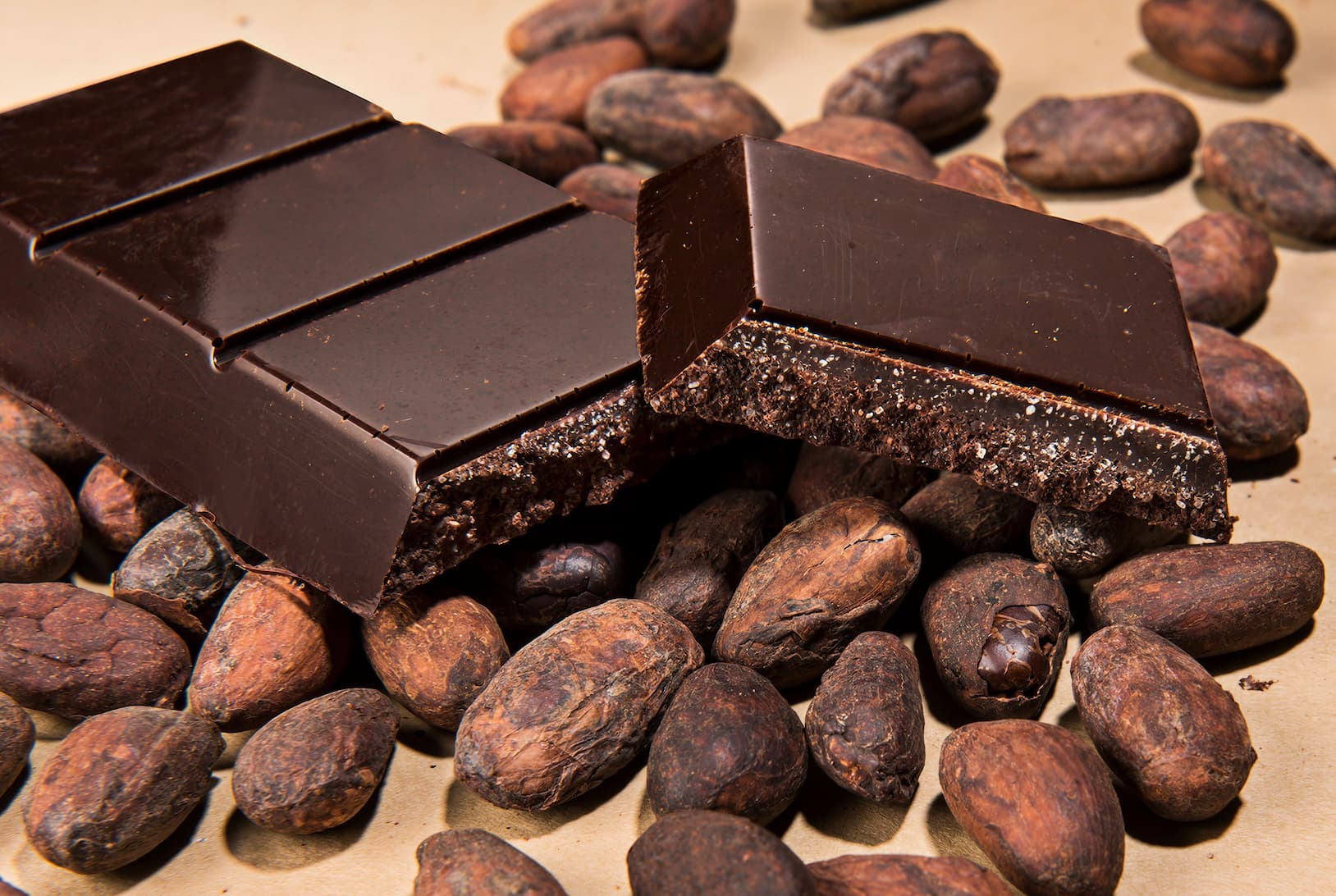
The Race to Save Chocolate’s Soul: How Science Is Preserving the Aroma of Modica Before Climate Change Erases It
What if, one morning, you opened a bar of chocolate and… nothing? No warm, bittersweet wave of aroma. No rush of comfort. Just silence where there once was scent. Sounds like science fiction, right? It isn’t.
Welcome to FreeAstroScience.com — the place where we break down complex scientific ideas into language that actually makes sense. We’re glad you’re here. Whether you’re a chocolate lover, a science enthusiast, or someone who simply cares about the world we’ll hand to the next generation, this story is for you.

Today, we’re telling you about a quiet emergency unfolding in the heart of Sicily — and a bold scientific mission racing against the clock. A team of international researchers is building what you might call a “Noah’s Ark” for endangered smells. And chocolate, the food that has comforted humanity for centuries, sits right at the center of this effort.
Stay with us until the end. This one’s worth your time.
📖 Table of Contents
- From Aztec Ritual to Sicilian Treasure: Where Did Modica Chocolate Come From?
- Why Is Climate Change Threatening Chocolate’s Aroma?
- What Is the Scentinel Project — and How Does It Work?
- How Do You Create a Digital Fingerprint of an Aroma?
- Why Does Smell Matter So Much to Our Memory and Identity?
- What’s Really at Stake — and What Comes Next?
From Aztec Ritual to Sicilian Treasure: Where Did Modica Chocolate Come From?
Let’s rewind about five centuries and travel roughly 10,000 kilometers — to the heart of ancient Mexico.
The Aztecs ground cacao beans with maize and mixed them into a bitter ceremonial drink called xocoâtl, which translates to “bitter water” . This wasn’t candy. It was sacred. A drink for warriors and priests, connected to gods and rituals.
When Spanish colonizers arrived, they sweetened the recipe and carried it across the Atlantic. It eventually reached Sicily, where something remarkable happened: the technique of making this chocolate froze in time.
The town of Modica, nestled in southeastern Sicily, still produces its chocolate using a cold-processing method first documented in 1746 . This IGP (Indicazione Geografica Protetta) technique keeps the temperature low enough that sugar crystals never fully dissolve. The result? A grainy, almost sandy texture and an aromatic profile that exists nowhere else on Earth.
Think of it like a living fossil — not a dinosaur bone behind glass, but a flavor and a fragrance that have survived three centuries of change. Until now.
Why Is Climate Change Threatening Chocolate’s Aroma?
Here’s the uncomfortable truth: cacao is a diva of a plant. It thrives only within a narrow band of conditions — temperatures between 21°C and 32°C, paired with constant humidity . Step outside that window, and the plant doesn’t just wilt. Its internal chemistry shifts.
The main growing regions — West Africa and Southeast Asia — are watching these ideal conditions slip away. Heat waves are disrupting flowering cycles. Rainfall patterns are becoming erratic. And the real damage? It’s happening at the molecular level.
The volatile compounds inside cacao beans — the tiny chemical messengers we perceive as aroma — are changing. When the biochemistry of the bean shifts, so does everything we smell and taste when we bite into a piece of chocolate .
Laura Benassi, a researcher at the CNR-INO (National Research Council – National Institute of Optics) in Florence, put it bluntly:
“Today, climate change doesn’t just threaten glaciers and coral reefs. It’s also rewriting, scent by scent, the sensory map of our cultural heritage.”
That’s a powerful sentence. Read it again. We’re not just losing ice and coral. We’re losing how the world smells.
| Parameter | Ideal Condition | Climate Change Impact |
|---|---|---|
| Temperature | 21 °C – 32 °C | Frequent heat waves exceeding 35 °C |
| Humidity | Constant, high (70–80%) | Erratic rainfall, prolonged dry spells |
| Flowering Cycle | Stable, seasonal | Disrupted by temperature fluctuations |
| Volatile Compounds | Complex, balanced aroma profile | Altered biochemistry → changed scent |
What Is the Scentinel Project — and How Does It Work?
In 2024, a team of international scientists launched a project with a name that says it all: Scentinel — a play on “scent” and “sentinel” . Funded through the Joint Programming Initiative (JPI), this research program aims to build a digital archive of endangered odors from around the world.
We’re talking about Ethiopian coffee. Middle Eastern incense. And yes — the unmistakable aroma of Modica chocolate.
The idea is both simple and extraordinary: if we can’t stop climate change from altering these scents, we can at least record them before they’re gone. A sensory time capsule, if you will.
In 2025, two researchers — Jana Striova from the Italian CNR and Luana Queiroz from NTNU (the Norwegian University of Science and Technology) — traveled to Sicily’s artisan chocolate workshops . They documented every step of the traditional “bean to bar” process, from roasting to grinding, using specialized instruments to capture the chemical and physical data of the aromas released at each stage.
Picture a scientist holding a sensor over a pile of freshly cracked cacao beans — not tasting, not smelling, but reading the invisible cloud of molecules rising from them. That’s exactly what happened.
How Do You Create a Digital Fingerprint of an Aroma?
This is where things get genuinely fascinating.
The volatile compounds that create an aroma — those tiny molecules that float into your nose and trigger the sensation of “chocolate” — can be captured and mapped. Using advanced sampling instruments and computational analysis techniques, the Scentinel team transforms biological scent data into what they call a digital aromatic fingerprint: a precise molecular portrait of how something smells .
Think of it like a photograph, but for your nose. A high-resolution image of scent, stored as data that can be analyzed, compared, and — here’s the exciting part — potentially recreated in a laboratory, even if the original raw material changes beyond recognition .
This isn’t about manufacturing fake chocolate smell. It’s about understanding the chemical architecture of an aroma so thoroughly that future scientists could reconstruct it from its blueprint, the way an architect rebuilds a cathedral from original plans.
The Chemistry Behind Chocolate’s Comfort
And while we’re talking molecular portraits, let’s look at two specific compounds that make chocolate more than just a treat:
Phenylethylamine (PEA)
The “happiness molecule” — associated with mood elevation and emotional well-being
C6H5CH2CH2NH2
Molecular formula: C₈H₁₁N
Theobromine
A gentle stimulant that provides sustained energy without the jitters of caffeine
C7H8N4O2
Molecular formula: C₇H₈N₄O₂
Phenylethylamine promotes feelings of happiness. Theobromine gives you a smooth, lasting energy boost . Both of these natural compounds are part of what makes chocolate feel like a warm hug on a hard day. And both are at risk of being altered as climate change reshapes the cacao bean’s internal chemistry.
That’s not just a food science problem. It’s a well-being problem.
Why Does Smell Matter So Much to Our Memory and Identity?
You might be wondering: why pour money and research hours into saving a smell? Isn’t that a bit… dramatic?
Not at all. Here’s why.
Neuroscience tells us that olfaction — our sense of smell — is the most direct pathway to emotional memory . When you catch a whiff of something familiar — your grandmother’s kitchen, a pine forest after rain, the chocolate shop around the corner — the response hits faster and deeper than any visual or auditory cue.
Smells don’t knock on the door. They walk right in.
A specific aroma can transport you across decades in a fraction of a second. Marcel Proust wrote an entire novel cycle triggered by the scent of a madeleine dipped in tea. That wasn’t literary exaggeration — it was neuroscience before neuroscience had a name for it.
So when we lose the characteristic scent of Modica chocolate, we don’t just lose a flavor. We sever a thread connecting people to a place, a history, and an identity that stretches back to 18th-century Sicily — and, before that, to Aztec temples in Mesoamerica .
The challenge for Modica has stopped being purely gastronomic. It’s now cultural. It’s about who we are and what we remember.
What’s Really at Stake — and What Comes Next?
Let’s pull back and look at the bigger picture.
The Scentinel project isn’t just about chocolate. It’s about recognizing that our sensory world — the way places smell, the way foods taste — is part of our cultural heritage, just as much as architecture, music, or language. And that heritage is under threat from a changing climate in ways most of us haven’t even considered.
Climate change isn’t only melting polar ice and bleaching coral. It’s quietly rewriting the sensory map of our civilization. One scent at a time.
The good news? Scientists are fighting back. The digital aromatic fingerprints being built right now in labs in Italy and Norway will serve as a reference library — a baseline that tells us exactly what Modica chocolate should smell like, molecule by molecule .
The first public results of this research will be shared in October 2026 at Chocomodica, the international chocolate event held in the town of Modica itself . That’s just months away. And when those findings go public, they’ll represent something bigger than data points on a screen. They’ll represent a commitment — a promise that science won’t sit idle while the world loses its flavor.
A Timeline of Chocolate’s Journey — and Its Fight for Survival
| When | What Happened |
|---|---|
| ~15th–16th c. | Aztecs prepare xocoâtl, the sacred bitter cacao drink |
| 16th–17th c. | Spanish colonizers sweeten the recipe and bring it to Sicily |
| 1746 | Modica’s cold-processing chocolate technique first documented |
| 2024 | Scentinel project launched with JPI funding |
| 2025 | Researchers Striova (CNR) and Queiroz (NTNU) document Sicilian artisan factories |
| October 2026 | First public results to be presented at Chocomodica |
Conclusion: The Sleep of Reason Breeds Monsters — Keep Thinking, Keep Caring
We started this article with a question: What if chocolate lost its smell? By now, you can see it’s not really about chocolate alone. It’s about what happens when we stop paying attention to the quiet losses — the ones that don’t make headlines, the ones that vanish before we notice they’re gone.
Modica’s chocolate has survived three centuries. Aztec traditions survived the fall of an empire. But neither can survive our indifference.
The Scentinel project reminds us that science isn’t cold and detached. At its best, science is an act of love — a way of saying, “This matters, and we refuse to let it disappear.” Researchers like Laura Benassi, Jana Striova, and Luana Queiroz are doing more than collecting data. They’re guarding the sensory memory of our shared human story.
At FreeAstroScience, we believe in explaining complex ideas in simple terms — because knowledge shouldn’t be locked behind jargon and paywalls. We also believe you should never switch off your mind. The sleep of reason breeds monsters, as Goya once warned us. Stay curious. Stay alert. Stay hungry — for knowledge and, yes, for good chocolate.
If this story moved you, or taught you something new, come back to FreeAstroScience.com. We’ll be here, making science feel like home.
📚 References & Sources
- Focus.it — “Addio al profumo del cioccolato? La missione scientifica per salvare l’aroma di Modica.” Published April 14, 2025. focus.it
- Scentinel Project — International research initiative funded by the Joint Programming Initiative (JPI), launched 2024. scentinel.eu
- CNR-INO — Consiglio Nazionale delle Ricerche, Istituto Nazionale di Ottica, Florence, Italy. ino.cnr.it
Written for you by FreeAstroScience.com — where complex science becomes clear, and curiosity is always welcome.
Gerd Dani — President, Free AstroScience · Science and Cultural Group