The Hidden Science Inside Your Phone: Celebrating World Quantum Day 2026
Have you ever stopped to wonder what invisible force makes your GPS work, powers your smartphone, or lets a doctor see inside your body without surgery?
Welcome to FreeAstroScience — where we explain complex science in plain language, because the sleep of reason breeds monsters. We believe your mind deserves to stay awake, curious, and alive.
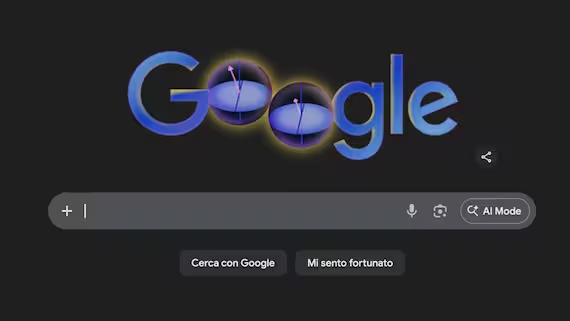
Today, April 14, 2026, the world celebrates World Quantum Day. And no, that date isn’t random. It hides a beautiful secret — one that connects a number written on a blackboard in 1900 to the device you’re holding right now. Whether you’re a physics student, a casual science lover, or someone who just stumbled here while scrolling, this article is for you. Stick with us to the end. We promise: by the time you finish reading, the quantum world won’t feel so strange anymore.
📚 Table of Contents
- 1.Why Does the World Celebrate Quanta on April 14?
- 2.Who Was Max Planck, and What Did He Discover?
- 3.What Exactly Are Quanta — And Why Should You Care?
- 4.The Formula That Changed Physics Forever
- 5.How Does Quantum Physics Shape Your Everyday Life?
- 6.Did You Know Planck’s Constant Defines the Kilogram?
- 7.What Does the Quantum Future Look Like?
- 8.Final Thoughts: You’re Already Living in a Quantum World
Why Does the World Celebrate Quanta on April 14?
Here’s a fun piece of trivia you can share at dinner tonight. The date April 14 wasn’t picked at random. In the American date format, today reads as 4/14. That number — 4.14 — matches the first digits of one of the most important numbers in all of physics: Planck’s constant, expressed in electron-volts per second.
Written out, Planck’s constant looks like this:
h = 6.626 070 15 × 10−34 J·s
or, in particle physics units:
h = 4.14 × 10⁻¹⁵ eV·s
See that 4.14? That’s where the date comes from — a clever wink at physics itself, similar to how Pi Day falls on March 14 (3/14).
World Quantum Day launched in 2021 as a grassroots movement among scientists and educators from more than 65 countries. By 2022, the first full celebration featured over 200 events across 40 countries on five continents. By 2023, registered activities topped 400. And here in 2026, following the momentum of the 2025 International Year of Quantum Science, events span lectures, lab tours, art installations, and school programs from Hanoi to Oslo.
The message? Quantum science isn’t just for people in white lab coats. It belongs to all of us.
Who Was Max Planck, and What Did He Discover?
To understand why we’re celebrating today, we need to rewind the clock to the year 1900. A German physicist named Max Planck was wrestling with a problem that had frustrated the scientific community for decades.
The question sounded simple: How do heated objects emit radiation?
Every experiment produced data that didn’t match any theory. Classical physics kept failing. Wien’s law worked for short wavelengths. The Rayleigh–Jeans formula handled long wavelengths. But nothing described the full picture.
Planck, in a moment he later described as an act of desperation, tried something radical. He proposed that heated objects don’t emit energy as a smooth, continuous flow — like water from a faucet. Instead, they release energy in tiny, discrete packets. He called them quanta.
It worked. His formula matched experimental data perfectly. And physics would never be the same.
For this discovery, Planck received the Nobel Prize in Physics in 1918. But the price was high: his hypothesis shattered everything classical physics assumed about how matter behaves at the smallest scales. In the quantum world, energy doesn’t flow — it jumps.
To describe those jumps, Planck introduced a new constant — now called Planck’s constant (h) — and it became one of the most fundamental numbers in nature. Today, it sits at the heart of all quantum mechanics.
What Exactly Are Quanta — And Why Should You Care?
Let’s make this feel real with a simple analogy.
Imagine you walk into a shop and owe €4.14 (fitting, right?). You reach into your pocket and pull out coins. You can’t pay with a smooth stream of money. You pay in chunks — discrete coins. A €2 coin, a €1 coin, a 10-cent piece, and four 1-cent pieces. That’s it.
Nature works the same way at the quantum scale. Energy isn’t a river. It’s a collection of coins.
When we talk about quanta, we mean the smallest possible “packets” of energy. Light, for instance, isn’t a smooth beam. It’s made of countless tiny particles called photons — each one carrying a specific, fixed amount of energy. You can’t have half a photon, just like you can’t pay with half a coin.
This idea — that energy is “quantized” — is the backbone of quantum mechanics. And it explains phenomena that baffled scientists for generations.
The Formula That Changed Physics Forever
In 1905, a young patent clerk named Albert Einstein took Planck’s idea and ran with it. He proposed that light itself is made of quanta — photons — and used this to explain the photoelectric effect, a mystery that had puzzled physicists for years. For that single paper, Einstein won the Nobel Prize in Physics in 1921.
The relationship between a photon’s energy and its frequency is beautifully simple:
Photon Energy Equation
E = h · f
EEnergy of the
photon (Joules)
hPlanck’s constant
(6.626 × 10⁻³⁴ J·s)
fFrequency of
the light (Hz)
Three letters. One multiplication sign. And a revolution.
This equation tells us that higher-frequency light (like ultraviolet or X-rays) carries more energy per photon. Lower-frequency light (like radio waves) carries less. The constant h is the bridge between the wave-like behavior of light and its particle-like nature.
Quantum mechanics gets its name from exactly this discovery: many physical quantities at the microscopic level — energy, angular momentum, spin — come in discrete, quantized values rather than a continuous spectrum. The energy of electrons orbiting an atom, for instance, can only take specific values. Nothing in between.
How Does Quantum Physics Shape Your Everyday Life?
“Okay, Gerd,” you might say. “Photons and packets of energy — cool. But what does this have to do with me?”
More than you’d think. Quantum mechanics isn’t some abstract theory locked in a university basement. It’s the silent engine running beneath almost every modern technology you touch.
Let’s walk through the big ones.
🔬 Lasers: From Surgery to Streaming
Lasers exist because of quantum physics. When electrons inside certain materials jump between energy levels, they release photons — all with the same frequency, traveling in perfect lockstep. That’s a laser beam.
We use lasers in fiber-optic communications (the backbone of the internet), in industrial cutting and welding, in laser eye surgery, and even in tattoo removal. Without quantum mechanics, none of this works.
🧲 MRI Scanners: Seeing Inside Your Body
When you lie inside an MRI machine, the scanner is talking to the hydrogen atoms in your body. It exploits the quantum property of nuclear spin to create stunningly detailed images of your organs, muscles, and brain — all without a single incision. This entire branch of medicine, called nuclear medicine, rests on quantum principles.
🛰️ GPS Navigation: Thank an Atomic Clock
Every time you open a map on your phone and it pinpoints your location, you’re relying on atomic clocks aboard GPS satellites. These clocks measure the oscillations of atoms with extreme precision — a precision only possible through quantum mechanics.
Here’s a fact that puts it in perspective: without those quantum-powered atomic clocks, your GPS would be off by about 11 kilometers. That’s not a small error. That’s the difference between arriving at a restaurant and ending up in a different town.
📱 Smartphones, Computers, and All Electronics
The device you’re reading this article on? Its processor contains billions of transistors — tiny switches that control electrical current. Transistors work because of the quantum behavior of semiconductors. Strip away quantum mechanics, and there are no microchips, no computers, no internet. Full stop.
| Technology | Quantum Principle | Real-World Use |
|---|---|---|
| Lasers | Stimulated emission of photons | Fiber optics, surgery, manufacturing |
| MRI Scanners | Nuclear spin of hydrogen atoms | Medical imaging, diagnostics |
| GPS Satellites | Atomic clock precision (quantum oscillations) | Navigation, ride-sharing, delivery |
| Transistors & Chips | Quantum behavior of semiconductors | Smartphones, computers, every electronic device |
| Nuclear Medicine | Quantum interactions in atomic nuclei | PET scans, radiation therapy, diagnostics |
Did You Know Planck’s Constant Defines the Kilogram?
Here’s something that might surprise you. Since May 20, 2019, Planck’s constant doesn’t just sit in physics textbooks. It actually defines the kilogram — the fundamental unit of mass we all use.
For over a century — from 1889 to 2019 — the kilogram was defined by a single physical object: a platinum–iridium cylinder stored in a vault near Paris called the International Prototype of the Kilogram (IPK). Every scale in the world was, in some chain of comparison, linked back to that one metal lump.
The problem? Physical objects change. The IPK was gaining or losing microscopic amounts of mass over the decades. So in 2018, the General Conference on Weights and Measures voted to redefine the kilogram based on the fixed numerical value of Planck’s constant:
h = 6.626 070 15 × 10−34 kg·m2·s−1 (exact, by definition)
This means every SI base unit now rests on fundamental constants of nature — not on any human-made artifact sitting in a French vault. That’s a beautiful thought: the laws of quantum mechanics now define how we measure mass anywhere in the universe.
What Does the Quantum Future Look Like?
So far, we’ve talked about quantum technologies that already exist. But what’s coming next? The honest answer: a lot — though not without real challenges.
Quantum computing is the headline grabber. Unlike classical computers that process information in bits (0 or 1), quantum computers use qubits. Thanks to a quantum property called superposition, a qubit can represent multiple states at once. Another property, entanglement, links qubits so that measuring one instantly affects another — even across great distances.
Companies like IBM, Google, Microsoft, Quantinuum, and IonQ are building quantum hardware platforms right now. Governments across the United States, Europe, and China are pouring billions into research, workforce training, and infrastructure.
What could quantum computers actually do? Researchers are exploring applications in drug discovery, financial modeling, optimization problems, materials science, and cryptography. They’re also driving an urgent push toward post-quantum security — new encryption methods designed to withstand attacks from future quantum machines.
Quantum sensing is another rising field. Imagine sensors so precise they can detect changes in gravity, magnetic fields, or temperature at levels classical instruments can’t reach. This has potential in navigation, medicine, and environmental monitoring.
Quantum communication could enable networks where eavesdropping is physically impossible — not because of clever software, but because of the laws of physics themselves.
We should be honest: many of these technologies remain in early stages. The gap between laboratory demonstrations and everyday products is real. But the direction is clear. The quantum era isn’t approaching — we’re already inside it.
Final Thoughts: You’re Already Living in a Quantum World
Let’s take a breath and look at the full picture.
In 1900, Max Planck proposed an idea born from frustration — that energy comes in tiny packets. That single hypothesis opened a door to a new physics. Einstein walked through it in 1905. Entire generations of scientists followed. And the result is the world we live in: a world of smartphones, satellites, MRI scanners, fiber-optic internet, and a kilogram defined not by a metal cylinder, but by a constant of nature.
World Quantum Day — celebrated every April 14 — reminds us that science isn’t just something that happens in laboratories. It’s something that happens to all of us, every second of every day. The phone in your pocket, the GPS in your car, the medical scan that saves a life — all of it traces back to a number: h = 4.14 × 10⁻¹⁵ eV·s.
You don’t need a physics degree to appreciate this. You just need curiosity.
At FreeAstroScience.com, we explain complex scientific principles in simple terms — because we believe knowledge should be free, open, and accessible. We want to educate you to never turn off your mind. Keep it active at all times. Because when reason sleeps, monsters thrive.
Come back often. Ask questions. Stay curious. The universe is vast, strange, and beautiful — and understanding it is one of the greatest privileges of being alive.
Happy World Quantum Day 2026.
— Gerd Dani, President of Free Astroscience – Science and Cultural Group
📖 References & Sources
- World Quantum Day Official Website — worldquantumday.org
- Bonaventura, F. (2026). “Perché la Giornata Mondiale dei Quanti è il 14 aprile.” Geopop — geopop.it
- Swayne, M. (2026). “Why World Quantum Day Matters.” The Quantum Insider — thequantuminsider.com
- Innovation News Network (2026). “World Quantum Day: Why the strangest science is shaping our future.” — innovationnewsnetwork.com
- IB Times Australia (2026). “10 Must-Know Facts About World Quantum Day 2026.” — ibtimes.com.au
- CERN (2019). “Lock the Planck: the kilogram has a new definition.” — home.cern
- NIST. “Kilogram: Mass and Planck’s Constant.” — nist.gov
- Wikipedia. “Planck constant” and “2019 redefinition of the SI base units.” — en.wikipedia.org