
Skip to content
Skip to content
Wednesday, May 27, 2026
  • Home
  • WHO WE ARE
  • Terms of Use and Disclaimer
  • Our Editorial Policy
  • Privacy Policy
FreeAstroScience logo with a glowing star, open book, and Earth on a space-themed circular badge with the tagline Igniting Curiosity for free astronomy science education

FreeAstroScience

  • Home
  • Astronomy
    • AstroPhysics
    • Cosmology
    • Exploration
  • Physics
  • Hi-Tech
    • A.I.
    • Robots
  • Healh
  • Lifestyle
    • Sport
    • Music
  • Environment
    • ClimateChange
  • Biology
  • Gerd’s
FreeAstroScience logo with a glowing star, open book, and Earth on a space-themed circular badge with the tagline Igniting Curiosity for free astronomy science education

FreeAstroScience

  • Home
  • Astronomy
    • AstroPhysics
    • Cosmology
    • Exploration
  • Physics
  • Hi-Tech
    • A.I.
    • Robots
  • Healh
  • Lifestyle
    • Sport
    • Music
  • Environment
    • ClimateChange
  • Biology
  • Gerd’s
  • Latest
  • Popular

Galaxies shaped by cosmic location just 1.2 billion years after the Big Bang

May 27, 2026May 27, 2026

Mercury’s polar water ice: new models suggest a larger, slower impact source

May 26, 2026May 26, 2026

New Cell Therapy Offers Hope for Advanced Liver Disease Patients

May 25, 2026May 25, 2026

Dark matter investigations: quantum limits and the classical field behavior of axions

May 25, 2026May 25, 2026

Astrophysics

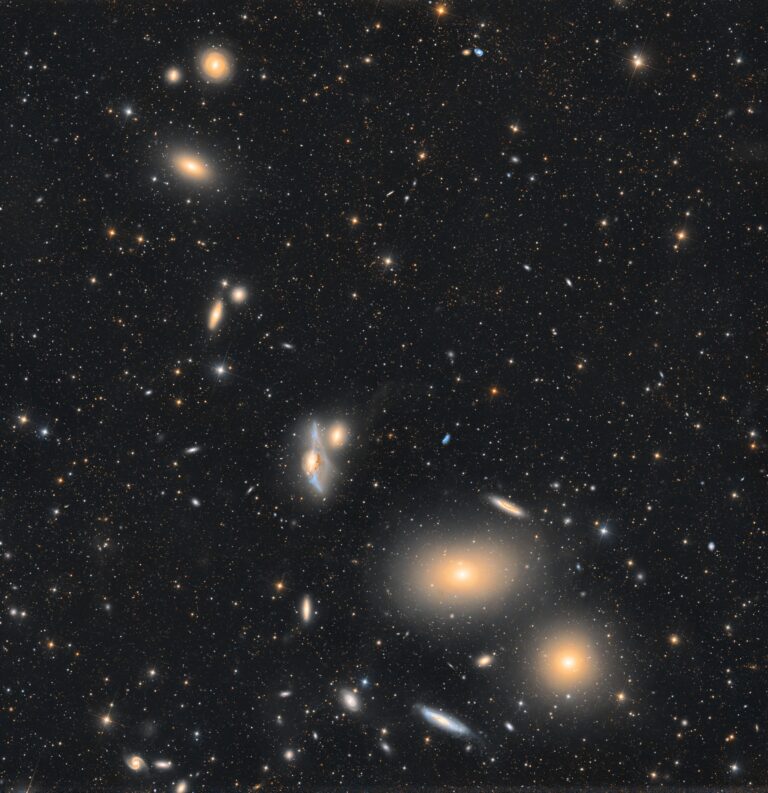
Markarian’s Chain arc in the Virgo Cluster with M84, M86, NGC 4438, NGC 4435, and a faint tidal bridge amid star fields.
  • Astronomy

What Hidden Wonders Await in Markarian’s Chain of the Virgo Cluster?

Gerd DaniMay 12, 2026May 12, 20260

Have you ever looked up at the night sky and wondered what lies beyond the stars we see? Welcome to…
Read More
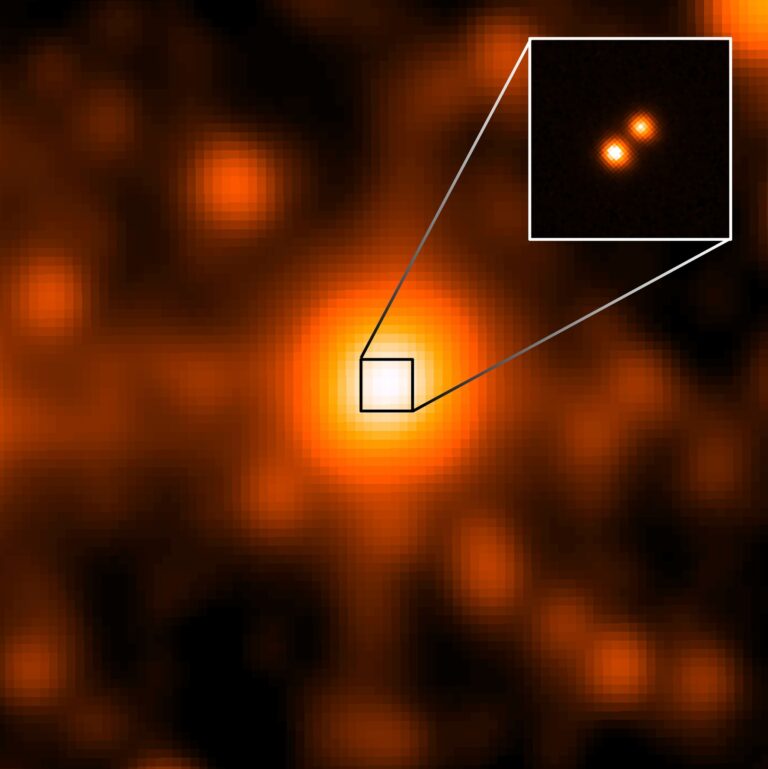
Infrared WISE telescope image of Luhman 16, the closest binary brown dwarf system to Earth, with Gemini inset resolving both components.
  • Astronomy
  • AstroPhysics

Are the Closest Neighbors to Earth Not Stars, but Brown Dwarfs?

Gerd DaniMay 9, 2026May 9, 20260

Luhman 16: The Two Closest Brown Dwarfs to Earth What if the closest neighbors to our Sun aren’t stars at…
Read More
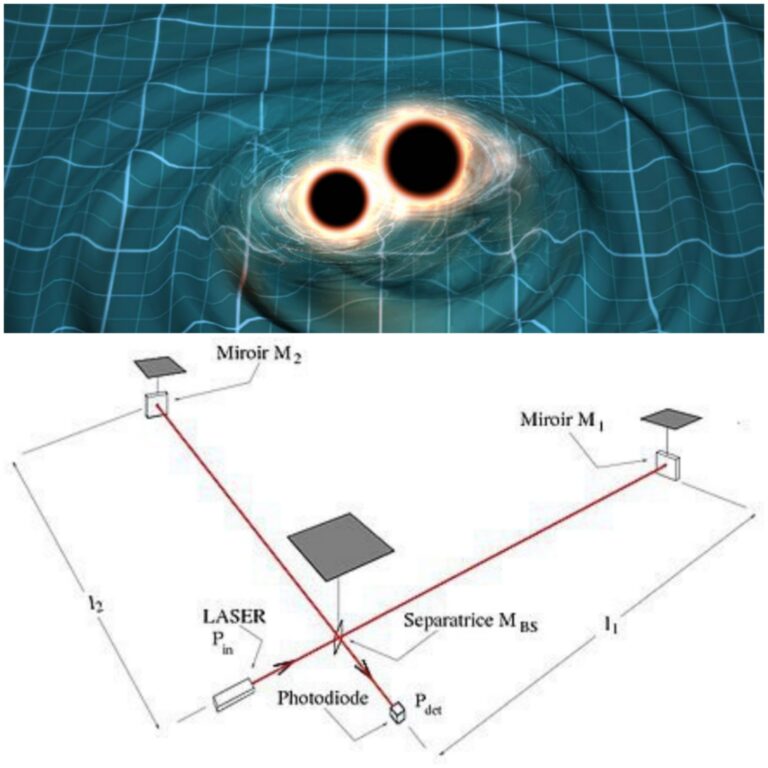
Two merging black holes generating gravitational waves above a labeled LIGO Michelson interferometer diagram showing laser, beam splitter, mirrors M1 and M2, and photodiode detector.
  • AstroPhysics
  • Research

How Can LIGO Detect Ripples in Spacetime Smaller Than a Proton?

Gerd DaniMay 9, 2026May 9, 20260

LIGO: The World’s Most Sensitive Ruler Listening to the Universe Have you ever wondered if we can actually hear the…
Read More
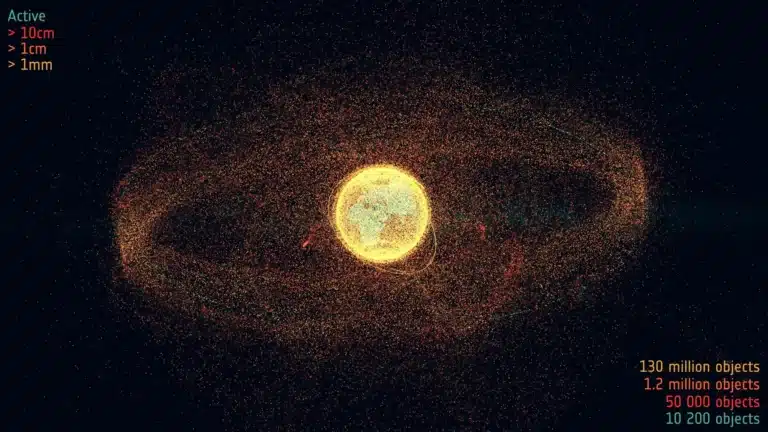
Visualization of Earth surrounded by 130 million pieces of orbital debris larger than 1 mm, 1.2 million above 1 cm, 50,000 above 10 cm, and 10,200 active satellites, shown as colored dots clustered in Low Earth Orbit and Geostationary Orbit.
  • AstroPhysics
  • Research

Can 3D-Printed Armor Save Spacecraft From Space Debris?

Gerd DaniMay 9, 2026May 9, 20261

What happens when a fleck of paint, barely bigger than a grain of sand, slams into your billion-dollar satellite at…
Read More
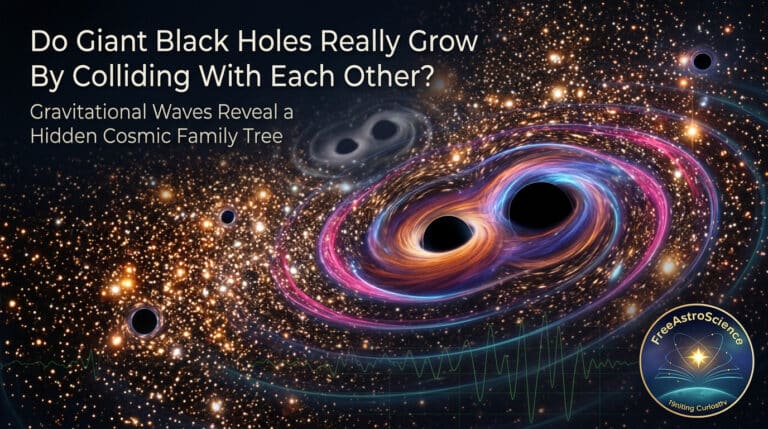
Two massive black holes merging with glowing magenta and orange accretion disks inside a dense globular star cluster, illustrating hierarchical black hole growth revealed by LIGO gravitational wave data.
  • AstroPhysics
  • Research

Do Cosmic Monsters Grow Through Black Hole Collisions?

Gerd DaniMay 8, 2026May 8, 20260

Do Giant Black Holes Really Grow By Colliding With Each Other? Have you ever wondered how the universe builds its…
Read More
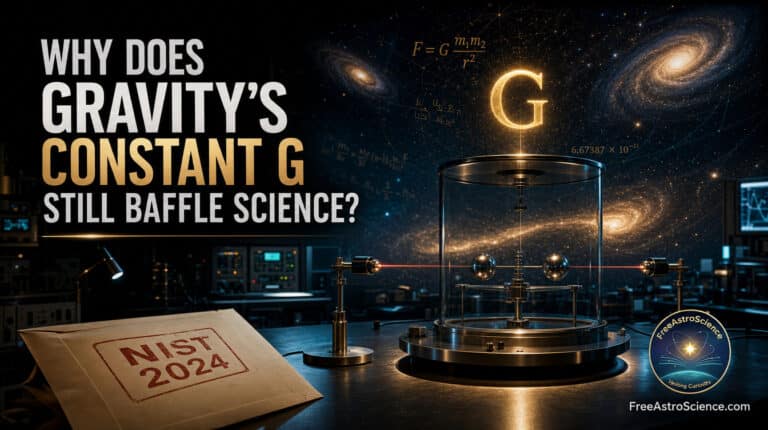
Ultra-realistic cover showing a torsion balance, glowing G, galaxies, and NIST 2024 envelope for the gravitational constant mystery.
  • AstroPhysics
  • Physics

Why Does Gravity’s Constant G Still Baffle Science After 225 Years?

Gerd DaniMay 7, 2026May 7, 20260

Why Can’t We Measure the Gravitational Constant G? The Universe’s Most Frustrating Number Have you ever wondered why, after centuries…
Read More
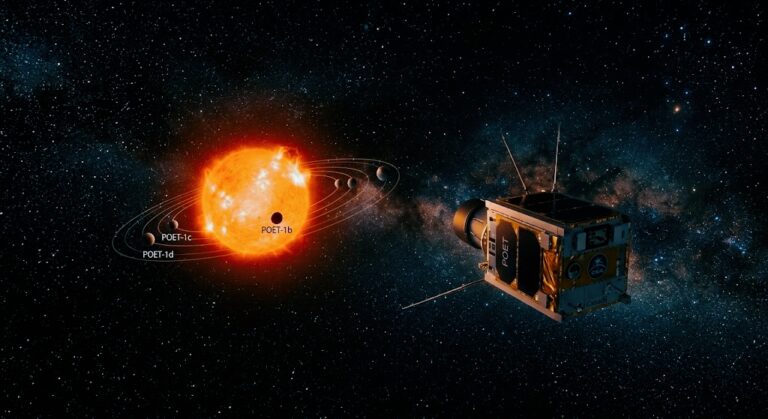
The POET mission: expanding the horizons of exoplanetary science
  • Exploration
  • Research

The POET mission: expanding the horizons of exoplanetary science

Denise MeloniMay 4, 2026May 4, 20260

The discipline of exoplanetary science and the pursuit of life beyond our solar system are advancing at an extraordinary pace….
Read More
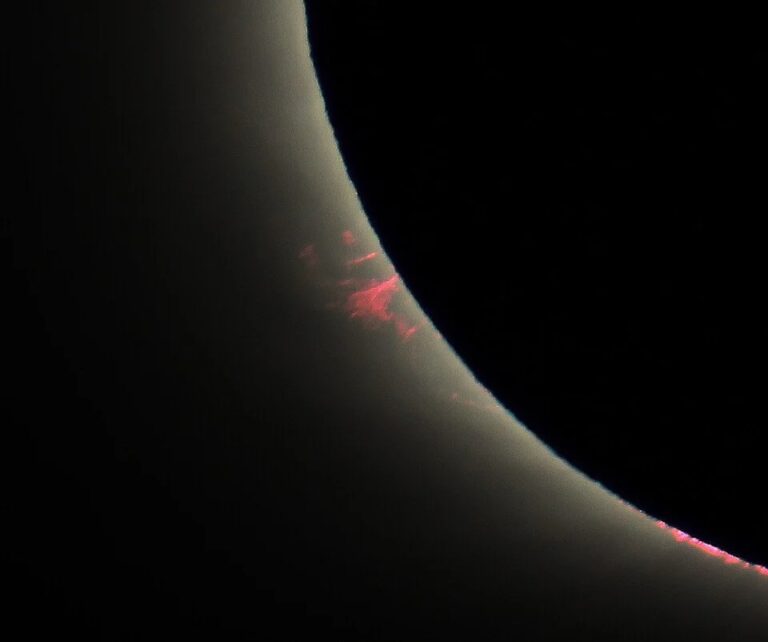
Solar prominence seen in true colour during totality of a solar eclipse
  • Astronomy
  • AstroPhysics

How Do Solar Prominences Survive Weeks Above the Sun?

Gerd DaniApril 29, 2026April 29, 20260

How Do Solar Prominences Stay Alive Inside a Million-Degree Furnace? What if we told you there’s a mountain range bigger…
Read More
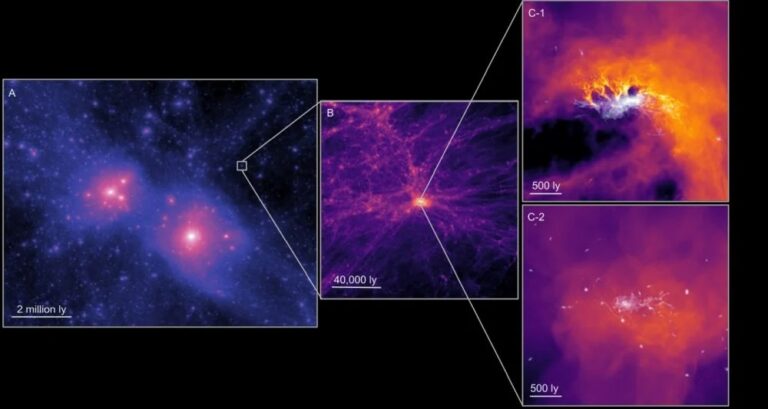
These screenshots are from simulations aimed at understanding ultra-faint dwarf galaxies in the early Universe. (A) Dark matter distribution in our neighborhood in the Universe, the so called Local Group of galaxies. The two large dark matter halos correspond to those of the Milky Way and Andromeda galaxy; (B) zoom-in on the dark matter in and around a small halo ~700 million years after the Big Bang; (C) stars and gas in the centre of the small dark matter halo in one of our simulations.
  • Astronomy
  • AstroPhysics

Can Tiny Galaxies Reveal the Universe’s First Moments?

Gerd DaniApril 28, 2026April 28, 20260

— Article written for you by FreeAstroScience.com — where we break complex science into simple words, so you never switch…

Read More
The plethora of asteroids in the inner Solar System makes for a wealth of mining opportunities to support Martian bases
  • AstroPhysics
  • Exploration

Can Asteroids Build Our First Mars Colony?

Gerd DaniApril 27, 2026April 27, 20261

What if the steel beams of the first Martian house never come from Earth at all? What if they ride…

Read More
  • 1
  • 2
  • 3
  • 4
  • …
  • 174
FreeAstroScience – Donation Widget (WordPress)
Support FreeAstroScience

Help us keep astronomy & science education free for everyone. Every contribution fuels open-access knowledge.

Donate with PayPal
100% goes to free science education & open-access research
Secure via PayPal

Sports

Free AstroScience - All rights Reserved
  • Privacy Policy
  • WHO WE ARE
  • CONSTITUTION OF FREEASTROSCIENCE
  • Contact Us
  • Work With Us
  • Our Editorial Policy
  • Comprehensive AI Policy for FreeAstroScience.com
Back To Top