What happens when a cruise ship becomes a moving public health question?
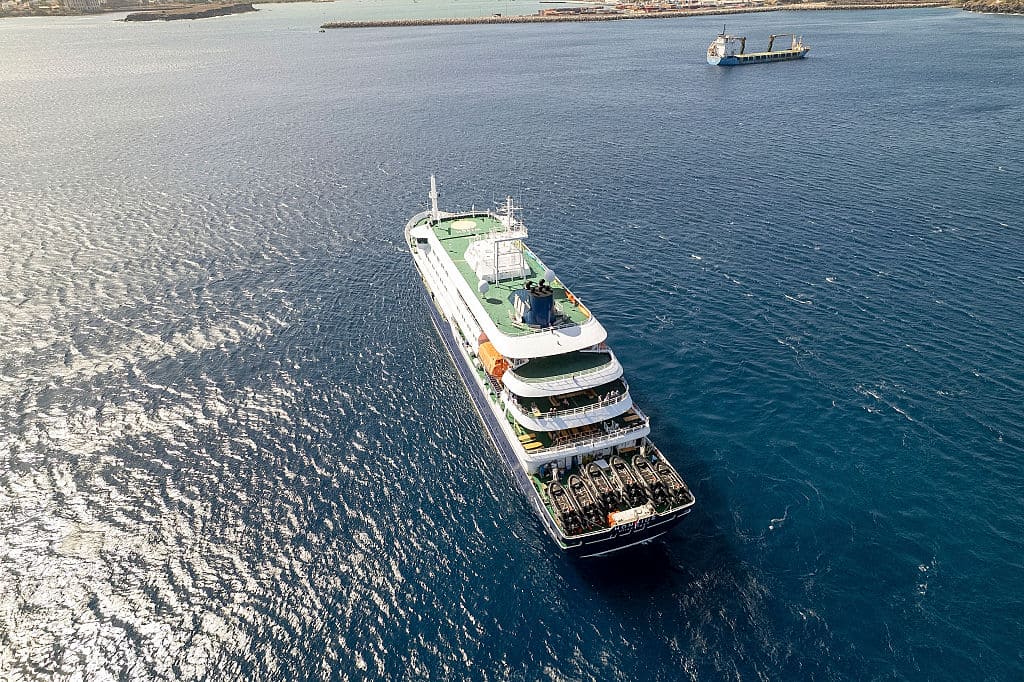
Welcome to FreeAstroScience.com. We’re looking at the MV Hondius hantavirus case with calm eyes, clear language, and respect for uncertainty. The ship is expected to reach the Canary Islands on Sunday, May 10, at noon, after carrying an onboard hantavirus outbreak involving nearly 150 passengers from 12 nationalities.
This is not a story to panic over. It’s a story for a reason. The Andes virus, the confirmed hantavirus strain in at least two passengers, raises hard questions about quarantine, testing, contact tracing, and rare human-to-human transmission . Read to the end, and you’ll see why careful science matters more than fear.
Table of Contents
- Why did one cruise ship become a public health puzzle?
- What makes the Andes virus different from other hantaviruses?
- Which symptoms make this infection so serious?
- What did the 1996 and 2018 outbreaks teach us?
- Why do super-spreaders matter in this case?
- Should passengers enter quarantine after the MV Hondius outbreak?
- What should we learn without turning fear into noise?
When a Ship Becomes a Test of Reason
Why did one cruise ship become a public health puzzle?
The MV Hondius case matters since it places a rare virus inside a very human setting: shared rooms, shared meals, shared corridors, and shared uncertainty . Nearly 150 passengers were on board, and they had unknowingly shared spaces with people later found infected .
The source describes the central question clearly. When the ship reaches the Canary Islands, authorities must decide how to manage the passengers . Should they enter quarantine, or can they return home carefully and monitor symptoms there ?
That choice is harder than it sounds. Hantaviruses are described as poorly known viruses, partly since they are difficult to establish in animal models . They also require maximum-security laboratories and can have long incubation times, reaching up to six to eight weeks .
Those details matter. A virus with a long incubation period can hide inside ordinary life. People may feel fine while public health teams are already racing a clock they cannot see.
The source also says hantaviruses had not been a real danger for industrialized countries in past experience, and study funds have been scarce . In most human infections, the infected person was described as a “dead end,” unable to pass the virus onward .
The Andes virus seems to complicate that older picture. It is the confirmed hantavirus strain in at least two passengers from the ship . The source says human-to-human transmission for Andes virus is established, though uncertainty remains about how easily that transmission happens .
FreeAstroScience takeaway: the hardest scientific problems are not always the loudest ones. Sometimes they arrive quietly, with long incubation periods, incomplete data, and uncomfortable decisions.
What makes the Andes virus different from other hantaviruses?
The Andes virus was discovered in 1995 in southern Argentina . It is transmitted through contact with excrement or saliva from a small rodent endemic to South America, Oligoryzomys longicaudatus .
That original route is already serious. Rodent-linked infections can emerge far from hospital rooms, in places where human activity meets animal habitats. Yet the Andes virus adds another layer, as it appears able to spread from person to person .
The source is careful here, and we should be careful too. It says the possibility of human-to-human transmission is established, while the ease of such spread remains uncertain . That distinction protects us from two mistakes: denial and panic.
Denial would pretend there is no human-to-human risk. Panic would treat every brief contact as equal. The available source points to a middle path: real risk, especially after long and close contact with an infected person .
This matters for the MV Hondius passengers. A cruise ship is neither a village nor a hospital ward, yet it includes enclosed spaces and repeated social contact. The source does not give a complete map of contacts on board, so we should not invent one.
What we do know is that public health management will be fragmented. Spain is responsible for first reception, while individual countries of origin will also manage returning passengers . That means coordination will matter as much as medicine.
Which symptoms make this infection so serious?
The Andes virus causes hantavirus pulmonary syndrome . The illness can start with flu-like symptoms, including fever, muscle pain, and headache .
The source then lists gastrointestinal problems, including abdominal pain, vomiting, and diarrhea . Later, the condition can worsen into severe respiratory disease .
That severe phase includes abnormal fluid accumulation in the lungs and respiratory failure . The source reports that the Andes virus can have a mortality rate reaching 50% .
Numbers like that can frighten us, and they should earn our attention. Yet attention is different from alarm. A high mortality rate in documented cases does not tell us every detail about every exposure aboard a ship.
It tells us something sharper: this is not a trivial infection. When respiratory failure is part of the disease picture, public health teams must act before certainty becomes perfect. Waiting for perfect certainty can turn small windows into closed doors.
The long incubation period makes communication harder. The source states that hantaviruses can have incubation times up to six to eight weeks . A passenger may need patience, repeated checks, and honest symptom reporting long after disembarking.
At FreeAstroScience, we often explain astronomy through simple images. Here is one from the sky. A faint comet is easier to track when observers share measurements early. A rare virus is easier to manage when people share symptoms early.
What did the 1996 and 2018 outbreaks teach us?
The source describes two past outbreaks that now shape the discussion around the MV Hondius case . The first began in 1996 with a 41-year-old man in Patagonia .
Three weeks later, his 70-year-old mother became ill . Then his doctor became ill, followed one month later by the doctor’s wife . A doctor who had treated the first doctor’s wife in hospital also became infected .
That event was described the following year in Emerging Infectious Diseases. The source calls it an alarm bell for human-to-human transmission of the Andes virus.
The second outbreak happened in 2018 in Epuyén, a village of 2,100 inhabitants in Argentina’s Chubut province, at the foot of the Andes . The source says that the case was described in detail in a 2020 article in the New England Journal of Medicine.
In Epuyén, a man who had contracted the virus attended a birthday party for 90 minutes while already feverish. Around one hundred people were gathered at that birthday event .
Five people were infected at the party. The mean incubation time in that event was 22 days, so those five people continued ordinary life for three weeks. The village’s social life relied on close interactions, which gave the virus opportunities to spread.
Later infections brought the total to at least 34 cases, with 11 deaths. The mayor of Epuyén then quarantined the entire village for 40 days.
That decision suspended every common indoor activity, including funerals . It was paired with detailed contact reconstruction, and by February 2019 the epidemic ended.
We should sit with that for a moment. Suspending funerals is not a technical footnote. It means public health can touch grief, memory, family, and dignity. That is why decisions must be both scientific and humane.
Why do super-spreaders matter in this case?
The source cites virologist Roberto Burioni, who explained lessons from the Epuyén episode on Substack. According to that explanation, the most likely human-to-human route was inhalation of droplets or aerosols.
Droplets are respiratory particles emitted while sneezing, coughing, or talking . Aerosols are smaller particles that can remain suspended for a long time indoors .
The second lesson was timing. The strain was presumed to spread almost always on the first day of fever, sometimes when patients did not yet know they were ill .
The third lesson was the role of super-spreaders . The source defines them as people with high viral load in their secretions .
The first infected person in Epuyén was described as one of these super-spreaders . With one of the five infected people, he had merely crossed paths while going to the bathroom, without stopping .
This point is uncomfortable. It suggests that risk is not always evenly distributed. Some infected people may pass the virus far more efficiently than others, while many infected people may transmit to no one.
The source also reports evidence that can look different at first glance. In 2018, investigators traced 51 contacts of a person infected in Argentina who developed first symptoms only after returning to the United States . None of those contacts became infected .
A 2021 review of previous studies on Andes virus concluded there was no evidence supporting human-to-human transmission . The source then says experts today agree that human-to-human transmission is real, especially after long and close contact with an infected person .
That is how science often moves. It does not walk in a straight line with a trumpet. It tests, revises, compares, and sometimes changes its mind when better patterns appear.
Should passengers enter quarantine after the MV Hondius outbreak?
The source says the passenger isolation process will differ from the Epuyén village case . It will be more fragmented and shared between Spain and the passengers’ countries of origin .
According to an article mentioned from Science, passengers will likely be asked to spend a quarantine period at home, with repeated hantavirus testing . That option tries to balance infection control with practical reality.
The source also says health authorities are working to trace 29 passengers who disembarked early on April 24 on Saint Helena . Some of those passengers later returned home independently .
That detail shows why contact tracing is more than a form. People move, flights connect, symptoms may arrive late, and responsibility crosses borders. Public health is a relay race, not a solo sprint.
There is also one reassuring detail. A KLM flight attendant who had removed from a Johannesburg-to-Amsterdam flight the Dutch woman who was wife of the first victim tested negative for the virus . The woman later died of hantavirus in South Africa, and the flight attendant had reported mild respiratory symptoms after contact with her .
That negative result does not erase the outbreak. It does remind us that exposure does not automatically mean infection. Science asks us to hold both truths at once.
For passengers, the practical message from the source is clear. Monitoring symptoms matters, repeated testing may be used, and health instructions may differ by country . The source does not provide final rules for every passenger, so we should not pretend those rules already exist.
For readers, the ethical message is just as clear. We should avoid blaming infected people. Viruses exploit biology and contact patterns; shame only makes people hide symptoms.
What should we learn without turning fear into noise?
The MV Hondius case is a lesson in uncertainty. Hantaviruses are hard to study, need high-security laboratories, and can incubate for weeks . That creates gaps in knowledge at the exact moment when officials need action.
The Andes virus adds a second lesson. Human-to-human transmission appears real, especially after long, close contact, yet its ease of spread remains uncertain . That combination demands calm caution.
The Epuyén outbreak adds a third lesson. A single social event, a 90-minute birthday party, and a mean incubation time of 22 days helped seed wider transmission in a small community . At least 34 infections and 11 deaths followed before a 40-day village quarantine helped end the epidemic .
We should also remember the human cost of control. Epuyén suspended common indoor activities, including funerals . That is a heavy price, even when taken to protect life.
FreeAstroScience seeks to educate you never to turn off your mind and to keep it active at all times, since the sleep of reason breeds monsters. That sentence is not decoration. It is a shield against denial, panic, stigma, and political noise.
As Europeans, as readers, and as human beings, we can support peace, reject extremism, and still think sharply about health. Good science does not shout. It listens to evidence, respects people, and acts before harm grows.
The best response to a rare virus is not fear. It is disciplined attention. It is honest reporting of symptoms. It is testing when advised. It is trust built through clear communication.
A cruise ship outbreak feels cinematic, almost like the opening scene of a thriller. Real life deserves better than a thriller script. It deserves careful public health, patient explanation, and citizens who refuse to switch off their reason.
Final reflection: calm science is stronger than panic
The MV Hondius hantavirus case brings together rare disease, travel, long incubation, contact tracing, and public trust. The Andes virus was confirmed in at least two passengers, and the ship carried nearly 150 people from 12 nationalities .
The source shows why quarantine is being discussed. Andes virus can cause hantavirus pulmonary syndrome, can reach severe respiratory disease, and has a mortality rate that can reach 50% . It also appears capable of human-to-human transmission, especially after long and close contact .
Past outbreaks in Patagonia and Epuyén teach us to respect early signals . They also teach us to protect communities without turning infected people into villains.
Here at FreeAstroScience.com, we’ll keep doing what science communication should do: make complex topics simple, human, and useful. Come back for clear explanations that help you stay curious, alert, and kind.