
The Bundibugyo Ebola Outbreak: A Race Against an Invisible Enemy
What happens when a rare virus slips past our defenses for weeks, then explodes into 395 suspected cases before anyone notices? Welcome, dear reader. We’re glad you stopped by FreeAstroScience.com today. The story you’re about to read is unsettling, hopeful, and very human all at once. Stay with us until the end, because the way scientists are scrambling to catch this outbreak tells us something important about how prepared (or unprepared) our world really is.
📑 Table of Contents
- ➤ What’s happening in Congo and Uganda right now?
- ➤ Why is the Bundibugyo strain such a headache?
- ➤ How do you test for a virus when your test doesn’t work?
- ➤ What did the first genome sequences tell us?
- ➤ Which drugs are heading into emergency trials?
- ➤ Do we have a vaccine for Bundibugyo Ebola?
- ➤ What does the missing U.S. partner mean for response?
- ➤ What can we learn from this story?
What’s happening in Congo and Uganda right now?
On Friday, May 15, 2026, lab tests confirmed something many African scientists had feared. A rare Ebola virus was making people sick in the Democratic Republic of the Congo. At that point, doctors counted 246 suspected cases and 80 deaths .
By the time you read this, the numbers have climbed to 395 suspected cases and 106 deaths . The outbreak’s heart sits in Ituri province, in the northeastern DRC. But confirmed cases have already popped up in Goma (North Kivu province) and, worryingly, in Kampala, the capital of Uganda .
The World Health Organization declared a public health emergency of international concern on Sunday. Africa CDC followed the next day .
| Indicator | Friday, May 15 | Monday, May 19 |
|---|---|---|
| Suspected cases | 246 | 395 |
| Deaths | 80 | 106 |
| Confirmed cases | — | 10 (DRC + Uganda) |
| Countries affected | DRC | DRC, Uganda |
The earliest known case? A nurse in Bunia, capital of Ituri. She fell ill on April 24 and died three days later . She was almost certainly infected by a patient she was treating. That means the virus had been circulating quietly for weeks before anyone raised the alarm.
Why is the Bundibugyo strain such a headache?
Most past Ebola outbreaks involved the Zaire ebolavirus species. That’s the one we have drugs for. That’s the one we have vaccines for. That’s the one most diagnostic kits detect.
This outbreak is different. The culprit is Bundibugyo virus, named after a region in Uganda where it first appeared in 2007. A second Bundibugyo outbreak hit the DRC in 2012. And now, in 2026, it’s back.
As Salim Abdool Karim, the epidemiologist chairing the Africa CDC committee, put it plainly: “We have no widely available diagnostic, no treatment, no vaccine” for this species. “So we sort of have our hands tied behind our back here”.
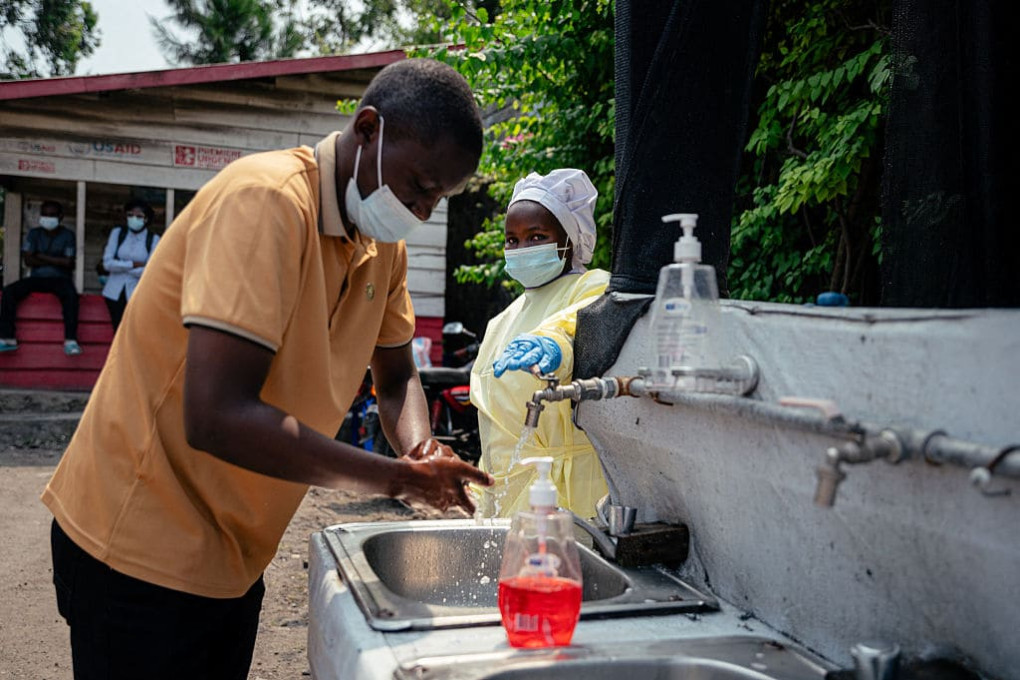
How do you test for a virus when your test doesn’t work?
Here’s where the story gets technical but stay with us. During recent Ebola emergencies, health workers leaned on a portable machine called GeneXpert. It runs PCR automatically — yes, the same technology we all got to know during COVID — to spot Ebola’s genetic material in a blood sample .
The catch? GeneXpert’s reagents were built for the Zaire strain. They don’t see Bundibugyo well . That single gap likely cost the world weeks of early warning.
What are scientists using instead?
Right now, labs are running a kit called RadiOne, according to Placide Mbala, head of epidemiology at the National Institute of Biomedical Research in Kinshasa . It works, but Mbala is still waiting for more reagents to reach remote labs near suspected cases.
For genome sequencing, researchers are using a “catchall” amplification kit. Andrew Rambaut, an evolutionary biologist at the University of Edinburgh, described the trade-offs: “It works well but is much more expensive, takes longer, and is potentially less sensitive for very degraded samples” .
What did the first genome sequences tell us?
Between Sunday, May 18, and Monday, May 19, two teams — one in Uganda, one in the DRC — posted the first three full genome sequences of the virus online . Kristian Andersen, an evolutionary biologist at Scripps Research, called it “Amazing work… bloody fast turnaround!” .
What do the sequences show?
- The virus is roughly equally related to the strains behind the 2007 and 2012 Bundibugyo outbreaks .
- Rambaut said it looks “exactly what I would expect a new spillover from the reservoir in the area would look like” — meaning the virus likely jumped fresh from animals to humans.
- More sequences in coming days could help reconstruct the chain of transmission and pin down how long the virus has been spreading in people .
Which drugs are heading into emergency trials?
On Friday night, May 15, WHO and Africa CDC met and picked their best candidates:
- Remdesivir — the antiviral many of us remember from the COVID years.
- MBP134 — a cocktail of monoclonal antibodies (lab-made antibodies) .
There’s a clever twist here. A clinical trial protocol called PARTNERS, developed at the University of Oxford, was already built for exactly this kind of moment. It started running during a 2024 Marburg virus outbreak in Rwanda, then paused when that outbreak ended .
As Amanda Rojek, a clinical scientist at Oxford, put it: “Effectively this protocol was sleeping and lying in wait” . Now it’s been adapted for Bundibugyo and is waiting for ethics-committee approval in the DRC and Uganda .
Do we have a vaccine for Bundibugyo Ebola?
Short answer: not really. Longer answer: we could have, and that’s the painful part.
Thomas Geisbert, a virologist at the University of Texas Medical Branch, has been working on Ebola vaccines since 2000. His method? Take a harmless virus called VSV (vesicular stomatitis virus), stitch in the gene for an Ebola surface protein, and use it as a delivery vehicle .
The results in monkeys are striking.
| Strategy | Protection rate |
|---|---|
| VSV with Bundibugyo surface protein (pre-exposure) | 100% |
| Same vaccine, given shortly after infection | 83% |
| Prime with VSV-Sudan + boost with VSV-Zaire (2 weeks apart) | 100% |
So why isn’t this Bundibugyo vaccine sitting in a freezer somewhere ready to go? Pharmaceutical companies didn’t want to pay for “clinical grade” production or human trials . As Geisbert told Science: “It’s the same story. I have lived this for 26 freaking years” .
The same thing happened with the VSV-Zaire vaccine. It worked in monkeys for years, but it didn’t reach human trials until the 2014 West Africa Ebola explosion was already raging .
In the meantime, the prime-boost combination (VSV-Sudan followed two weeks later by VSV-Zaire) is the most realistic option for now, since both shots already exist . A WHO meeting on May 19 was set to decide which vaccine tests will go forward.
What does the missing U.S. partner mean for response?
This part hurts to read. The U.S. Agency for International Development (USAID), which helped manage the 2024 mpox emergency, was dismantled in 2025 . Karim didn’t mince words: “Basically, the U.S. has become unreliable as a partner, so we have to carry on” .
The U.S. CDC still has 25 staff in the DRC and is sending more technical experts. It has also issued a 30-day travel restriction barring non-U.S. passport holders who’ve been in the DRC, Uganda, or South Sudan within the past three weeks . An American medical missionary who tested positive on Sunday is being flown to Germany for treatment .
Jason Kindrachuk, a virologist at the University of Manitoba, reminded us that the DRC has stopped more than a dozen Ebola outbreaks before, often without drugs or vaccines, by isolating patients and tracing contacts . Low-tech, high-impact. But even those measures need money, people, and partners.
What can we learn from this story?
We at FreeAstroScience wrote this article specifically for you, because the Bundibugyo outbreak is more than a news headline. It’s a mirror.
It shows us that:
- Preparedness is cheaper than panic. A Bundibugyo-specific test could have spotted this outbreak weeks earlier .
- Market logic fails public health. Vaccines that work brilliantly in monkeys sit on shelves because no company sees profit in them .
- Science can still move fast. Three genome sequences in under 72 hours. A trial protocol adapted in one morning. That’s what dedicated scientists pull off, even with limited resources .
- Solidarity has consequences. When wealthy nations pull back, the burden falls on under-resourced labs that are already doing heroic work.
Final reflections
The Bundibugyo virus didn’t surprise scientists because it’s new. It surprised them because it spread so far, so quietly, before anyone noticed . And the response — fast, smart, but reactive — repeats a pattern we’ve seen with every Ebola outbreak since 2014.
Here’s what we want you to walk away with. Science is not a magic shield. It’s a set of tools, sharpened by people who keep working even when funding dries up and the world looks away. The next outbreak — whether it’s Ebola, Marburg, or something we haven’t named yet — will test us again.
Come back to FreeAstroScience.com often. We exist to explain complex scientific principles in simple terms, and we believe you should never switch off your mind. Keep it active at all times, because the sleep of reason breeds monsters. The more of us who pay attention, ask questions, and refuse to look away, the better our chances next time the alarm sounds.
📚 References
- Intini, E. (2026, May 19). La corsa contro il tempo per fermare l’epidemia di Ebola in Congo. Focus.it. focus.it
- Kupferschmidt, K. (2026, May 18). Scientists play catch-up to startling Ebola outbreak. Science (AAAS). science.org — doi: 10.1126/science.z7qlkbd