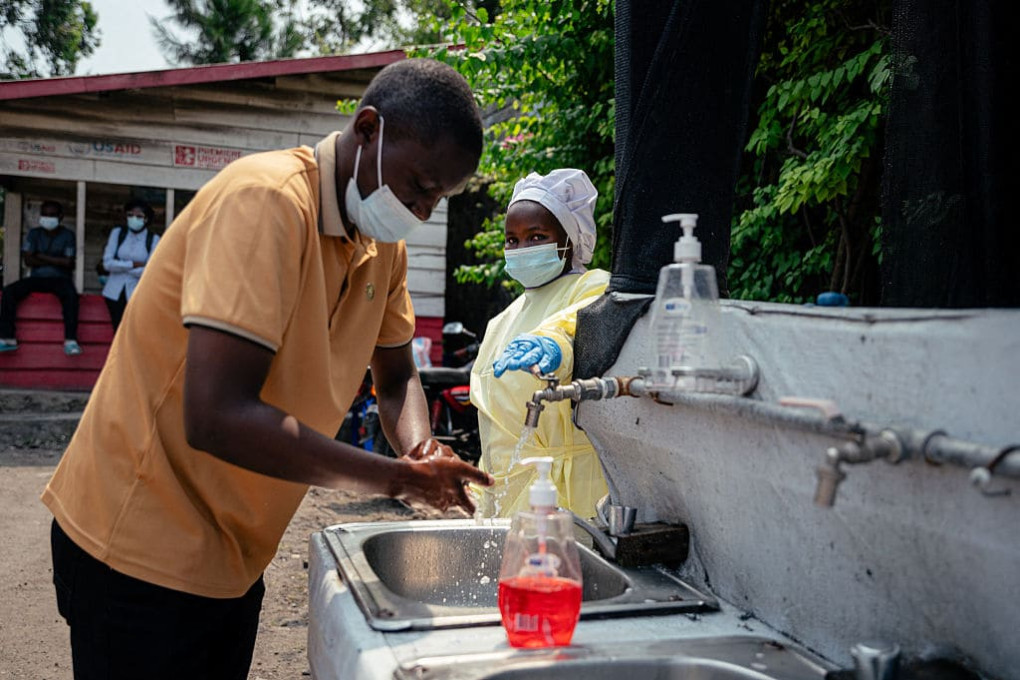
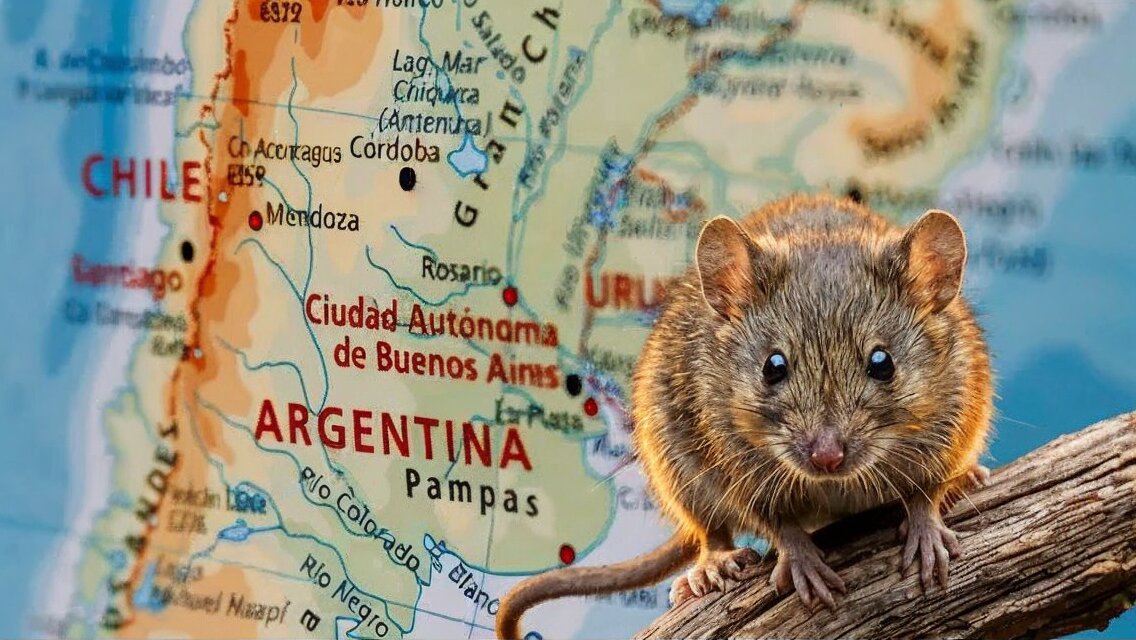
Could the Ebola outbreak unfolding right now in the Democratic Republic of Congo become the largest in history? That’s the question keeping epidemiologists awake at night, and it’s the one we want to answer with you today.
Welcome to FreeAstroScience.com, dear reader. We’re glad you’re here. I’m Gerd Dani, and together with our team we sift through the science so you don’t have to. This story matters because epidemics don’t respect borders, and what happens in a remote forest village can ripple across continents within weeks. Stay with us until the end. We’ll walk you through the numbers, the science, and the reasons we’re worried, but also the reasons we shouldn’t panic. Reading this through will give you a clearer picture than any headline could.
📋 Table of Contents
- ➤ What’s happening in Congo right now?
- ➤ Why does the early case count worry researchers?
- ➤ Were the initial Ebola numbers underestimated?
- ➤ How does this compare to the 2014 West Africa epidemic?
- ➤ Are we better prepared this time?
- ➤ What will determine how this ends?
- ➤ Final thoughts
What’s happening in Congo right now?
On May 15, the World Health Organization announced a fresh Ebola outbreak in the Democratic Republic of Congo, with some cases spilling into Uganda . The starting picture wasn’t pretty: 246 suspected cases, including 80 deaths.
Six days later, on May 21, things had moved fast. The Health Ministries of both African nations reported a provisional total of 575 suspected cases, of which only 51 had been confirmed in the lab, including 148 deaths.
Here’s a quick snapshot to help you visualise the jump:
| Date | Suspected Cases | Confirmed | Deaths |
|---|---|---|---|
| May 15, 2026 | 246 | — | 80 |
| May 21, 2026 | 575 | 51 | 148 |
The strain in play is Bundibugyo virus, one of six known species in the Ebolavirus genus.
Why does the early case count worry researchers?
Epidemiologists fear that what we’re seeing now is just the tip of the iceberg . The Bundibugyo virus likely spread quietly for at least a couple of months, blending into the noise of other zoonoses and infections that touch central Africa.
A few days ago, the suspected patient zero was a nurse infected on April 24. That picture has shifted. Patient zero is now identified as a person who died on April 20 in the DRC . Investigators also suspect a super-spreading event on May 5 — possibly a funeral — that pushed cases up sharply.
This kind of silent build-up isn’t unusual. The 2014–2016 West Africa epidemic, made public in March 2014, was eventually traced back to an 18-month-old child who had fallen ill almost three months earlier .
What sets off alarm bells today? The starting numbers themselves. We began with 246 suspected cases. Back in March 2014, Guinea reported only 49 suspected cases and 29 deaths at the same stage . That’s roughly five times more cases at the starting line.
The Bundibugyo strain in plain terms
Unlike the Zaire ebolavirus, against which we have approved vaccines and antibody treatments, the Bundibugyo strain doesn’t yet have specific licensed countermeasures . Its case fatality rate sits between 30% and 50%, according to data used by Imperial College researchers .
Were the initial Ebola numbers underestimated?
Probably yes. An analysis from the MRC Centre for Global Infectious Disease at Imperial College London suggests that, by May 17, the DRC could already have had between 400 and 800 cases — and values above 1,000 cases couldn’t be ruled out.
How did they reach that estimate? The team used two different approaches:
- Population movement modelling — tracing how people had moved across the affected provinces.
- Back-calculation from suspected deaths — combining death counts with the strain’s fatality rate (30–50%) and its incubation period .
We can express that back-calculation idea simply:
Estimated Cases ≈ Observed Deaths ÷ Case Fatality Rate
(adjusted for reporting lag and incubation period)
If you plug in 80 deaths divided by a 0.40 average fatality rate, you already get 200 cases just from the deceased side of the ledger — without counting people still in the incubation window or those with mild forms.
How does this compare to the 2014 West Africa epidemic?
Here’s where the story gets nuanced. The opening numbers of an epidemic only tell us part of the trajectory.
The 2014–2016 outbreak in Guinea, Liberia and Sierra Leone began with those modest 49 suspected cases and 29 deaths. It ended up infecting around 28,600 people and killing about 11,300. Devastating.
Today’s outbreak started more aggressively, but that doesn’t lock in a similar — or worse — final tally.
“It’s very worrying, but at this point there are no indications that this could lead to tens of thousands of infections,” said David Wohl, infectious disease specialist at the University of North Carolina at Chapel Hill, speaking to Nature. “We’re in a different situation, in some ways, compared to 2014, when it was completely unexpected.”
Are we better prepared this time?
Short answer: yes, in several ways.
- Institutional memory. Local experts who survived past Ebola events are still on the ground and can guide the response .
- Community awareness. The affected communities are more familiar with precautionary measures than they were a decade ago .
- Faster diagnostics. Lab confirmation pipelines are quicker now than in 2014.
- A vaccine ecosystem. Even if the Bundibugyo strain doesn’t have a perfectly matched vaccine, the platforms developed against Zaire ebolavirus give researchers a head start.
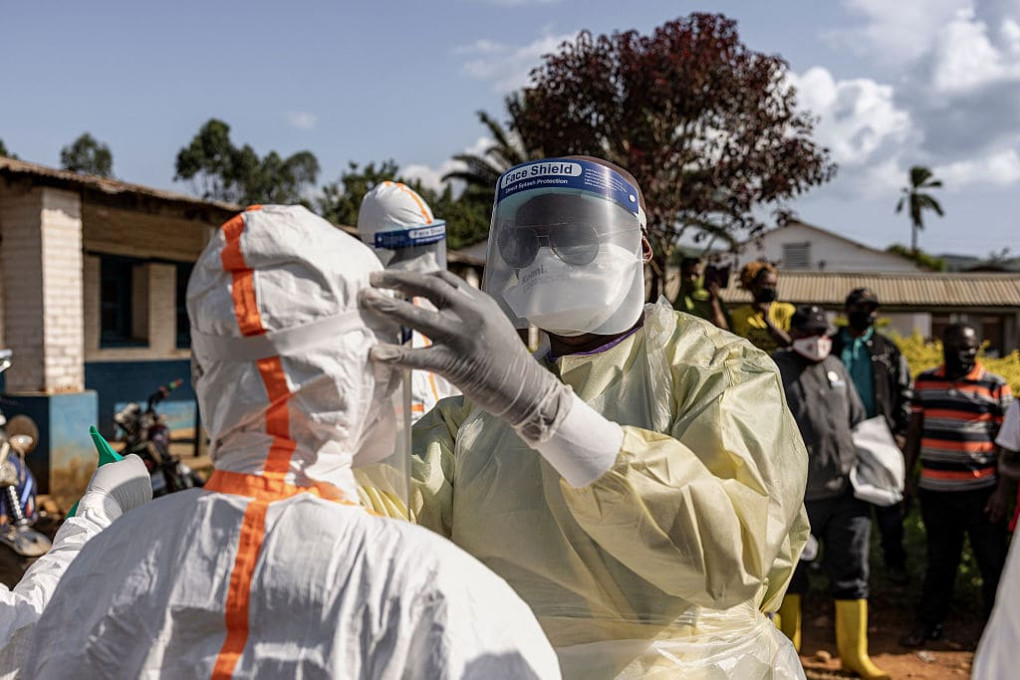
The honest caveat: Bundibugyo isn’t Zaire. The drugs and vaccines that worked best against the more famous strain don’t translate one-to-one . So clinical care and barrier measures still carry most of the load.
What will determine how this ends?
Three factors will shape the curve over the coming weeks:
🔍 Speed of detection
How quickly suspected cases are isolated.
🧬 Contact tracing
How thoroughly close contacts are followed.
🌍 Global solidarity
Whether the world responds fast — or looks away.
If those three pieces line up, the steep early curve might flatten and stabilise in the weeks ahead . If they don’t, we’ll be looking at much darker scenarios.
The growth rate of new cases — something we still can’t pin down precisely — will be another heavy variable in the next few weeks .
Final thoughts
Let’s pull this together. The 2026 Ebola outbreak in Congo started with numbers about five times higher than the 2014 West Africa event. Imperial College modellers think the real count by mid-May was already between 400 and 1,000+ cases, well above the official figures . The Bundibugyo strain at the centre of this outbreak doesn’t yet have a perfectly matched vaccine, and its fatality rate hovers at 30–50% .
And yet, this doesn’t mean catastrophe is inevitable. We’re better prepared than a decade ago. Communities know the drill. Local experts are mobilised. The future of this epidemic isn’t written — it depends on us, on our collective capacity to act fast and act together.
This article was written for you by FreeAstroScience.com, where we explain complex scientific principles in simple terms. We exist to remind you never to switch off your mind, never to stop questioning, because the sleep of reason breeds monsters — and outbreaks, much like injustices, thrive when we look away.
Come back to FreeAstroScience.com soon. There’s always more to learn, and we’re saving you a seat at the table.
— Gerd Dani, President of Free AstroScience
📚 References
- Intini, E. (May 22, 2026). L’attuale epidemia di Ebola in Congo diventerà la più grande di sempre? Focus.it. https://www.focus.it
- World Health Organization — Ebola Outbreak Updates. https://www.who.int/emergencies/disease-outbreak-news
- MRC Centre for Global Infectious Disease Analysis, Imperial College London. https://www.imperial.ac.uk/mrc-global-infectious-disease-analysis/