
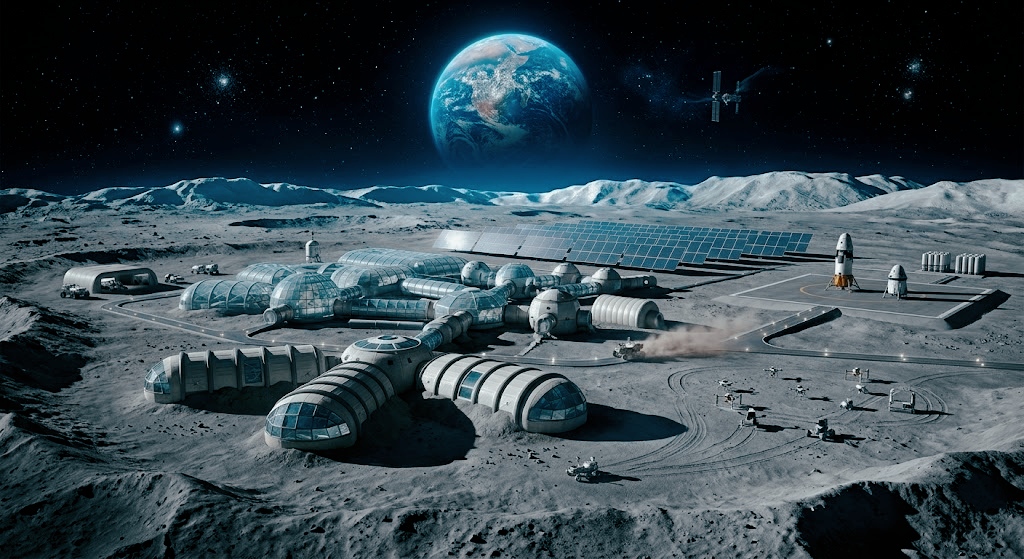
The lunar missions conducted under NASA’s Apollo program remain a monumental achievement in human history, establishing a standard that is challenging to surpass even decades later. As four astronauts prepare for humanity’s first journey toward the Moon in over half a century, comparisons between the historic Apollo missions and the contemporary Artemis program have become a central focus of scientific and public discourse. While Artemis draws significant inspiration from its predecessor, it represents a distinct evolution in space exploration strategy and societal representation.
Apollo and Artemis missions: trajectory and mission safety protocols
The initial human encounters with the lunar environment were characterized by the bold maneuvers of Apollo 8, which successfully entered a closed orbit around the Moon. In contrast, the upcoming Artemis II mission will prioritize a more conservative flight path to ensure crew safety. Instead of entering a full lunar orbit, the crew will utilize a free-return trajectory, effectively performing a gravitational slingshot maneuver around the Moon to propel the spacecraft back toward Earth. This strategic choice reflects a modern emphasis on risk mitigation during the inaugural crewed flight of a new deep-space vehicle.
A fundamental distinction between the two programs lies in the composition of the flight crews, which now more accurately reflects the diversity of contemporary society. While the Apollo era featured a demographic strictly limited by the social constraints of the 1960s, Artemis II includes a woman, a person of color, and a Canadian astronaut. This shift signifies a departure from the past and underscores NASA’s commitment to international cooperation and inclusive representation. As noted by crew member Christina Koch, the intention is not to replicate the exact conditions of the Apollo era but to forge a new path that honors that legacy while embracing the values of the present day.
The nomenclature of the new program is deeply symbolic, as Artemis is the twin sister of Apollo in Greek mythology, representing a continuation of the lunar lineage. NASA is currently targeting the first week of April for the launch, aiming to bridge the gap between the pioneering spirit of the mid-twentieth century and the sustainable exploration goals of the twenty-first. This mission serves as a critical test of the Space Launch System and the Orion spacecraft, laying the groundwork for a permanent human presence on the lunar surface and eventual journeys beyond.
A comparative analysis of the Apollo and Artemis lunar programs
The historical trajectory of NASA’s lunar ambitions reveals a stark contrast between the rapid escalation of the mid-twentieth century and the deliberate pacing of modern exploration. In a remarkably brief span of eight years, NASA transitioned from its first crewed spaceflight to the historic Apollo 11 moon landing in 1969, successfully meeting the ambitious deadline established by President John F. Kennedy. This feat continues to elicit profound admiration from contemporary astronauts, including Artemis II crew member Jeremy Hansen of the Canadian Space Agency, who noted that the efficiency and scale of the Apollo program remain staggering by modern standards.
In contrast to the swift momentum of the 1960s, the Artemis program has navigated decades of fluctuating priorities and debates regarding whether the Moon or Mars should serve as the primary objective. The Space Launch System (SLS) has conducted only a single uncrewed test flight to date, reflecting a more cautious developmental cycle. This perceived lack of urgency prompted NASA Administrator Jared Isaacman to implement a comprehensive restructuring of the program in February. By introducing an additional mission between the upcoming Artemis II flight and the eventual lunar landing—now rescheduled for Artemis IV in 2028—the agency aims to emulate the incremental testing successes that defined the Apollo era.
Under this revised framework, the Artemis III mission scheduled for next year will remain in Earth orbit, mirroring the mission profile of Apollo 9. Rather than attempting a lunar descent, the crew will focus on critical docking maneuvers between the Orion capsule and the lunar landers currently under development by private partners SpaceX and Blue Origin. This competitive environment between commercial entities has accelerated the development of landing technologies, as both firms strive to secure a primary role in the return to the lunar surface.
While the original space race was defined by the rivalry between the United States and the Soviet Union, the contemporary landscape features China as the principal competitor. China has already achieved a unique milestone by landing robotic probes on the far side of the Moon and is actively working toward a crewed landing near the lunar south pole by 2030. NASA is targeting the same polar region due to the presence of permanently shadowed craters believed to contain vast quantities of water ice.
This resource is considered essential for future deep-space exploration, as it could provide both life support and propellant for outbound missions. Administrator Isaacman remains steadfast in his commitment to reaching these strategic milestones ahead of international rivals to secure a victory in this second era of lunar competition.
The physical hardware of the two programs showcases significant engineering evolution, though the scale remains comparable. The Apollo-era Saturn V rockets stood 110 meters tall and utilized five first-stage engines, whereas the Artemis SLS measures 98 meters but generates superior liftoff thrust through a combination of four main engines and two solid rocket boosters. Logistically, while most Saturn V launches occurred at Launch Complex 39-A—now leased to SpaceX—the SLS will utilize the adjacent Pad 39-B for its missions.
However, the transition to the SLS has not been without technical hurdles. Unlike the Saturn V, which underwent two successful launches before carrying a crew, the SLS has only flown once. Developmental delays caused by hydrogen and helium leaks during testing have shifted the Artemis II launch target to April. Despite these modern challenges, the heart of mission operations remains in the same launch control facility. The social landscape of the control room has transformed significantly; whereas only one woman was present during the Apollo 11 liftoff, the Artemis program is now directed by Charlie Blackwell-Thompson, marking a new era of leadership in American spaceflight.
Mission dynamics and safety protocols
The legacy of Apollo 8 remains unparalleled in the annals of space exploration, marking the first instance in 1968 where humans reached the lunar vicinity. Commander Frank Borman famously advocated for a conservative flight plan, limiting the mission to ten lunar orbits to mitigate the profound risks associated with the journey. In a similar vein of caution, NASA has opted against placing the Orion capsule into a full lunar orbit during its crewed debut. The primary objective for Artemis II is the rigorous testing of life-support systems in a flight environment for the first time, prioritizing astronaut safety over orbital complexity.
A significant parallel exists between the eras of Apollo 8 and Artemis II, as both missions launched during periods of global uncertainty. NASA pilot Victor Glover has expressed the hope that the mission might provide a sense of collective inspiration for humanity. Operationally, the Artemis crew will spend one full day orbiting Earth to verify system integrity before transiting toward the Moon. The spacecraft is projected to travel approximately 8,000 kilometers beyond the lunar far side, surpassing the distance record established by the Apollo 13 mission in 1970.
To ensure a safe return, Artemis II will utilize a free-return trajectory, a “figure-eight” path dictated by the gravitational pull of the Moon and Earth. This maneuver requires minimal fuel and served as the critical safety mechanism that allowed the Apollo 13 crew to return home after their aborted lunar landing. Upon re-entry, the Artemis astronauts will conclude their journey with a parachute-assisted splashdown in the Pacific Ocean, maintaining a recovery tradition established during the mid-twentieth century.
While Apollo crews utilized bulky white pressure suits for both launch and re-entry due to extreme space constraints, the Artemis program benefits from the increased volume of the Orion capsule. Designed to accommodate four astronauts, Orion allows for specialized attire tailored to different mission phases. Commander Reid Wiseman and his team will wear custom-fit orange flight suits during launch and descent, which are capable of sustaining life for up to six days in the event of cabin depressurization. These modern suits include integrated hydration systems and waste management solutions to ensure survival during emergencies.
For the actual lunar surface operations of future missions, NASA has transitioned to a commercial model, partnering with Houston-based Axiom Space to develop next-generation white lunar suits. This contrast highlights the shift from the singular goals of the Apollo era—which focused on the geopolitical race to plant a flag—to a more sustainable and technologically diverse approach. Between 1969 and 1972, Apollo astronauts conducted six landings with stays lasting up to 75 hours; today, only five of the twenty-four individuals who journeyed to the Moon remain with us.
The Artemis program envisions a far more complex surface stay, with pairs of astronauts potentially spending nearly a week on the Moon. The logistical framework involves launching in the Orion capsule, transitioning to a specialized landing craft—such as SpaceX’s Starship or Blue Origin’s Blue Moon—while in lunar orbit, and later reuniting with Orion for the journey back to Earth. This architecture is designed to support long-term habitation rather than short-term sorties, serving as a foundational step toward the eventual exploration of Mars.
Administrator Jared Isaacman recently unveiled a vision for a lunar base that incorporates habitats, rovers, drones, and power stations, signaling a departure from the temporary camps of the past. Although the initial outposts will be functional rather than futuristic “glass-domed cities,” the commitment is substantial, with NASA planning a 20 billion dollar investment over the next seven years. This strategy aims to foster a stable human presence on the lunar surface, transforming the Moon into a gateway for the next frontier of deep-space discovery.
For more information, please visit the official NASA website.




Hello, its fastidious paragraph on the topic of
media print, we all know media is a fantastic source of data.