
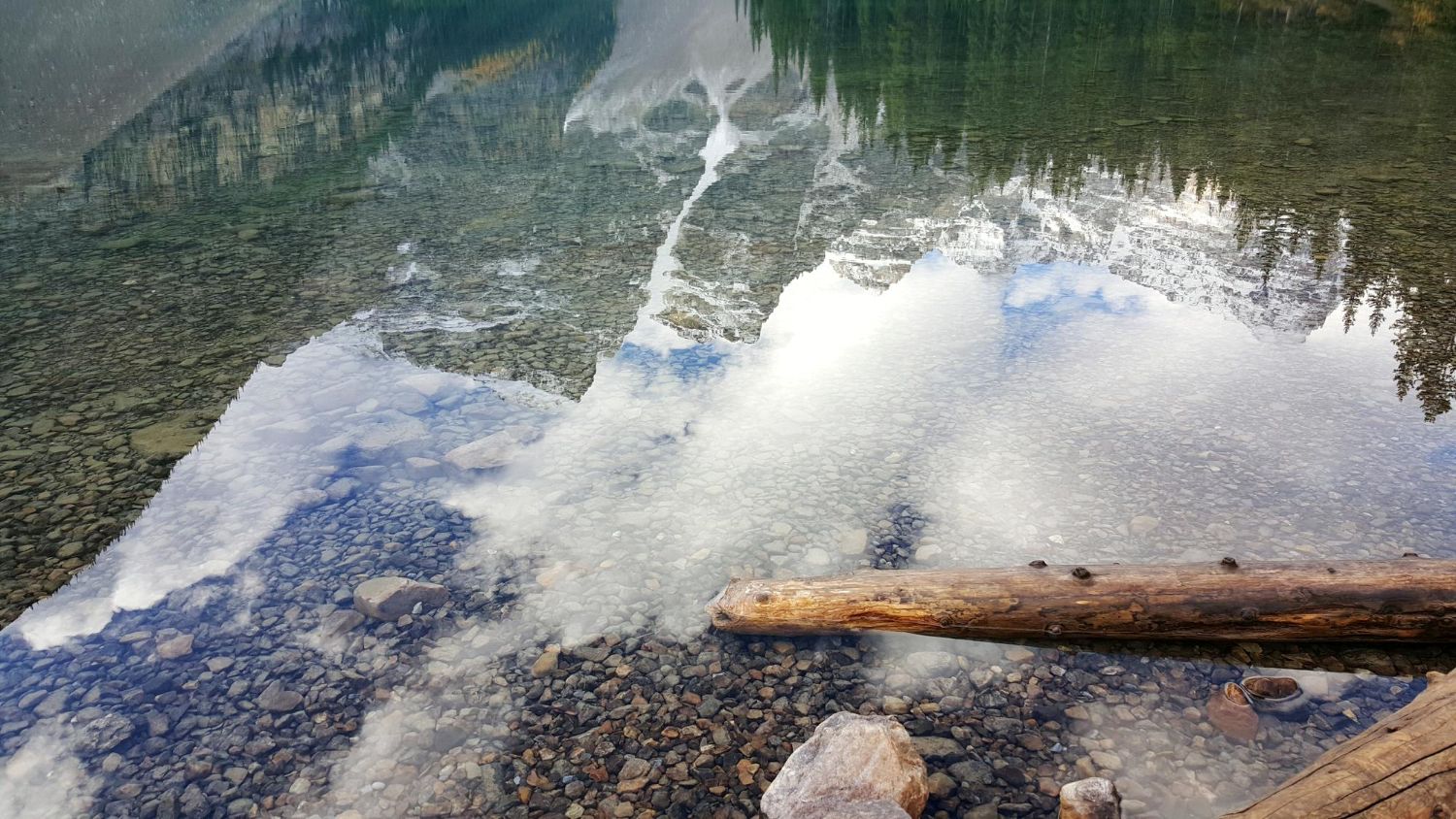
When most people think of a lake, they’re thinking about twinkling water, fish swimming here and there, and the distant croaks of frogs or birds along the banks. But this societal function isn’t as obvious as lakes routinely sink high concentrations of carbon dioxide before the water reaches the oceans: they are natural filters, purging excess nitrogen from the water.
Now, an international team led by the University of Basel and Eawag has shown that this purification is delicate and that climate change threatens to disrupt it with effects down to the ocean.
Nitrogen, for example, is indispensable to life but also a potential toxin. In small doses, it sustains life; in large amounts, it suffocates aquatic ecosystems.
Microorganisms in lakes carry out an important process called denitrification, in which nitrogen compounds such as nitrate and ammonia are converted into dinitrogen gas (N₂), which is harmlessly released to the atmosphere. About a fifth of all natural nitrogen removal in inland waters is attributed to this process.
Now, researchers writing in Nature Microbiology say this purification function is dangerously sensitive to elevated temperatures. Nitrate removal by lakes varies substantially over the seasonal cycle, with approximately 50% of total annual nitrogen removal occurring in just the summer months. That’s impacted by climate change,’ says lead author Cameron Callbeck.
The study focused on Lake Baldegg, a small, 5.3 km² lake located in the Lucerne Lake District of Switzerland, which serves as a model for many temperate-region lakes. At least once a year, its waters undergo complete mixing: oxygenated surface water overflows into the intermediate layer, and cold but anoxic depths.
This is because denitrification also ramps up in winter, almost 50 percent more than during summer, and contributes significantly. However, this essential period is at risk of becoming shorter due to climate change. During severe warming, the winter mixing phase could shrink by 27 days (the amount of nitrogen removed declines proportionately).
Yet it is uncertain why denitrification happened, especially in winter, Callbeck adds.
Lakes play a filtering role, and when that falters, nitrogen does not vanish; it continues on downstream. Excess nitrogen flows through rivers to the sea, where it causes toxic algal blooms, oxygen-depleted “dead zones,” and even overstresses coastal ecosystems.
Senior author Prof. Dr. Moritz Lehmann comments: “The study shows that even subtle shifts in the seasonal mixing rhythm of lakes can have significant effects on nitrogen cycling at the lake scale, and cumulatively even on the global nitrogen cycle.”
The researchers used two complementary methods to reveal this subtle process. They added nitrogen molecules with the rare ¹⁵N isotope to sediment samples and counted how much became nitrogen gas. At the same time, they built a detailed nitrogen budget for the lake.
The two methods converged, reinforcing the evidence for winter as a denitrification hotspot. The isotopic signatures and the total balance calculations from both the observations and the model agreed with each other. That made reliable predictions of lake nitrogen removal possible and showed that indeed the winter season is a denitrification hotspot,” Callbeck says.
The study went beyond nitrogen alone. The team discovered a microbial partnership within the sediments. Some bacteria break down chitin, a tough molecule derived from the shells of zooplankton and rotting algae, which settles on the lake bottom. This degradation releases compounds that feed other microbes, which in turn fuel nitrogen-eating microbes that mediate denitrification. Basically, the transformation of the chitin provides the energy that supports nitrogen filtration in this lake.
Now, the researchers plan to see if these same microbial processes also affect nitrous oxide production, a potent greenhouse gas linked to denitrification. If confirmed, lakes could have a second new role in the climate system that has gone unrecognized to date -fostering links between their winter denitrification pulse and atmospheric chemistry as well as directly through water quality.