Why Did PSG-Bayern End 5-4? The Science Behind Football’s Wildest Night
Ever watched a match so insane you questioned whether the world’s best defenders had suddenly forgotten how to play?
Welcome, dear reader. We’re thrilled you stopped by FreeAstroScience.com, where we translate complex scientific ideas into words you can actually use at the dinner table. Last night, at the Parc des Princes, something happened that we couldn’t just scroll past. Paris Saint-Germain beat Bayern Munich 5-4 in a Champions League semifinal . Nine goals. Elite defenses in rubble. Our inner scientist screamed: why?
Stick with us to the end. We promise you’ll walk away understanding not just a football result, but something deep about how your own brain handles pressure.
📑 Table of Contents
- What Actually Happened at Parc des Princes?
- Can a Defender’s Brain Really Get Tired?
- What Is “Momentum” and Why Does It Flip Matches?
- How Does the Yerkes-Dodson Law Explain the Chaos?
- Why Do Pros Suddenly Play Like Amateurs?
- Can Big Data Ever Predict This?
- Final Thoughts
What Actually Happened at Parc des Princes?
On April 28, 2026, PSG and Bayern Munich played a semifinal that almost broke the Champions League record books . A 5-4 score had shown up only once in more than 30 years of modern Champions League history . That’s an event practically daring probability itself.
A goal every ten minutes. In a semifinal. Where tension usually glues defenses shut.
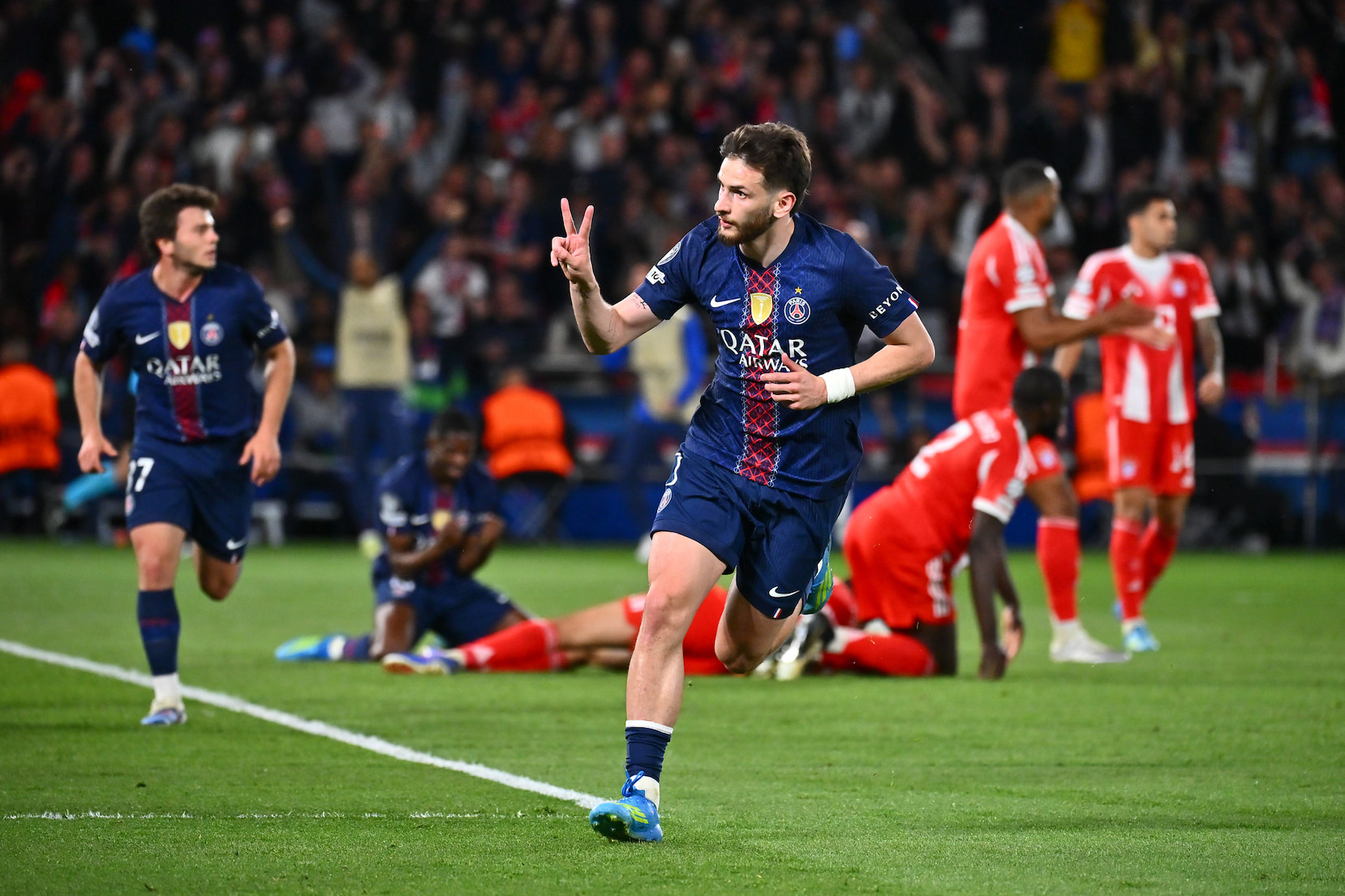
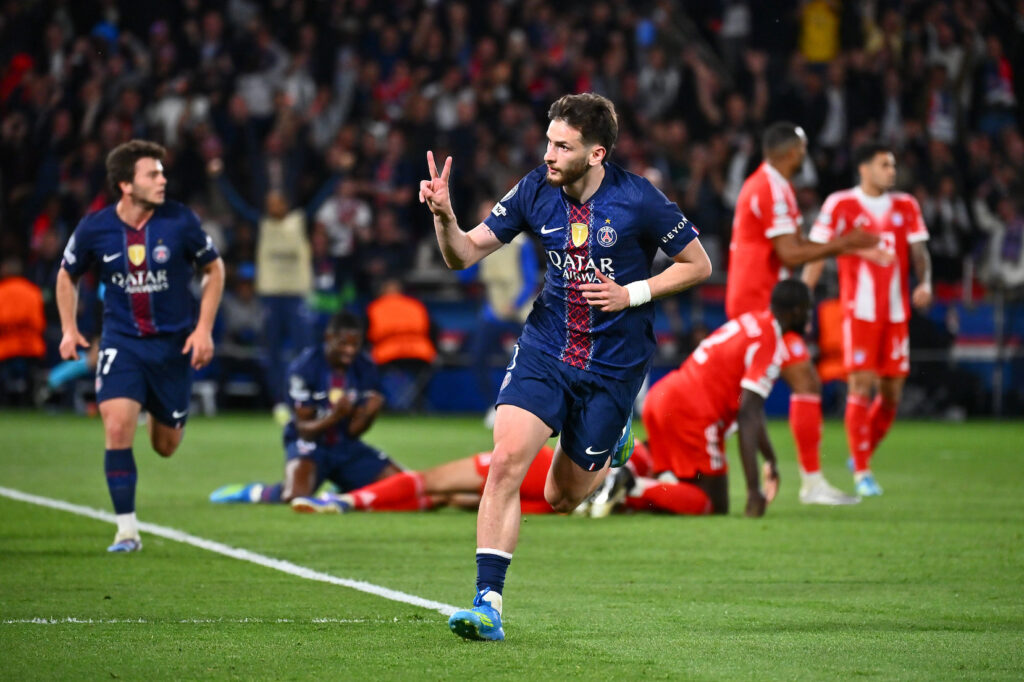
Khvicha Kvaratskhelia scored PSG’s fourth goal in a night where both teams looked like they’d lost their tactical manual . So we have to ask: when world-class structure collapses like this, where do we look for answers? Our bet? Beyond the pitch. Inside the athlete’s skull.
Can a Defender’s Brain Really Get Tired?
Yes. And science has a name for it: decision fatigue.
In a normal match, an elite defender leans on consolidated motor patterns and decision-making schemes . Think of it as muscle memory plus brain memory working together. But when the pace goes wild and the score changes every few minutes, the brain can slip into what researchers call cognitive overload .
A 2023 study published in Psychology of Sport and Exercise showed how mental fatigue shrinks our ability to hold back instinctive responses in favor of smarter tactical ones . Under extreme pressure, a defender stops reading the game and starts reacting impulsively to the ball . They commit positioning errors they’d never make with a cool head.
That’s not poor quality. That’s biology yelling enough.
What Is “Momentum” and Why Does It Flip Matches?
You’ve heard commentators talk about inertia or momentum in a match . It sounds like superstition, but there’s real science behind it.
Momentum describes a two-way change (cognitive plus emotional) that shifts performance after a trigger event, like a goal or a big save . After PSG went up 5-2, Bayern scored twice in three minutes . Not random. Not luck.
How Collective Self-Efficacy Flips a Game
A 2021 study pointed to changes in collective self-efficacy . A positive event acts as a catalyst:
- It reduces perceived effort in the scoring team
- It raises physiological stress in the conceding team
- It hurts coordination and communication
The result? Players focus only on the ball and lose track of runners cutting in behind them . That’s exactly how Bayern allowed the decisive 5-4 to happen, with players fixated on the ball while an attacker slipped through .
How Does the Yerkes-Dodson Law Explain the Chaos?
Here’s where psychology meets match night poetry. The Yerkes-Dodson law describes how performance changes with arousal (meaning physiological and emotional activation) .
Performance climbs as arousal rises, but only up to a critical point. Past that peak, quality crashes .
| Arousal Level | Mental State | Performance |
|---|---|---|
| Very Low | Boredom, disinterest | Poor |
| Moderate | Engaged, alert | Rising |
| Optimal (“Flow”) | Peak focus, top efficiency | Maximum |
| High | Pressure, tension | Dropping |
| Very High | Stress, panic | Collapse |
The curve looks like an inverted U. And here’s the kicker: for hard tasks (think: defending a one-on-one in a Champions League semifinal), the optimal arousal level is lower . Simple tasks tolerate more activation. Complex ones don’t.
The Mathematical Sketch
P = f(A) where dP/dA > 0 for A < Aopt and dP/dA < 0 for A > Aopt
Performance (P) rises with arousal (A) until an optimum (Aopt), then falls.
Last night’s emotional rollercoaster likely pushed the players’ arousal past that peak . And that’s when things went sideways.
Why Do Pros Suddenly Play Like Amateurs?
Sports psychologists call it choking under pressure . A sort of nervous system tilt.
Too much adrenaline starts messing with fine motor coordination and peripheral vision . The result is a paradox: extraordinary athletes commit beginner errors because their nervous system has flipped into emergency mode .
Imagine trying to thread a needle while someone screams in your ear. Your fingers just won’t cooperate. Defenders marking runners in a 5-4 thriller face the same problem, except on a bigger scale with 60,000 people screaming.
Can Big Data Ever Predict This?
Here’s the truth we love about football: it isn’t an equation .
Algorithms keep trying to forecast every variable, from transfer markets to match outcomes . Yet human biology stays the ultimate wildcard . The Parc des Princes match wasn’t just football. It was a live experiment in nervous system resilience under elite stress .
Why This Matters Beyond Sport
We’re not just talking about goals and trophies. The same mechanisms apply to:
- Students during high-stakes exams
- Surgeons in long operations
- Pilots managing emergencies
- You, when you present to your boss on a Monday morning
Your brain obeys the same laws as Kvaratskhelia’s. Understanding arousal, momentum, and decision fatigue isn’t just football trivia. It’s a survival manual for the modern mind.
Final Thoughts
We’ve walked through one wild night in Paris and found three scientific pillars behind the mess: decision fatigue weakening tactical control, momentum shifts rewiring team cohesion, and the Yerkes-Dodson curve pushing arousal beyond its sweet spot. Add choking under pressure, and the 5-4 stops looking like a freak accident. It starts looking like physiology doing exactly what physiology does.
Football reminds us of something we sometimes forget: no matter how polished the training, how rich the club, or how advanced the analytics, the human nervous system keeps the last word. That’s beautiful. That’s terrifying. That’s why we still watch.
This article was written specifically for you by FreeAstroScience.com, where we break down complex scientific principles into plain language anyone can grasp. Our mission is to help you never switch off your mind, because as Goya warned us, the sleep of reason breeds monsters. Stay curious, stay sharp, and come back soon. Your next question deserves an answer worth reading.
— Gerd Dani, President of Free AstroScience
📚 References
- Graziosi, R. (2026, April 29). PSG-Bayern 5-4: ma cosa succede al cervello dei campioni quando la partita “impazzisce”? Focus.it. Retrieved from https://www.focus.it
- Psychology of Sport and Exercise (2023). Study on mental fatigue and tactical inhibition (as cited in Focus.it).
- Research on collective self-efficacy in team sports (2021), as referenced in the Focus.it article.
- Yerkes, R. M., & Dodson, J. D. (1908). The relation of strength of stimulus to rapidity of habit-formation. Journal of Comparative Neurology and Psychology, 18, 459–482.