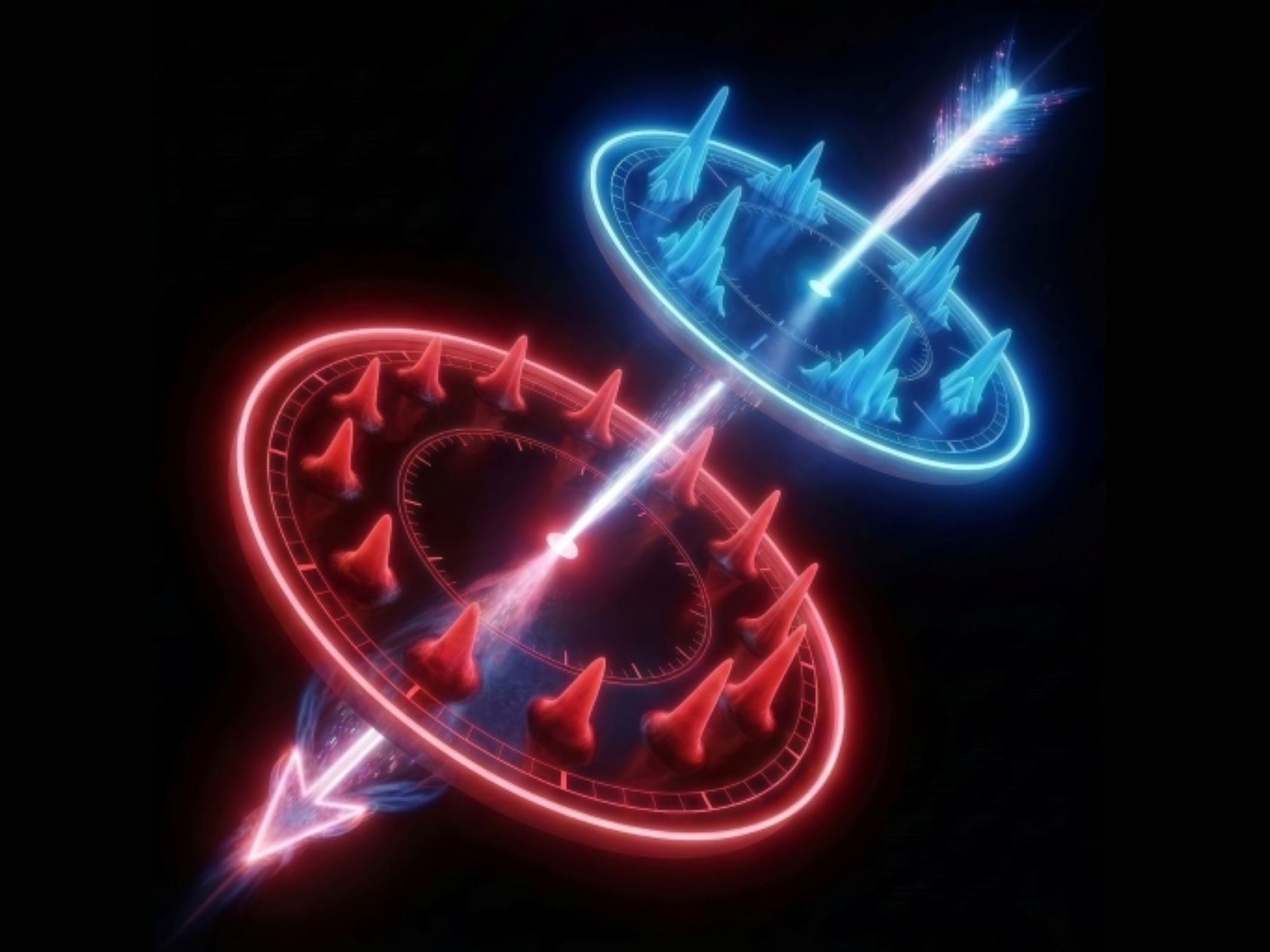
What if measuring a particle here could instantly decide the fate of another, light-years away? Would you believe it? Welcome, friends, to FreeAstroScience.com—where we turn the wildest corners of physics into plain English, so you never have to turn off your mind. After all, the sleep of reason breeds monsters. Stick with us to the end, and you’ll see how a single thought experiment became the backbone of quantum technology—and why the universe is even weirder than Einstein feared.
Quantum Entanglement and the EPR Paradox: When Physics Dared to Question Reality
1. How Did the EPR Paradox Begin?
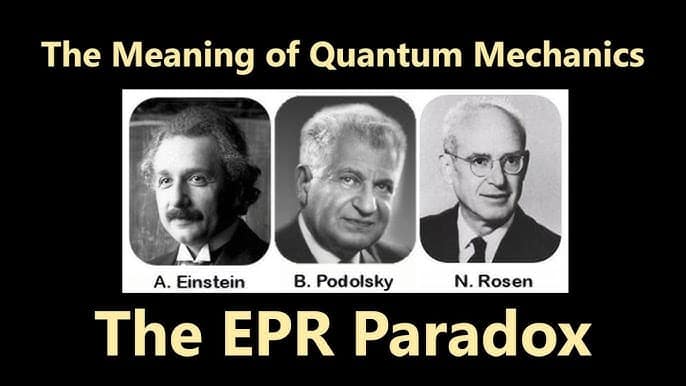
Let’s rewind to May 15, 1935. Three physicists—Albert Einstein, Boris Podolsky, and Nathan Rosen—published a paper in Physical Review (Vol. 47, pp. 777–780) that would haunt quantum physics for decades. Their goal? To show that quantum mechanics, as it stood, couldn’t possibly be the whole story. The Copenhagen interpretation, led by Niels Bohr and Werner Heisenberg, claimed quantum mechanics was complete. It said that particles don’t have definite properties until we measure them.
Einstein and his colleagues weren’t buying it. They believed in local realism: the idea that physical properties exist independently of observation (realism), and that nothing—no influence, no signal—can travel faster than light (locality). The EPR paper set out to challenge these principles. If quantum mechanics couldn’t describe all “elements of physical reality,” then it must be incomplete. Their key conclusion?
“One is thus led to conclude that the description of reality as given by a wave function is not complete.”
2. What Is Quantum Entanglement, Really?
Here’s the heart of the EPR thought experiment. Imagine two particles—let’s call them A and B. They interact, become entangled, and then fly apart. Now, if we measure a property of particle A (say, its spin or position), we instantly know the corresponding property of particle B, no matter how far apart they are.
The EPR team introduced a simple but powerful rule, now called the EPR Criterion of Reality:
“If, without in any way disturbing a system, we can predict with certainty… the value of a physical quantity, then there exists an element of physical reality corresponding to this physical quantity.”
The paradox? Quantum mechanics says the property wasn’t decided until the measurement happened. EPR argued it must have existed all along. This clash sits at the core of quantum entanglement and the debate over the completeness of quantum mechanics.
3. Why Did Einstein Call It “Spooky Action at a Distance”?
Einstein just couldn’t accept this. In a letter to Max Born dated March 3, 1947, he wrote:
“I cannot seriously believe in [quantum mechanics] because the theory cannot be reconciled with the idea that physics should represent a reality in time and space, free from spooky action at a distance.”
For Einstein, this was a direct clash with his theory of special relativity, which says nothing can travel faster than light. The EPR paradox forced a choice:
Accept quantum mechanics: Information travels instantly (violating locality).
Accept relativity: Quantum mechanics is incomplete, needing local “hidden variables”.
4. How Did Bohr Strike Back?
Niels Bohr didn’t let the challenge go unanswered. In his 1935 reply (Physical Review, Vol. 48, pp. 696–702), Bohr argued that once two particles are entangled, they form a single, indivisible system—even if they’re light-years apart. He said the EPR criterion is ambiguous—”without disturbing” is not well-defined in the quantum world.
Measuring one part, he said, doesn’t physically disturb the other. Instead, it changes the “conditions which define the possible types of predictions” about the system. Bohr insisted that classical ideas of reality and locality just don’t fit the quantum world. For him, quantum mechanics was complete—if you accepted its strange rules.
“The state of the measuring device and the state of the object cannot be separated from each other during a measurement but they form a dynamical whole.”
The debate stayed philosophical for nearly 30 years. No experiment could settle it—yet.
5. What Did Bell’s Theorem Prove?
In 1964, John Stewart Bell published a paper that changed everything: “On the Einstein-Podolsky-Rosen Paradox” (Physics, Vol. 1, p. 195). Bell proved mathematically that no local hidden-variable theory can reproduce all the predictions of quantum mechanics. He introduced Bell inequalities—statistical limits that any local hidden-variable theory must obey.
The most famous is the CHSH inequality, introduced in 1969 by Clauser, Horne, Shimony, and Holt. Here’s how it looks:
CHSH Formula:
S = E(a, b) + E(a, b') + E(a', b) - E(a', b')
|S| ≤ 2 (classical)
|S| ≤ 2√2 (quantum)
Model
CHSH Bound (|S|)
Local Hidden Variables
2
Quantum Mechanics (Tsirelson’s Bound)
2√2 ≈ 2.828
Bell’s own words say it best:
“If [a hidden-variable theory] is local it will not agree with quantum mechanics, and if it agrees with quantum mechanics it will not be local.”
Bell’s theorem turned a philosophical debate into a testable question. Now, it was up to experiment to decide.
6. How Did Aspect Test the Universe?
The real fireworks started in the early 1980s. Alain Aspect and his team at the Institut d’Optique in Orsay, France, ran a series of experiments that put Bell’s inequalities to the test. They used photon pairs created by exciting calcium atoms with a krypton laser. The photons traveled to polarizers placed meters apart.
Experiment
Year
Result
Significance
1st
1981
δexp = 5.72×10⁻² ± 0.2×10⁻²
Violation >13σ
2nd
1981
S = 2.697 ± 0.015
Strongest violation to date
3rd
1982
S = 0.101 ± 0.020
5σ violation, time-varying analyzers
The third experiment was especially clever: the polarizer settings were switched while the photons were already in flight, closing the “locality loophole.” The results? Quantum mechanics won, hands down. The violations matched quantum predictions, with statistical significance up to 242 standard deviations.
7. From Lab to Nobel: What Happened After Aspect?
The story didn’t end in the 1980s. In 1972, John Clauser and Stuart Freedman ran the first experimental test of Bell’s inequality—and found quantum mechanics was right. Fast forward to 2015: scientists finally closed all the loopholes in Bell tests. Here’s how the numbers stack up:
Experiment
System/Location
S Value (Measured)
Hensen et al.
NV centers in diamond, Delft (1.3 km apart)
S = 2.42 ± 0.20
Giustina et al.
Entangled photons, Vienna
S = 2.419 ± 0.015
Shalm et al.
Entangled photons, Boulder
S = 2.38 ± 0.14
In 2022, the Nobel Prize in Physics went to Alain Aspect, John F. Clauser, and Anton Zeilinger “for experiments with entangled photons, establishing the violation of Bell inequalities and pioneering quantum information science.” Every loophole closed, quantum mechanics confirmed every time.
8. What Does Quantum Non-Locality Actually Mean?
So, what’s the upshot? Quantum non-locality means that entangled particles show correlations that can’t be explained by any local hidden variable theory. But—and this is key—it doesn’t let us send messages faster than light. The measurement results are random. To compare them, we still need good old-fashioned, slower-than-light communication.
The universe is non-local, but causality and special relativity are safe. No paradoxical time machines here—just a deeper mystery about how reality knits itself together.
9. What Did the EPR Paradox Teach Us?
What started as a philosophical puzzle now powers real technology. Quantum entanglement is the engine behind quantum computing, where qubits in entangled states can solve problems that would take classical computers eons. Quantum Key Distribution (QKD) uses entanglement to create unbreakable cryptography—any eavesdropper instantly reveals themselves by disturbing the entangled state.
Quantum teleportation, once science fiction, is now a lab reality. In 2017, China’s Micius satellite distributed entangled photons over 1,200 kilometers, smashing distance records and paving the way for a quantum internet.
The EPR paradox didn’t just survive the test of time—it became the foundation for the next generation of technology. The universe’s “spooky” side is now our greatest asset.
Conclusion: What Is Reality, Really?
We’ve traveled from Einstein’s 1935 challenge, through Bell’s mathematical proof, to Aspect’s laboratory triumphs and the dawn of quantum technology. The EPR paradox didn’t break quantum mechanics—it made it stronger. Nature is non-local, and that’s not a bug. It’s a feature we’re learning to use.
So, what is “reality” at the quantum level? It’s stranger, richer, and more connected than we ever imagined. Keep your mind awake—don’t let the sleep of reason breed monsters. Come back to FreeAstroScience.com, where we turn the weirdest science into your next “aha!” moment.
Hensen, B., et al. (2015). Loophole-free Bell inequality violation using electron spins separated by 1.3 kilometres. Nature, 526, 682–686. https://www.nature.com/articles/nature15759