No Civilisation Deserves to Be Erased
When a leader threatens annihilation, we all lose something irreplaceable
Words can level cities before bombs ever fall.
That’s the terrifying truth we’re living through right now. As I write this from Rimini on 7 April 2026, the news cycle is dominated by escalating threats against Iran — a nation with 27 centuries of unbroken history, art, science, and human achievement. Donald Trump has once again wielded the language of total destruction, and the Pope himself has declared that “Trump’s threat against Iran is not acceptable”.
I’m Gerd Dani, and I run FreeAstroScience. I study the cosmos for a living. From my wheelchair, I’ve spent years looking at the universe through the lens of physics and astronomy, and if there’s one thing the stars teach you, it’s perspective. No single point of light is more important than another. No civilisation is superior to any other.
And no leader — none — has the moral authority to threaten the erasure of one.

The Recklessness of Annihilation Language
This isn’t the first time Trump has spoken in the grammar of obliteration. At the United Nations General Assembly, his address was “filled with” what many called bluster, including the threat to “totally destroy” North Korea. That language shocked diplomats. It drew gasps in the hall. And it set a precedent — one that’s now being extended toward Iran.
His words “aren’t just embarrassing; they’re corrosive. They don’t merely reflect his ignorance; they redefine” what’s acceptable in international discourse. When a sitting president normalises the vocabulary of civilisational annihilation, the damage is done long before any missile is launched.
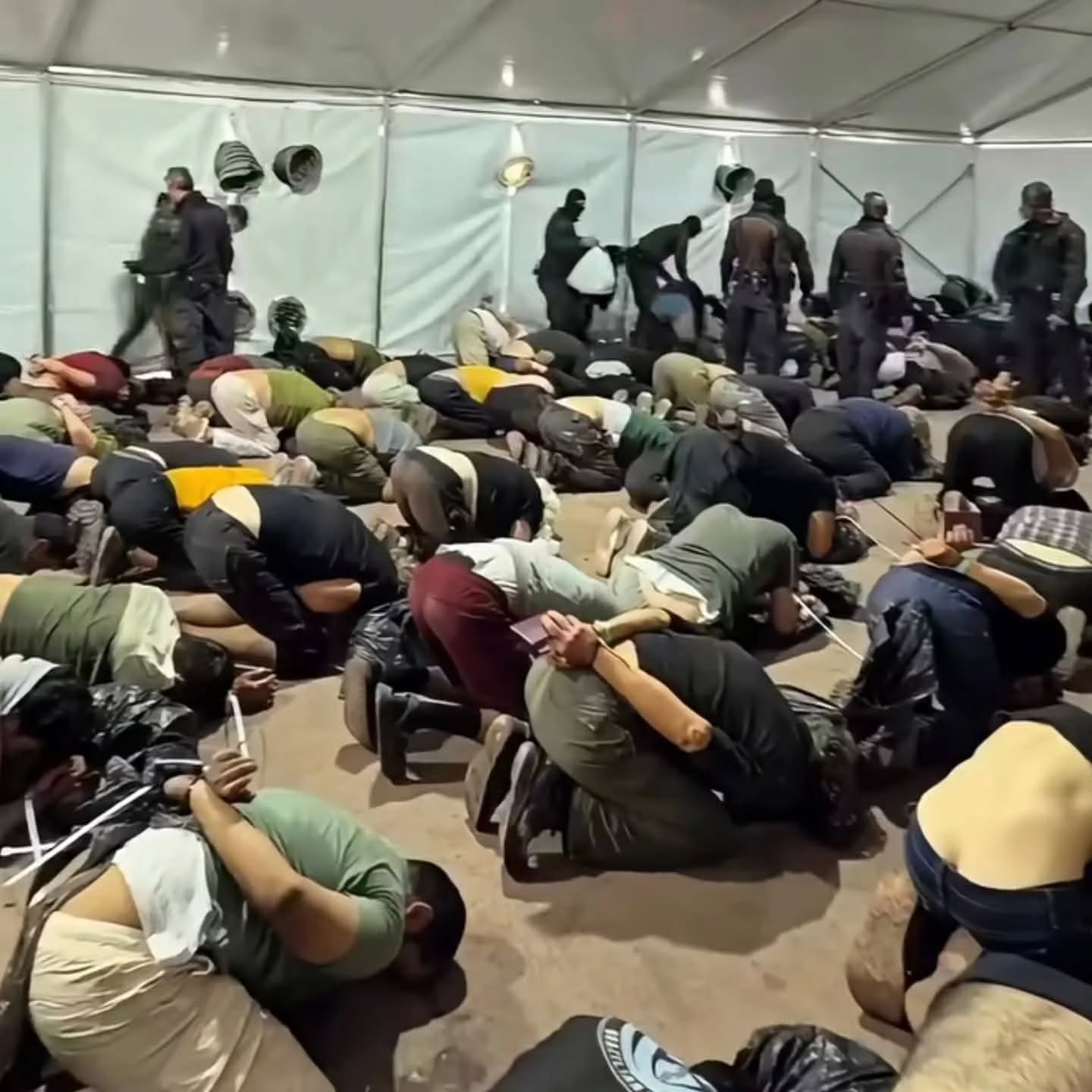
Iran has officially brushed off these threats . But brushing off a threat and being safe from it are two very different things. CNN reports that Israel has approved an updated list of Iranian energy and infrastructure targets in case diplomatic negotiations fail. Civilians — mothers, students, poets, engineers — sit in the crosshairs of geopolitical chess.
Italy’s own government has stated plainly: “Civilians cannot pay for the crimes of a regime”.
They’re right. And that sentence should be carved into the walls of every parliament on Earth.
27 Centuries Don’t Vanish Quietly
Let me put something into perspective — and I’ll simplify this for clarity, because the weight of history deserves to be felt, not just studied.
Iran’s civilisation stretches back to roughly 700 BCE with the Achaemenid Empire. That’s the empire of Cyrus the Great, who authored what many scholars consider the first declaration of human rights — the Cyrus Cylinder. While much of Europe was still in tribal conflict, Persians were building postal systems, codifying laws, and constructing gardens so beautiful that the very word “paradise” comes from the Old Persian pairidaēza.
Persian astronomers mapped the heavens centuries before Galileo picked up a telescope. The polymath Omar Khayyam reformed the calendar with a precision that rivals our modern Gregorian system. Avicenna (Ibn Sina) wrote The Canon of Medicine, a text that European universities used for over 500 years. Persian poetry — Rumi, Hafez, Saadi — still echoes in bookshops from Bologna to Brooklyn.
You don’t threaten to destroy that. You study it. You celebrate it. You learn from it.
No Civilisation Is Superior
Here’s where I get personal — because this isn’t abstract for me.
I was born in Albania in 1986. My family emigrated to Italy in 1991 so I could receive medical treatment for dystonia, a movement disorder that’s shaped every day of my life. I’ve had a Deep Brain Stimulation implant put in and later removed. I’ve been through surgeries that left me wondering if I’d ever think clearly again.
And through all of it, what saved me wasn’t one culture. It was many.
Albanian resilience taught me to endure. Italian generosity gave me a home. My Erasmus semester at Sabancı University in Istanbul showed me the breathtaking overlap between Eastern and Western thought. My physics degree from Milan and my astronomy studies in Bologna gave me the tools to see the universe as it actually is — indifferent to borders.
The idea that one civilisation is “better” than another is not just morally bankrupt. It’s scientifically illiterate. Cultures are ecosystems. Destroy one, and you impoverish the whole species.
The Danger of a Leader “With No Concept of History”
One observer described the core problem with devastating accuracy: “The second danger in his being our national leader” is having “no concept of history” . That’s not a partisan jab. It’s a diagnosis.
When you don’t know history, you don’t understand what you’re threatening to erase. You see a country on a map, not a living, breathing civilisation. You see a regime, not 90 million human beings who cook saffron rice, recite poetry at dinner, and teach their children mathematics with a pride that stretches back millennia.
Ignorance doesn’t excuse destruction. It accelerates it.
Science Demands We Do Better
At FreeAstroScience, we’ve built a community of tens of thousands of people who believe in one simple idea: science and culture are tools for human development, not weapons of division. Every time I post about a neutron star or a black hole merger, I’m reminded that the universe doesn’t care about your passport.
Light from a Persian observatory and light from a European one obey the same laws of physics. The atoms in an Iranian child’s body are identical to those in an American senator’s. This isn’t poetry — it’s particle physics.
So when someone threatens to bomb a civilisation into rubble, they’re not just committing a political act. They’re committing an act against human knowledge itself. Libraries burn. Observatories crumble. Generations of accumulated wisdom vanish in the heat of a single explosion.
We’ve seen it before. Baghdad’s House of Wisdom. The Library of Alexandria. The destruction of Palmyra. Every time, humanity lost something it never got back.
What Can We Actually Do?
I don’t have a military strategy. I don’t have a diplomatic back channel. What I have is a voice — amplified by a wheelchair, a degree in physics, and a stubborn refusal to stay quiet.
Talk about Iran’s culture. Read Rumi tonight. Look up the Nasir al-Mulk Mosque and let the stained glass take your breath away. Learn that algebra — the word itself — comes from the Arabic al-jabr, refined and transmitted through Persian scholarship. Share these facts. Make them impossible to ignore.
Refuse the narrative of superiority. Every time someone frames this conflict as “civilised world vs. barbaric regime,” push back. Regimes are not peoples. Governments are not civilisations. The distinction matters — it’s the difference between targeted diplomacy and collective punishment.
Support science and education as bridges. When I founded FreeAstroScience, I didn’t ask followers for their nationality. I asked for their curiosity. That’s the only passport that matters in the pursuit of knowledge.
Never Give Up on Humanity
I’ve spent my life hearing people tell me what I can’t do. Can’t walk. Can’t travel alone. Can’t run a science platform from a wheelchair. Every single time, I’ve answered the same way: never give up.
That philosophy isn’t just personal. It’s civilisational.
Iran’s people have survived invasions by Alexander the Great, the Mongols, the Arabs, the British, and decades of sanctions. They’re still here. Still writing poetry. Still doing mathematics. Still raising families under impossible pressure.
Threatening to destroy them isn’t strength. It’s the loudest possible admission of intellectual and moral failure.
The stars don’t care who wins an election. But we should care deeply, urgently, and without apology about what kind of species we choose to be. One that builds observatories, or one that bombs them.
I know which side I’m on.
Gerd Dani is the founder and president of FreeAstroScience, a science and cultural group. He holds a degree in Astronomy from the University of Bologna and a Master’s in Physics from the University of Milan. He writes from Rimini, Italy.