
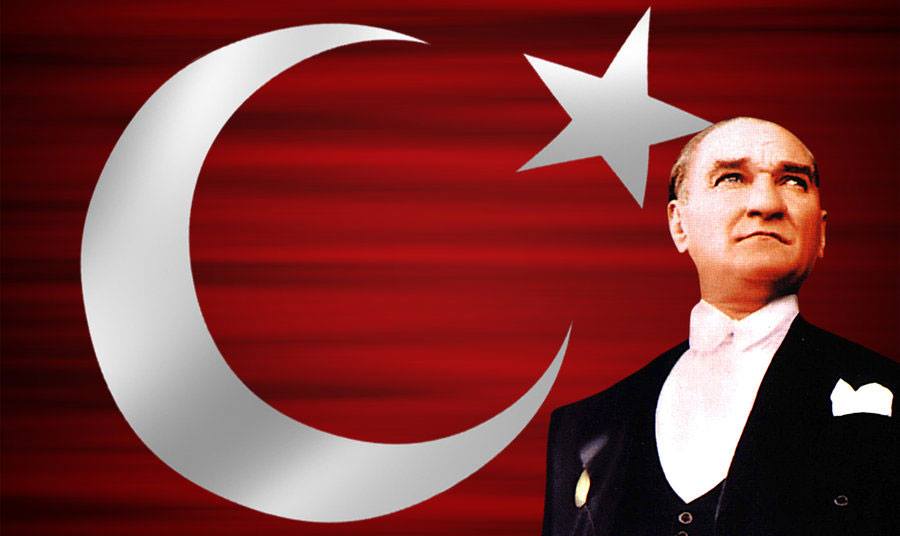
What does it take to tear down a 600-year-old empire and build a modern nation from its ashes — in just 15 years? Welcome to FreeAstroScience.com, where we believe that history, like science, is best understood when we keep our minds wide awake. Today, we’re diving into the extraordinary life of Mustafa Kemal Atatürk and the enduring force of Kemalism. This isn’t just a story about Turkey — it’s about how one person’s vision can reshape millions of lives, challenge old certainties, and spark debates that still echo around the world. We wrote this article just for you, our curious reader, to make sense of complex ideas in simple, human terms. At FreeAstroScience, we urge you: never turn off your mind, because the sleep of reason breeds monsters. Read on to the end for a deeper understanding of Atatürk, Kemalism, and why their legacy still matters.
Table of Contents
- From Thessaloniki to Ankara: The Revolutionary Life of Mustafa Kemal Atatürk
- Who Was the Man Behind the Turkish Revolution?
- What Made Gallipoli the Turning Point of His Life?
- How Did an Empire Fall and a Republic Rise?
- What Exactly Is Kemalism — and Why Should We Still Care?
- What Did 15 Years of Reform Actually Change?
- How Far Did Kemalism Reach — Beyond Turkey’s Borders?
- What Are the Criticisms — And Are They Fair?
- What Does Kemalism Mean for Our World Today?
- References
From Thessaloniki to Ankara: The Revolutionary Life of Mustafa Kemal Atatürk
Who Was the Man Behind the Turkish Revolution?
Let’s picture a young boy in 1881, born in Salonika — today’s Thessaloniki, Greece — to Ali Rıza Efendi and Zübeyde Hanım. His name: Mustafa. He’d later earn the name Kemal, meaning “perfection,” from a teacher who saw something special in him. From the start, Mustafa Kemal Atatürk was different. He attended the Şemsi Efendi School, a place known for its modern approach. He moved on to the Salonika Military Middle School, then the Monastir Military Preparatory School. By 1899, he was in Istanbul, enrolled at the Military Academy. He graduated as a lieutenant in 1902, then as a staff captain from the Staff College in 1905.
What set Atatürk apart wasn’t just his education. He was rational, realistic, and fiercely patriotic. He believed in science and reason. He once said, “Sovereignty unconditionally belongs to the nation.” That idea would shape everything he did. He was charismatic, too — the kind of leader who could inspire people to follow him through fire. He wasn’t just a soldier; he was a thinker, a reformer, and a man who saw the future before anyone else did.
What Made Gallipoli the Turning Point of His Life?
Before Atatürk became a household name, he fought in the Italo-Turkish War (1911-1912) and the Balkan Wars (1912-1913). But it was Gallipoli, in 1915, that changed everything. As commander of the 19th Division, he faced the might of the Allied armies. The odds were grim. Yet, Atatürk’s leadership turned the tide. He famously told his troops, “I am not ordering you to attack. I am ordering you to die.” That wasn’t just bravado. It was a call to sacrifice for something bigger than themselves.
During the chaos, a piece of shrapnel struck him. A simple pocket watch saved his life. Gallipoli made Atatürk a national hero. His courage and quick thinking inspired a battered nation. Suddenly, people saw hope where there had only been despair. The legend of Atatürk was born on those blood-soaked cliffs.
How Did an Empire Fall and a Republic Rise?
The Ottoman Empire, once mighty, was crumbling by the end of World War I. The Armistice of Mudros, signed on October 30, 1918, ended Ottoman involvement in the war. Allied troops occupied Istanbul on November 13, 1918. The Treaty of Sèvres, signed August 10, 1920, threatened to carve up what was left of the empire. For many Turks, it was a humiliation too far.
On May 19, 1919, Mustafa Kemal landed in Samsun. That day is now celebrated as the start of the Turkish War of Independence. He issued the Amasya Circular on June 22, 1919, calling for national resistance. The Sivas Congress, held September 4-11, 1919, united the movement. On April 23, 1920, the Grand National Assembly opened in Ankara, with Atatürk as its first president.
The war was brutal. The Battle of Sakarya (August 23 – September 13, 1921) was a turning point. Atatürk was promoted to commander-in-chief and given the title “Gazi,” meaning “victor.” The final blow came at the Battle of Dumlupınar in August 1922. Turkish forces recaptured Izmir on September 9, 1922. The Ottoman Sultanate was abolished on November 1, 1922. Sultan Mehmed VI went into exile on November 17.
The Treaty of Lausanne, signed July 24, 1923, gave international recognition to the new Turkish state. Ankara became the capital on October 13, 1923. On October 29, 1923, the Republic of Turkey was proclaimed. The last Ottoman Caliph, Abdülmecid II, was exiled on March 3, 1924. After 623 years, the Ottoman era was over. A new chapter had begun.
What Exactly Is Kemalism — and Why Should We Still Care?
Kemalism, or Atatürkism, is more than a set of policies. It’s an idea — a blueprint for building a modern, secular, national state from the ruins of empire. The Republican People’s Party (CHP) adopted the Six Arrows (Altı Ok) in 1931. By 1937, they were written into the Turkish Constitution. These six principles still shape Turkey’s identity and politics today.
| Principle (Turkish) | Core Idea | Key Policies & Dates | Historical Impact |
|---|---|---|---|
| Republicanism (Cumhuriyetçilik) | Popular sovereignty, anti-monarchism | Abolition of Sultanate (1922), Republic (1923), 1924 Constitution | Ended monarchy, established republic, centralized power |
| Nationalism (Milliyetçilik) | Unified national identity, secular, anti-imperialist | Latin alphabet (1928), Turkish Language Association (1932) | Promoted Turkish identity, marginalized minorities |
| Populism (Halkçılık) | Sovereignty with the people, legal equality | Abolition of aristocratic privileges, unified education | Suppressed class divisions, justified one-party rule |
| Statism (Devletçilik) | State-led economic development | Sümerbank (1933), Etibank (1935), Five-Year Plan (1934-38) | Rapid industrialization, economic independence |
| Secularism (Laiklik) | Separation of religion and state | Abolition of Caliphate (1924), Swiss Civil Code (1926) | Modernized law, ongoing political debate |
| Revolutionism (Devrimcilik) | Continuous reform, modernization | Women’s suffrage (1930/34), Surname Law (1934), Fez ban (1925) | Rapid social change, Westernization |
Arrow 1 — Republicanism: Why Did a Nation Need to Dethrone Its Own Monarchy?
Republicanism meant putting the people in charge. The Ottoman Sultanate was abolished in 1922. The Republic was proclaimed in 1923. The 1924 Constitution made it official. At first, this wasn’t a liberal democracy. The focus was on building a strong state, not on political parties or open debate. But it was a clean break from centuries of monarchy.
Arrow 2 — Nationalism: Building One People From Many Fragments
Kemalist nationalism was civic and secular. It aimed to unite everyone under a single Turkish identity. The Latin alphabet replaced Arabic script in 1928. The Turkish Language Association, founded in 1932, worked to “purify” the language. But this push for unity sometimes meant suppressing other cultures, especially Kurdish and other minorities.
Arrow 3 — Populism: When the State Claims to Speak for Everyone
Populism in Kemalism meant that sovereignty belonged to the people — but as a single, unified group. Aristocratic privileges were abolished. Education was unified and secular. In practice, this often justified one-party rule and the silencing of dissent. The state claimed to speak for everyone, but not everyone got a voice.
Arrow 4 — Statism: The State as Economic Engine
Statism put the state at the heart of the economy. The Great Depression showed that relying on foreign capital was risky. State banks like Sümerbank (1933) and Etibank (1935) were created. The First Five-Year Industrial Plan (1934-1938) pushed industrial growth above 8% a year. In just a decade, Turkey’s gross national product increased fivefold.
Arrow 5 — Secularism: What Happens When God Is Asked to Leave the Room?
Secularism was radical. The Caliphate was abolished on March 3, 1924. Religious courts were closed the same day. The Swiss Civil Code, adopted in 1926, outlawed polygamy, set minimum marriage ages, and gave women equal inheritance rights. The Directorate of Religious Affairs was created to oversee religion. In 1928, Islam was removed as the state religion. Secularism remains the most debated pillar of Kemalism.
Arrow 6 — Revolutionism: The Idea That Reform Never Stops
Revolutionism meant that reform was never finished. Women gained the right to vote in local elections in 1930 and full national suffrage on December 5, 1934 — before France or Italy. The Surname Law of June 21, 1934, required everyone to adopt a family name. Mustafa Kemal became “Atatürk,” meaning “Father of the Turks.” The Gregorian calendar replaced the Islamic one on January 1, 1926. The fez was banned on November 25, 1925. Sufi orders were dissolved on November 30, 1925. Change was constant — and sometimes forced.
What Did 15 Years of Reform Actually Change?
The numbers tell a powerful story. In 1923, fewer than 9% of Turks could read and write. By 1938, that number had soared above 33%. Eighteen women were elected to parliament in the mid-1930s. Turkey had the world’s first female supreme court justice. Education was unified and secularized in 1924. The groundwork for Village Institutes — schools for rural teachers — was laid in the 1930s. Turkish women gained full political rights before many “Western” countries. The Turkish Historical Society (1931) and Turkish Language Society (1932) promoted a new sense of identity. The economy shifted from a liberal phase (1923-1929) to a statist phase (1929-1938), with the 1923 Economic Congress in Izmir setting the stage.
| Reform | Date | Description | Significance |
|---|---|---|---|
| Abolition of Caliphate | March 3, 1924 | Ended religious-political leadership, exiled last Caliph | Secularized state, broke with Ottoman past |
| Abolition of Religious Courts | March 3, 1924 | Closed Sharia courts, unified secular legal system | Modernized law, centralized authority |
| Swiss Civil Code | Feb 17/Oct 4, 1926 | Outlawed polygamy, civil marriage, equal rights for women | Legal equality, modern family law |
| Latin Alphabet Adoption | Nov 1, 1928 | Replaced Arabic script with Latin | Boosted literacy (9%→33%) |
| Women’s Suffrage | 1930 (local), 1934 (national) | Voting and office rights for women | Gender equality, global leadership |
| Fez Ban (Hat Law) | Nov 25, 1925 | Outlawed fez, promoted Western dress | Symbolic break with Ottoman tradition |
| Gregorian Calendar | Jan 1, 1926 | Replaced Islamic calendar | Aligned with West, modernized daily life |
| Educational Unification | March 3, 1924 | Secular, state-controlled, compulsory education | Increased literacy, national identity |
| Village Institutes (groundwork) | 1930s | Rural teacher training, literacy, modernization | Reduced rural illiteracy, spread modern values |
| Economic Modernization | 1923–1938 | State-led industrialization, GNP x5 | Economic independence, rapid growth |
| Surname Law | June 21, 1934 | Mandatory surnames, Atatürk’s name | Modern identity, social equality |
| Secular Constitution | April 10, 1928 | Islam removed as state religion | Formalized secularism |
How Far Did Kemalism Reach — Beyond Turkey’s Borders?
Kemalism wasn’t just a Turkish story. Its influence spread across the Muslim world and beyond. Interwar Bulgaria, Cyprus, Albania, Yugoslavia, Egypt, Persia (Iran), Afghanistan, China, and India all looked to Turkey as a model. In Albania, leaders used Kemalist ideas to nationalize and secularize Islam and modernize education. In the 1960s, Kemalism inspired Third World nationalist movements. Both democratic and authoritarian regimes admired Atatürk’s approach. Historians like Andrew Mango and M. Şükrü Hanioğlu, and even the Encyclopædia Britannica, rank Atatürk among the great figures of the 20th century.
What Are the Criticisms — And Are They Fair?
No legacy is perfect. Kemalism’s one-party rule was authoritarian. The military staged coups in 1960, 1971, 1980, and 1997, claiming to protect Kemalist principles. Religious freedom was restricted. Kurds and other minorities were marginalized. There’s a tension between republicanism and democracy — between unity and diversity. Yet, Turkey’s transition to multiparty democracy in 1950 was a step forward. In recent decades, the rise of the AKP (Justice and Development Party) has challenged secularism, fueling new debates. Today, Turkey is polarized between secular and religious-conservative camps. The conversation about Kemalism is far from over.
What Does Kemalism Mean for Our World Today?
Kemalism is still the official state ideology of Turkey. Around the world, scholars study it as a model for secular modernization. But in an age of globalization, democratization, and religious revival, its relevance is hotly debated. Kemalism’s top-down reforms brought rapid change, but sometimes at the cost of democracy and diversity. Atatürk’s legacy reminds us that leadership and vision can change the course of history — but every revolution comes with a price. The lessons of Kemalism are as urgent now as they were a century ago.
Mustafa Kemal Atatürk didn’t just rebuild a nation — he rewrote the rules of what a country could be. Kemalism’s Six Arrows still shape debates about identity, freedom, and progress. When one person’s vision reshapes the lives of 80 million people, the world takes notice. At FreeAstroScience, we believe that keeping your mind active is the best way to honor that legacy. Remember: the sleep of reason breeds monsters. Stay curious, keep questioning, and come back to FreeAstroScience.com to keep your mind sharp and your spirit awake.
References
- Encyclopædia Britannica — Kemal Atatürk biography
- Encyclopædia Britannica — Kemalism
- Presidency of the Republic of Turkey — Atatürk Biography
- Turkish Ministry of Culture — Atatürk
- Lumen Learning — Atatürk and Turkish Independence
- Atatürk Society — Atatürk’s Reforms
- Wikipedia — Dissolution of the Ottoman Empire
- Wikipedia — Abolition of the Ottoman Sultanate
- Grokipedia — Six Arrows
- Grokipedia — Atatürk’s Reforms
- Encyclopedia.com — Kemalism
- Academia.edu — Kemalism, Nationalism, Liberalism
- DEU — Atatürk’s Reforms Impact
- Fiveable — Legacy of Kemalism
- EBSCO Research Sta/li>