
Have you ever wondered why millions of Italians stop, look up, and watch tricolor smoke trails painting the Roman sky every single June 2nd?
Welcome, dear reader. We’re glad you found your way to FreeAstroScience.com today, on this bright Tuesday, June 2, 2026. We wrote this article specifically for you, because at FreeAstroScience we believe complex historical and scientific principles deserve simple, honest explanations. Stay with us until the very last line, because the story behind today’s date is more dramatic, more human, and more relevant than most history books admit. We promise: by the end, you’ll never look at a June 2nd parade the same way again.
A Nation Reborn: The Day Italians Chose Themselves
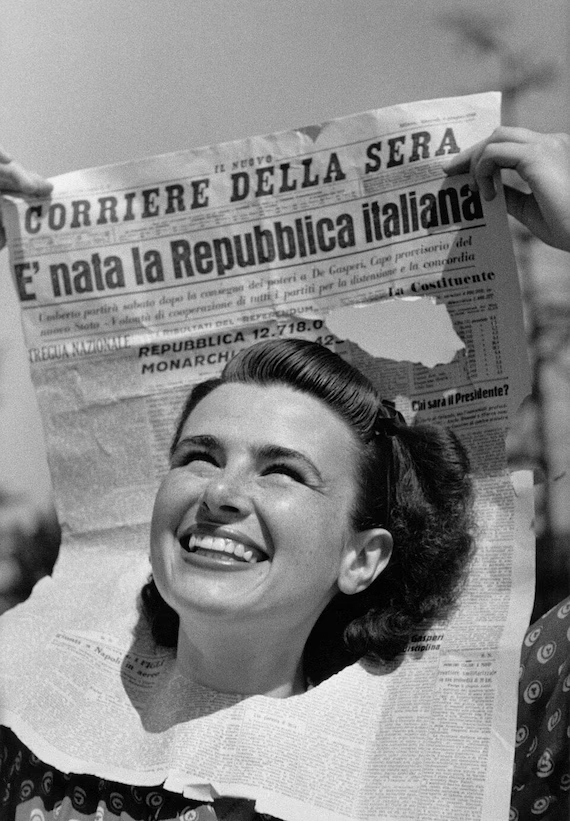
Today, Tuesday June 2, 2026, marks the 80th anniversary of the institutional referendum that gave birth to the Italian Republic ]. On this date in 1946, ordinary citizens walked into polling stations and made one of the boldest choices in modern European history: they fired their king and crowned themselves sovereigns.
It’s a story we Italians carry in our bones. And it deserves to be told properly.
Why Did Italians Lose Faith in Their King?
To understand June 2, we need to rewind. When Italy unified in 1861, the new state took a monarchical shape under the House of Savoy . For decades the crown stood as a symbol of national unity. Then came the catastrophe.
Between 1922 and 1943, King Vittorio Emanuele III shared power with Mussolini’s fascist dictatorship . He didn’t resist. He signed the racial laws. He let the country march into a world war that would devastate cities, families, and entire generations. Only in July 1943, when defeat had become undeniable, did the king finally dismiss Mussolini .
Too little, too late. The royal house was burned out, politically speaking.
From 1943 to 1945, Italy split in two. In the North, fascists and Nazi Germany propped up the puppet “Repubblica Sociale Italiana,” fought tooth and nail by the Resistance . In the South, what was left of the Kingdom of Italy survived under Allied protection, with the king as a fading figurehead .
What Was the Salerno Turning Point?
April 1944, Salerno. Rome was still in German hands, and the provisional government had set up shop in the southern city . Communist leader Palmiro Togliatti made a stunning offer: his party would recognize the king and join the cabinet, on one condition. After the war, the Italian people would choose, freely, whether to keep the monarchy or build a republic .
Every major antifascist party agreed. The Allies signed off. History calls this the Svolta di Salerno, the Salerno turning point . Soon after, Vittorio Emanuele handed his powers to his son Umberto, naming him Lieutenant of the Realm, though he stubbornly refused to abdicate .
How Did the Historic Vote of June 2, 1946 Unfold?
The war ended in April 1945. Less than a year later, in March 1946, Umberto called the referendum . Italians would vote on June 2 and the morning of June 3, simultaneously electing the Constituent Assembly that would draft the new Constitution .
Here’s the detail that still moves us: Italian women voted for the first time . Half the country, finally counted as full citizens, walking into the booth with the future of the nation in their hands.
The campaign was electric. Communists, socialists, and progressive forces backed the republic . The Christian Democrats stayed officially neutral, since their voter base mixed reformers and conservatives, though most of their leaders were republicans . The monarchy drew support from liberal-conservative groups and most of the Church hierarchy .
On May 9, in a desperate last move, Vittorio Emanuele finally abdicated. His son became Umberto II, the so-called “May King” .
What Do the Numbers Tell Us?
Turnout was extraordinary: 24,946,878 voters, about 89% of those eligible . Citizens of Bolzano and the entire Venezia Giulia region didn’t vote, since their borders were still being negotiated .
| Choice | Votes | Outcome |
|---|---|---|
| Republic 🇮🇹 | 12,672,767 | Winner |
| Monarchy 👑 | 10,688,905 | Defeated |
| Blank / void ballots | 1,509,735 | Excluded from totals |
| Margin of victory | ~ 2 million votes for the Republic | |
The Cassation Court announced these results on June 10, 1946 . The country, however, split along a clear geographic line. The Center-North voted republican; the South leaned monarchist . Why? Two reasons. The Mezzogiorno had a more conservative tradition, and the Resistance, with its republican parties, had been fought largely north of Rome .
Were There Really Fraud Allegations?
You may have heard whispers about rigged ballots. Let’s settle this once and for all.
Even if every single one of the 1,509,735 blank or void ballots had been counted for the monarchy, the Republic would still have won . The math doesn’t lie. Beyond that, the parties supporting the Republic also dominated the simultaneous Constituent Assembly elections, confirming where the country’s heart truly lay .
Umberto II didn’t take it well. He refused to step down, claiming the count wasn’t final . On June 13, Prime Minister Alcide De Gasperi ended the standoff by assuming the duties of head of state, effectively pushing the king aside . The Italian Republic was born. Umberto left for Portugal that same day, never recognizing his defeat .
On June 18, the Cassation Court confirmed the definitive results. The numbers barely shifted .
How Did June 2 Become a National Holiday?
The first official commemoration happened in 1947, with provisional head of state Enrico De Nicola presiding . Two years later, on May 27, 1949, Law no. 260 made June 2 a permanent national holiday .
- 1947First anniversary celebration of the referendum.
- 1948The military parade on Via dei Fori Imperiali makes its debut.
- 1949Law no. 260 turns June 2 into an official national holiday.
- 1977Oil shocks and austerity move the celebration to the first Sunday of June.
- 2000–2001President Carlo Azeglio Ciampi restores both the parade and the June 2 holiday.
- June 2, 2026The 80th anniversary — Italy celebrates on a Tuesday.
In the 1970s, oil shocks and economic austerity convinced the government to make it a “movable” celebration on the first Sunday of June, sparing the country a working day . President Carlo Azeglio Ciampi, deeply attached to national symbols, restored the fixed June 2 holiday in 2001 . It has stayed that way ever since.
What Happens in Rome on Republic Day?
Today’s ceremony follows a script written over decades. In the morning, the President of the Republic lays a laurel wreath at the Tomb of the Unknown Soldier at the Altare della Patria, where the flag is raised . Then the Frecce Tricolori tear across the Roman sky, leaving white, red, and green trails behind them .
The President reviews the troops and moves to Via dei Fori Imperiali, where the military parade has been held since 1948 . The four armed forces march by, joined by Police, Fire Brigades, Civil Protection, and the Red Cross . Around them stand the highest representatives of the Italian state.
Outside Rome, every provincial capital holds its own ceremony. Italian embassies abroad host receptions for citizens and friends of Italy . It’s a day when the diaspora remembers home.
How Does It Compare to Other National Holidays?
For Italians, June 2 carries the same weight that July 4 holds for Americans (Declaration of Independence, 1776) or July 14 for the French (Storming of the Bastille, 1789) . It’s the day a nation looks itself in the mirror and says: this is where we began.
The holiday is also tied, by an invisible thread, to April 25 (Liberation Day) . Without the liberation from Nazi-fascism, no referendum would have been possible. No referendum, no Republic. No Republic, no Constitution. No Constitution, no rights .
Closing Thoughts: Why This Date Still Matters
Eighty years on, the lesson of June 2 isn’t dusty. It’s urgent. A people, exhausted by war and dictatorship, chose democracy with a pencil and a piece of paper. Women voted for the first time. The South and the North disagreed but accepted the result. A king walked away. A constitution was written.
We at FreeAstroScience wrote this piece for you because we believe history, like physics, isn’t a museum piece. It’s a living force. We exist to teach you never to switch off your mind, to keep it awake, alert, curious. Remember Goya’s warning: the sleep of reason breeds monsters. June 2 is proof that when reason stays awake, even an exhausted nation can choose freedom.
Come back to FreeAstroScience.com often. Bring your questions. Bring your doubts. We’ll keep translating the world, from stars to referendums, into language you can hold in your hands.
Frequently Asked Questions
Why is Italy’s Republic Day on June 2?
Because on June 2 and 3, 1946, Italians voted in a referendum that abolished the monarchy and established the Republic. The Cassation Court announced the result on June 10, with about 12.67 million votes for the Republic and 10.69 million for the monarchy .
Who was the last King of Italy?
Umberto II, son of Vittorio Emanuele III. He became king on May 9, 1946, and left Italy for Portugal on June 13, 1946, when Prime Minister Alcide De Gasperi assumed the duties of head of state .
Were the 1946 referendum results actually fraudulent?
No. The Republic won by roughly 2 million votes. Even if every blank or void ballot had been counted as monarchist, the outcome wouldn’t have changed. Republican parties also dominated the parallel Constituent Assembly elections .
When did June 2 first become a national holiday?
It was officially established by Law no. 260 on May 27, 1949. Between 1977 and 2000 it was moved to the first Sunday of June for economic reasons, then restored to June 2 in 2001 by President Carlo Azeglio Ciampi .
What’s the most iconic moment of the Republic Day celebrations?
The military parade on Via dei Fori Imperiali in Rome, held since 1948, together with the Frecce Tricolori flying overhead and tracing the Italian flag’s colors across the sky .
References
- Fonzo, E., Come è nata la Repubblica italiana il 2 giugno 1946: non ci furono brogli, Geopop. geopop.it/repubblica-italiana-nascita
- Fonzo, E., Perché la Festa della Repubblica italiana cade il 2 giugno 2026: è per lo storico referendum del 1946, Geopop. geopop.it/perche-la-festa-della-repubblica-italiana
- Ridolfi, M., La festa del 2 giugno: rituali civili, spazi sociali e territorialità repubblicane, in Storia e problemi contemporanei, 41, 2006.
- Ridolfi, M. (a cura di), 2 Giugno: nascita, storia e memorie della Repubblica, Viella, 2020.
Article written for you by Gerd Dani — FreeAstroScience.com — where complex ideas become clear, and reason never sleeps. 🇮🇹



I do not even understand how I ended up here, but I assumed this publish used to be great