
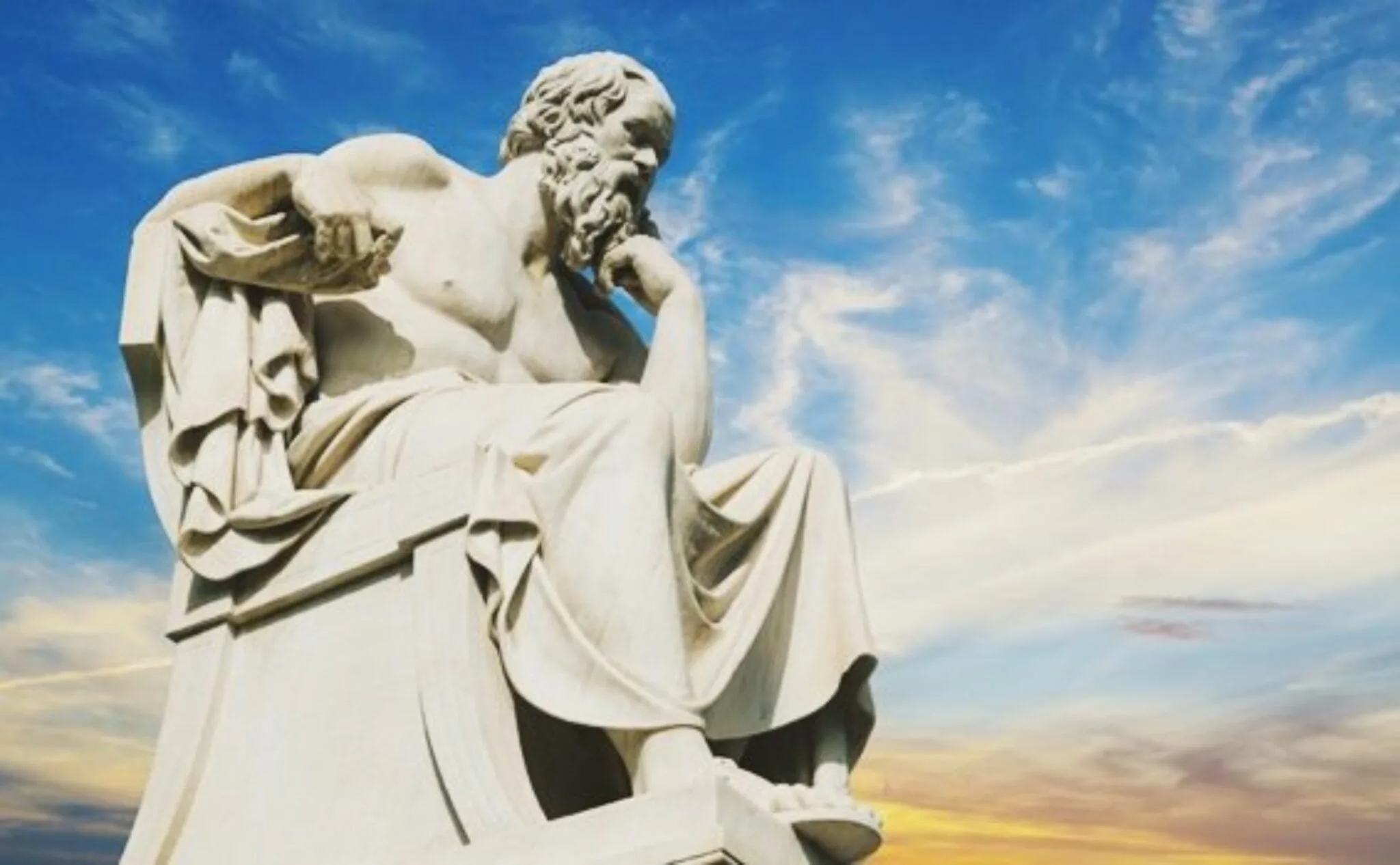
How Did Socrates Teach People to Find Truth by Asking the Right Questions?
What if the smartest thing you could ever say was “I don’t know”? Welcome, dear reader. Today we’re walking through the dusty streets of ancient Athens with one of history’s strangest geniuses, a man who never wrote a single book yet shaped how the entire Western world thinks. We’re talking about Socrates and his famous method called maieutics, the art of giving birth to truth. Stick with us to the end, because by the time you finish, you’ll see why a 2,400-year-old conversation still matters for the way you think today.
📜 Table of Contents
- 1. Who Was Socrates and Why Should You Care?
- 2. What Did the Oracle of Delphi Really Mean?
- 3. The Wisdom of Knowing That You Don’t Know
- 4. Is Virtue Really the Same Thing as Intelligence?
- 5. Why Did Socrates Believe Dialogue Was Everything?
- 6. Why Did He Choose Death Over Escape?
- 7. Frequently Asked Questions
Who Was Socrates and Why Should You Care?
Picture Athens in the 5th century B.C. The city buzzes with poets, politicians, and craftsmen who all think they have life figured out. Into this world walks a barefoot man with an annoying habit: he asks questions nobody can answer.
Socrates was born in Athens in 469 B.C. His father, Sophroniscus, was a sculptor. His mother, Phaenarete, was a midwife . That detail about his mother isn’t trivia, by the way. The whole spirit of his teaching grew from her trade, as you’ll soon see.
He barely left his city, except to fight in the battles of Amphipolis, Delium, and Potidaea, defending Athens with his own body . His life unfolded entirely within Athenian walls, from his education to his trial in 399 B.C. The charges? Corrupting the young and refusing to believe in the city’s gods. The sentence? Death .
Here’s a strange fact. Socrates wrote nothing. Not one word. Everything we know comes from others, namely Plato, Xenophon, Aristophanes, and Aristotle . So when we read his thoughts, we’re reading them through the memories and pens of his students.
What Did the Oracle of Delphi Really Mean?
The story starts with a riddle. Socrates had a bold friend named Chaerephon, who one day traveled to the temple at Delphi and asked the oracle a daring question: was anyone wiser than Socrates? The Pythia, priestess of Apollo, answered that no one was wiser .
Now, most of us would have grinned and bragged for a week. Socrates did the opposite. He was baffled. He knew, deep down, that he wasn’t wise at all. So what game was the god playing?
“After I heard the oracle, I made the following reflections: what does the god mean, and what riddle is he posing? For I am conscious of not being wise, neither much nor little. So what does he mean by saying I am the wisest?”
— Plato, Apology of Socrates, 20e–21c
Look closely at his reaction, because his entire philosophy hides inside it. Even a statement from the highest religious authority in Greece had to pass through careful, patient analysis. No idea, Socrates believed, deserves blind acceptance. Every notion must face the trial of reason, no matter how exhausting that search becomes.
The Wisdom of Knowing That You Don’t Know
So Socrates set out on a mission. He went hunting for someone wiser than himself. He questioned politicians, poets, and skilled artisans, one by one.
And he found a pattern. These respected men all believed they knew something important. Yet under his questions, their knowledge fell apart. They thought they knew. They didn’t .
That’s when the riddle cracked open. The god wasn’t flattering him. Among all the Greeks, Socrates alone understood one thing: he knew that he didn’t know. To truly learn, a person first has to strip away false, borrowed certainty. Only then can real knowledge get built, slowly, brick by brick.
The Numbing Sting of a Stingray
One of the best illustrations comes from a young man named Meno. He arrived bursting with confidence, certain he could define what virtue is. After a few rounds with Socrates, his confidence melted into honest confusion.
“Socrates, I had heard, even before meeting you, that you do nothing but doubt, and make others doubt too… You resemble that flat sea stingray, which numbs anyone who comes near and touches it. My soul and my tongue are numb, and I no longer know how to answer you.”
— Plato, Meno, 79e–80b
That numbness wasn’t cruelty. It was the first real step toward wisdom. Beliefs absorbed without thought collapse the moment reason pokes them . Only the person who admits ignorance feels driven to search. The person who thinks he already knows stays trapped, a prisoner of his own prejudice .
And here’s a humbling twist Socrates added. Even knowledge built through careful reasoning must keep proving itself. No truth, he warned, can ever be claimed once and for all and then imposed like a dogma .
Is Virtue Really the Same Thing as Intelligence?
Socrates dropped the big cosmic puzzles that had obsessed earlier thinkers. He turned, fully and stubbornly, toward one question: how should we live? His conversations circled the cardinal virtues the Greeks prized, including justice, holiness, temperance, and courage .
In four of Plato’s early dialogues, he digs into these virtues with his companions. Strangely, every dialogue ends in a dead end, what philosophers call an aporia. No tidy conclusion. No final answer .
Yet those dead ends point somewhere. They suggest the virtues shouldn’t be chased separately. Justice, holiness, temperance, and courage all turn out to be faces of a single virtue: intelligence .
Think about it. Only an intelligent person can tell a just act from an unjust one, a brave deed from a cowardly one . Socrates summed it up beautifully in the Phaedo:
“O dear Simmias, take care that the only genuine coin, for which all things should be exchanged, is intelligence… and that virtue is only that which is accompanied by intelligence.”
— Plato, Phaedo, 69b
Here’s the whole arc of his thought in one line. The single virtues are just expressions of one virtue, and that one virtue dissolves completely into intelligence.
Why Did Socrates Believe Dialogue Was Everything?
If virtue equals intelligence, and intelligence equals knowledge, one question remains. Where does knowledge come from?
Socrates had a clear answer. Knowledge lives entirely in dialogue between people . We don’t learn alone in a quiet room. We learn through that constant workout of the mind that happens when we talk with others .
Remember his mother, the midwife? This is where her trade returns. Socrates saw himself as a midwife of ideas. He didn’t pour facts into people. He helped them deliver the truth already growing inside them. That’s maieutics, the art of intellectual birth.
But dialogue meant something deeper to him than a clever technique. It was the space where each person accepts the other as an equal partner. In that exchange, we reach the highest good available to us: the awareness of being an equal among equals.
The source puts the comparison boldly. If democracy was Athens’ greatest achievement in institutions, then Socratic philosophy was its matching peak in the world of thought .
Why Did He Choose Death Over Escape?
Here’s the part that gives us chills. The same city that sentenced him to death was the only soil where his philosophy could ever grow. Socrates knew this. So when he had the chance to escape prison, he refused .
In the Apology, he says something that still echoes through every classroom and courtroom:
“The greatest good for a man is to discuss virtue every day… and a life without this examination is not worth living.”
— Plato, Apology of Socrates, 38a
In the Crito, he imagines the laws of Athens themselves standing before him, asking why he’d want to destroy them by fleeing . The laws raised him, educated him, gave his parents a framework to marry and bring him into the world. Could he really tear all that down to save his own skin?
He decided he couldn’t. He believed the homeland deserves respect even greater than a mother or father, and that one must either persuade it of what justice requires or obey its commands . That choice cost him his life. It also made him immortal.
What Can a Barefoot Athenian Teach Us Today?
We wrote this article for you at FreeAstroScience.com, where we take tangled ideas and explain them in plain words. Our mission is simple. We want you to never switch off your mind, because the sleep of reason breeds monsters.
Socrates handed us a survival kit for the age of noise. Question loud claims. Admit what you don’t know. Treat conversation as a path to truth, not a battle to win. In a world drowning in confident opinions, his honest “I don’t know” feels almost revolutionary again.
Final Thoughts
We traveled from a sculptor’s son to the wisest man in Greece, from a riddle at Delphi to a quiet refusal to flee death. Along the way, three ideas stayed lit. First, true wisdom starts by admitting ignorance. Second, every virtue flows from intelligence. Third, real knowledge is born through honest dialogue between equals .
So here’s a question to carry with you onto the train, into your kitchen, through your next argument: what beliefs are you holding right now simply because nobody ever made you examine them? Maybe it’s time to play midwife to your own thoughts.
Come back to FreeAstroScience.com soon. We’ll keep sharpening minds together, one good question at a time.
Frequently Asked Questions
What does “maieutics” actually mean?
Maieutics is the Socratic art of helping people “give birth” to truth through questioning. The word links back to Socrates’ mother, who was a midwife. Instead of teaching facts directly, he drew knowledge out of others through dialogue .
Did Socrates write any books?
No. Socrates never wrote anything. Everything we know about him comes from the writings of Plato, Xenophon, Aristophanes, and Aristotle.
What does “I know that I know nothing” really mean?
It means recognizing that you don’t possess true knowledge yet. For Socrates, this admission is the starting point of real learning. Only someone who knows they don’t know feels pushed to search for genuine understanding . Why was Socrates sentenced to death?
In 399 B.C., Athens accused him of corrupting the young and not believing in the city’s gods. He was condemned to death and, given the chance to escape, chose to stay and accept the sentence.
How did Socrates connect virtue and intelligence?
He argued that justice, holiness, temperance, and courage are all expressions of a single virtue, which is intelligence. Only an intelligent person can tell good acts from bad ones, so virtue depends on knowledge .
Sources & References
- Socrate e la maieutica: l’arte di partorire la verità, Amici della Scienza, 24 Maggio 2026. Includes citations from Plato, Apology of Socrates (20e–21c, 38a), Meno (79e–80b), Phaedo (69b), and Crito.