
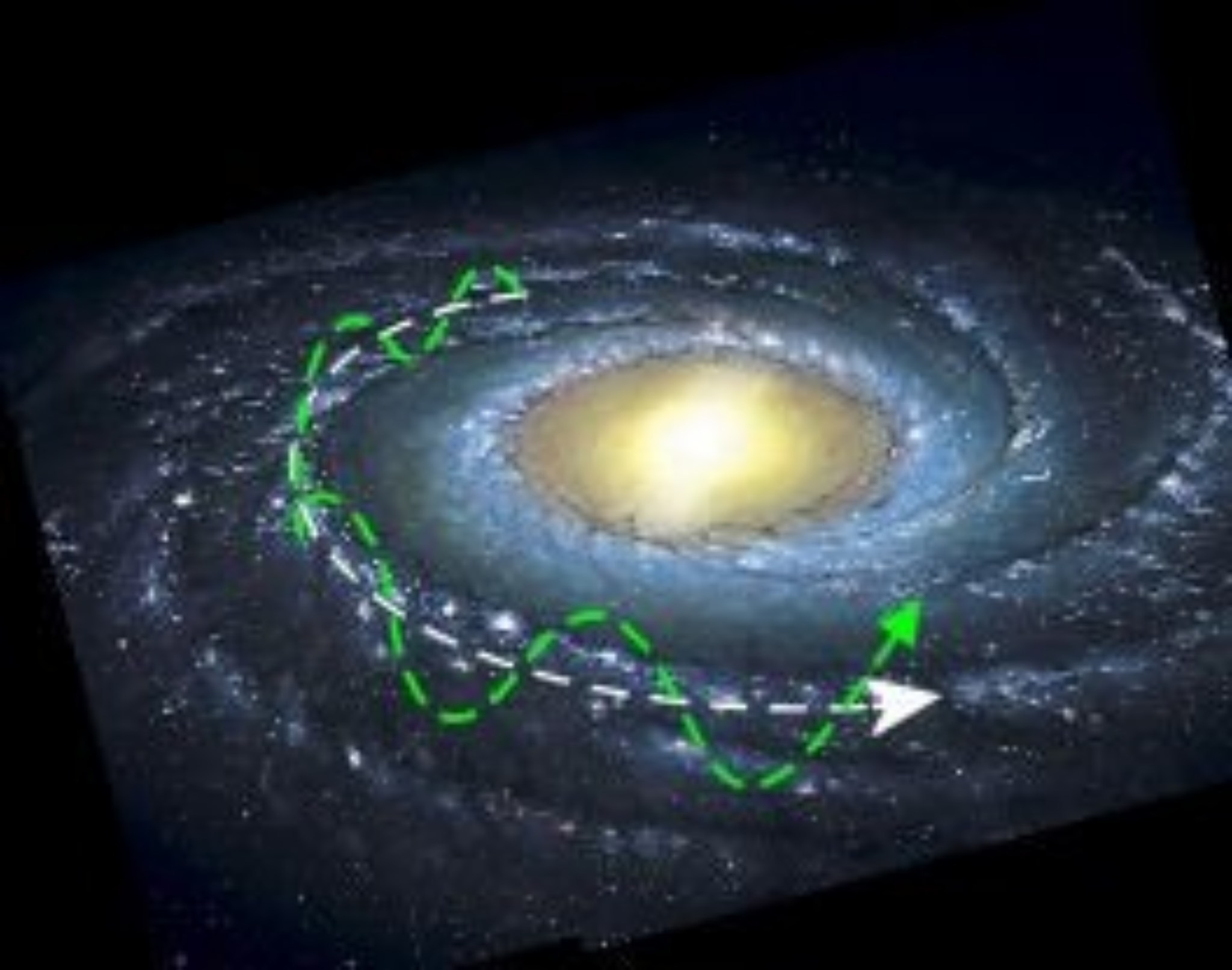
How Many Galactic Years Is Our Solar System? The Cosmic Clock Explained
Have you ever wondered how old we really are — not in human years, but on the grand timescale of our galaxy?
Welcome to FreeAstroScience, where we break down complex scientific ideas into language everyone can enjoy. We’re glad you’re here. Whether you stumbled upon this page by curiosity or came looking for answers about galactic time, you’re in the right place.
Today, we’re tackling a question that reshapes how we think about time itself: How many galactic years has our Solar System been around? The answer — roughly 20 — might sound small. But behind that number hides a staggering journey of billions of Earth years, cosmic orbits, and the entire history of life on our planet.
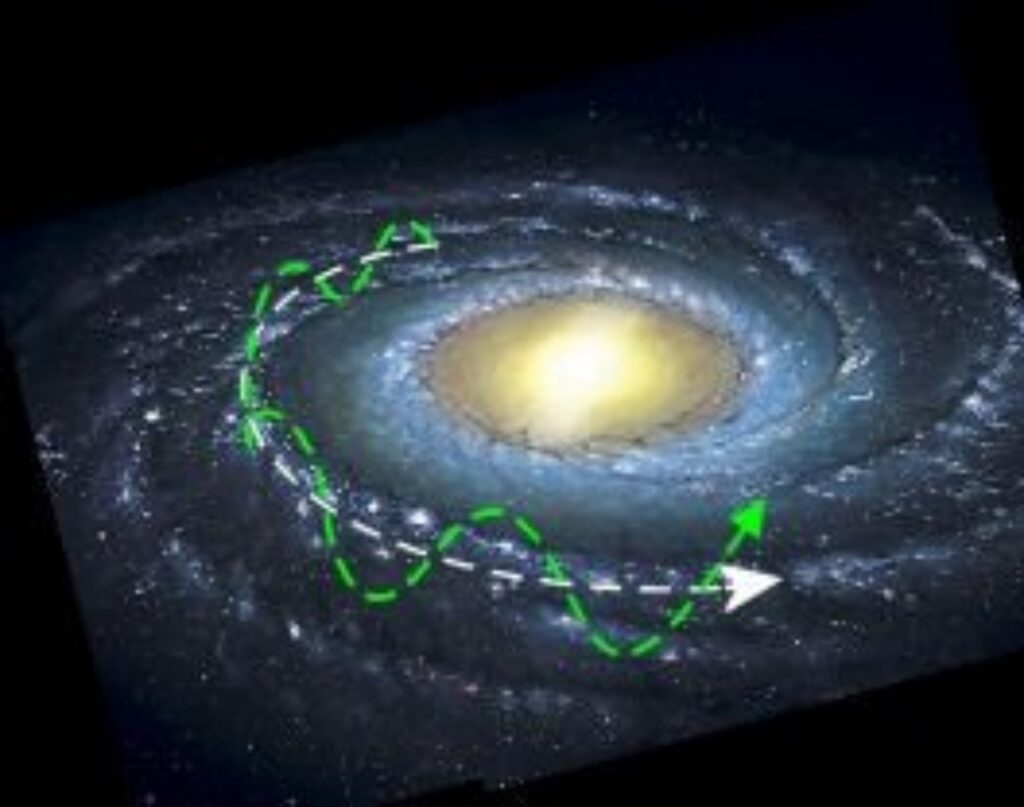
Stick with us to the end. By the time you finish, you’ll see our place in the Milky Way — and in time — very differently.
📖 Table of Contents
- What Exactly Is a Galactic Year?
- How Fast Are We Moving Through the Galaxy?
- How Old Is Our Solar System in Earth Years?
- How Do We Calculate Our Age in Galactic Years?
- What Happened During Each Galactic Year?
- Has the Sun Always Orbited at the Same Distance?
- What Does the Future Hold in Galactic Time?
- Conclusion
What Exactly Is a Galactic Year?
A galactic year — sometimes called a cosmic year — is the time our Sun needs to complete one full orbit around the center of the Milky Way. Think of it as our planet’s “year” around the Sun, only scaled up to galactic proportions.
One galactic year equals roughly 225 to 250 million Earth years. Most astronomers settle on an average near 230 million years, though the exact figure depends on the measurement method used.
Why does this unit matter? Because it gives us a way to compress mind-boggling timescales into manageable numbers. Saying “the Solar System is 4.6 billion years old” is accurate, sure. But saying “we’re about 20 galactic years old” puts things into perspective — connecting geological events, cosmic history, and the story of life into a single, graspable timeline.
How Fast Are We Moving Through the Galaxy?
Here’s something that might surprise you. Right now, as you read these words, you’re hurtling through the Milky Way at an astonishing speed.
Our Solar System orbits the galactic center at about 230 km/s — that’s roughly 828,000 km/h (or about 515,000 mph). At that pace, you could circle Earth’s equator in just 2 minutes and 54 seconds. Still, even at that blistering speed, one galactic year takes hundreds of millions of Earth years to complete.
That contrast tells us something profound: our galaxy is enormous. The Sun sits about 27,000 light-years from the Galactic Center, on the inner edge of the Orion Arm, a smaller spiral structure nestled between the Sagittarius and Perseus arms.
Speed is only part of the story. What matters for our calculation is how far we’ve traveled — and how many times we’ve come full circle.
How Old Is Our Solar System in Earth Years?
Our Solar System formed about 4.6 billion years ago from the gravitational collapse of a dense molecular cloud. That event created our Sun, the planets, moons, asteroids, and comets we know today.
The most precise dating we have comes from ancient meteorites. The oldest solid materials found in meteorites — tiny mineral inclusions — clock in at 4,568.2 million years old. That number is one of the best-defined ages in all of planetary science, and it anchors everything we know about our cosmic origin story.
NASA describes the process this way: the collapsing cloud formed a spinning disk, gravity pulled material into the center to ignite the Sun, and leftover matter clumped together to build planets. The whole process — from cloud to star — took roughly 100,000 years.
So we have our starting point: ~4.57 billion Earth years. Now let’s convert that to galactic time.
How Do We Calculate Our Age in Galactic Years?
The math here is refreshingly straightforward. We take the age of the Solar System and divide it by the length of one galactic year.
🔢 Solar System Age in Galactic Years
Galactic Age = Age of Solar System ÷ Duration of 1 Galactic Year
Galactic Age = 4,568,000,000 ÷ 230,000,000
≈ 19.86 → rounded to ~20 galactic years
Using an average galactic year of 230 million Earth years. Estimates range from 225 to 250 million years, yielding 18.3 to 20.3 galactic years.
That gives us approximately 19.8, which we round to 20 galactic years.
Different sources produce slightly different numbers, depending on the exact galactic-year duration they adopt. Using 225 million years, we get about 20.3. Using 250 million, about 18.3. The commonly cited figure — and the one most astronomers agree on — is 20 ± 1 galactic years.
Twenty orbits. That’s all. In the grand scheme of galactic time, our Solar System is still a young adult — barely into its cosmic twenties, if you will.
What Happened During Each Galactic Year?
A Walk Through Galactic History
This is where things get genuinely breathtaking. If we map major events in Earth’s history to galactic years, the entire arc of life and geology compresses into a surprisingly short timeline.
The following table (based on a galactic year of ~225 million Earth years) traces the highlights:
| Galactic Years Ago | Earth Years Ago (approx.) | Event |
|---|---|---|
| ~61 GY | 13.7 billion | The Big Bang |
| ~60 GY | 13.5 billion | Birth of the Milky Way |
| ~20 GY | 4.57 billion | ☀️ Birth of the Sun and Earth (Galactic Year Zero for us) |
| 16–17 GY | 3.8–4.0 billion | 🌊 Oceans appear on Earth (~4th galactic year) |
| ~15 GY | ~3.5 billion | 🧬 Life begins on Earth (~5th galactic year) |
| 14 GY | 3.2 billion | Prokaryotes appear |
| 12 GY | 2.7 billion | Photosynthetic bacteria appear |
| 11 GY | 2.5 billion | The Great Oxidation Event begins |
| 10 GY | 2.25 billion | First eukaryotes; stable continents form |
| 7 GY | 1.6 billion | Multicellular organisms appear |
| 2 GY | 540 million | 💥 The Cambrian Explosion |
| 1 GY | 225 million | 🌋 Permian–Triassic extinction (“The Great Dying”) & first dinosaurs (~19th galactic year) |
| ~0.3 GY | 66 million | ☄️ Cretaceous–Paleogene extinction (goodbye, dinosaurs — mid-19th galactic year) |
| ~0.001 GY | ~300,000 | 🧑 Anatomically modern humans emerge |
What This Timeline Tells Us
Let’s linger on a few moments in this table, because the scale is humbling.
Galactic Year Zero — roughly 20 galactic years ago — marks the birth of our Sun and the formation of our Solar System. Everything we know, love, and study started here.
By the fourth galactic year, oceans had formed on young Earth. By the fifth, primitive life was already stirring. That means life didn’t waste time. Within just a few galactic years of Earth’s formation, biology had already taken root.
The dinosaurs — those ancient titans that feel impossibly distant to us — first appeared during the 19th galactic year and went extinct partway through that same year. Let that sink in: the entire rise and fall of the dinosaurs fits inside less than one galactic year.
And modern humans? We’ve been around for roughly 0.001 galactic years — a blink within a blink. If a galactic year were a calendar year, humans would have arrived in the final second before midnight on December 31st.
Has the Sun Always Orbited at the Same Distance?
Here’s a wrinkle that keeps astronomers debating late into the night.
The calculation of 20 galactic years assumes the Sun has always orbited at roughly the same distance from the Galactic Center. But the Milky Way’s rotation curve is quite flat between 1 and 10 kiloparsecs from the center. That means the orbital period varies a lot — by a factor of 10 — depending on distance.
There’s an ongoing scientific discussion about whether the Sun migrated inward or outward over its lifetime, or whether it has stayed put. If the Sun formed at a different radius, it would have completed either more or fewer orbits than our simple division suggests.
So while “20 galactic years” is a solid estimate, some uncertainty remains. The true number could range from 19 to 21, depending on the Sun’s orbital history.
That bit of uncertainty isn’t a flaw — it’s a reminder that science is a living, breathing conversation. We don’t know everything, and that’s exactly what makes the search exciting.
What Does the Future Hold in Galactic Time?
If we’ve completed 20 galactic years, what comes next?
According to current models:
- In ~1 galactic year (225 million years from now), all continents on Earth may fuse into a new supercontinent — sometimes called Pangaea Proxima or Amasia.
- In ~4 galactic years (~900 million years), carbon dioxide levels may drop so low that multicellular life can no longer survive.
- In ~22 galactic years (~5 billion years), the Milky Way and the Andromeda Galaxy will begin their collision — a cosmic merger that will reshape both galaxies.
- In ~25 galactic years, our Sun will exhaust its hydrogen fuel, shedding its outer layers and leaving behind a white dwarf.
The Sun, in other words, has perhaps 25 more galactic years of life ahead. We’re roughly at the midpoint of its entire journey.
Conclusion
So, how many galactic years is our Solar System? About 20. That number — small as it sounds — carries the entire story of our existence.
Our Sun was born at galactic year zero. Oceans formed by the fourth galactic year. Life ignited by the fifth. Dinosaurs came and went within a single galactic year — the nineteenth. And we, Homo sapiens, have been around for barely a thousandth of one galactic orbit.
Twenty loops around a galaxy of 100 to 400 billion stars. Twenty revolutions at 828,000 kilometers per hour. Twenty chapters in a story that’s still being written.
When you next look up at the Milky Way on a dark, clear night, remember: you’re not standing still. You’re riding a planet that’s riding a star that’s carving its twenty-first lap around a galaxy so vast it takes light itself 87,000 years to cross it.
We’ll see you again at FreeAstroScience.com, where we explain complex science in human language — because we believe the sleep of reason breeds monsters. Never stop asking questions. Never stop looking up.

sooo beutiful …. thank you