The deployment of the James Webb Space Telescope (JWST) has initiated a transformative era in the study of exoplanetary atmospheres. Researchers from Johns Hopkins University recently focused their attention on HATS-75 b, a massive gas giant orbiting a red dwarf approximately 637 light-years away. This investigation provides critical data on the chemical composition of planets within low-mass stellar systems.

Atmospheric insights into the giant exoplanet HATS-75 b
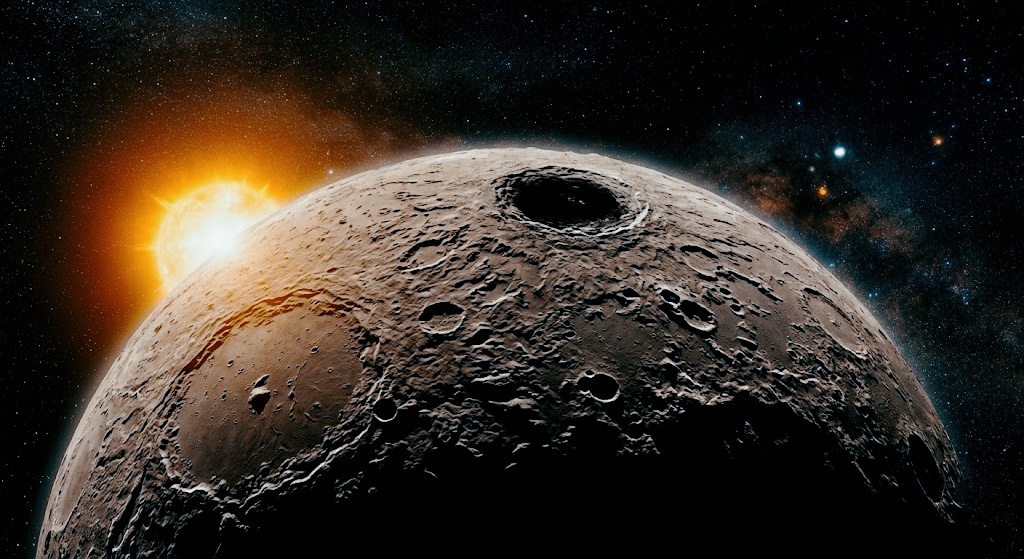
HATS-75 b was first identified in 2021 through the combined efforts of the HATSouth network and NASA’s Transiting Exoplanet Survey Satellite. This celestial body possesses a radius roughly 0.88 times that of Jupiter and approximately half its mass. It completes a full orbit around its host star every 2.79 days at a distance of 0.03 AU, resulting in an estimated equilibrium temperature of 772 K.
The host star, HATS-75, is a diminutive M-dwarf that is approximately 40% smaller and less massive than the Sun. With an effective temperature of 3,790 K and an estimated age of 14.9 billion years, it serves as a unique anchor for this planetary system. HATS-75 b is part of a small but growing group of roughly thirty “GEMS,” which are giant exoplanets orbiting M-dwarf stars.
The recent study led by Reza Ashtari utilized the JWST’s Near-Infrared Spectrograph to analyze the planet’s transmission spectrum during transit. This technique allows scientists to observe how starlight filters through the planetary atmosphere, revealing specific chemical signatures. The objective was to characterize the atmospheric makeup while evaluating how stellar irregularities might influence the interpretation of the data.
Challenges of stellar heterogeneity and contamination
The analysis of the transmission spectrum revealed a slightly deeper transit at shorter wavelengths, which complicates the interpretation of atmospheric data. This phenomenon suggests the presence of either atmospheric hazes or stellar contamination from “cool spots” on the surface of the red dwarf. This challenge is formally known as the Transit Light Source effect, where stellar features outside the transit path distort the perceived chemical signals.
To address these complexities, the research team modeled the impact of these stellar spots on the collected light. By assuming the validity of the TLS scenario, the astronomers were able to distinguish between signals originating from the planet and those caused by the star itself. This rigorous approach is vital when studying M-dwarfs, as their inherent activity can mimic or mask important atmospheric gases.
Although a model dominated by atmospheric hazes could potentially explain the observations, the team disfavored this hypothesis based on independent evidence. Specifically, the detection of starspot crossings during the transit provided direct proof of the stellar heterogeneity required to produce the observed contamination. This finding highlights the necessity of meticulous host star analysis to avoid misinterpreting the true nature of exoplanetary worlds.
Chemical composition and atmospheric implications
Under the assumption of the TLS model, the JWST observations provided strong evidence for methane and moderate evidence for carbon dioxide. The data also indicated a weaker presence of carbon monoxide, painting a complex picture of the carbon cycle on HATS-75 b. Interestingly, the researchers did not detect water vapor, a result likely attributed to the interference caused by the host star’s surface spots.
The findings suggest that the atmosphere of HATS-75 b possesses a sub-solar metallicity and a notably high carbon-to-oxygen ratio. This chemical profile offers valuable clues regarding the planet’s formation and its journey through the protoplanetary disk. Such a high ratio often indicates that a planet formed in regions enriched with carbon-bearing solids, distinguishing it from gas giants in systems more similar to our own.
Ultimately, HATS-75 b stands as a significant addition to the rare population of GEMS characterized by the JWST. The study concludes that while these chemical discoveries are groundbreaking, they also serve as a cautionary tale regarding the intricacies of transmission spectroscopy. The successful characterization of this world emphasizes the importance of integrated modeling to reveal the authentic chemical composition of unusual exoplanets.
The study is published on arXiv.