Have you ever wondered what it feels like when spring suddenly turns into the heart of summer—overnight? This May, Europe found itself in the grip of a heat wave so fierce, it shattered records, upended daily life, and left many of us asking: is this the new normal? Welcome, friends of FreeAstroScience.com. Here, we break down the science behind the headlines, making sense of the world’s wildest weather with clarity and heart. Our mission is simple: explain complex science in a way that keeps your mind sharp and your curiosity alive—because, as we always say, the sleep of reason breeds monsters. Stick with us to the end, and you’ll not only understand what’s happening, but why it matters for all of us.
Table of Contents
- What Happened? How Hot Did It Get Across Europe?
- How Did the Heat Wave Affect People?
- What Is a Heat Dome and How Does It Trap Heat?
- Why Did the Heat Wave Last So Long? The Omega Block Explained
- How Did Saharan Air Reach Italy and the UK?
- What’s Happening to the Jet Stream?
- What Does a +10°C Temperature Anomaly Mean?
- Is the Mediterranean Sea Making Heat Waves Worse?
- How Does This Compare to Past European Heat Waves?
- Is Climate Change Making Heat Waves Like This More Likely?
- How Did Agencies Respond to the Heat Wave?
- What Are the Wider Impacts on Society?
- Temperature Records Table: May 2026 Heat Wave
- Visualizing the Temperature Anomaly
- What Can We Learn from This Heat Wave?
- FAQ: Your Questions Answered
- References & Further Reading
Europe’s Heat Dome of May 2026: When Spring Became Summer
What Happened? How Hot Did It Get Across Europe?
This May, Europe didn’t just break a few temperature records—it smashed them. In Italy, especially in the central and northern regions, we saw the mercury soar above 35°C. That’s not just a hot day for May; it’s up to 10 degrees above what’s normal for this time of year. Florence, Bologna, and Milan all clocked in at 34–36°C, making it feel more like July than late spring. France wasn’t spared either. On May 25, the country recorded its hottest May day ever, with a national average of 24.8°C and Angoulême hitting 36°C. Spain’s Seville reached a blistering 38°C, while Germany saw widespread highs between 30 and 33°C. Over in the UK, Kew Gardens in London hit 34.8°C on May 25, breaking a record that had stood for over a century. Even at night, Londoners couldn’t catch a break—temperatures didn’t drop below 20°C, a first for May. These aren’t just numbers; they’re a sign that something extraordinary is happening across the continent.
How Did the Heat Wave Affect People?
Extreme heat isn’t just uncomfortable—it’s dangerous. In France, the first fatalities of the season were reported. At least seven people lost their lives: five drowned while trying to cool off in lakes and rivers, and two died during sporting events, including a 53-year-old runner in Paris and a woman in Lyon. Hospitals saw a surge in heat-related illnesses. The UK Health Security Agency issued amber and yellow heat health alerts, warning that the elderly and those with chronic illnesses were at particular risk. Italy’s ISPRA urged people to stay indoors during the hottest hours and to keep hydrated. These warnings weren’t just for show; they were a matter of life and death.
What Is a Heat Dome and How Does It Trap Heat?
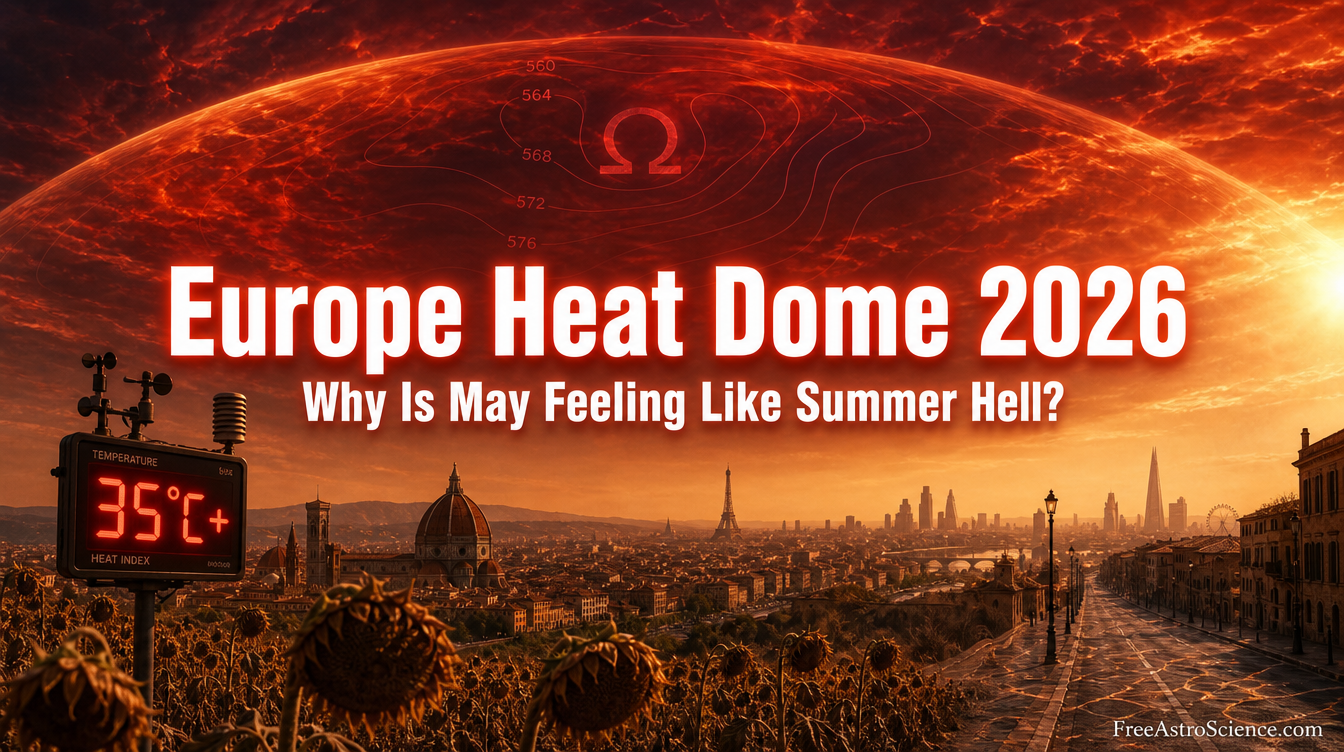
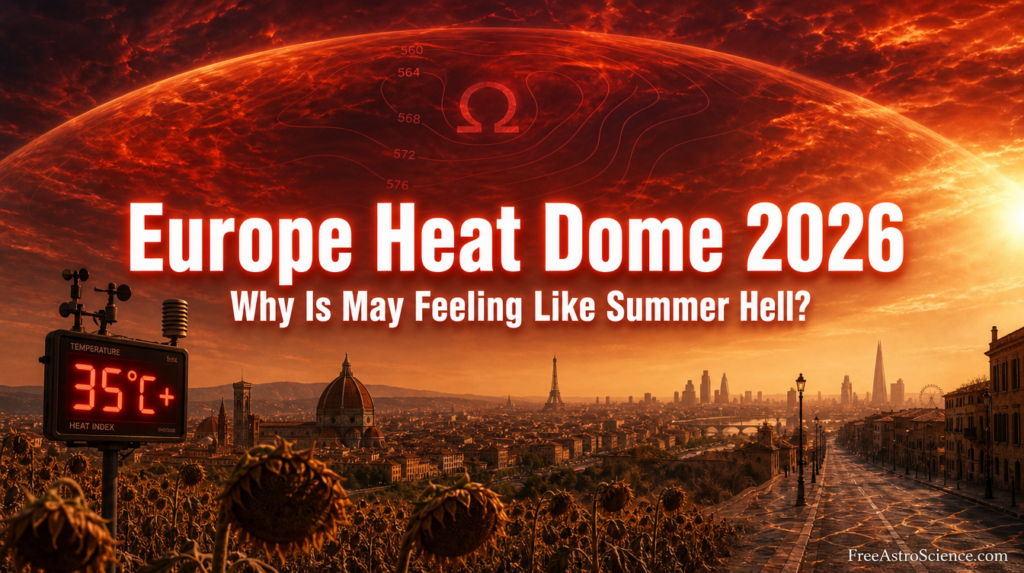
Let’s break down the science. A heat dome forms when a massive high-pressure system parks itself over a region. Think of it as a giant, invisible lid pressing down on the atmosphere. Air sinks, compresses, and heats up—a process called adiabatic compression. With nowhere for the heat to escape, temperatures at the surface climb higher and higher. Clouds can’t form easily, so the sun beats down all day, making things even hotter. During this event, surface pressure reached 1030 hPa in central Europe, locking in the heat for days on end. Nights offered little relief, with “tropical nights” where temperatures stayed uncomfortably high.
Why Did the Heat Wave Last So Long? The Omega Block Explained
You might wonder why the heat didn’t just move on after a day or two. The answer lies in a weather pattern called an omega block. Picture the Greek letter Ω: a big high-pressure ridge (the middle) flanked by two low-pressure troughs (the sides). This setup stalls the usual west-to-east movement of weather systems. The result? The heat dome sits in place, sometimes for a week or more, baking everything underneath. These blocks are stubborn and hard to dislodge, which is why the heat wave lingered so long.
How Did Saharan Air Reach Italy and the UK?
It wasn’t just local air heating up. The heat dome’s position created a pathway for hot, dry air from the Sahara to surge northward. This is called the Saharan Air Layer (SAL). On the western edge of the high-pressure system, southerly winds carried this dusty, scorching air across the Mediterranean, reaching as far as Italy, France, and even the UK. Sometimes, you could even see the haze from Saharan dust in the sky. This extra-hot air helped push temperatures even higher, especially in southern Europe.
What’s Happening to the Jet Stream?
The jet stream—a fast-moving river of air high above us—usually keeps weather systems moving. But when it gets wavy or slows down, it can trap high-pressure systems in place. This May, the jet stream meandered northward, forming a pronounced ridge over Europe. Scientists call this a “double jet” configuration, and it’s been happening more often in recent years. These changes are linked to Arctic warming and can make blocking patterns like heat domes more common and persistent.
What Does a +10°C Temperature Anomaly Mean?
When meteorologists talk about a “temperature anomaly,” they mean the difference between what’s happening now and what’s normal for that time and place. Usually, they use a 30-year average (like 1981–2010) as the baseline. So, a +10°C anomaly means it’s ten degrees hotter than the average for that date. For context, most European heat waves have anomalies around +5°C. This May, some places doubled that. It’s not just a hot day—it’s a sign of something extraordinary and potentially dangerous.
How Do We Calculate a Temperature Anomaly?
Temperature Anomaly = Observed Temperature − Average Temperature (1981–2010)
Example: If the average for May 25 is 25°C, but the observed temperature is 35°C,
the anomaly is +10°C.
Is the Mediterranean Sea Making Heat Waves Worse?
The Mediterranean isn’t just a beautiful backdrop—it’s a key player in Europe’s climate. Over the past few decades, the sea has warmed faster than the global average. In 2025, 86% of the European ocean experienced at least “strong” marine heatwaves. When the sea is warmer, it can reinforce heat domes, making heat waves on land even more intense and longer-lasting. Warm water means more humidity, higher nighttime temperatures, and a greater risk of compound events—when both the sea and the air are unusually hot at the same time.
How Does This Compare to Past European Heat Waves?
Europe has seen deadly heat waves before. The summer of 2003 stands out, with an estimated 55,000 to 72,000 excess deaths. More recently, 2019 and 2022 brought multiple episodes of 40°C+ temperatures in Spain, France, and even the UK. But here’s the twist: the May 2026 heat wave happened much earlier in the year, with spring temperatures rivaling those of midsummer. Europe’s ten warmest summers have all occurred since 2003, and 23 of the 30 most severe heat waves since 1950 happened after 2000. The trend is clear—extreme heat is becoming more common, and it’s arriving sooner.
Is Climate Change Making Heat Waves Like This More Likely?
The science is clear: climate change is raising the odds. Europe is warming at 0.56°C per decade—twice the global average. According to the Copernicus Climate Change Service, what used to be a 1-in-100-year event is now happening every 33 years, or even more often. Richard Betts, head of climate impacts at the UK Met Office, says these events are “happening more severely, because it’s on top of a warming climate.” Dan Suri from the Met Office adds that breaking May temperature records is now three times more likely than before. Professor Sonia Seneviratne called the current heat wave “mind-bogglingly crazy.” UN climate chief Simon Stiell described it as a “brutal reminder” of what’s at stake if we don’t act.
How Did Agencies Respond to the Heat Wave?
Meteorological and health agencies across Europe sprang into action. Météo-France issued yellow and orange heat alerts for much of the country. The UK Met Office and UK Health Security Agency coordinated amber and yellow heat health alerts. Italy’s ISPRA warned of increased wildfire risk and urged people to take precautions. Spain’s AEMET described the heat as “extraordinarily high” and warned of wildfires. The European Centre for Medium-Range Weather Forecasts (ECMWF) tracked the heat dome and issued forecasts to help countries prepare.
What Are the Wider Impacts on Society?
The heat wave didn’t just affect people’s comfort—it strained power grids, threatened crops, and raised the risk of wildfires. Italy has already faced 82 extreme weather events in the first five months of 2026, including storms and floods. Cyclone Harry alone caused over 2 billion euros in damages. Urban areas suffered from the “heat island” effect, where concrete and asphalt trap even more heat. Farmers worried about crop losses, and city dwellers faced sleepless nights. The message is clear: extreme heat touches every part of society.
Temperature Records Table: May 2026 Heat Wave
| Country | Location | Temperature | Previous Record | Anomaly Above Average | Date |
|---|---|---|---|---|---|
| Italy | Florence, Bologna, Milan (Central/North) | 34–36°C | Varies by city | +10°C | May 24–26, 2026 |
| France | Angoulême | 36°C | Varies | +10°C | May 25, 2026 |
| France | National Average | 24.8°C | 24.6°C (May 24, 2026) | +10°C (local) | May 25, 2026 |
| Spain | Seville | 38°C | Varies | +10°C | May 24–25, 2026 |
| Germany | West/South Regions | 30–33°C | Varies | +10–12°C | May 24–26, 2026 |
| UK | Kew Gardens, London | 34.8°C | 32.8°C (1922/1944) | +10°C | May 25, 2026 |
| UK | Hawarden Airport, Wales | 32.2°C | 30.6°C (1944) | +10°C | May 25, 2026 |
What Can We Learn from This Heat Wave?
The May 2026 European heat wave wasn’t just a freak event—it was a warning. We saw spring turn to summer in a matter of days, with temperatures and impacts that left no one untouched. The science tells us these events are becoming more likely as our climate warms. But knowledge is power. By understanding the forces at play—from heat domes and omega blocks to the warming Mediterranean—we can prepare, adapt, and push for change. At FreeAstroScience.com, we believe in keeping our minds awake and our curiosity alive. Don’t let the sleep of reason breed monsters. Stay curious, stay informed, and come back often to keep learning with us.
FAQ: Your Questions Answered
What is a heat dome?
A heat dome is a large, stationary high-pressure system that traps hot air at the surface, causing prolonged periods of extreme heat. It acts like a lid, preventing cooler air from moving in and keeping temperatures high for days or even weeks.
Why is the May 2026 heat wave in Europe so unusual?
This heat wave broke records across multiple countries, with temperatures up to 10°C above the seasonal average. It happened in May—much earlier than typical summer heat waves—and lasted longer due to persistent atmospheric patterns.
How many people died in the French heat wave of May 2026?
At least seven people died in France during the May 2026 heat wave, including five drownings and two deaths during sporting events.
What is a temperature anomaly of +10°C?
A +10°C anomaly means the observed temperature is ten degrees higher than the average for that date, based on a 30-year baseline. It signals an extreme and rare event.
Is the European heat wave linked to climate change?
Yes. Scientists agree that climate change is making heat waves like this more frequent and intense. Europe is warming at twice the global average, and record-breaking events are now three times more likely than before.
References & Further Reading
- GreenMe: Oltre 35°C a maggio (e si contano le prime vittime per il caldo anomalo)
- Met Office: Provisional spring daily temperature record as heatwave continues
- AP News: Europe heat wave May 2026
- BBC: Science & Environment – Heatwave
- The Guardian: Europe Heatwave Tracker
- Copernicus Climate Change Service: Heatwaves
- NOAA: What is a heat dome?
- NPR: Europe heat wave deaths May 2026