Have you ever stepped outside at night and felt the universe gazing right back at you?
Welcome to FreeAstroScience, where we turn the grand complexities of the cosmos into words you can carry in your pocket. We’re glad you’re here. April 2026 is shaping up as one of the most thrilling months for sky-watchers in recent memory. A full “Pink Moon” opens the show. A sun-grazing comet gambles its very existence against our star. An ancient meteor shower returns for its 2,700th recorded year. And four planets line up in a pre-dawn parade that’ll take your breath away. Whether you own a telescope or simply enjoy looking up on a clear night, this guide was written specifically for you. Stay with us to the very end — once you see what April has in store, you won’t want to miss a single night.
📋 Table of Contents
- 1. What Moon Magic Awaits Us This April?
- 2. Which Planets Are Shining Brightest This Month?
- 3. Could Comet MAPS Become 2026’s Greatest Sky Show?
- 4. When Will the Ancient Lyrid Meteors Streak Overhead?
- 5. What Conjunctions Should You Circle on Your Calendar?
- 6. Why Is Spring the Best Season for Galaxy Hunters?
- 7. How Bright Are April’s Celestial Objects?
- 8. Your Complete April 2026 Night Sky Calendar
April 2026: Your Complete Guide to a Spectacular Month of Stargazing
What Moon Magic Awaits Us This April?
The Full Pink Moon (April 1–2)
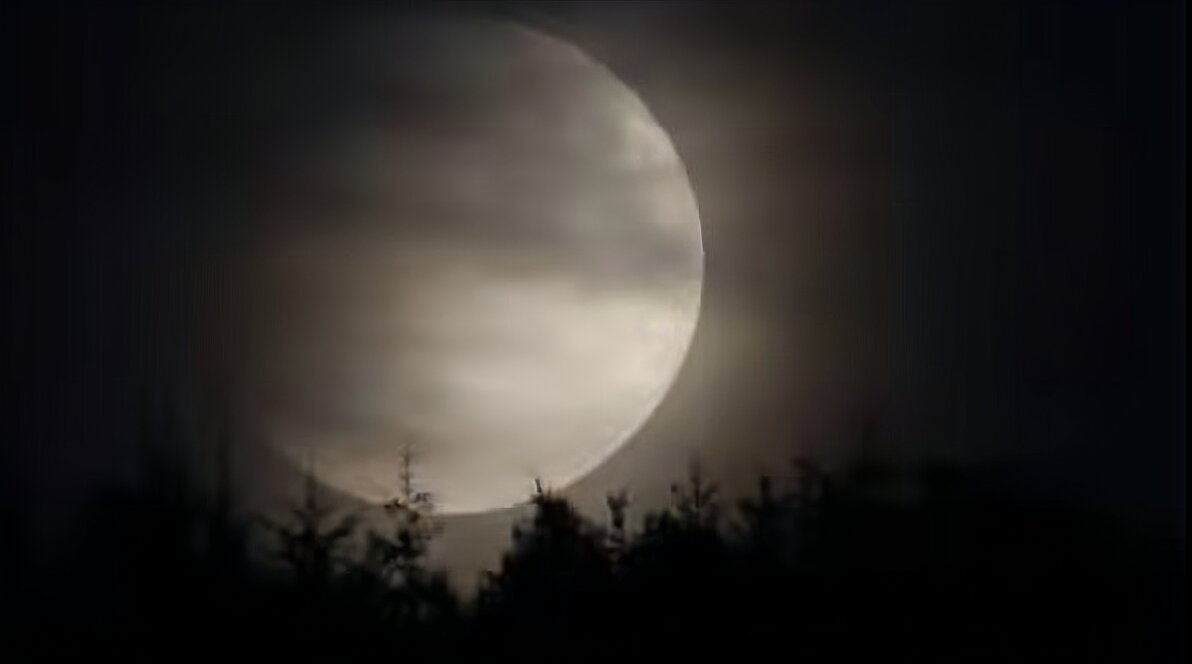
April opens with a glow. The first full Moon of spring — the Pink Moon — reaches peak illumination on April 2 at 02:11 UTC (that’s 10:12 PM ET on April 1 for readers in North America) .
Before you set your expectations: the Moon won’t turn pink. The name traces back to Phlox subulata, a moss pink wildflower that blooms across eastern North America each spring . Think of it as a seasonal nickname. Not a color forecast.
What will look stunning? When the Moon rises above the eastern horizon just as the Sun sets, it’ll appear remarkably bright and large . This isn’t your imagination playing tricks. The full Moon sits near its perigee — its closest orbital point to Earth — making it about 15% brighter than an average full Moon .
Some media outlets love calling these events “supermoons.” The scientific community stays a bit more reserved. But the visual effect? Absolutely real.
The Pink Moon also kicks off a trio of “colorful” full Moons in 2026. May brings a Blue Moon. June delivers the Strawberry Moon . None actually changes color — but the naming tradition stretches back centuries and connects us to the rhythms of the natural world.
And there’s a bonus connection worth knowing: the Pink Moon follows March’s dramatic Blood Moon, which turned red during a total lunar eclipse . So if you caught that one, April’s full Moon completes a beautiful one-two punch.
Earthshine: Leonardo da Vinci’s Favorite Lunar Glow
Around the New Moon on April 17, watch for something quiet and beautiful: earthshine .
This phenomenon paints a ghostly glow on the unlit part of the Moon’s face. Sunlight bounces off Earth, crosses space, and softly illuminates the dark lunar disk. Your best windows to spot it this month arrive on the mornings of April 13–14 (before sunrise) and the evenings of April 20–21 (just after sunset) .
Why is earthshine stronger in spring? The Northern Hemisphere tilts toward the Sun during this season. Lingering snow and ice act like enormous mirrors, reflecting more sunlight toward the Moon .
Leonardo da Vinci first explained this effect correctly — back in the early 1500s. That’s why it’s often called the “Da Vinci Glow” or, more poetically, “the old Moon in the new Moon’s arms” .
We literally light up the Moon with our own reflected sunlight. If that isn’t poetry written in physics, nothing is.
Which Planets Are Shining Brightest This Month?
Mercury Steps Into View (April 3)
Mercury is the solar system’s most elusive planet. It stays so close to the Sun that most people have never spotted it with naked eyes. On April 3, that changes.
The smallest planet reaches greatest western elongation — its widest apparent distance from the Sun for the entire year . For you, this means Mercury hangs low in the pre-dawn eastern sky, easier to find than usual . Look just above the horizon before sunrise. Mars creeps up beneath it shortly after .
One tip: you’ll need a clear, flat eastern horizon. No tall buildings. No trees. Just you and the edge of the world.
Scientists prize these elongation events, too. When Mercury is far enough from the Sun’s glare, high-altitude telescopes and space-based sensors gain a cleaner view of the planet’s thin exosphere and surface reflectivity .
A Pre-Dawn Planet Parade (April 16–23)
Set your alarm. This is worth losing a little sleep for.
Between April 16 and 23, Mercury, Mars, and Saturn gather in a tight cluster above the eastern horizon, appearing roughly 30 minutes before sunrise .
Over several mornings, the trio shifts formation. One day they form a pyramid. The next, a diagonal line. Then they regroup again . The most striking views come between April 18 and 20, when all three planets crowd closest together .
Around April 18, Saturn, Mars, Mercury, and even distant Neptune (telescope required) cluster within a 10-degree section of sky in the pre-dawn east . The challenge? Everything sits very low on the horizon. Find a spot with zero obstructions — a large lake, an open field, or a hilltop will do .
These planetary groupings aren’t gravitational events. The planets remain millions of miles apart from one another. What we see is a line-of-sight phenomenon — a visual alignment along the ecliptic plane . Knowing the science behind it doesn’t make it any less breathtaking.
Venus and Jupiter Own the Evening Sky
While the morning hosts its parade, the evening sky has its own headliners.
Venus dominates the western sky all month — burning bright and impossible to miss as dusk settles . Jupiter hangs high in the west during early evening, positioned about ten degrees below the stars Pollux and Castor in Gemini .
On April 23, Venus draws close to dim, bluish Uranus and the faint stars of the Pleiades cluster . Grab your binoculars for this one. The contrast between one of the sky’s brightest objects and some of its faintest speaks volumes about the sheer range of our solar system.
Jupiter sets after 2:00 AM early in the month. By the end of April, it drops below the horizon around 1:00 AM .
Could Comet MAPS Become 2026’s Greatest Sky Show?
The Sun-Grazer’s Dangerous Journey (April 4)
Here’s where things get unpredictable — and thrilling.
Comet C/2026 A1 (MAPS) reaches perihelion (its closest point to the Sun) on April 4, passing within roughly 850,000 miles of our star . That’s staggeringly close. Mercury orbits at about 36 million miles from the Sun. This comet flies 42 times closer.
MAPS is a “sun-grazing” comet — a ball of ice, rock, and dust screaming toward a furnace that could tear it apart . As solar energy hits the nucleus, ice sublimates (turns straight from solid to gas), potentially creating a glowing coma surrounded by a long, radiant tail .
The big question hangs over all of us: will the nucleus survive? We won’t know until around April 4 . Comets are notoriously hard to predict because we don’t know their exact makeup, so we can’t determine how they’ll react under extreme solar heating .
If it holds together, Comet MAPS could become a “Great Comet” of 2026. Forward-scattering of sunlight may make its tail visible even during morning twilight . Southern Hemisphere observers will have the best view. In the Northern Hemisphere, the comet hugs the horizon — brief sightings, but potentially unforgettable .
The comet’s backstory adds a human touch. It was discovered by Alain Maury, a Planetary Society Shoemaker Near-Earth Object Grant winner, along with colleagues Georges Attard, Daniel Parrott, and Florian Signoret . Their initials gave the survey — and the comet — its name: MAPS. In recent years, this team has become the leading non-professional discoverer of near-Earth asteroids, with hundreds of finds to their credit .
That’s right: citizen scientists discovered a comet that might light up the entire sky. The universe rewards those who keep looking.
Comet C/2025 R3: A Quieter Telescope Visitor (Late April)
While MAPS grabs headlines, a second comet deserves your attention.
NASA highlights Comet C/2025 R3 as a potential standout this month . April 17 may offer the best chance to spot it. The comet makes its closest approach to Earth on April 27, passing within 44 million miles .
Experts estimate it’ll reach about magnitude 8 — meaning binoculars or a telescope are required . Look in the eastern sky, among the constellations Pegasus and above Pisces, during predawn hours from mid-April through the end of the month . Southern Hemisphere viewers can catch it in early May evenings.
Some astronomers think C/2025 R3 could be the brightest comet of the year . It won’t rival a Great Comet, but through a good pair of optics, it’ll reward your effort.
When Will the Ancient Lyrid Meteors Streak Overhead?
2,700 Years of Shooting Stars
The Lyrid meteor shower holds a special place in human history. Records stretch back 2,700 years, making it one of the oldest documented celestial events on Earth .
Every April, our planet passes through debris left by Comet C/1861 G1 Thatcher. Tiny particles — screaming into our atmosphere at 110,000 miles per hour — burn up in a flash, producing the bright streaks we call “shooting stars” .
The Lyrids stay active from April 14 to 30 . Peak conditions arrive overnight from April 21 to 22 . The International Meteor Organization pins the maximum at April 22, 7:40 PM Universal Time .
Under dark skies, expect roughly 10 to 15 meteors per hour at peak . That’s a moderate shower — not a storm. But this year’s viewing conditions are excellent. The Moon sets before midnight on peak night, leaving the sky dark when the shower’s radiant point in the constellation Lyra climbs highest before dawn .
The meteors appear to radiate from near Vega, the fifth brightest star in the night sky . If you’ve ever spotted the Summer Triangle on a warm evening, Vega is the blue-white gem at its top.
NASA monitors showers like the Lyrids for more than beauty. The data helps engineers assess meteoroid risks to satellites and the International Space Station .
Your Best Viewing Strategy
- North & South America: Watch before dawn on April 22 .
- Europe & Asia: Try before dawn on April 23 .
- Equipment: None needed. Your eyes are enough.
- Setup: Get away from city lights. Lie flat on your back. Give your eyes 20–30 minutes to adjust to the darkness .
- Where to look: East, toward the constellation Lyra, but shooting stars can appear anywhere in the sky .
Patience is your telescope here. A thermos of hot coffee doesn’t hurt, either.
What Conjunctions Should You Circle on Your Calendar?
Moon, Venus, and the Pleiades (April 18–19)
After sunset on April 18 and 19, one of April’s most visually striking scenes unfolds above the western horizon.
The thin crescent Moon, brilliant Venus, and the misty Pleiades star cluster line up loosely in the fading light . They’ll remain visible for about two to three hours after sunset . As the sky deepens, look a bit higher: Jupiter shimmers above the constellation Orion .
A sliver of Moon, our sister planet, and a star cluster that guided ancient Greek sailors — all in one view. That’s the kind of moment that stops you mid-step.
Moon and Jupiter Side by Side (April 22)
On the evening of April 22, the waxing crescent Moon appears just above Jupiter in the constellation Gemini . If you’re already outside for the Lyrid meteor shower, treat this pairing as a warm-up in the early evening before the serious meteor watching starts after midnight.
Why Is Spring the Best Season for Galaxy Hunters?
The Whirlpool Galaxy and Deep-Sky Treasures
Spring earns the name “galaxy season” among astronomers — and the reason is elegant .
During spring evenings, the plane of our Milky Way sits low along the horizon. We look outward — away from our galaxy’s dusty disk — straight into intergalactic space. That’s when the great spirals reveal themselves.
One of April’s top targets: the Whirlpool Galaxy (Messier 51). It sits about 31 million light-years away and is actively colliding with a smaller companion, NGC 5195 . Astrophysicists study M51 as a model for how gravitational interaction triggers star formation in spiral arms .
For backyard observers, M51 perches high in the sky around midnight throughout April. Its position near the handle of the Big Dipper makes it easy to find . Through binoculars, it appears as a soft smudge. Through a telescope, the spiral structure comes alive — one of the most satisfying sights in amateur astronomy .
The Leo Triplet of galaxies is another worthy April target. Look for it near the constellation Leo .
And if you can get out on April 17 — the New Moon — the Milky Way’s galactic center grows increasingly visible in the predawn hours. With zero lunar glare, millions of stars packed into that luminous band greet your eyes . Head to a dark-sky preserve or national park for the best experience.
What About the Northern Lights?
With daylight increasing in the Northern Hemisphere, the traditional “dark sky” aurora season near the Arctic Circle winds down . The sky grows too bright for human eyes to pick out the green and red ionized gases that dance during an aurora.
But here’s a hopeful note: the northern lights don’t disappear entirely . Under the right conditions — strong solar activity, coronal mass ejections — auroras can still ripple across skies much farther south, including regions like the Great Lakes . Keep an eye on space weather forecasts. You might get lucky.
How Bright Are April’s Celestial Objects?
Astronomers measure brightness using a scale called apparent magnitude. The system works in reverse: lower numbers mean brighter objects. Negative numbers are the brightest of all.
The mathematical relationship connecting the magnitudes of two objects to their brightness ratio looks like this:
b1 / b2 = 10(m2 − m1) / 2.5
where b = brightness | m = apparent magnitude
Each step of one magnitude equals a brightness change of about 2.512 times. A difference of five magnitudes means one object is exactly 100 times brighter than the other.
So when Venus (magnitude –4.4) blazes in the west and you try to spot Uranus (magnitude +5.7) nearby on April 23, you’re comparing objects separated by roughly 10 magnitudes — a 10,000-fold difference in brightness. No wonder Uranus needs binoculars!
Here’s a quick comparison of the celestial objects you can look for this month:
| Object | Approx. Magnitude | You’ll Need |
|---|---|---|
| 🌟 Venus | −4.4 | Naked eye (brightest planet) |
| 🪐 Jupiter | −2.0 | Naked eye |
| ⭐ Vega (in Lyra) | 0.0 | Naked eye |
| ☿ Mercury | −0.3 | Naked eye (low horizon) |
| 🔴 Mars | +1.5 | Naked eye |
| 🪐 Saturn | +0.8 | Naked eye (very low) |
| 🔵 Uranus | +5.7 | Binoculars |
| 🔵 Neptune | +7.8 | Telescope |
| ☄️ Comet C/2025 R3 | ~+8.0 | Telescope / strong binoculars |
| 👁️ Faintest naked-eye star | ~+6.0 | Naked eye (dark sky only) |
💡 Quick rule of thumb: Anything brighter than magnitude +6.0 can be seen with the naked eye under perfect dark-sky conditions. City lights typically limit your vision to about magnitude +3 or +4.
Your Complete April 2026 Night Sky Calendar
Here’s every major event at a glance. Bookmark this table and check it each week.
| Date | Event | Best Time | Look | Equipment | Category |
|---|---|---|---|---|---|
| Apr 1–2 | Full Pink Moon | Moonrise (~sunset) | East ➜ overhead | Naked eye | Moon |
| Apr 3 | Mercury at greatest elongation | Before sunrise | East, low horizon | Naked eye | Planet |
| Apr 4 | Comet MAPS perihelion | TBD — if it survives | Low horizon (varies) | Binoculars+ | Comet |
| Apr 13–14 | Earthshine (morning window) | Shortly before sunrise | East | Naked eye | Moon |
| Apr 14 | Lyrid meteor shower begins | Predawn hours | East / all sky | Naked eye | Meteor |
| Apr 16–23 | Pre-dawn planet parade (Mercury, Mars, Saturn) | ~30 min before sunrise | East, low horizon | Naked eye | Planet |
| Apr 17 | New Moon — peak stargazing night | All night | All sky | Any | Observing |
| Apr 17 | Best chance for Comet C/2025 R3 | Predawn hours | East (Pegasus / Pisces) | Telescope / binoculars | Comet |
| Apr 18–19 | Moon + Venus + Pleiades conjunction | After sunset (2–3 hrs) | West | Naked eye | Planet |
| Apr 18–20 | Tightest planet parade grouping | ~30 min before sunrise | East, low horizon | Naked eye | Planet |
| Apr 20–21 | Earthshine (evening window) | Just after sunset | West | Naked eye | Moon |
| Apr 21–22 | Lyrid meteor shower peak | 10 PM → dawn | East (near Vega) | Naked eye | Meteor |
| Apr 22 | Moon + Jupiter conjunction | Evening | West (Gemini) | Naked eye | Planet |
| Apr 23 | Venus near Uranus & Pleiades | After sunset | West | Binoculars | Planet |
| Apr 27 | Comet C/2025 R3 closest to Earth (44 M mi) | Predawn hours | East | Telescope / binoculars | Comet |
| All month | Whirlpool Galaxy (M51) best viewing | Around midnight | Near Big Dipper handle | Binoculars / telescope | Deep Sky |
A Bonus from the Launchpad: Artemis II
While not a stargazing event, it’s too exciting to skip. NASA’s Artemis II mission may lift off as early as April 1, 2026 . This crewed lunar flyby would mark the first time humans have traveled beyond low Earth orbit since Apollo 17 in December 1972.
Imagine the scene: the Pink Moon rising in the east while a rocket blazes upward from Florida, carrying astronauts toward that very Moon. If the timing aligns, April 2026 could open with a night for the history books.
A Final Word: The Sky Is Always Performing
April 2026 reminds us of something we too often forget in our busy, screen-lit lives. The universe is always performing — right above our heads. A 2,700-year-old meteor shower still paints the same sky our ancestors watched in awe. A comet made of ice and dust gambles its existence against the fury of our star. Planets arrange themselves in formations that ancient civilizations read as omens from the gods. And a simple wildflower lends its name to a full Moon that lights up the night.
We didn’t write this guide just to list dates and times. At FreeAstroScience.com, we explain complex scientific principles in simple terms — because understanding the cosmos shouldn’t require a PhD. It just requires curiosity and the willingness to step outside.
At FreeAstroScience, we want to educate you never to turn off your mind. Keep it active, always. As Goya once warned us, the sleep of reason breeds monsters. But when reason stays awake — when we watch, wonder, and ask — the sky above transforms into the most beautiful classroom in existence.
So step outside this April. Let the Pink Moon fill your window. Track Mercury in the gray light of dawn. Cross your fingers for Comet MAPS. Count Lyrid meteors with someone you love. And when the Whirlpool Galaxy appears as a smudge in your binoculars, remember: that smudge is 31 million light-years of spinning stars, gas, and gravity.
Come back to FreeAstroScience.com whenever you’re ready to learn more. We’ll be right here, gazing upward — same as you. 🌌