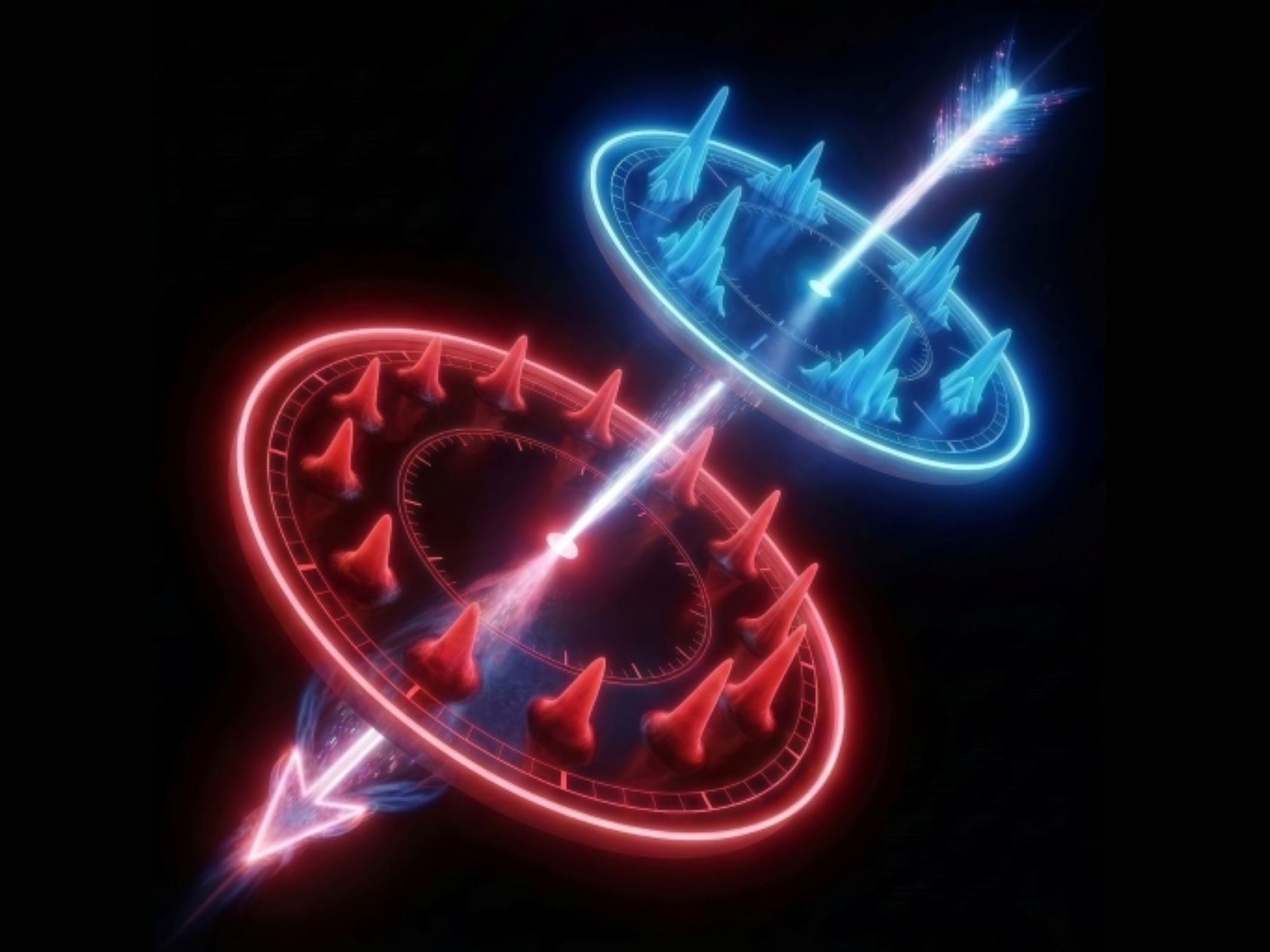
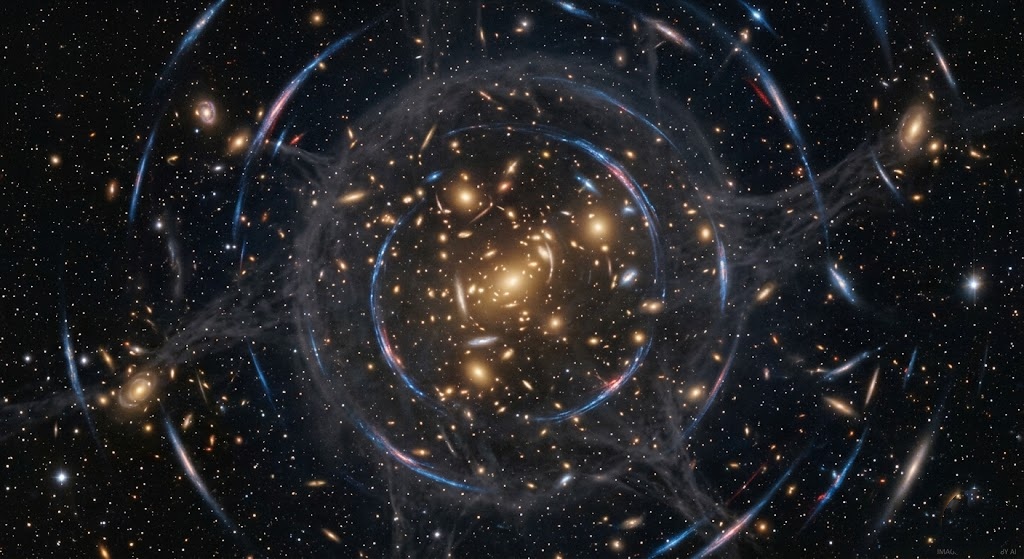
The concept of spacetime, first articulated within einstein’s theory of general relativity, represents a four-dimensional continuum where physical events unfold by merging three-dimensional space with one-dimensional time. This continuum evolves according to complex patterns dictated by the einstein field equations, which describe the profound relationship between matter, energy, and the geometry of the universe. Identifying persistent patterns within this evolution has long remained a significant challenge for theoretical physicists seeking to map the underlying order of cosmic dynamics.
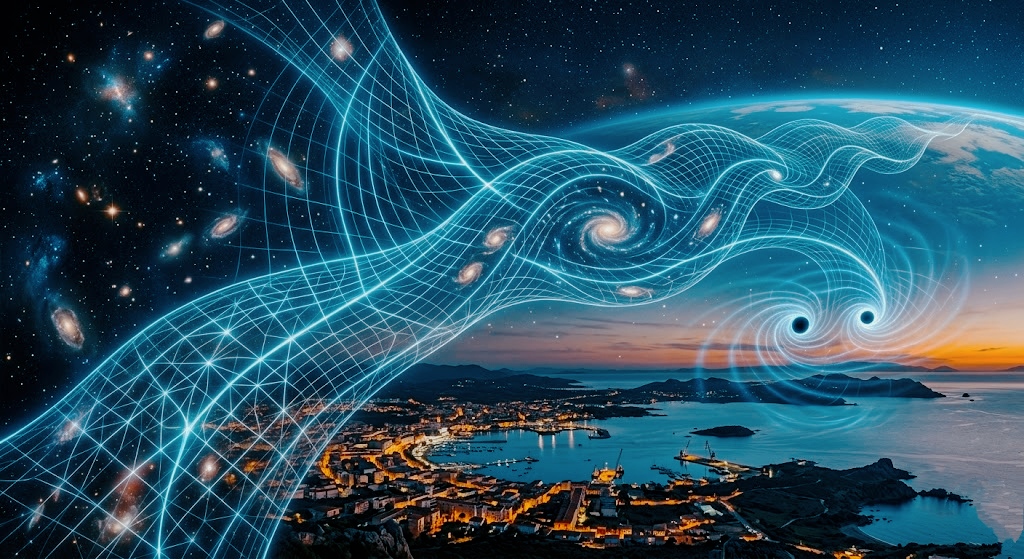
Recent collaborative research between adolfo ibáñez university and columbia university has introduced a transformative perspective by applying principles of nonlinear electrodynamics to gravitational theory. By examining the relativistic dynamics of plasma, researchers discovered that certain topological structures remain preserved even within generic curved spacetimes. This suggests that the evolution of the universe is not arbitrary but is instead governed by specific rules that maintain the connectivity of geometric field structures over time.
Topological constraints and the fluid dynamics of spacetime evolution
The theoretical framework proposed by felipe a. asenjo and luca comisso suggests that spacetime evolution is driven by topological constraints similar to those found in fluid mechanics. These rules relate to the properties of geometric objects that remain unchanged when they are stretched or bent, providing a foundation for the overall nonlinear dynamics of gravity. By identifying these invariants, the study offers a way to understand how the metric of curved spacetime preserves its essential structural integrity during cosmic expansion or contraction.
Influenced by analogies between gravity and fluid motion, the researchers sought to determine if the fundamental rules that preserve structures in electrically conducting fluids could apply to the gravitational field. Their findings indicate that specific geometric structures within the gravitational field do indeed remain preserved as spacetime evolves. These “frozen” structures provide a stable architectural map that restricts how gravity can change, offering a new lens through which to view the history of the cosmos.
This topological approach allows for a deeper investigation into how these rules might be violated under extreme physical conditions. By defining the boundaries of what is preserved, scientists can better identify the unique circumstances that lead to structural breakdowns in the fabric of the universe. This insight is crucial for developing a more robust understanding of various cosmological phenomena, ranging from the stability of black holes to the propagation of gravitational waves across vast distances.
Mathematical analogies between electromagnetism and relativity
To uncover these hidden patterns, the research team rewrote the einstein field equations using the language of electromagnetic theory, making them mathematically analogous to equations describing conducting fluids. This methodology allowed them to apply the same procedures used to prove that magnetic field lines remain connected in a plasma fluid when ohm’s law is satisfied. By establishing this link, they demonstrated that analogous gravitational field structures remain connected under specific ideal conditions.
The study introduces the concept of gravitational helicity as an important topological invariant that could prove useful in solving open problems in relativity. This framework suggests that spacetime contains structured field lines that impose strict constraints on its nonlinear evolution. By treating gravity as a fluid-like system, the researchers have created a bridge between two traditionally distinct branches of physics, allowing for the cross-pollination of complex mathematical tools.
This new approach facilitates the study of complex gravitational systems where gravity becomes exceptionally intense. By identifying the rules that limit spacetime evolution, the team provides a more predictable model for the behavior of binary black hole systems and other high-energy cosmic events. This theoretical shift from pure geometry to a more dynamic, fluidic representation offers a powerful way to calculate the invariants of the universe that remain constant despite the passage of time.
Future implications for gravitational wave detection
The identification of fundamental rules that restrict spacetime evolution has significant implications for the future of experimental physics and the detection of gravitational waves. Current predictions used by observatories such as ligo, virgo, and kagra rely heavily on computer simulations with specific initial conditions. By focusing on quantities that remain invariant within spacetime itself, researchers hope to uncover universal behaviors of gravity that could refine the accuracy of these predictions.
These preserved geometric structures are expected to enhance our understanding of strong-gravity systems, which are the primary sources of gravitational waves. As space-based detectors like lisa are prepared for launch in the coming decade, having a more precise theoretical map of gravitational dynamics will be essential for interpreting the data they collect. The ability to predict how spacetime behaves in extreme environments will allow scientists to test the limits of general relativity with unprecedented detail.
Furthermore, the team intends to explore how various phenomena observed in plasmas might manifest within non-vacuum spacetimes. This continued exploration of the analogy between plasma dynamics and gravity could reveal hidden complexities in the evolution of the cosmos. By uncovering the intrinsic restrictions of gravity, this research marks a significant step toward a more unified and comprehensive understanding of the nonlinear forces that shape our universe.
The study is published in the journal Physical Review Letters.