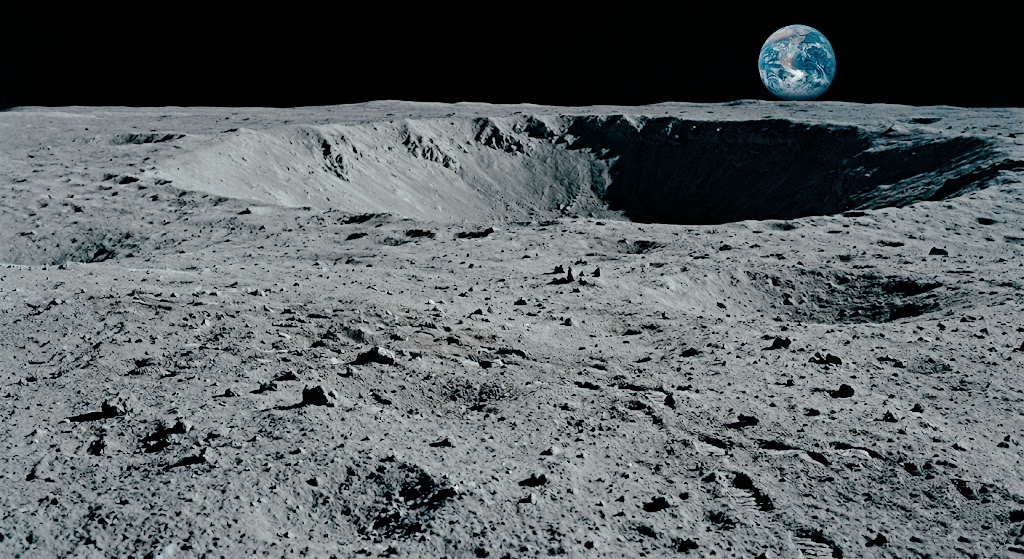
Establishing a sustainable human presence on the Moon is hindered by the logistical and economic challenges of transporting Earth-based materials. A recent study by Rice University researchers, including Denizhan Yavas and Ashraf Bastawros, offers an innovative solution by repurposing lunar dust. While traditionally viewed as a pervasive, abrasive hazard, this regolith can be effectively utilized to reinforce structural composites, significantly reducing dependence on terrestrial supplies.
From a lunar obstacle to a structural resource
Historically, lunar dust has been categorized primarily as a nuisance or an obstacle to exploration. Its pervasive and highly abrasive nature poses significant risks to mechanical systems and human habitats, requiring rigorous mitigation strategies to ensure the longevity of equipment.
The research led by Denizhan Yavas originated from a fundamental inquiry into these properties. By questioning whether this perceived threat could be repurposed, the team sought to identify if the abrasive nature of the dust might actually be advantageous in specific engineering contexts.
This shift in perspective marks a departure from traditional mitigation efforts, which focused solely on repelling the dust. Instead, the team explored how to harness the material, effectively turning a major challenge for lunar missions into an opportunity for structural enhancement.
Engineering advanced composites with lunar dust
The core of the investigation involved incorporating a lunar regolith simulant into fiber-reinforced polymer composites. These materials are already standard in high-performance aerospace engineering due to their lightweight and durable characteristics, making them an ideal foundation for experimental structural integration.
By integrating the simulant as a reinforcement phase within these composites, the researchers aimed to modify the physical properties of the materials. The experiment tested how the addition of ground lunar particles influenced the fundamental integrity of the polymer matrices.
The results were statistically significant, demonstrating improvements in strength, toughness, and damage resistance by as much as 30 to 40 percent. This confirms that a substance historically difficult to handle can be successfully engineered into a material that provides superior structural benefits.
Enabling sustainable infrastructure for long-term exploration
The implications of this research extend far beyond the laboratory setting, offering a viable pathway for future lunar development. Reducing dependence on Earth-based supplies is critical for the feasibility of long-term missions, as the costs and logistical complexities associated with transporting materials remain prohibitive.
High-performance composites reinforced with lunar materials could facilitate the construction of essential infrastructure. These might include robust habitats, protective radiation barriers, and other structures required to support a consistent human presence on the lunar surface.
Looking toward the future, the research team envisions a design philosophy where materials are deeply integrated with the lunar environment. By leveraging existing regolith to build resilient and scalable infrastructure, humanity may take a vital step toward sustainable extraterrestrial exploration.
The study is published in Advanced Engineering Materials.