Have We Just Drawn the Biggest Portrait of the Universe Ever Made?
Welcome, dear reader. We’re glad you stopped by FreeAstroScience.com today. Grab a coffee, settle in, and let us walk you through something extraordinary: a map so vast it holds 47 million galaxies, and a mystery so deep it shakes the foundations of physics itself. Stay with us until the end, because what scientists found hiding in this map might rewrite the story of our universe’s fate.
📑 Table of Contents
- What is DESI and why should we care?
- What does the cosmic web really look like?
- The numbers behind the map
- Is dark energy really constant?
- The math of an accelerating universe
- What happens next?
- Closing thoughts
The Largest 3D Map of the Cosmos Ever Drawn {#what-is-desi}
Picture this. On the night of April 14, 2026, 5,000 fiber-optic eyes on top of a mountain in Arizona swung toward a patch of sky near the Little Dipper . Every 20 minutes, they drank in ancient light, some of it billions of years old. When sunrise came, a five-year mission was done .
This is the Dark Energy Spectroscopic Instrument, or DESI for short. It sits on the Nicholas U. Mayall 4-meter Telescope at Kitt Peak National Observatory, about 55 miles from Tucson . We’ve been writing this piece especially for you at FreeAstroScience.com, because a story this big deserves plain language, not jargon walls.

Why build such a monster?
Simple. We wanted to measure dark energy, the strange stuff that makes up roughly 70% of everything. Nobody knows what it is. We only know it’s pushing galaxies apart faster and faster. So DESI built the largest high-resolution 3D map of the universe ever made, spanning 11 billion light-years.
What Does the Cosmic Web Look Like? {#cosmic-web}
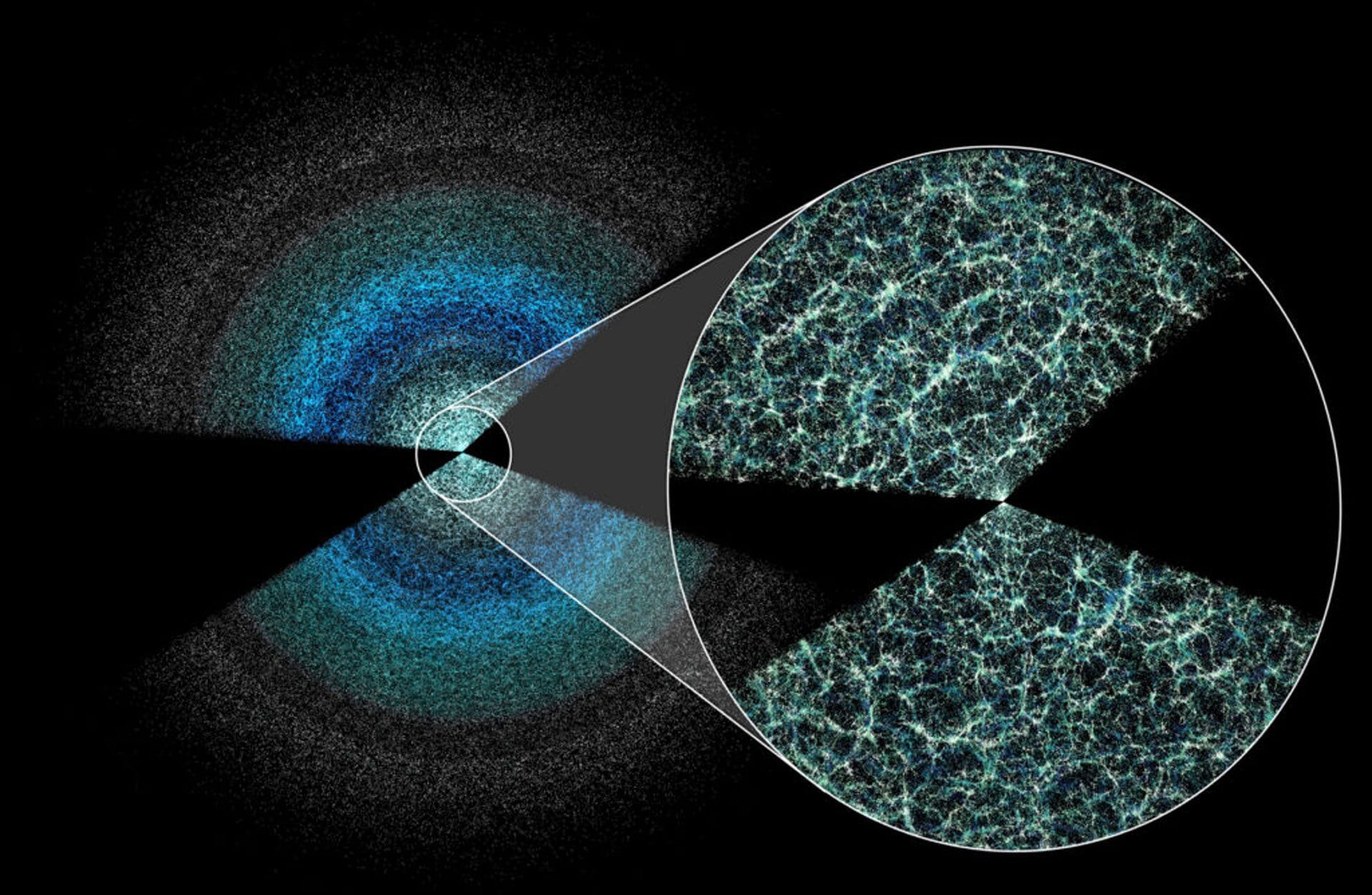
Look at the image above. The dark gap? That’s where our own Milky Way blocks the view of distant objects . The spiderweb pattern in the zoomed-in circle? That’s the real shape of the universe at the largest scales.
Galaxies aren’t scattered randomly. They cluster along filaments, stretched between empty voids like cosmic cobwebs. We’re seeing gravity and dark energy fight each other across billions of years . Gravity pulls galaxies into clumps. Dark energy pulls everything apart. The result? This delicate lace pattern you’re looking at.
Every pixel of light in that inset traveled for up to 11 billion years to land in DESI’s fiber optics . Think about that. Those photons left their galaxies before Earth even existed.
The Numbers Behind the Map {#numbers}
Let’s put this achievement in perspective with some hard figures.
| Metric | Original Goal | Actually Achieved |
|---|---|---|
| Galaxies & quasars observed | 34 million | 47+ million |
| Nearby stars logged | — | 20+ million |
| Sky coverage | 14,000 sq. degrees | Extending to 17,000 sq. degrees by 2028 |
| Cosmic history traced | — | 11 billion years |
| Collaboration size | — | 900+ scientists, 70+ institutions |
| Wavelength range | — | 360 nm – 980 nm |
DESI has now collected cosmological data for six times as many galaxies and quasars as all previous measurements combined . That’s not a typo. Six times everything humanity had before.
The survey ran on schedule despite the COVID-19 pandemic and the 2022 Contreras Fire that swept over Kitt Peak . Firefighters saved the telescope. Monsoons and mudslides slowed recovery. Yet the team finished ahead of schedule .
Is Dark Energy Really Constant? {#dark-energy}
Here’s where things get juicy. Einstein gave us the cosmological constant, a fixed value representing a uniform, unchanging dark energy. It’s the backbone of the Lambda Cold Dark Matter (ΛCDM) model, our standard picture of the universe .
But DESI’s first-year data, analyzed in April 2024, dropped a bombshell. It hinted that dark energy might be weakening over cosmic time .
“The weakening acceleration observed by DESI can no longer be explained with a cosmological constant. This could be the most interesting discovery in cosmology since that of dark energy itself.” — Nathalie Palanque-Delabrouille, DESI collaborator, Berkeley Lab
If confirmed, this would be a genuine paradigm shift . Einstein’s “constant” wouldn’t be constant at all. The fate of the universe, the whole balance between matter and dark energy, would need rethinking .
How did they spot this?
DESI uses a technique called baryon acoustic oscillations (BAO). Sound waves that rippled through the early universe left frozen imprints in how galaxies cluster today . By measuring the typical distance between galaxy pairs at different cosmic ages, scientists build a cosmic ruler. That ruler tells us how fast space has been stretching.
Combine BAO with the cosmic microwave background and Type 1a supernovae, and you get a crosscheck on dark energy . No single probe cracks the mystery alone. Together, they’re starting to whisper surprises.
The Math of an Accelerating Universe {#math}
Let’s peek under the hood, just briefly. The expansion of the universe follows the Friedmann equation:
H2 = (8πG/3) ρm + (Λc2/3)
where H is the Hubble parameter, ρm is matter density, and Λ is the cosmological constant
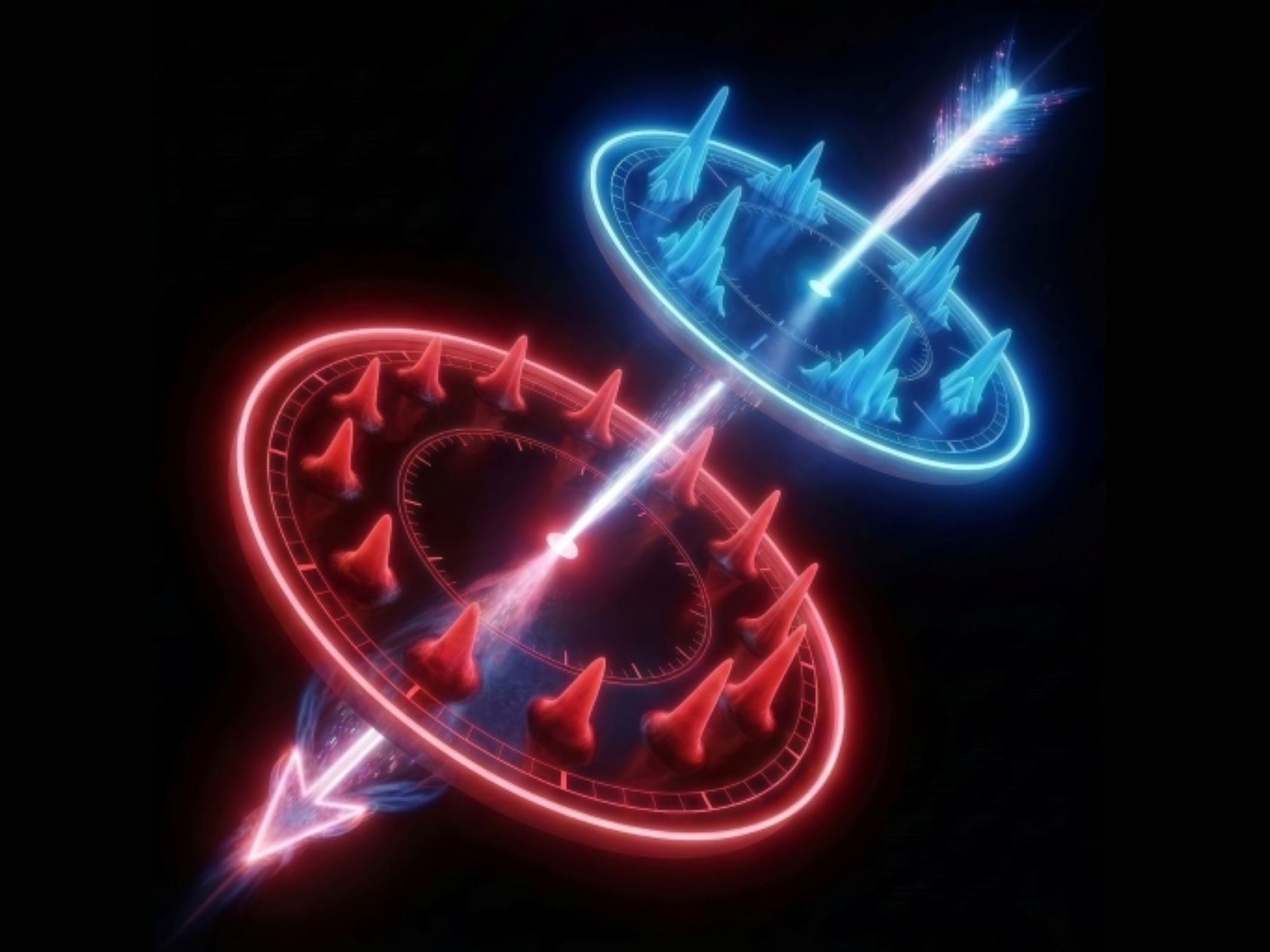
If Λ is truly constant, the second term stays fixed forever. But if DESI’s hint holds up, that term itself is evolving. You’d need to replace Λ with something like a dynamic field, sometimes called “quintessence,” that changes value as the universe ages.
The equation of state for dark energy is usually written as:
w = p / ρ
For a cosmological constant, w = -1 exactly. If w deviates from -1, dark energy isn’t constant.
DESI’s data suggests w might not sit stubbornly at -1. That tiny number holds enormous consequences.
What Happens Next? {#whats-next}
Don’t put away your telescope just yet. DESI isn’t stopping. It’ll keep observing through 2028 and extend the map by about 20%, from 14,000 to 17,000 square degrees .
Here’s what’s coming:
- Luminous red galaxies — fainter, more distant targets to densify the existing map
- Dwarf galaxies and stellar streams — stars ripped from smaller galaxies by Milky Way gravity, useful for probing dark matter
- First full five-year cosmology papers expected throughout 2027
- New regions near the galactic plane and deeper southern sky
The first Data Release 2 (DR2) cosmology papers already appeared in Physical Review D in October 2025 . More are on the way.
We’re sitting, as Stephanie Juneau put it, “on the edge of my seat” . So are we at FreeAstroScience.
Closing Thoughts {#conclusion}
What have we learned today? That humans, working together across 14 countries and 75 institutions , can chart 47 million galaxies across 11 billion years. That the web-like structure of the universe isn’t just a pretty picture; it’s a data goldmine. And that Einstein’s elegant cosmological constant may have to make room for something weirder.
The nature of dark energy is still the biggest mystery in cosmology. DESI hasn’t solved it. But it has handed us the sharpest tool yet to chip away at the question.
This article was written specifically for you by FreeAstroScience.com, where we break down complex scientific ideas into plain, human language. Our mission is to keep your mind switched on, always, because the sleep of reason breeds monsters. Come back soon — the universe keeps writing new chapters, and we’ll keep reading them together with you.
Keep looking up. Keep thinking. See you next time at FreeAstroScience.com.
📚 References & Sources
- Space.com — A dark energy tool just created the most comprehensive 3D map of our universe ever
- Wikipedia — Dark Energy Spectroscopic Instrument
- DESI Official Site — Lawrence Berkeley National Laboratory
- NOIRLab — DESI Completes Planned 3D Map of the Universe
- EarthSky — DESI’s 3D map of the universe is complete!
- UC Santa Cruz — DESI completes largest high-resolution 3D map of universe to date
- Berkeley Lab News Center — DESI Completes Planned 3D Map of the Universe
- Science/AAAS — Astronomers complete largest 3D map of the universe ever made