Luca Parmitano Artemis III Pilot: Italy Reaches for the Moon Once More
Have you ever imagined an Italian sitting at the controls of the most ambitious lunar spacecraft of our generation? Welcome, dear readers of FreeAstroScience.com. Today we share a story that makes our hearts beat a little faster, written specifically for you by our team, where we translate complex science into words anyone can grasp. We invite you to read every line to the end, because what NASA announced on June 9, 2026 is far more than a press release. It’s a moment of pride for Italy, for Europe, and for everyone who still looks up at the night sky with wonder.
A New Chapter Opens, and It Speaks Italian
NASA’s announcement on June 9, 2026 named four people who’ll fly on Artemis III. One of them carries an Italian passport. That alone tells you something has shifted. For the first time, a European astronaut sits in the pilot’s seat of an Artemis flight. And that European is one of ours: Colonel Luca Parmitano of the Italian Air Force, ESA astronaut, and now pilot of humanity’s next big push toward the Moon .
As the Luca Parmitano Artemis III pilot, he brings an impressive background that will be vital for this historic mission.
We don’t say this lightly. This isn’t symbolic. Parmitano won’t be a passenger. He’ll handle the spacecraft maneuvering alongside the NASA commander during some of the trickiest orbital choreography ever attempted.
Who’s Flying? Meet the Artemis III Crew
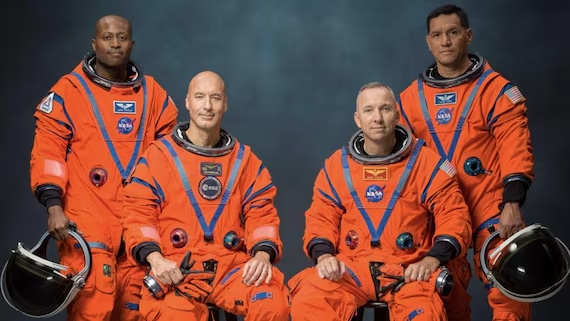
NASA picked four astronauts plus one backup. Here’s the team going up :
| Role | Astronaut | Agency |
|---|---|---|
| Commander | Randy Bresnik | 🇺🇸 NASA |
| Pilot | Luca Parmitano | 🇮🇹 ESA (Italy) |
| Mission Specialist | Frank Rubio | 🇺🇸 NASA |
| Mission Specialist | Andre Douglas | 🇺🇸 NASA |
| Backup | Bob Hines | 🇺🇸 NASA |
Bresnik brings command experience. Rubio holds the U.S. record for the longest single spaceflight. Douglas flies his first mission. And Parmitano? He brings something rare: the cool head of a test pilot who’s already faced death in a spacesuit and walked away calm enough to fly again.
Why Luca Parmitano? An Italian at the Stick
Look at the numbers, and the choice writes itself.
A Career Built in the Sky
- 366 days** in space across two long missions: Volare (2013) and Beyond (2019)
- Six spacewalks totaling more than 30 hours outside the Station
- Former Commander of the International Space Station
- Over 2,000 flight hours logged
- Qualified on more than 20 military aircraft and helicopters; flown over 40 types in total
- Trained as Experimental Test Pilot at EPNER in Istres, France
- Promoted to Colonel in the Italian Air Force in 2019
That’s not a résumé. That’s a portrait of someone who’s spent his life pointing machines at the unknown and bringing them back.
### The Man Who Almost Drowned in Space
Some readers will remember the 2013 spacewalk when water flooded Parmitano’s helmet and nearly killed him. He kept his composure. He came home. Then he went back up. NASA didn’t pick him in spite of that incident. They picked him partly because of it. When you need a pilot for risky rendezvous and docking maneuvers, you want someone who’s already proved he can think clearly when things go sideways.
In Parmitano’s own words: “As a test pilot, this is truly a dream mission, as we’ll be able to help testing systems and developing procedures so that future crews may go further” .
What Will Artemis III Actually Do?
Here’s where the news gets interesting, and a bit surprising.
No Moon Landing This Time
The original plan called for Artemis III to put boots back on the lunar surface. That changed. NASA reorganized the mission. Artemis III will now stay in low Earth orbit for about two weeks.
Why? Because before you trust a system to land humans on another world, you test it where rescue is still possible.
The Choreography in Orbit
Picture this sequence :
- Blue Origin’s lander launches first and parks itself in low Earth orbit
- The Orion capsule lifts off atop NASA’s Space Launch System rocket from Kennedy Space Center
- Orion docks with the Blue Origin lander and the crew runs days of joint operations tests
- They separate, and then SpaceX’s Starship launches to dock with Orion for about a day
- Splashdown in the Pacific Ocean closes the mission
The crew will rehearse the rendezvous and docking choreography that future missions need to put humans back on the Moon starting with Artemis IV.
### Why This Test Matters
Two private lunar landers. One spacecraft. Multiple heavy-lift launches coordinated like a ballet. NASA Administrator Jared Isaacman called it “the most awe-inspiring coordination of heavy-lift rocket launches in history”. He’s not exaggerating. Nothing like this has ever been attempted.
The data Parmitano and his crewmates collect will shrink the risks for everyone who flies after them.
How Big Is Europe’s Role in This Mission?
Europe isn’t a guest at this party. Europe brought the engine.
The European Service Module: Orion’s Powerhouse
ESA’s European Service Module (ESM) provides the Orion spacecraft with :
- Power through four solar arrays
- Propulsion for the main maneuvers
- Thermal control
- Air and water for the four astronauts on board
Without the ESM, Orion is a beautiful capsule that goes nowhere. With it, Orion flies.
Built in Turin, Assembled in Bremen
Here’s the part that should make every Italian sit up straight. The structure of every European Service Module is built by Thales Alenia Space in Turin. Italian engineers, Italian factories, Italian craftsmanship. Final assembly happens at Airbus in Bremen, Germany.
The third module, ESM-3, is the one Parmitano will rely on. It already left Bremen in August 2024 aboard the Canopée vessel, was handed over to NASA in September 2025, and is now finishing tests at Kennedy Space Center .
Europe by the Numbers
Daniel Neuenschwander, ESA’s Director of Human and Robotic Exploration, summed it up well: “Europe will play not only one but two decisive roles in this upcoming Artemis mission” . A pilot in the seat. An engine in the back.
Why Should Italians Feel Proud Today?
Let’s say it plainly. We don’t get many days like this one.
A boy from Catania, Sicily, who joined the Italian Air Force in 2007 , is now the first European pilot in NASA’s return to the Moon. The propulsion module that will push him through space carries the fingerprints of workers in Turin. The country that gave the world Galileo, Cassini, and Schiaparelli now sends one of its own to test the spacecraft architecture that will, within a few short years, place human boots back on lunar dust.
Parmitano himself thanked the chain that lifted him up: the Italian Air Force for his early training, the Italian Space Agency and “Italy as a whole” for trusting him with his first long-duration flight when he was still a rookie, and ESA for everything since.
This isn’t national mythology. This is engineering, training, and twenty years of patient investment paying off in front of the whole world.
When Does This All Happen?
Mark your calendar. NASA targets late 2027 for launch, with mid-2027 timeframes also discussed. The first wet dress rehearsals (full launch-day simulations) start before the end of 2026.
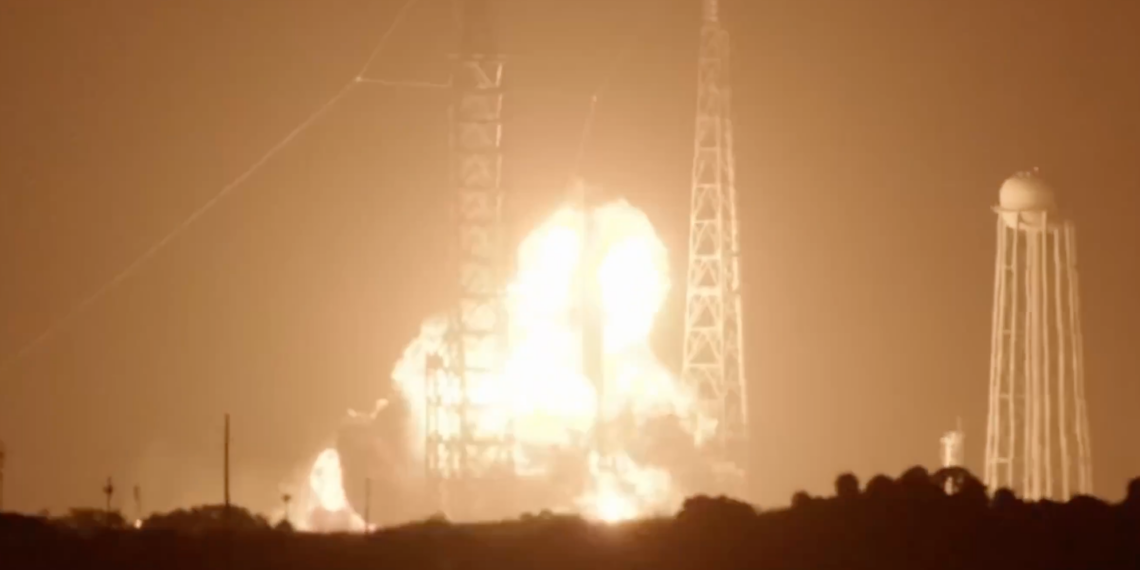
One open question lingers. Blue Origin’s New Glenn rocket exploded during a static fire test on May 28, 2026 . The company says its lander will be ready by 2027 anyway. Pad repairs at the Cape could still push the schedule. Space hardware doesn’t care about deadlines. It’s ready when it’s ready.
Closing Thoughts: A Reason to Keep Looking Up
We at FreeAstroScience.com wrote this piece because we believe stories like Parmitano’s matter beyond the headlines. Italy didn’t stumble into this seat. Generations of teachers, engineers, pilots, and dreamers built the ladder he’s climbing. When ESA’s Director General Josef Aschbacher said “Europeans can take pride in being part of this exciting journey”, he wasn’t being polite. He was stating a fact written in metal, code, and human courage.
We remind you, as we always do, never to switch off your mind. Goya warned us that the sleep of reason breeds monsters. The opposite is also true: an awake mind, curious and trained, breeds rockets, lunar landers, and the rare gift of seeing your country’s name on a spacecraft heading toward the Moon.
Come back to FreeAstroScience.com. Bring your questions. Sharpen your thinking with us. The sky isn’t a limit. It’s an invitation.
Frequently Asked Questions
Will Luca Parmitano walk on the Moon during Artemis III?
No. NASA reorganized the mission. Artemis III will stay in low Earth orbit to test rendezvous and docking with Blue Origin and SpaceX landers. Lunar landings start with Artemis IV .
Is Parmitano the first European on an Artemis mission?
Yes. Luca Parmitano is the first European astronaut assigned to fly on a NASA Artemis mission, sitting as pilot alongside commander Randy Bresnik .
What does the European Service Module do for Orion?
The ESM supplies power, propulsion, thermal control, air and water for the four astronauts on board. Its structure is built by Thales Alenia Space in Turin, Italy, with final assembly by Airbus in Bremen, Germany .
When will Artemis III launch?
NASA targets late 2027, with the first wet dress rehearsals starting before the end of 2026. Hardware readiness, including Blue Origin’s lander after the May 2026 New Glenn incident, could shift the date .
How long has Luca Parmitano spent in space already?
366 days across two missions (Volare in 2013 and Beyond in 2019), including six spacewalks totaling more than 30 hours, plus a stint as ISS Commander .