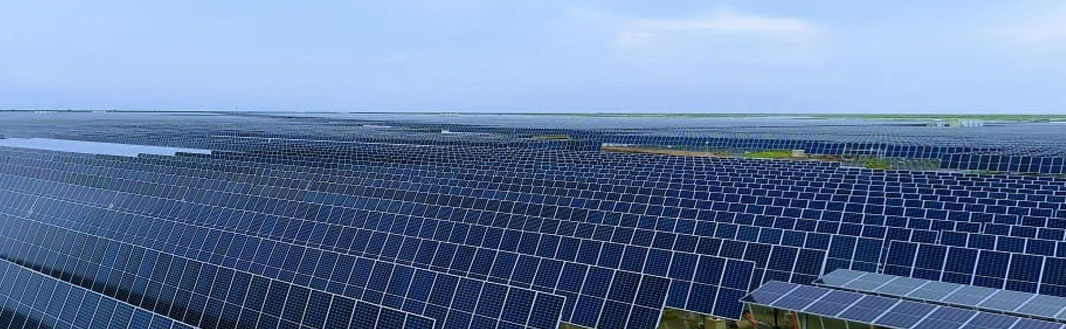
What happens when you cover an area the size of Paris with solar panels — right in the middle of salt marshes and monsoon floods? You get one of the most ambitious clean energy projects on Earth.
Welcome to FreeAstroScience, where we break down complex science into clear, human language. We’re glad you’re here. Today, we’re taking you to the sun-scorched flatlands of Gujarat, India, where an extraordinary solar mega-park is reshaping how we think about renewable energy at scale. Whether you’re a physics enthusiast, an engineering lover, or just someone curious about our planet’s energy future — stay with us to the end. The story is worth it.
📑 Table of Contents
- What Is the Dholera Solar Park?
- How Big Is This Solar Park, Really?
- What Engineering Challenges Did Builders Face?
- How Do the Solar Panels Actually Work?
- What Are the Key Numbers Behind Dholera?
- How Much Carbon Does Dholera Offset?
- What Is the Economic Impact?
- Final Thoughts
The Mega Solar Park That Could Power a Nation’s Future
The sun doesn’t send us a bill. That old saying has never been more relevant than right now, in a world hungry for clean energy and running out of patience with fossil fuels. India — the world’s most populous nation — knows this better than most. And the country is making a massive bet on sunlight.
We’re talking about the Dholera Solar Park, a project so large it’s hard to wrap your head around it.
What Is the Dholera Solar Park?
The Dholera Solar Park sits within the Dholera Special Investment Region (DSIR), a designated industrial zone in the Ahmedabad district of Gujarat, India . The Indian government designed this region as the foundation for a futuristic “smart city” — one powered almost entirely by solar energy.
At its core, the project’s goal is bold: produce 5 GW of clean electricity per year by 2030 . That’s gigawatts, not megawatts. Five billion watts of power, harvested from nothing but sunlight.
Within this vast zone, Tata Power Solar has already commissioned a 300 MW solar plant — India’s largest single-axis solar tracker system — generating 774 million units (MUs) of electricity annually Think of this 300 MW installation as the first major chapter in a much longer story.
How Big Is This Solar Park, Really?
Numbers can feel abstract. So let’s put it this way.
The full Dholera Solar Park spans 11,000 hectares — that’s 110 square kilometers of photovoltaic panels . If you’ve ever visited Paris, imagine covering the entire city with solar panels. That’s roughly the same footprint.
The Tata Power 300 MW Phase
The already-completed 300 MW Tata Power installation alone occupies 1,320 acres, split across six plots of 220 acres each . Across those plots, engineers installed a staggering 873,012 monocrystalline PV modules.
Let that number sink in. Nearly a million individual solar panels — in a single project phase.
What Engineering Challenges Did Builders Face?
Building a solar park in a desert sounds straightforward, right? Point the panels at the sun and collect the energy. The reality at Dholera was far more complicated.
Salt, Mud, and Monsoons
Dholera lies in the Gulf of Khambhat — an area defined by muddy terrain, salt marshes, and violent monsoon flooding . This isn’t a stable, rocky desert. The ground shifts. It floods. Salt eats through metal.
Engineers had to design mounting systems that could resist extreme salt corrosion. Every support structure received reinforced hot-dip galvanization to prevent the salty air from destroying them within a few years .
To keep panels from sinking or lifting in the soft, wet soil, builders drove specialized piles to calculated depths — a careful balancing act between stability and flexibility during the rainy season .
Cable Installation Under Water
During construction of the 300 MW Tata Power phase, unpredictable heavy rains flooded the 33 kV cable trenches completely . The execution team didn’t stop. They used floaters to lay high-tension (HT) cables on submerged ground. Where conventional underground cable routes failed, the team switched to pre-cast ballasts, raising power cables 500 mm above ground level was engineering on the fly — solving problems in real time, in the rain, during a global pandemic.
Yes, COVID-19 was happening too. Tata Power Solar managed to commission the entire 300 MW project within the planned timeline despite lockdowns, machinery restrictions, and limited manpower movement .
How Do the Solar Panels Actually Work?
This is where the physics gets exciting. Dholera isn’t just big — it’s a testing ground for cutting-edge solar technology.
Bifacial Panels: Catching Light From Both Sides
Many of Dholera’s sections use bifacial photovoltaic panels . Unlike conventional solar panels that only capture sunlight hitting their front face, bifacial modules also harvest light reflected off the ground beneath them.
Why does this work so well at Dholera? The terrain has light-colored, sandy tones that bounce a significant amount of sunlight back upward . This reflected energy gets absorbed by the panel’s rear side, producing a meaningful boost in total electricity output — essentially squeezing more watts from the same sun.
Single-Axis Solar Trackers
Static panels generate less energy because the sun moves. Dholera’s solution? Single-axis tracking systems that rotate panels from east to west throughout the day, following the sun’s arc across the sky .
The 300 MW Tata Power installation is, in fact, India’s largest single-axis solar tracker system . These trackers maximize the angle of sunlight hitting the panels at every hour, significantly increasing daily energy capture compared to fixed-tilt installations.
Fighting the Dust: Robot Drones at Night
Here’s a problem most people don’t think about. In arid, desert-like environments, dust accumulation can cut panel efficiency by 25–30% within just a few days . That’s a huge loss.
Dholera’s engineers came up with an elegant fix: autonomous ground drones that glide across the panels during nighttime hours. These machines use microfiber brushes and ultrasonic vibrations to remove dust without scratching the glass or wasting water .
No human intervention needed. The panels wake up clean every morning.
What Are the Key Numbers Behind Dholera?
Let’s bring the data together. Here’s a snapshot of the Dholera Solar Park by the numbers.
| Parameter | Value | Source |
|---|---|---|
| Total Park Area | 11,000 hectares (110 km²) | DSIR / Geopop |
| Target Capacity by 2030 | 5 GW | Indian Government / MNRE |
| Tata Power Phase — Capacity | 300 MW | Tata Power Solar |
| Annual Energy Generation (300 MW phase) | 774 million units (MUs) | Tata Power Solar |
| PV Modules Installed (300 MW phase) | 873,012 monocrystalline modules | Tata Power Solar |
| Area Used (300 MW phase) | 1,320 acres (6 × 220-acre plots) | Tata Power Solar |
| CO₂ Reduction (300 MW phase) | ~704,340 metric tons/year | Tata Power Solar |
| Total Investment Attracted | 250 billion rupees (~$3 billion USD) | DSIR / Geopop |
| Estimated Jobs Created | 20,000+ (direct and indirect) | DSIR / Geopop |
How Much Carbon Does Dholera Offset?
This is where the math tells a powerful story.
The 300 MW Tata Power installation alone prevents approximately 704,340 metric tons of CO₂ emissions every year That’s the carbon equivalent of taking hundreds of thousands of cars off the road annually.
Now, let’s project forward. If the full 5 GW (5,000 MW) park comes online by 2030, we can estimate the total carbon offset using the data we already have.
Carbon Offset per MW (from 300 MW data):
CO₂ offset per MW = 704,340 MT ÷ 300 MW ≈ 2,348 MT/MW/year
Projected Total Offset at 5 GW (5,000 MW):
Total CO₂ offset = 5,000 MW × 2,348 MT/MW ≈ 11,740,000 MT/year
Projected Annual Energy at 5 GW:
Energy = (5,000 ÷ 300) × 774 MU ≈ 12,900 million units/year
Nearly 12 million metric tons of carbon dioxide prevented every single year. And roughly 12,900 million units of clean electricity flowing into India’s grid. These aren’t abstract projections — they’re grounded in real performance data from the already-operational 300 MW phase.
What Is the Economic Impact?
Dholera isn’t just an energy project. It’s an economic engine.
The solar park has already attracted 250 billion rupees in investment — roughly $3 billion USD . Companies like Tata Power and Gujarat Urja Vikas Nigam have chosen to set up industrial facilities in the area, drawn by the promise of cheap, reliable, clean electricity .
Jobs and a New Industrial Ecosystem
The project is expected to create over 20,000 direct and indirect jobs . And we’re not just talking about panel maintenance. The Dholera ecosystem includes positions in research and development, smart grid management, and AI-based energy monitoring .
For a region that was largely marshland and salt flats, this transformation is remarkable. A place once defined by mud and monsoons is becoming a hub for India’s clean-tech future.
Final Thoughts: Why Dholera Matters to All of Us
The Dholera Solar Park isn’t just another clean energy project. It’s a proof of concept — evidence that large-scale solar power works even in some of the toughest environmental conditions on the planet. Salt. Mud. Floods. Dust. A pandemic. Engineers faced them all, and the panels are generating power right now.
From bifacial modules catching reflected light off pale desert soil, to autonomous drones cleaning panels in the dark, to single-axis trackers chasing the sun across the sky — Dholera represents the best of what human ingenuity can do when the stakes are high enough.
India’s target of 5 GW of solar capacity by 2030 at this single location would make it one of the largest solar installations in human history. The economic ripple effects — billions in investment, tens of thousands of jobs, a new smart city rising from the Gujarat plains — show that clean energy isn’t just good for the planet. It’s good for people.
We at FreeAstroScience write these articles because we believe complex science belongs to everyone. Not locked in journals. Not hidden behind jargon. Right here, in plain language, for you. We exist to keep your mind switched on — because as Goya once warned us, the sleep of reason breeds monsters.
Come back to FreeAstroScience.com anytime. There’s always something new to learn, and we’ll always be here to explain it.
📚 References & Sources
- Tata Power Solar — 300 MW Solar Plant in Dholera, Gujarat (Case Study)
- Dholera Special Investment Region (DSIR) — Official Portal
- Ministry of New and Renewable Energy (MNRE), Government of India
- Geopop — “5 GW di energia solare all’anno entro il 2030: come funziona il Dholera Solar Park in India”