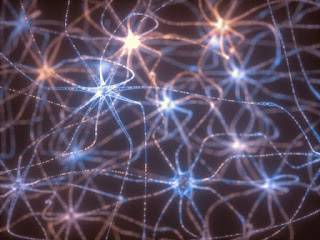

Glial cells, which appear star-shaped, are known as astrocytes and are found in the central nervous system. They are responsible for controlling blood flow and synaptic activity, preserving neuron health and being essential for breathing. Despite the recent advances in comprehending astrocytes, there is still a lot to uncover about the role they play in aiding neurons and the brain in information processing.
An investigation was carried out to find out if astrocytes could have a role in the brain’s capacity to handle both outside and inner data at the same time.
The capacity to amalgamate outside and inside data is essential for our survival and when things veer off track it can be a catalyst for mental and behavioral health disorders. Evidence has come to light that astrocytes may play a major role in this amalgamation process, according to Nathan Smith, MS, Ph.D., associate professor of Neuroscience at the Del Monte Institute for Neuroscience at the University of Rochester, and contributions from other authors.
It has been demonstrated by prior studies that astrocytes are able to detect when neurons are transmitting information and can also sense external stimuli from senses like vision and smell.
The influx of information triggers astrocytes to modify their calcium Ca2+ signaling, furnishing neurons with the most pertinent information to handle the stimulus.
Researchers noted that the calcium signaling by astrocytes may be a key element in neuronal communication and the potential consequences of an interrupted signal. Nevertheless, there is still a lot that is unstudied when it comes to the relationship between astrocytes and neuromodulators, the signals that neurons send to each other.
In Smith’s opinion, astrocytes are too frequently disregarded in the field of systems neuroscience. They posit that a malfunctioning of astrocytic calcium signaling could be a factor in afflictions that involve disturbed sensory processing, such as Alzheimer’s and autism spectrum disorder.
This study found, for the first time, that astrocytes not only take care of neurons, but may also influence their activity. It suggested that astrocytes could reduce the potassium levels in the vicinity of the neuron, thus preventing its activation.
According to Smith, the potential to utilize astrocytes in the treatment of neurological diseases may be increased if we can comprehend how astrocytes amalgamate interior and external data. He believes that learning their purpose more extensively will help promote the possibility of targeting astrocytes in neurological illness.
The communication between astrocytes and neurons is more intricate than we initially thought. Recent findings demonstrate that astrocytes are capable of detecting and responding to alterations, which is essential for altering behavior and forming memories. The authors urge that discovering more about astrocytes would facilitate our understanding of the brain’s functioning and open up the possibility of progress in medical care and treatment.
Reference:
Rune Nguyen Rasmussen, Antonis Asiminas et al. Astrocytes: integrators of arousal state and sensory context. Trends in Neurosciences. DOI: 10.1016/j.tins.2023.03.003ù