
A sophisticated approach leveraging artificial intelligence is now enabling scientists to listen to the interior of the sun, providing vital warnings regarding solar disturbances. This methodology offers a unique perspective on the phenomena that significantly affect the space surrounding earth and various human endeavors. By interpreting complex acoustic data, researchers can better understand the mechanisms that drive solar activity and its subsequent impact on our technological infrastructure.
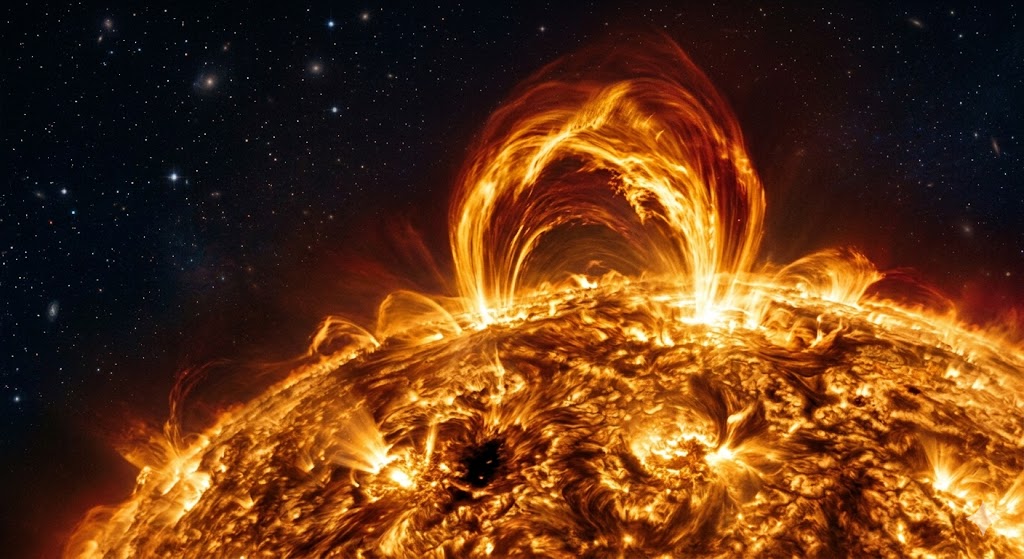
The solar cycle and its technological impact
The solar cycle represents a period of approximately eleven years during which the magnetic activity of the sun undergoes a rhythmic increase and decrease. Each cycle begins in a relatively tranquil state, marked by minimal surface disturbances and a stable magnetic environment. However, as the cycle progresses, the solar magnetic field becomes increasingly aggressive, leading to a higher frequency of sunspots and solar flares.
These intensifying magnetic conditions result in powerful eruptions known as coronal mass ejections, which can propel significant amounts of solar material into space. Such events are particularly concerning because they have the potential to disrupt satellite operations and destabilize terrestrial power grids. Consequently, solar activity exerts a direct and often challenging influence on the global communication technologies that society relies upon daily.
By utilizing machine learning to monitor the acoustic heartbeat of the sun, scientists are tracing energy flows that move from deep within the solar interior toward the surface. This advanced tracking creates a much clearer link between internal solar processes and the perturbations that threaten modern infrastructure. Dr. Rekha Jain emphasizes that the sun does not merely provide daylight but actively shapes life on earth, necessitating a deeper understanding of its energetic shifts.
Helioseismology and the role of p-modes
Pressure-driven sound vibrations, scientifically referred to as p-modes, are measured on the solar surface to gain insights into the sun’s hidden layers. These vibrations are critically important because they travel deep into the solar interior before returning to the surface with information from within. For several decades, solar scientists have observed these waves to map the internal structure of the sun with increasing accuracy.
This scientific practice is analogous to the methods used by terrestrial seismologists who study earthquakes to determine the composition of the earth’s interior. Much like the solar cycle itself, these acoustic waves follow an eleven-year rhythm, meaning their frequency varies in accordance with the sun’s overall level of activity. By understanding these wave properties, researchers are contributing to a more precise foundation for forecasting the sun’s natural behavior.
In a manner similar to a medical professional using ultrasound to examine the human body, p-modes allow researchers to effectively see inside the sun. A recent study guided by Dr. Rekha Jain demonstrates that an artificial intelligence model can decode these p-modes with remarkable efficiency. By analyzing thirty years of historical p-mode data, the team has successfully predicted when the height of these waves will reach a calm phase in the current cycle.
Artificial intelligence in space weather research
The ability to predict these acoustic waves provides researchers with an independent indicator for anticipating periods of high solar activity. These periods are closely connected to variations in the magnetic field that remain hidden beneath the solar surface until they erupt. This breakthrough establishes helioseismology as a vital new instrument within the broader and essential field of space weather research.
Helioseismology represents a multidisciplinary effort that combines traditional solar physics and magnetohydrodynamics with modern machine learning and atmospheric sciences. This integration is designed to predict and mitigate the adverse effects that solar activity can have on both technology and human society. As our reliance on electronic systems grows, the capacity to forecast space weather becomes increasingly fundamental to global security.
The application of artificial intelligence to solar data is paving the way for a future where solar events are forecasted with unprecedented precision. By decoding the internal signals of our star, researchers are developing the tools necessary to protect critical assets in space and on the ground. This ongoing research ensures that society remains resilient in the face of the sun’s powerful and ever-changing magnetic nature.
The study is published in Solar Physics.
that was surprisingly useful, i ended up going through most of it, without adding unnecessary stuff.