The Moon Is Calling — And Four Astronauts Are About to Answer
What would you give to witness the exact moment humanity returns to the Moon — live, in real time, surrounded by people who share your same quiet wonder?
Welcome, friend. We’re Gerd Dani and Flavia Ceccato from FreeAstroScience, and we’ve been counting down to this day for years. On April 1, 2026, NASA will launch four astronauts toward the Moon aboard the Artemis II mission. It’s the first crewed lunar voyage since Apollo 17 splashed down in December 1972. That’s 53 years of waiting. 53 years since a human being left our planet’s immediate neighborhood.
The waiting ends this week.

We wrote this article to give you everything you need to know — the mission, the crew, the rocket, a day-by-day timeline, and the astonishing technology that’ll beam 4K video from deep space straight to your screen. And at the very end, we’ll share how you can watch the launch live with us on our FreeAstroScience stream. Because nobody should witness history alone.
Stick around to the last line. We promise every scroll is worth it.
📑 Table of Contents
- 🔭 What Is Artemis II — And Why Does It Matter So Much?
- 👩🚀 Who Are the Four Astronauts Flying to the Moon?
- 🚀 When and Where Does the Rocket Launch?
- 📅 What Happens During the 10-Day Mission?
- 📡 How Is NASA Broadcasting From Deep Space?
- 🎙️ Our Live Stream: How to Watch With Us on April 1
- 🌕 Why Watch It Together?
🔭 What Is Artemis II — And Why Does It Matter So Much?
Let’s set the stage. The last time a human being ventured beyond low Earth orbit, Richard Nixon was in the White House. Since then, we’ve launched space shuttles, assembled the International Space Station module by module, and driven rovers across Mars. All remarkable achievements. Yet none of them carried a person past our planet’s front yard.
Artemis II rewrites that story.
This is NASA’s first crewed flight under the Artemis program — the agency’s long-term plan to return people to the Moon and, eventually, send them to Mars. The mission will test the Orion spacecraft’s life support systems with a living, breathing crew for the very first time . Think of it as the final dress rehearsal before astronauts actually set foot on lunar soil again during Artemis III.
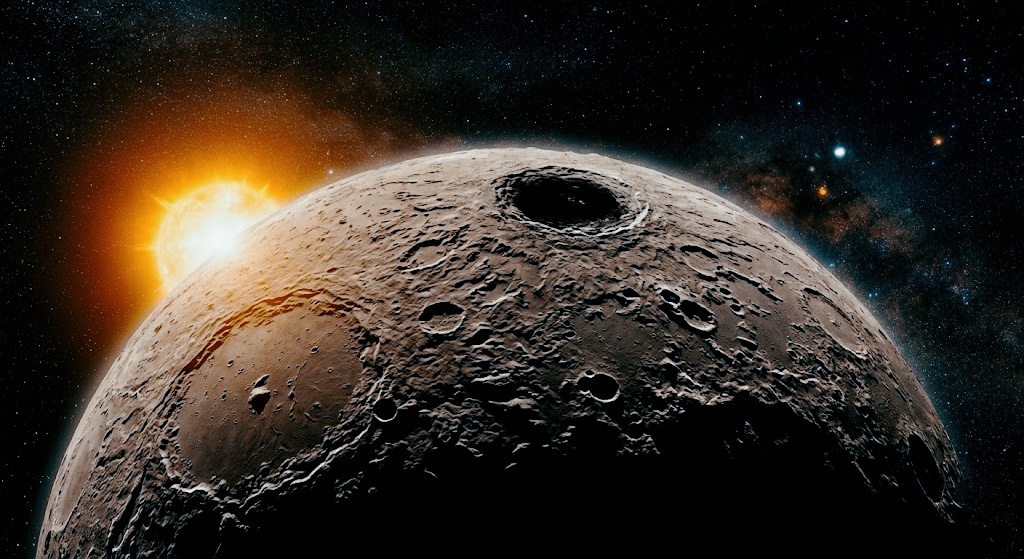
The crew won’t land on the Moon this time. They’ll fly around it, looping behind its far side and testing every system that future missions will depend on. The whole journey? About 10 days .
And here’s the number that sends a shiver down our spines: if the April 1 launch date holds, these four astronauts are expected to travel farther from Earth than any human being has ever been — surpassing Apollo 13’s record of 248,655 miles (roughly 400,171 km) people. Farther from home than anyone in history.
Let that sit with you for a moment.
👩🚀 Who Are the Four Astronauts Flying to the Moon?
Every great voyage needs a crew equal to the moment. Artemis II has exactly that .
| Astronaut | Role | Agency | Notable Fact |
|---|---|---|---|
| Reid Wiseman | Commander | NASA | Veteran astronaut & former Navy test pilot |
| Victor Glover | Pilot | NASA | First Black astronaut on a long-duration ISS crew |
| Christina Koch | Mission Specialist | NASA | Record holder: 328 days in space — longest single flight by a woman |
| Jeremy Hansen | Mission Specialist | CSA 🇨🇦 | First non-American astronaut ever assigned to a Moon-bound mission |
A few details stand out. Jeremy Hansen represents the Canadian Space Agency, and his seat on Orion marks the first time in history that a non-American astronaut has been assigned to a lunar mission. That’s a new chapter in international space exploration — and Canada should be enormously proud.
Christina Koch spent 328 consecutive days in orbit during her ISS mission. Victor Glover broke barriers as part of NASA’s SpaceX Crew-1. And Reid Wiseman, the commander, brings years of leadership forged in the Navy and at NASA.
Each of these astronauts has logged thousands of hours in simulators. We’d bet their hearts are beating just a little faster with every sunrise. Ours are, too.
🚀 When and Where Does the Rocket Launch?
Here are the numbers you’ll want to save:
| 📅 Launch Date | Wednesday, April 1, 2026 |
| 🕐 Launch Time | 6:24 PM EDT / 10:24 PM UTC |
| ⏱️ Launch Window | 2 hours (10:24 PM – 12:24 AM UTC) |
| 📍 Launch Site | Kennedy Space Center, LC-39B, Florida |
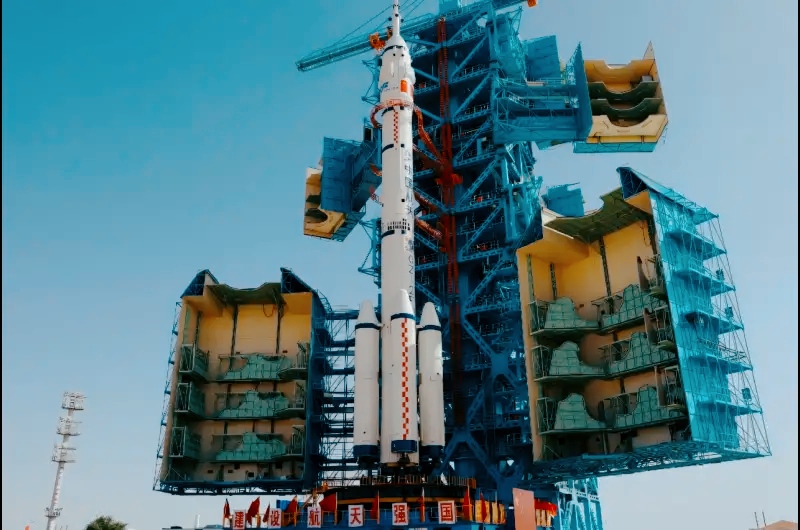
| 🚀 Rocket | Space Launch System (SLS) — NASA’s most powerful rocket ever |
| 🛰️ Spacecraft | Orion |
| 📆 Backup Dates | April 2 through April 6, 2026 |
The Space Launch System is a beast. It’s the most powerful rocket NASA has ever built, and sitting on top of it will be the Orion spacecraft — the capsule that carries the crew around the Moon and back to Earth safely’s live coverage begins early on launch day: tanking operations at 7:45 AM EDT, with full launch coverage on NASA+ starting at 12:50 PM EDT You can track Orion’s position throughout the entire 10-day journey using NASA’s AROW (Artemis Real-time Orbit Website) at nasa.gov/trackartemis if you want something warmer than a NASA feed — something with conversation, heart, and community — we’ll be right here. More on that in a moment.
📅 What Happens During the 10-Day Mission?
The mission doesn’t end at liftoff. Not even close. Here’s what the Artemis II crew will experience from Day 1 to splashdown
| Day | Date | Phase | Key Events |
|---|---|---|---|
| 1 | Apr 1 | Launch & Earth Orbit | SLS liftoff; upper-stage burn sends Orion to high Earth orbit ~2.5 hours later |
| 2 | Apr 2 | Heading Moonward | Translunar injection burn; first live crew downlink expected ~10:24 PM EDT |
| 3–5 | Apr 3–5 | Coast to the Moon | Daily status briefings; live downlinks from crew; CSA sessions included |
| 6 ⭐ | Apr 6 | Lunar Flyby | Crew passes behind the Moon’s far side — total loss of communication with Earth. Expected to break humanity’s distance record (~248,655+ miles). NASA+ coverage from 12:45 PM EDT |
| 7–9 | Apr 7–9 | Return Journey | Conversation with ISS crew (Apr 7); crew news conference (Apr 9) |
| 10 | Apr 10 | Splashdown 🌊 | NASA+ return coverage from 6:30 PM EDT. Splashdown in the Pacific Ocean at ~8:06 PM EDT. Recovery teams bring crew aboard ship |
The Moment That Gives Us Chills
Day 6 is the one we can’t stop thinking about. The crew will swing behind the Moon’s far side — the side we never see from Earth — and for a few haunting minutes, every radio link with our planet goes silent. No signal. No voice. Just four human beings, alone on the far side of the Moon, farther from home than anyone has ever been.
At approximately 1:45 PM EDT on April 6, if the April 1 launch holds, they’ll officially surpass the Apollo 13 distance record of 248,655 miles. That record has stood since April 1970 — more than 56 years.
We get goosebumps just typing that.
📡 How Is NASA Broadcasting From Deep Space?
Here’s something that separates Artemis II from every Moon mission that came before it: the broadcast technology is from the 21st century, not the 1960s .
Seeing the Moon in 4K
The Orion spacecraft carries high-definition cameras alongside an experimental laser communication system capable of transmitting 4K video from deep space . That means we won’t just hear about the lunar flyby — we’ll see it, in a visual quality that Apollo-era audiences couldn’t have imagined. The difference between Apollo’s grainy footage and what Artemis II will beam back is the difference between a postcard and an IMAX screen.
A Stronger Deep Space Network
To handle all that data flowing from hundreds of thousands of miles away, NASA has upgraded its Deep Space Network (DSN) — the global array of enormous dish antennas responsible for communicating with spacecraft far from Earth . These upgrades ensure a stable, continuous link with Orion, allowing the simultaneous reception of scientific data and live video for the public .
Artificial Intelligence in the Mix
NASA is also experimenting with AI-powered tools to process mission footage in near real time . The system can automatically generate clips and highlight reels of the most significant moments — and push them to different platforms almost instantly. The goal is to keep the world engaged across all 10 days, not just during launch and splashdown .
Astronauts Telling Their Own Story
And the crew themselves? They’ll share updates through their personal social media channels and dedicated blogs, giving us a raw, first-person window into life inside Orion as it sails through the void . That kind of intimate storytelling simply didn’t exist during the Apollo era. Now it’s baked into the plan.
NASA has also prepared an Artemis Media Kit — a digital resource packed with high-resolution photos, technical fact sheets, and explanatory graphics for journalists and content creators . On top of that, the agency is producing augmented reality experiences, virtual tours of launch facilities, and behind-the-scenes documentaries — all available on the NASA+ streaming platform, designed for mobile screens and on-demand viewing .
This isn’t just a test flight. It’s the most connected space journey in human history.
🎙️ Our Live Stream: How to Watch With Us on April 1
And now — the part closest to our hearts.
🌕
FreeAstroScience Live Stream
Watch the Artemis II Launch — Together
📅 April 1, 2026🕚 11:00 PM UTC
🎙️ Gerd Dani & Flavia Ceccato
📍 On FreeAstroScience channels
No ticket. No sign-up. Just your curiosity.
We’ve set our stream to begin at 11:00 PM UTC — roughly 35 minutes after the two-hour launch window opens at 10:24 PM UTC. That gives us time to welcome you, share some background, catch our breath together, and let the anticipation build before those five RS-25 engines and two solid rocket boosters ignite.
What You’ll Get During the Stream
- Real-time commentary as we follow NASA’s live broadcast
- Plain-language explanations of every stage — ignition, booster separation, upper-stage burn, translunar injection
- Open conversation — ask us anything, share your excitement, connect with fellow space lovers from around the world
- Post-launch reactions — what just happened, what comes next, and why it matters for the future of space exploration
Want the official NASA feed running alongside ours? It’ll be streaming on NASA+, YouTube, and Amazon Prime . You can also track Orion’s real-time position at nasa.gov/trackartemis is even inviting the public to register as virtual guests — complete with a stamp for your virtual guest passport. It’s free and takes about a minute.
But our stream? That’s where the conversation lives. Where science meets feeling. Where you’re not just watching — you’re part of it.
🌕 Why Watch It Together?
We could give you a dozen practical reasons. But let’s start with the honest one.
Space can feel lonely. Not just for astronauts — for those of us who love it from down here, too. We read about distant galaxies at 2 AM. We stare at the Moon from our windows. We carry a quiet fascination that the people around us don’t always share .
That’s exactly why moments like this matter.
When the SLS rocket lights up the Florida sky on April 1, four human beings will ride a column of fire toward the Moon. And somewhere on this planet — in kitchens, bedrooms, offices, hospital rooms — thousands of us will be watching. Holding our breath. Feeling small and enormous at the same time .
We don’t want to feel that alone. And we don’t think you should either.
A Reminder Before We Go
Here at FreeAstroScience.com, we explain complex scientific ideas in simple, clear language — because we believe knowledge belongs to everyone, not locked behind jargon or paywalls. We built this site on one guiding principle: never turn off your mind. Keep it active. Keep it curious. Keep it hungry. Because, as Goya once warned us, the sleep of reason breeds monsters.
Artemis II is more than a test flight around the Moon. It’s the opening chapter of a program that will land the first woman and the first person of color on the lunar surface . It’s a stepping stone toward Mars. It’s proof — real, tangible proof — of what we’re capable of when we refuse to stop looking up.
April 1, 2026. 11:00 PM UTC. We’ll be live. Waiting for you.
No ticket. No sign-up. Just your curiosity and a screen.
Mark the date. Tell a friend. Set your alarm. And when the countdown reaches zero, know this: you’re not watching alone.
Come back to FreeAstroScience.com whenever you need a place where the universe is explained in words that feel like home. Because science belongs to all of us. Every single one.
See you under the same sky. 🌕
— Gerd Dani & Flavia Ceccato, FreeAstroScience