Hantavirus in Argentina: What’s Really Happening Right Now?
Have you ever wondered how a tiny mouse, hiding in a remote corner of Patagonia, could send shockwaves through a Dutch cruise ship docked thousands of miles away in the Canary Islands?
Welcome, dear reader. We’re glad you found us here at FreeAstroScience.com, where we translate complex science into words you can actually use. Today we want to walk you through one of the strangest public-health stories of 2026: the Andes hantavirus outbreak linked to the cruise ship MV Hondius. Stick with us to the end, because the full picture, the numbers, the geography, and the reasons behind this outbreak, only make sense once you see how the pieces fit together.
📑 Table of Contents
- What happened on the MV Hondius?
- What is Andes hantavirus, exactly?
- How bad is Argentina’s 2025–2026 season?
- Where are Argentinians getting infected?
- Could Tierra del Fuego be ground zero?
- What did we learn from Epuyén in 2018?
- Should we worry about a global outbreak?
- How can we protect ourselves?
What happened on the MV Hondius?
On 10 May 2026, the Dutch cruise ship MV Hondius reached the port of Granadilla in Tenerife, Canary Islands. Passengers and crew, 114 travellers and 61 crew members from 22 different countries, began disembarking under strict medical protocols.
Everyone on board was treated as high-risk. Those with symptoms went straight into medical isolation; those without were flown home on non-commercial flights and asked to quarantine for up to six weeks. One former passenger developed acute symptoms on their flight back to France and ended up in intensive care.
The ship had started its trip on 1 April, more than 6,000 miles away in Ushuaia, Argentina’s southernmost city, often called “The End of the World” . Somewhere along that route, the virus came aboard. The sad part? The likely “patient zero” is believed to be a Dutch couple, aged 69 and 70, who both died from the infection.
What is Andes hantavirus, exactly?
Let’s slow down and explain. Hantaviruses are RNA viruses carried by wild rodents. They belong to the genus Orthohantavirus, family Hantaviridae, and about 40 species have been identified worldwide . Humans usually catch them by breathing in aerosols from rodent urine, droppings, or saliva.
In the Americas, these viruses can trigger Hantavirus Cardiopulmonary Syndrome (HCPS), a fast-moving lung and heart disease with a case fatality rate that can reach 50%. In Europe and Asia, the related illness is Haemorrhagic Fever with Renal Syndrome (HFRS), which attacks the kidneys .
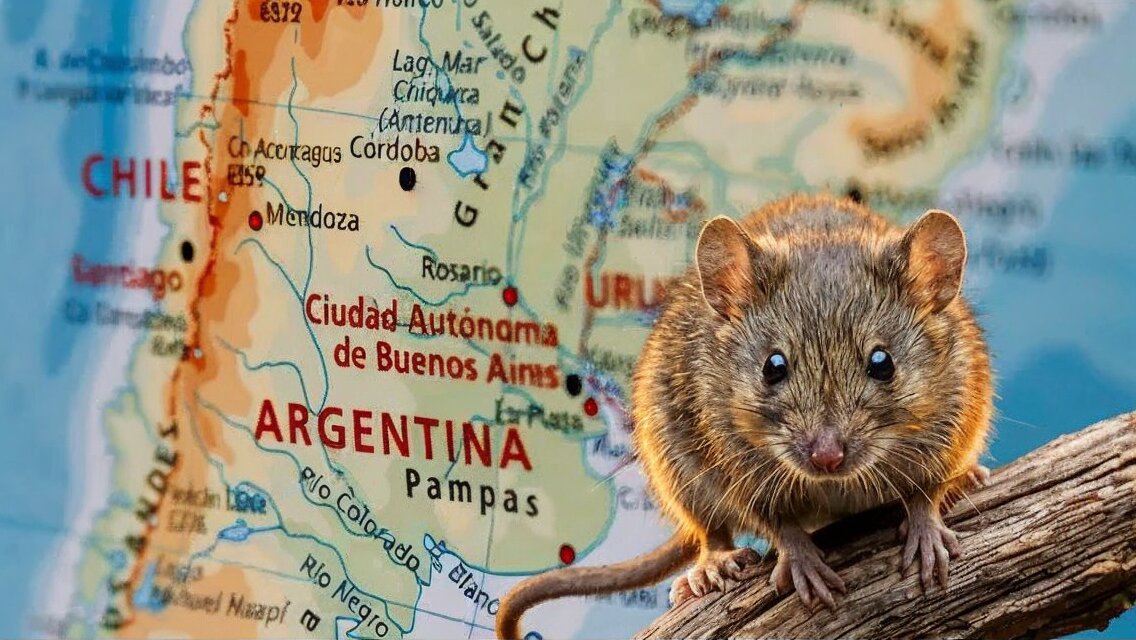
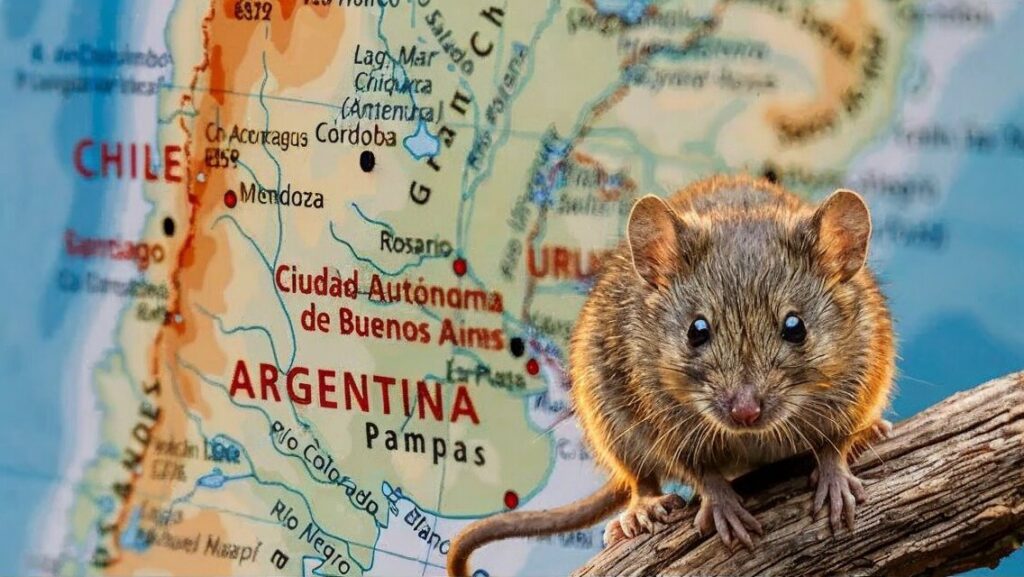
The Andes virus (ANDV) is the troublemaker here. It circulates in southern Argentina and Chile, and it carries one rare and worrying trait: it’s the only hantavirus known to transmit from person to person . Its main carrier is the long-tailed pygmy rice rat (Oligoryzomys longicaudatus), a wild rodent of the Andes region.
How does person-to-person spread actually work?
Human-to-human transmission is uncommon and happens mostly through close, prolonged contact, think household members or intimate partners. It seems most likely during the early phase of illness, when viral loads peak. First documented in El Bolsón, Argentina, in 1996, this rare feature is exactly what makes the Andes virus so relevant to the MV Hondius case .
How bad is Argentina’s 2025–2026 season?
Here’s where the numbers get our attention. According to Argentina’s National Epidemiological Bulletin (SNVS 2.0), between June 2025 and April 2026 the country recorded 101 confirmed hantavirus cases, the highest single-season total since 2019.
That’s a 58% jump compared to the previous season. And the case fatality rate? A sobering 31.7%, up from 22% the year before.
| Indicator | Value |
|---|---|
| Confirmed cases (Jun 2025 – Apr 2026) | 101 |
| Deaths | 32 |
| Case fatality rate | 31.7% |
| National incidence (per 100,000) | 0.21 |
| Total confirmed cases since 2018 | 644 |
| Median patient age | 36 years |
| Patients aged 20–49 | 69% |
| Male patients | 80% |
Why are men aged 20–49 over-represented? Because they’re the ones working in fields, forests, and rural areas where the infected rodents live . Occupation, not biology, explains the skew.
Where are Argentinians getting infected?
The geography tells a clear story. Most cases cluster in three regions :
| Region | Provinces | Cases | % of total |
|---|---|---|---|
| Centro | Buenos Aires, Santa Fe, Entre Ríos | 54 | 53% |
| NOA (Northwest) | Salta (83% of regional cases) | 36 | 36% |
| Sur (South) | Neuquén, Río Negro, Chubut | 10 | ~10% |
Salta province alone posts the highest incidence in the country: 1.98 cases per 100,000 people, though still below its 2023–2024 record of 2.56 . The southern region crossed the endemic outbreak threshold in week 43 of 2025 .
What’s driving the expansion? Argentina’s Ministry of Health points to shifting rodent ranges, more people entering wild habitats, habitat destruction, small rural settlements, and climate change .
Could Tierra del Fuego be ground zero?
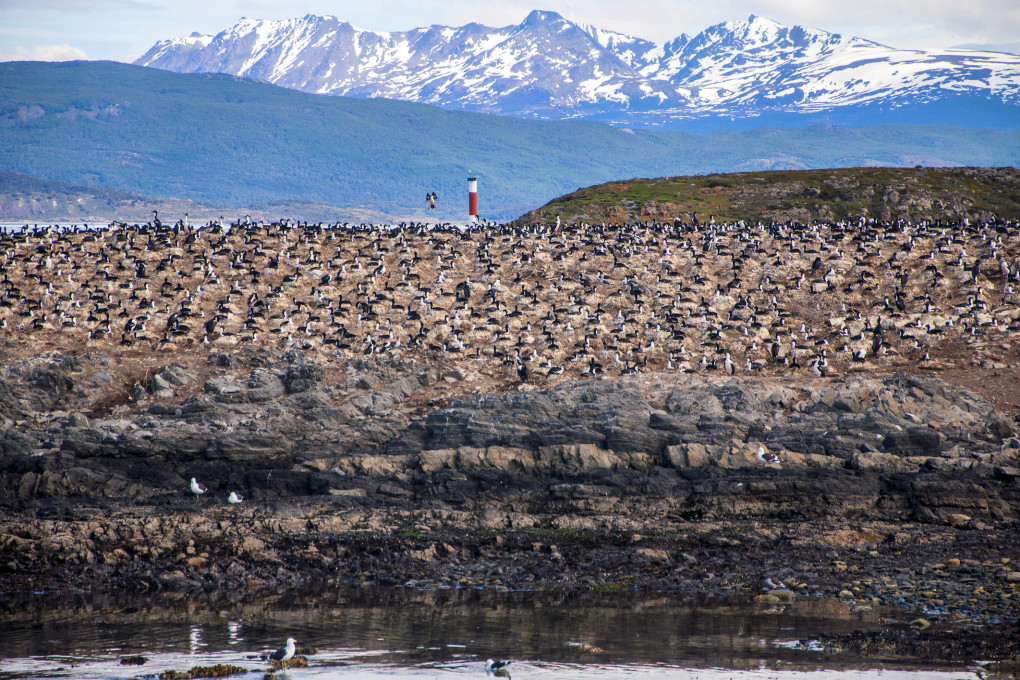
Here’s the plot twist. The MV Hondius sailed from Ushuaia, in the province of Tierra del Fuego. Naturally, fingers pointed there. One popular theory suggested a passenger caught the virus at a landfill on Ushuaia’s outskirts, where tourists go birdwatching and waste attracts rodents .
Local officials aren’t buying it. Juan Facundo Petrina, Director General of Epidemiology for Tierra del Fuego, pushed back hard:
“In Tierra del Fuego we have no record of hantavirus cases in our history. Specifically, since 1996, when the National Surveillance System included it among mandatory reporting diseases, we haven’t had a single case in Tierra del Fuego.”
Petrina also noted that the long-tailed pygmy rice rat isn’t present on the island, and the endemic zone lies more than 1,500 km (930 miles) north. For the rodents to reach Tierra del Fuego, they’d need to cross the Strait of Magellan, which, as he dryly put it, is a real obstacle .
So where did the Dutch couple likely catch it? Petrina’s best guess: a mountain region of Patagonia, somewhere in Chubut, Neuquén, or Río Negro, two to four weeks before boarding. Those provinces have historically documented cases, and the couple had travelled through them.
What did we learn from Epuyén in 2018?
If we want to understand how Andes virus spreads among humans, we have to revisit Epuyén, a village of 2,800 people in Chubut province. In 2018, researchers reconstructed an outbreak there in detail. The study later appeared in the New England Journal of Medicine in 2020 .
It started with one person, infected by a rodent, who attended a birthday party while feverish. Over three months, the numbers climbed:
Epuyén Outbreak (2018) by the numbers
- 34 confirmed infections
- 4 waves of contagion
- 11 deaths
- Reproduction number R = 2.12 (each infected person passed it to more than two others)
- 3 super-spreaders caused 64% of all secondary cases
The decisive factor? Social context. A crowded party, a funeral, the tight bonds of a small community. Still, we must be careful: Epuyén remains a single well-studied case, and the full mechanics of human-to-human Andes transmission (who spreads it, when, how) aren’t yet fully understood .
Should we worry about a global outbreak?
Short answer: no. Both the WHO and the ECDC rate the risk of global spread as very low. As Maria Van Kerkhove, WHO’s acting director for epidemic and pandemic management, put it plainly:
“This is not SARS-CoV-2. It’s not the start of a COVID pandemic. Hantaviruses have been around for a long time. They don’t spread the same way.”
Genetic sequencing of the MV Hondius samples shows the virus is very similar to Andes strains already known in South America. It’s not a new variant, and there’s no evidence it spreads more easily or causes worse disease . A preliminary analysis on Virological.org even suggests near-total genetic match with strains from 1996 and 2018 .
That said, RNA viruses mutate fast, so scientists can’t yet rule out subtle changes. Dedicated studies are still needed .
How can we protect ourselves?
There’s no licensed vaccine and no specific antiviral for hantavirus. Treatment is supportive, close monitoring and management of heart, lung, and kidney complications. Early access to intensive care saves lives .
Prevention is about keeping distance from rodents. The WHO recommends:
- Keep homes and workplaces clean
- Seal gaps that let rodents inside
- Store food in sealed containers
- Never sweep or vacuum dry rodent droppings (it creates infectious aerosols)
- Dampen contaminated areas before cleaning
- Wash hands thoroughly and often
Symptoms start 1 to 8 weeks after exposure: fever, headache, muscle aches, abdominal pain, nausea. In HCPS, things can worsen fast, cough, shortness of breath, fluid in the lungs, shock. If you’ve had possible rodent exposure and develop these signs, tell your doctor right away.
What’s our takeaway?
We’ve walked through a story that mixes an old pathogen, a cruise ship, a remote Argentinian village, and a global health system doing its job. The Andes hantavirus isn’t new. It’s been circulating for three decades, with well-known endemic zones in Patagonia and the Argentine northwest. What’s new in 2025–2026 is the higher case count, the climbing fatality rate, and the unusual setting, a cruise ship with passengers from 22 countries.
Does that change our risk as ordinary citizens? Not much. Does it tell us something about climate change, habitat loss, and how human activity pushes wildlife into our lives? Absolutely. That’s the quiet lesson we want you to carry home.
This article was written for you by FreeAstroScience.com, where we translate complex scientific principles into simple, human language. We believe you should never switch off your mind, because the sleep of reason breeds monsters. Come back to us whenever you want to sharpen your thinking and keep curiosity alive.
Thank you for reading to the end. Share this with someone who needs clear answers instead of panic.
— Gerd Dani, President, Free AstroScience
📚 References & Sources
- ECDC – Andes hantavirus outbreak update, European Centre for Disease Prevention and Control.
- World Health Organization – Hantavirus fact sheet.
- BBC News – Tourist hotspot at ‘end of the world’ denies causing hantavirus outbreak, reporting from Ushuaia.
- Ministerio de Salud de Argentina – Boletín Epidemiológico Nacional N°806, SE 16, Año 2026.
- Martínez et al. – Super-Spreading Events and Contribution to Transmission of MERS, SARS, and Andes Virus, New England Journal of Medicine, 2020.
- Jonsson, Figueiredo, Vapalahti (2010) – A global perspective on hantavirus ecology, epidemiology, and disease, Clinical Microbiology Reviews, 23(2), 412–441.
- Tian H., Stenseth N.C. (2019) – The ecological dynamics of hantavirus diseases, PLoS Neglected Tropical Diseases.