The Weak Force’s Strange Obsession with Left-Handed Neutrinos
Have you ever felt like the world wasn’t built for you — like you’re playing by rules nobody else has to follow? What if an entire class of particles felt the same way? What if one of nature’s four fundamental forces refused to interact with half of reality?
Welcome back to FreeAstroScience.com, where we turn the most mind-bending ideas in science into something you can carry with you on the train, at lunch, or late at night when your brain won’t stop asking questions. We’re here because the sleep of reason breeds monsters — and we’d rather breed curiosity.
This is Part 2 of our neutrino series. If you missed Part 1, we covered why neutrinos break almost every expectation in physics — catch up here: Why Do Neutrinos Break Every Rule in Physics?
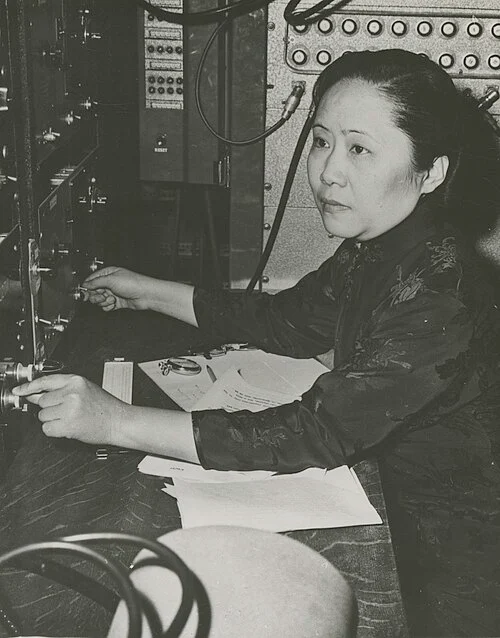
Now, things get stranger. We’re talking about handedness, a concept so disorienting that even Wolfgang Pauli — one of history’s sharpest physicists — refused to believe it at first. And we’re talking about a brilliant woman named Chien-Shiung Wu who proved him wrong.
Stick with us to the end. This story has twists that would make a screenwriter jealous.
📑 Table of Contents
- 1. What Is “Handedness” in Particle Physics?
- 2. Why Is the Weak Force the Eccentric Cousin?
- 3. Who Was Madame Wu and Why Did She Change Physics?
- 4. Why Doesn’t Handedness Matter for Most Particles?
- 5. Why Are Neutrinos Only Left-Handed?
- 6. Massive but Locked: The Paradox That Haunts Physics
- 7. Beta Decay: The Weak Force in Action
- 8. What Comes Next?
What Is “Handedness” in Particle Physics?
Before we get into the drama, let’s ground ourselves. In particle physics, “handedness” — or chirality — describes something about the internal spin of a particle relative to its direction of motion. Picture a spinning football spiraling through the air. Depending on how it spins relative to its flight path, we’d call it left-handed or right-handed.
For most of the universe, nobody cares about handedness. Gravity doesn’t care. Electromagnetism doesn’t care. The strong nuclear force? Not interested .
Think of all the forces of nature and the ways they interact: gravity and mass, electromagnetism and charge, the strong force and color charge. Left-handed? Right-handed? Makes zero difference .
An electron, for instance, constantly flits back and forth between left-handed and right-handed states. These are like two massless twins that, when combined, give us the electron we know and love — the one with mass and charge . When it hits you, you feel its mass and charge. That’s it.
Except there’s one force that breaks the pattern. And it breaks it badly.
Why Is the Weak Force the Eccentric Cousin?
Every family has one. The relative who shows up to dinner in a tuxedo and swim fins. In the family of fundamental forces, that’s the weak nuclear force .
The weak force REALLY cares about handedness. It cares so much that it only talks to left-handed particles. It’s completely blind to right-handed ones . Imagine a person at a party who will only shake hands with left-handed people. Bizarre, right? That’s the weak force.
And yet, this strange, picky force is responsible for some of the most important processes in the cosmos. One of its superpowers is beta decay — it can reach inside a neutron, grab one of its quarks, and transform it, turning the neutron into a proton . That transformation makes nuclear fusion and fission possible. Without it, stars wouldn’t shine .
So we’ve got a force that’s both wildly selective and absolutely essential. Wolfgang Pauli, the legendary (and famously grumpy) physicist, once said:
“I cannot believe God is a weak left-hander.”
He couldn’t accept that nature played favorites. But nature, as it turns out, doesn’t care what physicists find comfortable.
Who Was Madame Wu and Why Did She Change Physics?
Here’s where one of the most underappreciated stories in 20th-century physics comes in.
Chien-Shiung Wu — a Chinese-American experimental physicist known as Madame Wu and called the “First Lady of Physics” — designed and executed the experiment that proved the weak force violates parity . Parity, in simple terms, is the idea that physics should look the same in a mirror. Left and right should be interchangeable. It’s a beautiful, tidy symmetry.
Wu shattered it.
Her experiments with cobalt-60 showed that radioactive decay preferred one direction over another. The emitted electrons didn’t fly off equally in all directions — they had a preference. A handedness .
When she first announced the result, nobody liked it. It wrecked the nice, neat picture of the universe that physicists had spent decades building . But evidence is evidence. And Madame Wu was, as Paul Sutter puts it, “exceptionally good at getting it” .
Even the old curmudgeon Pauli relented .
Her colleagues Tsung-Dao Lee and Chen-Ning Yang won the 1957 Nobel Prize in Physics for theorizing parity violation. Wu, who proved it, did not receive the Nobel. History has not been kind to her recognition — but physics itself would be lost without her work.
Why Doesn’t Handedness Matter for Most Particles?
So the weak force only talks to left-handed particles. That sounds like a devastating limitation. In practice? It barely matters for most particles.
Here’s why. Every massive particle — like an electron — is ambidextrous . It constantly flips between left-handed and right-handed states. If the weak force wants to interact with an electron, it just “waits” for the left-handed version to appear (which takes almost no time at all) and grabs it .
To stretch the analogy: our picky party guest who only shakes left hands isn’t actually lonely — because everyone at the party can use both hands .
So for electrons, quarks, and other massive particles, the weak force’s left-handed obsession is a quirk. A footnote. An amusing dinner party story.
Until we get to neutrinos.
Why Are Neutrinos Only Left-Handed?
This is where the story screeches to a halt.
Every single neutrino we’ve ever observed is left-handed. Every one. In every experiment, in every reaction, across decades of particle physics. Only left-handed .
They don’t flit back and forth. They don’t switch identities. They just… are left-handed .
And antineutrinos? Those are only right-handed .
No other massive particle behaves this way. Electrons swap. Quarks swap. Protons, muons — they all dance between left and right. But neutrinos? Locked. Trillions pass through your thumb every single second, and not one of them is right-handed .
Let’s put this in a comparison:
| Particle | Left-Handed? | Right-Handed? | Swaps Between Both? |
|---|---|---|---|
| Electron (e⁻) | ✅ Yes | ✅ Yes | ✅ Constantly |
| Quark (u, d) | ✅ Yes | ✅ Yes | ✅ Constantly |
| Photon (γ) | ✅ Yes | ✅ Yes | ❌ Locked (massless) |
| Neutrino (ν) | ✅ Yes | ❌ Never observed | ❌ Locked — but MASSIVE |
| Antineutrino (ν̄) | ❌ Never observed | ✅ Yes | ❌ Locked — but MASSIVE |
Source: Based on data from Universe Today, April 2026
See the problem? Every other massive particle gets to be ambidextrous. Neutrinos are massive — and locked into one hand. That’s not supposed to happen.
Massive but Locked: The Paradox That Haunts Physics
For a long time, physicists filed this under “weird but fine” . The reasoning went like this: neutrinos were thought to be massless. And massless particles — like photons — are locked into a single chirality. A left-handed photon stays left-handed. A right-handed photon stays right-handed. No swapping.
So if neutrinos were massless, their left-handedness wasn’t a mystery. It was just how massless particles work.
There was a small oddity — we see both left-handed and right-handed photons in equal measure, but only left-handed neutrinos and right-handed antineutrinos . That asymmetry nagged at people. But it got tagged as a “problem for another day” .
Then came the bombshell.
In the late 1990s and early 2000s, experiments — particularly at Super-Kamiokande in Japan and the Sudbury Neutrino Observatory in Canada — showed that neutrinos oscillate between flavors. And oscillation requires mass. Neutrinos aren’t massless.
So now we’ve got a paradox:
- Massless particles → locked into one chirality. ✅ That’s fine.
- Massive particles → swap between left and right chirality. ✅ That’s expected.
- Neutrinos → massive AND locked into one chirality. ❌ That breaks the rules.
As Paul Sutter puts it: “The neutrino is both massive AND locked. I don’t know about you, but this sounds like a problem” .
Beta Decay: The Weak Force in Action
Let’s get concrete. The weak force’s signature move is beta decay — the process that transforms a neutron into a proton inside atomic nuclei . Without it, stars can’t fuse hydrogen. The Sun goes dark. Life doesn’t happen.
Here’s the process:
⚛️ Beta-Minus Decay (β⁻)
n → p + e⁻ + ν̄e
A neutron transforms into a proton, releasing an electron and a right-handed electron antineutrino.
⚛️ At the Quark Level
d → u + W⁻ → u + e⁻ + ν̄e
The weak force changes a down quark into an up quark by emitting a W⁻ boson, which then decays into an electron and an antineutrino.
The W⁻ boson only couples to left-handed particles — this is the parity violation Wu proved .
Notice the antineutrino in that equation? It’s right-handed. Always. That’s the only way we ever see antineutrinos — as right-handers . And when neutrinos participate in weak interactions? Always left-handed. No exceptions.
This selectiveness doesn’t just make the weak force odd. It makes neutrinos the most singular particles in the Standard Model.
How Neutrinos Interact (and Don’t)
Neutrinos are the loners of particle physics. They carry no electric charge — so electromagnetism ignores them. They carry no color charge — so the strong force ignores them too . Gravity? Sure, everything feels gravity. But the neutrino’s real relationship is with the weak force .
They speak the same language. They’re the one particle the weak force will actively seek out . And since the weak force only works with left-handed particles, and neutrinos are only left-handed… it’s a match made in some very strange corner of the cosmos.
What Comes Next?
Let’s take a breath and look at where we’ve landed.
We’ve got a fundamental force — the weak nuclear force — that only talks to left-handed particles. For most of nature, that’s no big deal, because most particles constantly swap between left and right. But neutrinos don’t swap. They’re only left-handed. Antineutrinos are only right-handed .
That was tolerable when we thought neutrinos were massless. Massless particles get locked into one chirality — it’s the law. But neutrinos have mass. And massive particles are supposed to swap hands .
Something in our understanding is either missing or wrong. The Standard Model doesn’t have a comfortable explanation for this. And that gap — that persistent, nagging contradiction — might be pointing us toward physics we haven’t discovered yet.
In Part 3, we’ll look at the most straightforward fix — and what it quietly hides . (Spoiler: it involves the question of whether neutrinos might be their own antiparticles. Yes, really.)
This article was written for you by FreeAstroScience.com, where we take complex scientific principles and explain them in plain, honest language. We believe in keeping your mind active, alert, and questioning — because the sleep of reason breeds monsters. Come back for Part 3. Keep asking why. Keep looking up.
📚 References & Sources
- Sutter, P. (2026, April 13). Are Neutrinos Their Own Evil Twins? Part 2: The Weak Left-Hander. Universe Today. universetoday.com
- FreeAstroScience. (2026). Why Do Neutrinos Break Every Rule in Physics? (Part 1). freeastroscience.com
- Wu, C. S., et al. (1957). Experimental Test of Parity Conservation in Beta Decay. Physical Review, 105(4), 1413–1415.
- Fukuda, Y., et al. (Super-Kamiokande Collaboration). (1998). Evidence for Oscillation of Atmospheric Neutrinos. Physical Review Letters, 81(8), 1562–1567.