Why Haven’t We Gone Back to the Moon — and What Changed?
If we landed on the Moon in 1969 with computers weaker than your phone, why did it take more than fifty years to go back?
Welcome to FreeAstroScience.com, where we explain complex scientific ideas in plain language. We’re Gerd Dani, writing from the helm of Free AstroScience — Science and Cultural Group — and today we’re answering one of the most common questions in all of space exploration.
It’s a fair question. Twelve human beings walked on the lunar surface between 1969 and 1972. Then — silence. More than half a century of it. No conspiracy. No lost alien secrets. Just a very human mix of politics, money, shifting priorities, and the slow, painful work of rebuilding what we once threw away.
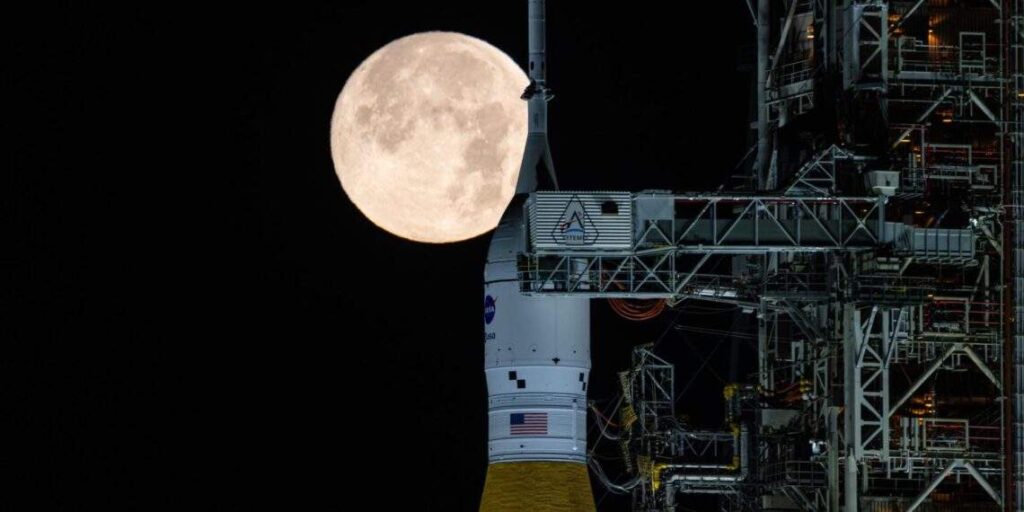
But here’s the good news: that silence is ending right now. NASA’s Artemis II mission is sending four astronauts toward the Moon as we speak .
Stay with us to the very end. We’ll walk through the real reasons we left the Moon behind — and why we’re finally heading back. Because at FreeAstroScience, we believe the sleep of reason breeds monsters. Let’s keep our minds wide awake together.
📑 Table of Contents
- 1. Why Did Apollo End So Suddenly?
- 2. Where Did All the Money Go?
- 3. Why Did NASA Pick the Shuttle and the ISS Instead?
- 4. Can You Really Forget How to Reach the Moon?
- 5. Didn’t Anyone Try Before Artemis?
- 6. Is Going to the Moon Still That Hard?
- 7. So Why Are We Going Back Now?
- 8. Why Send People Instead of Robots?
- 9. What Makes Artemis Different This Time?
- 10. Conclusion
Why Did Apollo End So Suddenly?
Here’s the part most people don’t know. Apollo didn’t run out of technology. It ran out of political motivation.
The race to the Moon was never purely about science. It was a Cold War contest — the United States versus the Soviet Union. Once Neil Armstrong planted his boots on the Sea of Tranquility in July 1969, America had won. The urgency evaporated almost overnight.
By early 1970, with two successful Moon landings already completed, President Richard Nixon moved to cut NASA’s budget to match his administration’s other priorities . Three planned Apollo missions — 18, 19, and 20 — were cancelled to save money, even though the hardware was built and the crews were trained.
The last human to stand on the Moon, Eugene Cernan, left these words as he climbed back aboard his spacecraft in December 1972: “As we leave the Moon at Taurus–Littrow, we leave as we came and, God willing, as we shall return, with peace and hope for all mankind” .
He believed we’d be back soon. Over fifty years passed instead.
And that phrase — “been there, done that” — became the unspoken attitude of an entire generation . But as Asa Stahl of The Planetary Society points out, we spent a total of only about 12 days on the Moon’s surface across all Apollo landings. Saying we’re “done” with the Moon after 12 days is like saying you’ve explored an entire country after a long weekend .
Where Did All the Money Go?
Let’s talk numbers, because they tell a brutal story.
At Apollo’s peak in 1966, NASA’s budget consumed roughly 4% of the entire U.S. federal budget . That’s a staggering figure — the kind of spending a nation commits to only when it feels threatened.
Once that threat faded, so did the checkbook. The Vietnam War was consuming billions. Social programs demanded attention. Economic turbulence hit the 1970s hard. Spending billions to collect more Moon rocks started to feel like a luxury.
Today, NASA operates on about 0.5% of federal spending. The Artemis program has cost an estimated $93 billion to date , and that number draws intense scrutiny from lawmakers.
💰 Budget Snapshot
1966 (Apollo peak): ~4% of U.S. federal budget
2026 (Artemis era): ~0.5% of U.S. federal budget
NASA is attempting the hardest thing humans have ever done — with roughly one-eighth the relative funding it had during Apollo.
Here’s the uncomfortable truth: every crewed flight to deep space requires “the alignment of technical expertise, political will and financial support over years if not decades,” as Smithsonian curator Emily Margolis wrote . NASA’s programs must survive across multiple presidential administrations, Congresses, and budget cycles . The Moon doesn’t care about election years — but funding decisions absolutely do.
Why Did NASA Pick the Shuttle and the ISS Instead?
After Apollo, NASA needed a direction that Congress would actually pay for. The answer was the Space Shuttle — a reusable spacecraft designed for low Earth orbit.
The shuttle flew from 1981 to 2011. It was an incredible machine — deploying satellites, servicing the Hubble Space Telescope, and constructing the International Space Station. But it could only reach low Earth orbit. It wasn’t built for deep space.
NASA repurposed leftover Apollo hardware to build Skylab, America’s first space station, which operated from 1973 to 1974. Then the shuttle took over, and for the next three decades, NASA’s crewed program stayed close to home.
The International Space Station absorbed a massive share of NASA’s human spaceflight budget starting in the late 1990s. The first modules launched in 1998, and the station has been continuously crewed since November 2000. The ISS taught us how to live and work in space for months at a time — an essential skill for any Moon base or Mars trip. But every dollar spent on the station was a dollar not spent on getting farther out.
For nearly 40 years, the Moon — just 384,400 km away — might as well have been in another galaxy.
Can You Really Forget How to Reach the Moon?
This sounds absurd. But it’s partially true.
When Apollo ended, the production lines for the Saturn V rocket were shut down. The factories that built its F-1 engines were repurposed or closed. Engineers retired. Supply chains dissolved. And much of the practical, hands-on knowledge — the kind that doesn’t fit neatly into blueprints — simply vanished.
“It has been more than 50 years since people have designed and sent landers to the moon, so firms were starting from almost scratch and working with novel technologies,” a 2024 report noted. Phillip Metzger, a planetary physicist at the University of Central Florida, put it bluntly: “We say we’ve been there before, but these companies haven’t been there before” .
Private companies that attempted Moon landings in recent years learned this lesson the hard way. An Israeli nonprofit crashed in 2019. A Japanese company lost contact with its lander in 2023. Pittsburgh-based Astrobotic suffered engine failure just after launch in January 2024 . The Moon doesn’t give second chances easily.
And even NASA’s own new technologies have surprised engineers. The Orion capsule’s heat shield showed unanticipated chipping during the uncrewed Artemis I mission. That led to years of additional research and a complete change to the reentry plans for Artemis II .
The truth about spaceflight? “Sending humans into space safely continues to be difficult, especially as missions increase in complexity” .
Didn’t Anyone Try Before Artemis?
Oh, they tried. More than once. Every attempt ran headfirst into the same wall: politics and money.
1989 — President George H.W. Bush announced a Moon and Mars exploration program. Congressional concerns about cost killed it before it started .
2004 — President George W. Bush launched the Vision for Space Exploration, directing NASA to retire the shuttle, finish the ISS, and return humans to the Moon using new vehicles. This became the Constellation program, which began developing the Ares I and Ares V rockets alongside the Orion capsule .
Constellation made real progress. Lockheed Martin won the Orion contract in August 2006 . But the program was chronically underfunded.
2009 — The Augustine Committee, an independent review panel under President Obama, found that NASA’s ambitions far outstripped its budget, causing significant delays . The committee recommended an extra $3 billion per year to make exploration beyond low Earth orbit possible .
2010 — President Obama cancelled Constellation. But two of its technologies survived, saved by U.S. senators from states that would have lost aerospace jobs. The NASA Authorization Act of 2010 kept Orion alive and directed the agency to develop the Space Launch System (SLS) — a redesigned heavy-lift rocket based on Constellation’s Ares V .
That’s three presidents, two cancelled programs, and over 30 years of false starts. Each new administration reassessed spaceflight among its priorities, “either encouraging or curtailing NASA’s efforts to return humans to the lunar surface” .
Is Going to the Moon Still That Hard?
Yes. Absolutely yes.
We tend to think technology only moves forward. Smartphones are a billion times more powerful than Apollo-era computers. Shouldn’t going to the Moon be easier now?
Not necessarily. “New technologies require years of study, development and testing before they can be certified for flight,” explains historian Emily Margolis. “And even then, systems and materials can behave in ways that surprise and worry engineers” .
The Moon itself is a brutal environment. Spacecraft deal with wild temperature swings, depending on which side faces the Sun. Cosmic rays — high-energy particles from deep space — can fry unprotected electronics .
The Moon’s gravity is weaker than Earth’s but far from uniform. “When you orbit the moon, you will eventually crash into the moon because the lumpy gravity will perturb your orbit,” physicist Phillip Metzger explains. Spacecraft need navigation systems that “understand precisely where you are and can adapt in real time” .
And landing? With almost no atmosphere, there’s nothing to slow you down. Every lander must fire its engines with extreme precision to come to a stop just above the surface — or crash . A software glitch caused Ispace’s lander to misjudge terrain height in 2023, run out of fuel, and smash into the ground .
All of this has to happen autonomously. “There’s no way for a human to correct things in real time just because of how quickly it all happens,” says Addie Dove, an associate professor at the University of Central Florida .
🌙 The Moon Doesn’t Forgive Mistakes
Between 2019 and 2024, four separate organizations attempted robotic Moon landings. Only one — Intuitive Machines in February 2024 — succeeded in placing a vehicle intact on the surface . As Metzger warned: “If you crash too many times, then the politicians make you quit trying” .
So Why Are We Going Back Now?
If money, politics, and difficulty kept us away for five decades, what changed?
Several things came together at once.
China entered the race
America’s Apollo missions were driven by competition with the Soviet Union. This time, China is the rival . China has landed rovers on the Moon — including the far side — and announced plans for a crewed lunar landing by 2030 .
There’s still prestige in being first. But now it matters where you plant your flag. Both the U.S. and China want access to the resource-rich lunar south pole. As former astronaut Helen Sharman explains: “Although you can’t own a piece of the land because of the UN treaty, you can basically operate on that land without anybody interfering with it. So the big thing right now is to try to grab your piece of land” .
The Moon has resources we need
The terrain looks dry and barren, but it’s far from that. “The Moon has got the same elements in it that we have here on Earth,” says Prof. Sara Russell of the Natural History Museum. “An example is rare earth elements, which are very scarce on Earth” .
There are metals like iron and titanium. Helium used in superconductors and medical equipment. And the biggest prize: water ice trapped in permanently shadowed craters near the poles . Water means drinking water for astronauts, oxygen to breathe, and hydrogen and oxygen for rocket fuel .
NASA hopes to mine this ice and potentially turn the Moon into a kind of refueling station in space .
The Moon is a stepping stone to Mars
NASA wants to send people to Mars by the 2030s. That’s an incredibly ambitious goal. But the agency has decided that the Moon is the right place to practice .
“Going to the Moon and staying there for a sustained period is much safer, much cheaper and much easier to be a test bed for learning how to live and work on another planet,” says Libby Jackson, head of space at the Science Museum .
On the Moon, NASA can test life-support systems, power generation, habitat construction, and radiation shielding. “These are all technologies that if you try them for the first time on Mars and they go wrong, it’s potentially catastrophic. It’s much safer and much easier to try them out on the Moon,” Jackson adds .
Private industry changed the game
Unlike Apollo, Artemis leans heavily on private companies. SpaceX, Blue Origin, Intuitive Machines, and others are partnering with NASA through programs like CLPS (Commercial Lunar Payload Services), sharing costs and speeding up development . The first private firm to land intact on the Moon — Intuitive Machines in February 2024 — did so in partnership with NASA, which paid nearly $118 million for the mission .
Why Send People Instead of Robots?
This is a question even astronomers debate. If we’re going back for science, wouldn’t robots be cheaper and safer?
The answer is more layered than you might think.
Robots are incredible. They can monitor a world for years. They don’t need food, air, or sleep. They can survive places no human ever could . But when it comes to actual exploration — collecting samples, setting up experiments, reacting to the unexpected — humans are dramatically faster.
According to some experts, astronauts tend to be about 100 times more expensive than rovers but up to 1,000 times more efficient . Stephen Squyres, principal investigator for NASA’s Spirit and Opportunity rovers, once said that an astronaut could finish a day’s work for each rover in under a minute .
Each Apollo Moon landing returned over ten times more samples than a typical robotic mission brings back . Those rocks are still generating new scientific papers decades later . More rocks means more discoveries.
And astronauts are better drivers. The crew of Apollo 17 drove roughly 35 kilometers on the Moon over three days. The same distance took NASA’s Opportunity Mars rover more than eight years .
Then there are experiments that need a human touch. Artemis III plans include picking plants in a terrarium, scouting the perfect spot for a soil probe, and adjusting a seismometer to be in perfect contact with the ground. “These tasks would be difficult for a robot to do, but are relatively simple for an astronaut” .
The smartest approach? Use both. “A successful space program uses robots and astronauts to complement one another” .
| Factor | Robotic Missions | Crewed Missions |
|---|---|---|
| Cost | Lower (~$3B per Perseverance-class mission) | ~100× more expensive |
| Efficiency | Slow, methodical | Up to 1,000× faster |
| Samples Collected | Small amounts per mission | 10× more per landing (Apollo) |
| Mobility | 35 km in 8+ years (Opportunity) | 35 km in 3 days (Apollo 17) |
| Adaptability | Limited, follows pre-set instructions | Can improvise and react to surprises |
| Endurance | Can operate for years | Limited by supplies and life-support |
| Risk to Life | Zero human risk | Significant — astronauts face radiation, equipment failure |
Data sourced from The Planetary Society and NASA historical records .
What Makes Artemis Different This Time?
In December 2017, the Trump administration issued a policy directive shifting NASA’s focus back to the Moon. The agency officially named the program Artemis in May 2019 .
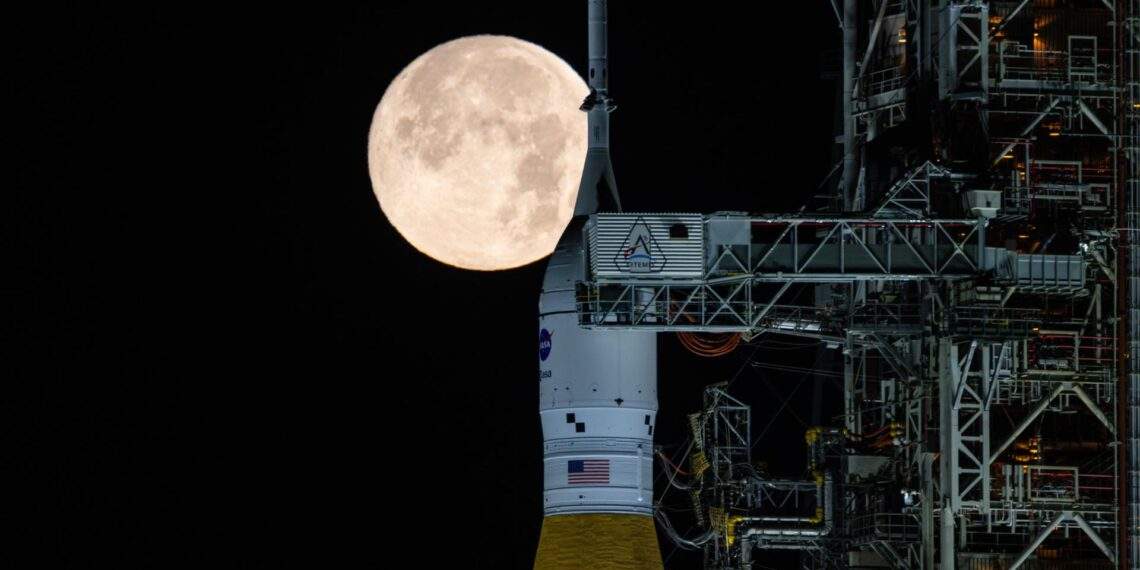
The 25-day uncrewed Artemis I mission launched in November 2022 — the first flight of the SLS rocket and the first to integrate SLS with Orion . It proved the core systems could work. Now Artemis II will prove they can work with humans aboard .
But there’s a deeper difference between Artemis and Apollo. Apollo was built to visit. Artemis is built to stay.
NASA’s goal isn’t six landings and then goodbye. It’s a sustained human presence on the Moon — a research base, resource extraction, and eventually a launching point for Mars . NASA wants to build the first lunar space station, study the Moon like never before, and use it as a stepping stone to the rest of the solar system .
The program also draws strength from commercial and international partnerships that Apollo never had . Canada is providing a robotic arm. The European Space Agency contributes the Orion service module. Private companies are building landers and delivery services. This is a global effort.
And unlike Apollo, Artemis will send astronauts to the south pole — an area nobody has ever visited, rich in water ice and scientific potential . As planetary scientist Addie Dove puts it: “It’s sort of like saying we’ve explored all of Antarctica or all of Africa when we’ve only been to the coast” .
The science waiting on the Moon
The Moon is more than a barren rock. Because it formed from the same collision that shaped early Earth, it holds 4.5 billion years of our planet’s history . With no plate tectonics, no wind, no rain to erase the record, the lunar surface is a perfect time capsule .
“The Moon is a fantastic archive of the Earth,” says Prof. Sara Russell. “A new haul of rocks from a different area of the Moon would be amazing” .
The lunar surface also preserves billions of years of asteroid and comet impacts. By studying these records, we can learn how the early solar system formed — and how life’s ingredients may have arrived on Earth .
And there are mysteries about the Moon itself we still haven’t solved. We don’t fully understand its internal structure, its magnetic history, or the exact nature and quantity of its water deposits. Getting humans there — not just for a few days, but for sustained periods — is the fastest way to find answers.
We Paused. We Didn’t Quit.
So why haven’t we been back to the Moon in over 50 years?
There’s no single answer. It was the end of the Cold War removing the political urgency. It was budget cuts — from 4% of federal spending down to 0.5%. It was the Space Shuttle and the ISS absorbing all of NASA’s crewed-flight energy for three decades. It was institutional knowledge that evaporated when production lines closed and engineers retired. It was two cancelled programs — SEI and Constellation — that ran into political headwinds. And it was the simple, humbling fact that going to the Moon is genuinely, technically, ferociously difficult — even the second time around .
But none of those things mean we can’t go. They meant we chose not to — for a while.
That while is over.
Artemis II is on the launchpad right now. Four astronauts — representing a more diverse crew than Apollo ever had — are preparing to fly around the Moon and come home, testing every system that future lunar explorers will depend on . Behind them, a pipeline of missions aims to put boots on the south pole, build a research base, and set the stage for Mars .
As one commenter on a NASA forum put it simply: “Why go to the Moon? Because we can. Because we can learn and grow as a species by doing so. Because some of the best and most beautiful things require leaving our comfort zones” .
We wrote this article for you — right here at FreeAstroScience.com — because we believe understanding our universe shouldn’t feel like homework. We break down complex scientific principles in plain terms, and we do it because an informed mind is a powerful mind. We want you to never turn off your mind, to keep it active at all times. Because the sleep of reason breeds monsters — and the waking mind builds rockets to the Moon.
Come back to FreeAstroScience.com. There’s always more sky to explore. 🌙