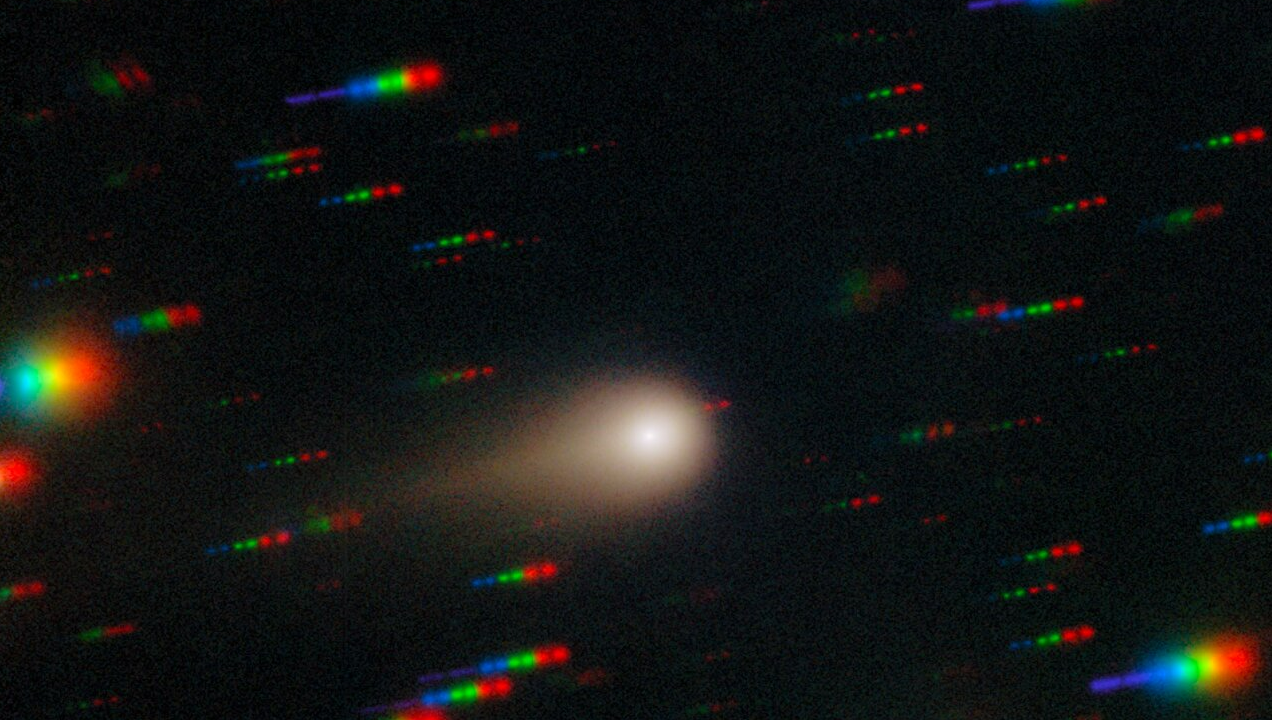
What if the comet streaking past Jupiter right now is older than our own Sun? Welcome, dear reader. We’re so glad you’ve found your way here, because the story we’re about to share with you bends the imagination. A frozen wanderer called 3I/ATLAS just rolled through our cosmic neighborhood, and the James Webb Space Telescope caught it doing something no interstellar object has ever been seen doing before. Stay with us until the very last paragraph, because what scientists pulled out of its icy breath will change how you picture the early Milky Way forever.
A Frozen Visitor From the Dawn of the Milky Way
Imagine a snowball that started its journey before Earth, the Sun, and most of the stars we see at night even existed. That’s not poetry. That’s the working hypothesis astronomers are now defending, with hard data, about the comet known as 3I/ATLAS. Three telescopes — Subaru, ALMA, and the James Webb Space Telescope — have been staring at this object, and what they’ve pulled out of its glowing coma reads like a love letter from the infant universe.
Who found 3I/ATLAS, and when did it appear?
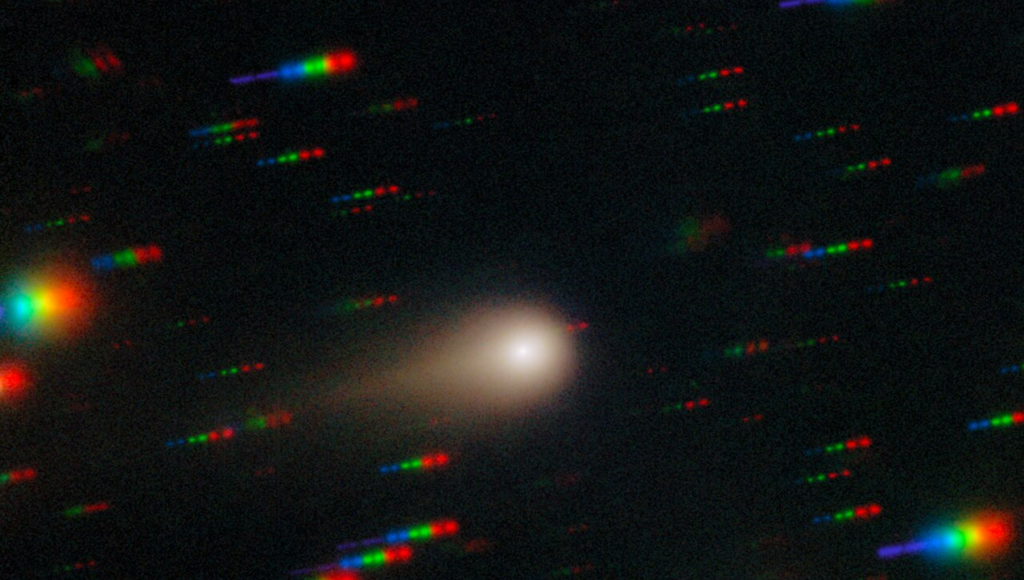
On 1 July 2025, the ATLAS survey system perched in the Atacama desert of Chile spotted a faint smudge moving against the stars. NASA announced the find that same month. The smudge turned out to be only the third confirmed interstellar object ever seen passing through our solar system, after 1I/’Oumuamua in 2017 and 2I/Borisov in 2019. The “3” tells you it’s the third. The “I” stands for interstellar — a guest from somewhere else entirely.
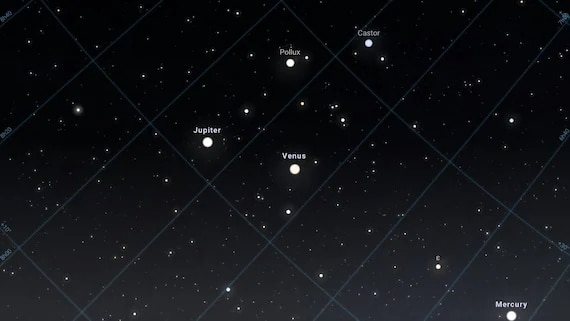
The comet swept in from the direction of the constellation Sagittarius, hit its closest point to the Sun (perihelion) on 30 October 2025, and is now racing back toward the dark. As we write this in April 2026, it has already crossed beyond Jupiter’s orbit. Webb is preparing one last look before the comet fades from reach.
How big is this frozen traveller?
Here’s where things get tricky. Early estimates based on brightness and activity put 3I/ATLAS somewhere between 440 metres and 5,600 metres across — anything from a New York skyscraper to taller than Mount Everest. Sharper measurements from Hui and colleagues, published in 2026, narrowed the nucleus down to about 2.6 kilometres in diameter. To picture it, imagine a dirty mountain of ice and dust roughly the size of a small city, hurtling along at tens of kilometres per second.
| Object | Year found | Type | Notable trait |
|---|---|---|---|
| 1I/’Oumuamua | 2017 | Asteroidal / unclear | Cigar-shaped, no visible coma |
| 2I/Borisov | 2019 | Comet | Looked much like our own comets |
| 3I/ATLAS | 2025 | Comet | Bright coma, ancient chemistry, methane detected |
What did the James Webb Telescope spot inside it?
Between 15 and 27 December 2025, a team led by Matthew Belyakov at Caltech and Ian Wong at the Space Telescope Science Institute pointed JWST’s Mid-Infrared Instrument (MIRI) at the comet. They caught it twice: once at 2.20 astronomical units from the Sun, then again 12 days later at 2.54 au. Those 12 days proved priceless. They gave astronomers two snapshots of a cosmic object actively changing its skin.
Webb’s spectrum revealed four signatures glowing above the dust:
| Molecule | Wavelength | Production rate (15 Dec) | Production rate (27 Dec) |
|---|---|---|---|
| Water (H₂O) | 5.8–7.0 µm | 3.78 × 10²⁷ molecules/s | 1.05 × 10²⁷ molecules/s |
| Carbon dioxide (CO₂) | ~15 µm | 8.70 × 10²⁷ molecules/s | 5.42 × 10²⁷ molecules/s |
| Methane (CH₄) | 7.5–7.65 µm | 4.2 × 10²⁶ molecules/s | 2.3 × 10²⁶ molecules/s |
| Atomic nickel (Ni I) | 7.507 µm | log Q ≈ 23.72 (forbidden transition) | |
The most striking line in that table belongs to methane (CH₄). This is the first direct detection of methane in any interstellar object — ever. ALMA had already spotted methanol in unusually high amounts. Webb has now added the harder-to-catch CH₄ signature on top.
How does Webb actually “see” gas?
Each molecule vibrates and rotates at very specific energies. When sunlight kicks them, they re-emit photons at signature wavelengths — like fingerprints in light. Webb’s spectrometer separates that light, and software called the Planetary Spectrum Generator translates the brightness of each peak into a number of molecules being puffed into space every second. That’s how we know the comet was venting roughly 3.78 × 10²⁷ water molecules per second on 16 December and only about a quarter of that 12 days later.
Why does the methane discovery matter so much?
Methane is what astronomers call a “hypervolatile.” It boils away at very low temperatures — much lower than water. If a comet was baked at any point during its life, the surface CH₄ should have evaporated long ago. So when 3I/ATLAS started releasing methane in growing amounts after perihelion, the team realised something fascinating: the molecule wasn’t coming from the surface at all. It was bubbling up from deeper, untouched layers, freshly exposed by the Sun’s heat.
Picture an old onion losing its outer skins. Each layer Webb watched fall away revealed chemistry that hadn’t seen sunlight for billions of years. The CH₄ to H₂O ratio rose from 11.0% in the first observation to 21.6% in the second — not because methane suddenly appeared, but because water production was shutting down faster as the comet sailed back across the so-called “water ice line” near 2.5 au.
What about the methanol and the nickel?
Earlier ALMA radio observations by Roth and colleagues found methanol (CH₃OH) in quantities rarely seen in any solar system comet. JWST also picked up atomic nickel — and not in tiny traces. The nickel comes from the breakdown of nickel-bearing organometallic molecules, possibly nickel carbonyls. Detecting metals like nickel as cold gas (where physics says they shouldn’t exist as atoms) is one of the strangest puzzles modern cometary science has ever faced.
Could this comet really be 12 billion years old?
This is where you might want to sit down. By studying how 3I/ATLAS moves through the galaxy, Hopkins and colleagues estimated its dynamical age — how long it has been drifting between stars — at somewhere between 3 and 11 billion years. JWST’s reading of the carbon isotope mix points to formation in a metal-poor pocket of the Milky Way at temperatures near 30 Kelvin (about –243°C), shortly after a burst of early star formation.
Add it all up and 3I/ATLAS likely formed between 10 and 12 billion years ago — more than twice the age of our planet. The star it once orbited may not even exist anymore. We’re looking at a fragment of a vanished planetary system. A piece of cosmic driftwood from a beach that no longer exists.
“It’s a very interesting object. It has been travelling through the galaxy for at least a billion years.” — Matthew Belyakov, Caltech, lead author of the JWST/MIRI study
Where is 3I/ATLAS heading right now?
As of April 2026, 3I/ATLAS sits beyond Jupiter’s orbit, dimming fast as it heads back into the cold dark from where it came. JWST is squeezing in one last observation before the object becomes too faint to study in detail. After that, it slips away forever — gravitationally unbound to our Sun, on a path that will eventually take it back into interstellar space and toward another, unknown future.
We won’t see 3I/ATLAS again. Neither will our great-great-grandchildren. The data Webb collected in those December nights of 2025 is, quite literally, all we will ever have. Researchers will study it for decades.
🕒 3I/ATLAS — a quick journey log
- 1 July 2025Discovered by ATLAS survey in the Atacama desert, Chile
- July 2025NASA confirms: third interstellar object ever recorded
- August 2025JWST/NIRSpec catches first signs of CO₂, H₂O, CO at 3.32 au
- 30 October 2025Perihelion — closest pass to the Sun
- 15–27 December 2025JWST/MIRI detects CH₄ for the first time on any ISO
- April 2026Beyond Jupiter’s orbit; final Webb observation underway
What does all this mean for us back home?
Think about what just happened. A frozen visitor showed up uninvited, and in five months we measured its size, mapped its coma, weighed its molecules, dated its birth, and watched its outer skin peel away in real time. We compared its chemistry to comets like C/2016 R2 and found the same family of weirdly CO₂-rich, hypervolatile-rich objects. We even found atomic metals where they shouldn’t be.Each of these numbers is also a quiet revolution. They tell us that planet-forming material 12 billion years ago — when the Milky Way was still a teenager — already contained water, carbon dioxide, methane, methanol, and complex organics. The chemistry of life’s building blocks isn’t a recent invention. It was being cooked up almost as soon as stars learned how to forge heavy elements at all.
That’s the gift 3I/ATLAS hands us before it disappears: proof that the universe was preparing its kitchen long before there was a single cook to use it.
Final thoughts from us at FreeAstroScience
This article was written for you, with care, by FreeAstroScience.com — the place where we take the hardest ideas in modern science and put them into words a curious mind can hold. We believe in keeping your reasoning sharp and your wonder awake, because as Goya warned, the sleep of reason breeds monsters. So never switch off your mind. Never accept “it’s too complex” as the final answer.
3I/ATLAS reminds us of something quietly thrilling: we are not alone in the cosmos’s history. Other planetary systems, born around stars long dead, are still sending us their messengers. We just have to be patient enough — and clever enough — to read the message before it floats away.
Come back to FreeAstroScience.com often. Keep asking questions. Keep watching the sky. The next visitor could be on its way already, and we’ll be here, waiting to share the story with you.