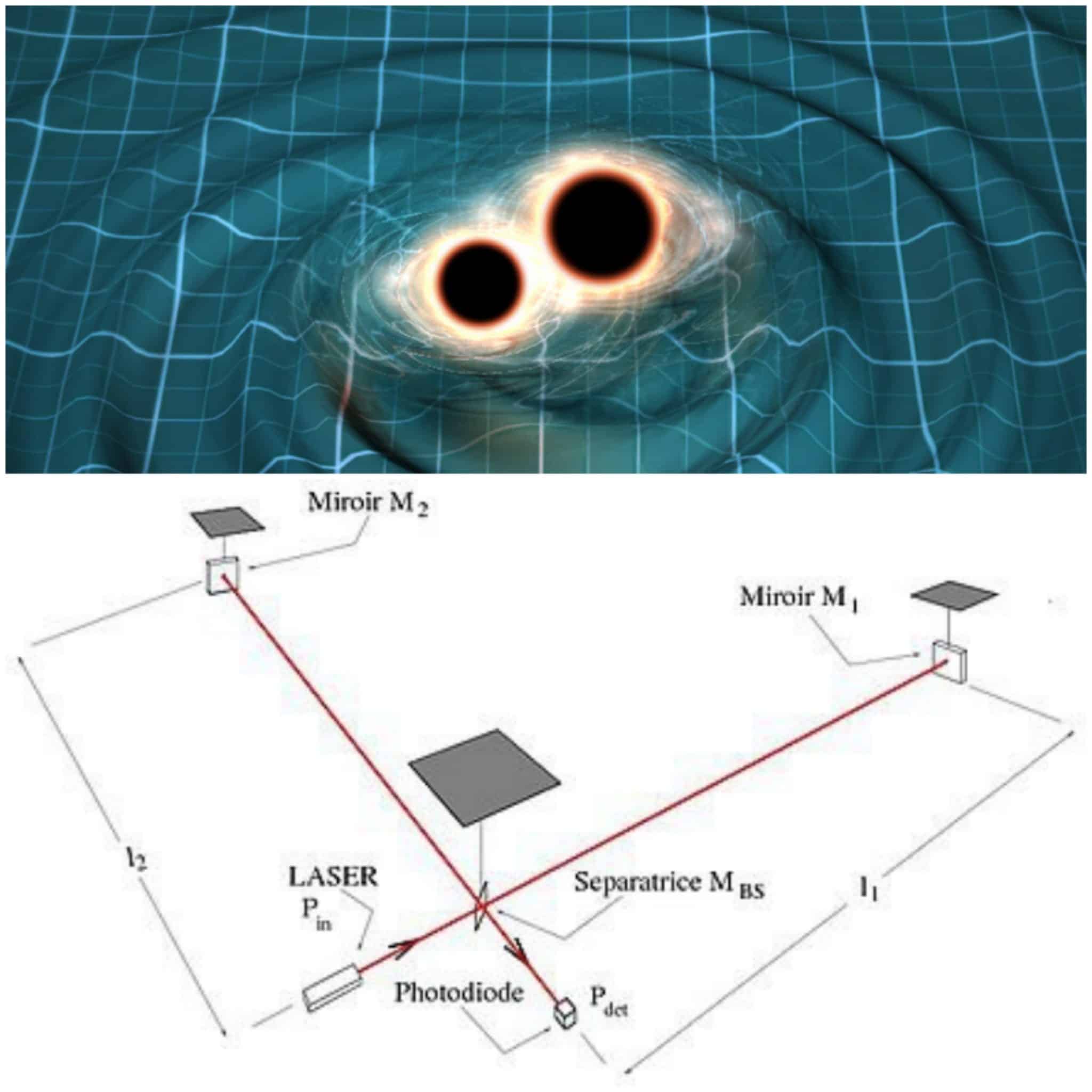
You may have come across films like “Interstellar,” which attempt to merge quantum mechanics and Einstein’s relativity for a comprehensive explanation of gravity. This is a long-standing scientific dilemma that lacks a clear consensus. Though attempts with string theory were made, even the esteemed Stephen Hawking couldn’t pinpoint a “theory of everything” to describe natural occurrences using a singular equation.
Understanding Relativity’s Predictions
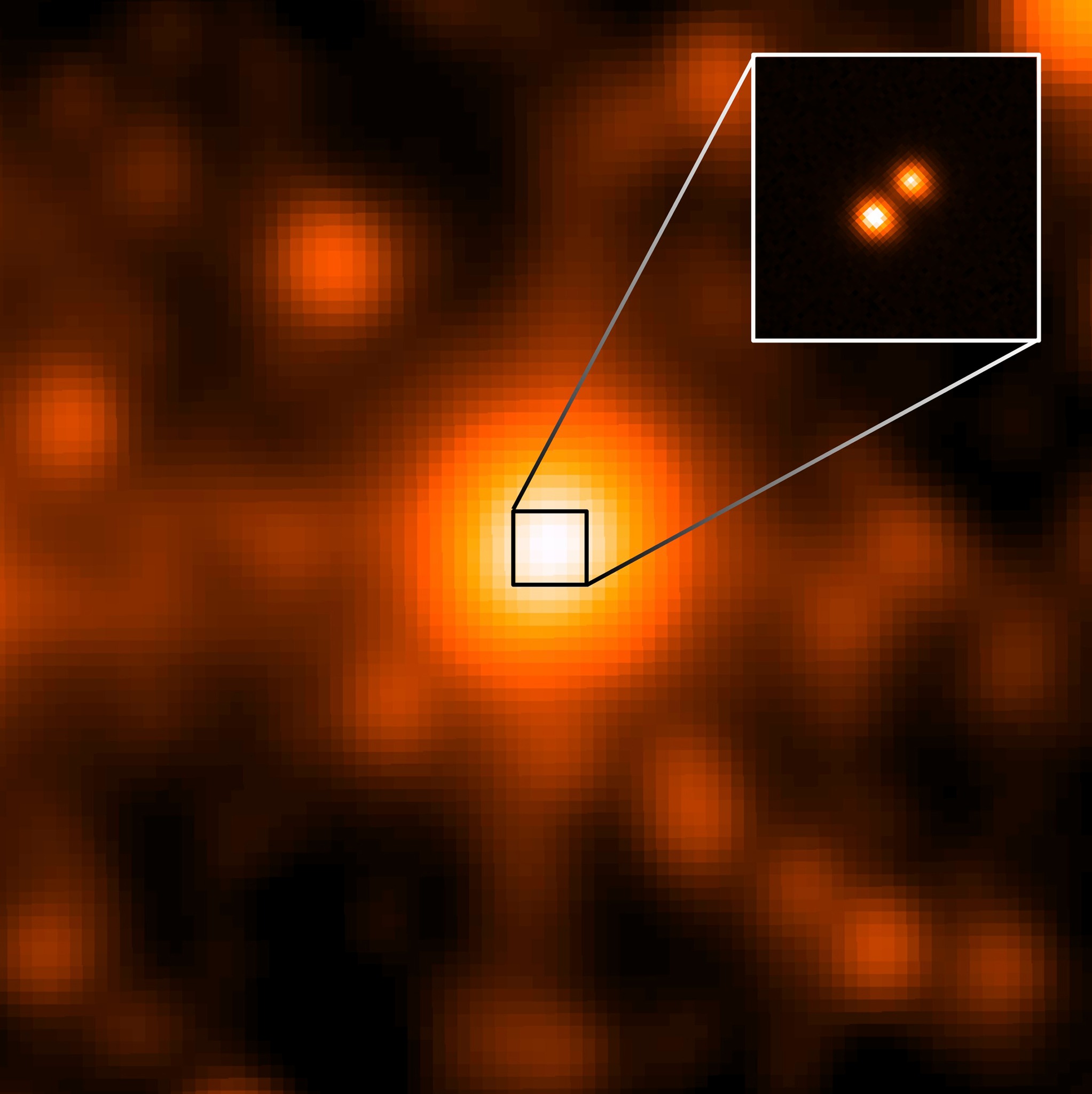
To comprehend this discord, we need to revisit 1915, the year Albert Einstein introduced his theory of general relativity. Counted among the most successful theories in scientific history, its predictions are still validated today. This ranges from black hole discoveries to the equivalence principle demonstrated by the MICROSCOPE satellite in space. The light emitted by star S2, orbiting the black hole at the galactic center, also exhibits a gravitational redshift just as general relativity predicted.
Despite its success, relativity theory isn’t the final explanation of gravity. It’s a classic field theory that views space and time as continuous and deterministic events. In general relativity, numerical relationships bind mass, energy, space, and time, describing mass-energy distribution and motion, as well as the curvature of space-time.
The Quantum Mechanics Conundrum
However, where does quantum mechanics fit in? Einstein’s predictions only apply to the macrocosm – large-scale systems.
Exploring Quantum Mechanics
When we delve into the microscopic world, observable phenomena obey the laws of an alternate reality description as effective as general relativity – quantum physics. In the quantum realm, unlike in general relativity, space and time are discrete with limits to their divisibility. Below these limits, space and time lose their significance.
Quantum physics also introduces the uncertainty principle, asserting that it’s impossible to accurately know both values of conjugate quantities, such as a particle’s momentum and position. Stemming from the wave nature of quanta, this principle applies to photons, protons, electrons, and neutrons, which in quantum physics are described by wave functions with a probabilistic distribution. This introduces an element of uncertainty in the subatomic world that cannot be eliminated.
In essence, the inherent unpredictability of quanta disrupts the classical, orderly beauty of the world as described by general relativity. The latter is used to explain phenomena like gravitational lensing generated by galaxy clusters, while quantum physics is employed for studying phenomena like entanglement between distant particles.
Gerd Dani — Founder & Director Gerd Dani is the visionary in a wheelchair behind FreeAstroScience. An astronomy graduate and a master's in physics, he founded this blog in June 2020, driven by a passion for breaking down complex scientific and philosophical concepts into bite-sized, digestible pieces. As President, he is dedicated to making science accessible to everyone, from students to seasoned academics.
(()=>{async function handleCredentialResponse(response){try{const res=await fetch('https://freeastroscience.com/wp-login.php?action=googlesitekit_auth',{method:'POST',headers:{'Content-Type':'application/x-www-form-urlencoded'},body:new URLSearchParams(response)});/* Preserve comment text in case of redirect after login on a page with a Sign in with Google button in the WordPress comments. */ const commentText=document.querySelector('#comment')?.value;const postId=document.querySelectorAll('.googlesitekit-sign-in-with-google__comments-form-button')?.[0]?.className?.match(/googlesitekit-sign-in-with-google__comments-form-button-postid-(\d+)/)?.[1];if(!! commentText?.length){sessionStorage.setItem(`siwg-comment-text-${postId}`,commentText);}location.reload();}catch(error){console.error(error);}}if(typeof google !=='undefined'){google.accounts.id.initialize({client_id:'251104905146-eghigrtua82ec7aan4em9fle9u5f0ilc.apps.googleusercontent.com',callback:handleCredentialResponse,library_name:'Site-Kit'});}const defaultButtonOptions={"theme":"outline","text":"signin_with","shape":"rectangular"};document.querySelectorAll('.googlesitekit-sign-in-with-google__frontend-output-button').forEach((siwgButtonDiv)=>{const buttonOptions={shape:siwgButtonDiv.getAttribute('data-googlesitekit-siwg-shape')|| defaultButtonOptions.shape,text:siwgButtonDiv.getAttribute('data-googlesitekit-siwg-text')|| defaultButtonOptions.text,theme:siwgButtonDiv.getAttribute('data-googlesitekit-siwg-theme')|| defaultButtonOptions.theme,};if(typeof google !=='undefined'){google.accounts.id.renderButton(siwgButtonDiv,buttonOptions);}});/* If there is a matching saved comment text in sessionStorage,restore it to the comment field and remove it from sessionStorage. */ const postId=document.body.className.match(/postid-(\d+)/)?.[1];const commentField=document.querySelector('#comment');const commentText=sessionStorage.getItem(`siwg-comment-text-${postId}`);if(commentText?.length && commentField && !! postId){commentField.value=commentText;sessionStorage.removeItem(`siwg-comment-text-${postId}`);}})();
var astra = {"break_point":"921","isRtl":"","is_scroll_to_id":"1","is_scroll_to_top":"1","is_header_footer_builder_active":"1","responsive_cart_click":"flyout","is_dark_palette":"","revealEffectEnable":"","edit_post_url":"https://freeastroscience.com/wp-admin/post.php?post={{id}}&action=edit","ajax_url":"https://freeastroscience.com/wp-admin/admin-ajax.php","infinite_count":"2","infinite_total":"0","pagination":"number","infinite_scroll_event":"scroll","no_more_post_message":"No more posts to show.","grid_layout":{"desktop":3,"tablet":1,"mobile":1},"site_url":"https://freeastroscience.com","blogArchiveTitleLayout":"layout-2","blogArchiveTitleOn":"1","show_comments":"Show Comments","enableHistoryPushState":"1","masonryEnabled":"","blogMasonryBreakPoint":"0"};
//# sourceURL=astra-theme-js-js-extra