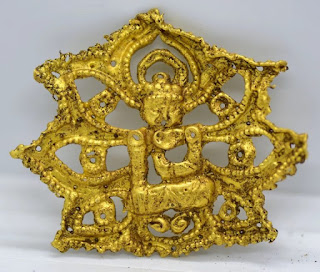

in the Eastern Eurasian mountains is alarming, as the thawing permafrost exposes ancient burial sites like the Khorig cemetery[3]. Researchers have been working diligently to excavate and study the remains of high-ranking individuals from the Mongol Empire, including a notable elite woman buried with a five-clawed golden dragon[1].
The proteomic analysis of these remains has provided valuable insights into the lifestyles and diets of Mongol Empire aristocrats, revealing their consumption of various animal products, including yak milk[2]. Yaks continue to be an essential resource in high-altitude regions of Eastern Eurasia, offering multiple practical uses and holding immense cultural significance[3].
As the permafrost melts, it is crucial to protect these archaeological discoveries from looting and potential destruction. The findings at the Khorig cemetery provide a unique glimpse into the lives of the elite during the Mongol Empire’s reign, shedding light on long-standing religious ideals and the daily life of these influential figures[2].
References:
[1] Melting permafrost reveals bodies of ancient Mongolians