
Have you ever wondered why your car’s side-view mirrors come with that cryptic warning about objects being closer than they appear? At FreeAstroScience.com, we believe in making complex scientific principles accessible to everyone. Join us on an enlightening journey through the physics of automotive safety, where we’ll unravel this daily driving mystery and equip you with knowledge that could save lives.
The Physics Behind Your Side-View Mirrors
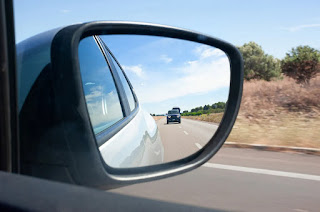
Let’s dive into the fascinating world of optics! Car side-view mirrors utilize convex mirrors – curved surfaces that bow outward like the exterior of a sphere. This clever design isn’t just a random choice; it’s a carefully calculated safety feature that expands our field of vision. Think of it as nature’s wide-angle lens!
Why Convex Mirrors?
- Wider field of view (typically 30% more than flat mirrors)
- Better visibility of blind spots
- Enhanced awareness of surrounding traffic
- Reduced dead zones
The Trade-off: Distance Distortion
As with many things in life, this enhanced field of view comes with a catch. The convex shape that gives us that wider view also creates an optical illusion that makes objects appear farther away than they actually are. It’s like looking through the wrong end of a telescope!
Safety Implications
- Objects can be up to 30% closer than they appear
- Critical for lane-change decisions
- Requires extra caution during merging
- Essential awareness for new drivers
Innovation in Mirror Technology
Remember Dr. R. Andrew Hicks’ groundbreaking work in 2012? His algorithmic approach to mirror design represents just the beginning. Recent developments include:
- Smart mirrors with integrated cameras
- Digital side-view systems (popular in luxury vehicles)
- Anti-glare adaptive technology
- AI-assisted distance recognition systems
Practical Tips for Safer Driving
We recommend these science-backed strategies:
- Double-check blind spots physically
- Maintain a 3-second following distance
- Adjust mirrors properly before driving
- Use the “lean and glance” technique when changing lanes
Conclusion
Understanding the science behind car mirrors isn’t just about satisfying curiosity – it’s about safety on the road. At FreeAstroScience.com, we’ve shown you how convex mirrors work, why they create optical illusions, and how to use this knowledge to become a safer driver. Remember: physics doesn’t just exist in textbooks; it’s an integral part of our daily lives, especially when we’re behind the wheel. Stay curious, stay safe, and keep exploring the science that surrounds us!