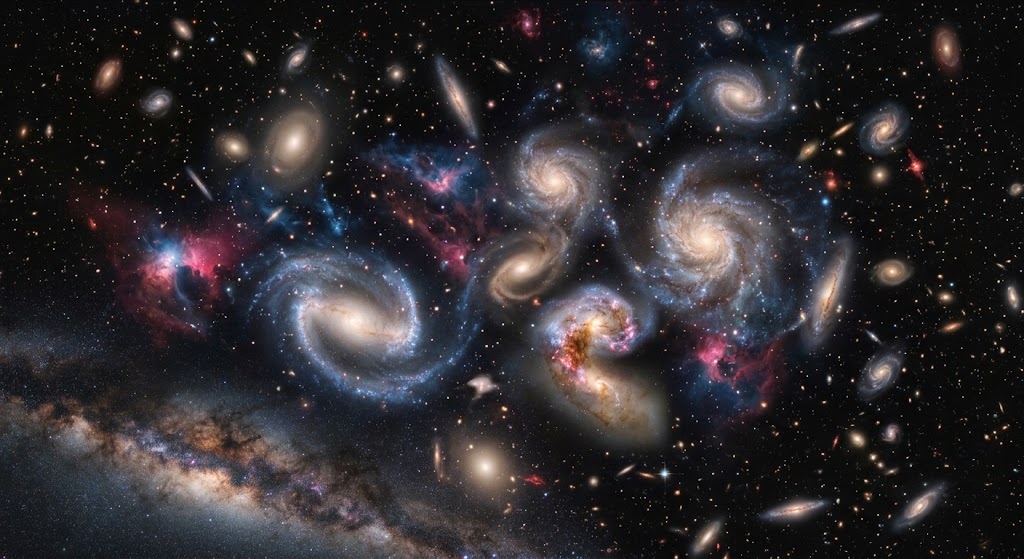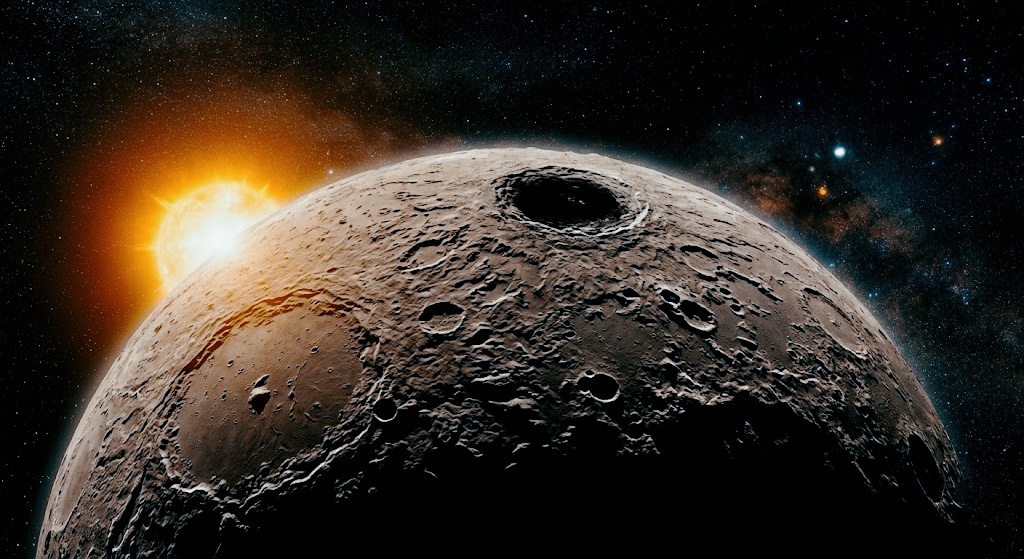
Signals from the first planet outside our galaxy were seen 28 million light years away Scientists have found evidence of ‘first planet outside the Milky Way’ Astronomers have found evidence of what could be the first planet to be discovered outside our galaxy. For the first time in history, astronomers believe they have found signs of a planet outside our galaxy. According to the publication of the scientific journal Nature Astronomy, the possible planet is the size of Saturn and is located in the Messier 51 galaxy, about 28 million light years from the Milky Way.
Also, according to the publication, the technique used to discover the new planet was based on the so-called transits and can significantly expand the search for the so-called extragalactic exoplanets. Transits occur when a planet passes in front of a star and blocks some of the light. Thousands of planets have been discovered using this technique in recent years. “It’s always fun when you find something that’s the first of its kind,” said researcher Rosanne Di Stefano, an astrophysicist at the Harvard-Smithsonian Center for Astrophysics, in an interview with NBC. “Once we started finding planets locally, it made sense that there would be planets in other galaxies, but that’s humbling and really exciting.”
Discovery The first exoplanets were discovered in the 1990s and required the combination of a number of complicated detection techniques. Since then, however, NASA missions like the Kepler Space Telescope and the Transiting Exoplanet Survey Satellite have discovered a greater volume of new planets across the galaxy. More than 4,000 exoplanets have been discovered and confirmed, but so far, they’ve all been in the Milky Way. Most are also less than 3,000 light years from Earth. If confirmed, the planet in the Whirlpool Galaxy would be thousands of times farther away than any other alien planet that has been identified. The study led by astronomer Rosanne Di Stefano, from Harvard & Smithsonian, still has many uncertainties. However, if the calculations are correct, the new planet will only cross the star again 70 years from now, that is, it will only be seen again to confirm its existence in 2090.

Gerd Dani — Founder & Director Gerd Dani is the visionary in a wheelchair behind FreeAstroScience. An astronomy graduate and a master's in physics, he founded this blog in June 2020, driven by a passion for breaking down complex scientific and philosophical concepts into bite-sized, digestible pieces. As President, he is dedicated to making science accessible to everyone, from students to seasoned academics.
(()=>{async function handleCredentialResponse(response){try{const res=await fetch('https://freeastroscience.com/wp-login.php?action=googlesitekit_auth',{method:'POST',headers:{'Content-Type':'application/x-www-form-urlencoded'},body:new URLSearchParams(response)});/* Preserve comment text in case of redirect after login on a page with a Sign in with Google button in the WordPress comments. */ const commentText=document.querySelector('#comment')?.value;const postId=document.querySelectorAll('.googlesitekit-sign-in-with-google__comments-form-button')?.[0]?.className?.match(/googlesitekit-sign-in-with-google__comments-form-button-postid-(\d+)/)?.[1];if(!! commentText?.length){sessionStorage.setItem(`siwg-comment-text-${postId}`,commentText);}location.reload();}catch(error){console.error(error);}}if(typeof google !=='undefined'){google.accounts.id.initialize({client_id:'251104905146-eghigrtua82ec7aan4em9fle9u5f0ilc.apps.googleusercontent.com',callback:handleCredentialResponse,library_name:'Site-Kit'});}const defaultButtonOptions={"theme":"outline","text":"signin_with","shape":"rectangular"};document.querySelectorAll('.googlesitekit-sign-in-with-google__frontend-output-button').forEach((siwgButtonDiv)=>{const buttonOptions={shape:siwgButtonDiv.getAttribute('data-googlesitekit-siwg-shape')|| defaultButtonOptions.shape,text:siwgButtonDiv.getAttribute('data-googlesitekit-siwg-text')|| defaultButtonOptions.text,theme:siwgButtonDiv.getAttribute('data-googlesitekit-siwg-theme')|| defaultButtonOptions.theme,};if(typeof google !=='undefined'){google.accounts.id.renderButton(siwgButtonDiv,buttonOptions);}});/* If there is a matching saved comment text in sessionStorage,restore it to the comment field and remove it from sessionStorage. */ const postId=document.body.className.match(/postid-(\d+)/)?.[1];const commentField=document.querySelector('#comment');const commentText=sessionStorage.getItem(`siwg-comment-text-${postId}`);if(commentText?.length && commentField && !! postId){commentField.value=commentText;sessionStorage.removeItem(`siwg-comment-text-${postId}`);}})();
var astra = {"break_point":"921","isRtl":"","is_scroll_to_id":"1","is_scroll_to_top":"1","is_header_footer_builder_active":"1","responsive_cart_click":"flyout","is_dark_palette":"","revealEffectEnable":"","edit_post_url":"https://freeastroscience.com/wp-admin/post.php?post={{id}}&action=edit","ajax_url":"https://freeastroscience.com/wp-admin/admin-ajax.php","infinite_count":"2","infinite_total":"0","pagination":"number","infinite_scroll_event":"scroll","no_more_post_message":"No more posts to show.","grid_layout":{"desktop":3,"tablet":1,"mobile":1},"site_url":"https://freeastroscience.com","blogArchiveTitleLayout":"layout-2","blogArchiveTitleOn":"1","show_comments":"Show Comments","enableHistoryPushState":"1","masonryEnabled":"","blogMasonryBreakPoint":"0"};
//# sourceURL=astra-theme-js-js-extra