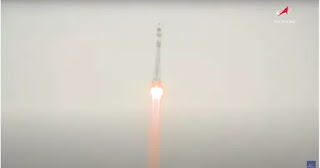

Russia has reignited its lunar exploration initiative, marking a significant event by launching a lander to the moon. The Luna-25 mission, powered by a Soyuz-2.1b rocket, took flight from the Vostochny Cosmodrome situated in the Amur region of Russia’s Far East. This launch is a notable jump from the last Soviet lunar mission in 1976, when the Luna-24 successfully brought back around 170 grams of lunar samples to Earth.
The Luna-25’s journey to the Moon
Presuming everything goes as planned, Luna-25 will spend the upcoming five days traveling to the Moon, then orbit the celestial body for another five to seven days. The lander will then make its descent in the lunar south pole area, near the Boguslawsky crater. After landing, it’s expected to gather samples for a minimum of one year.
The Luna-25 mission has faced a series of delays, with the initial plans laid out two years ago. The delays primarily stemmed from the political tension caused by the Russian invasion of Ukraine that started in February 2022. This situation led to the European Space Agency (ESA) retracting its offer to provide the Pilot-D navigation camera, a tool designed to aid Luna-25 in executing a precise landing on the Moon. Consequently, numerous other space projects involving Roscosmos and ESA were also canceled.