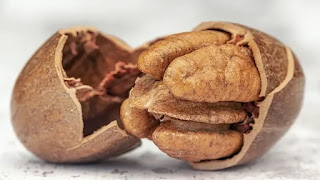
“Regular intake of pecans can help combat obesity, diabetes, and related health conditions, such as fatty liver disease, as revealed by a joint research initiative by scientists at Texas A&M AgriLife.
“The rise in obesity and diabetes is a global concern, with unhealthy dietary habits alongside lifestyle and genetic predisposition being the primary causes,” stated Luis Cisneros-Zevallos, Ph.D., professor of horticulture and food science at the Department of Horticultural Sciences in the Texas A&M College of Agriculture and Life Sciences, and a scientist affiliated with the Institute for Advancing Health Through Agriculture. “People are continuously seeking healthier alternatives, and our research highlights pecans as a beneficial nutritional tool.”
Cisneros-Zevallos, the lead researcher of the study, published “Pecans and Its Polyphenols Prevent Obesity, Hepatic Steatosis and Diabetes by Reducing Dysbiosis, Inflammation and Increasing Energy Expenditure in Mice Fed a High-Fat Diet” in MDPI.
“This research scientifically substantiates the long-held belief in the Americas that pecans are extremely nutritious,” commented Amit Dhingra, Ph.D., head of the Department of Horticultural Sciences. “Cisneros-Zevallos’ research offers insights into the underlying mechanisms of these nutritional advantages. Our department prioritizes sustainability, wellness, and food security, and this study underscores the importance of horticultural crops in promoting human health.”
Health Advantages of Pecans
The research was carried out by an interdisciplinary team, which included Claudia Delgadillo-Puga, Ph.D., and Ivan Torre-Villalvazo, Ph.D., from the National Institute of Medical Sciences and Nutrition Salvador Zubiran, Mexico.
According to Cisneros-Zevallos, the researchers used mice models to study the effects of a high-fat diet combined with pecans. They found that pecans boosted energy expenditure and decreased dysbiosis and inflammation. The study also confirmed that pecans influence adipose tissue lipolysis and mitochondrial oxidative metabolism in the liver and skeletal muscle.

Gerd Dani — Founder & Director Gerd Dani is the visionary in a wheelchair behind FreeAstroScience. An astronomy graduate and a master's in physics, he founded this blog in June 2020, driven by a passion for breaking down complex scientific and philosophical concepts into bite-sized, digestible pieces. As President, he is dedicated to making science accessible to everyone, from students to seasoned academics.
(()=>{async function handleCredentialResponse(response){try{const res=await fetch('https://freeastroscience.com/wp-login.php?action=googlesitekit_auth',{method:'POST',headers:{'Content-Type':'application/x-www-form-urlencoded'},body:new URLSearchParams(response)});/* Preserve comment text in case of redirect after login on a page with a Sign in with Google button in the WordPress comments. */ const commentText=document.querySelector('#comment')?.value;const postId=document.querySelectorAll('.googlesitekit-sign-in-with-google__comments-form-button')?.[0]?.className?.match(/googlesitekit-sign-in-with-google__comments-form-button-postid-(\d+)/)?.[1];if(!! commentText?.length){sessionStorage.setItem(`siwg-comment-text-${postId}`,commentText);}location.reload();}catch(error){console.error(error);}}if(typeof google !=='undefined'){google.accounts.id.initialize({client_id:'251104905146-eghigrtua82ec7aan4em9fle9u5f0ilc.apps.googleusercontent.com',callback:handleCredentialResponse,library_name:'Site-Kit'});}const defaultButtonOptions={"theme":"outline","text":"signin_with","shape":"rectangular"};document.querySelectorAll('.googlesitekit-sign-in-with-google__frontend-output-button').forEach((siwgButtonDiv)=>{const buttonOptions={shape:siwgButtonDiv.getAttribute('data-googlesitekit-siwg-shape')|| defaultButtonOptions.shape,text:siwgButtonDiv.getAttribute('data-googlesitekit-siwg-text')|| defaultButtonOptions.text,theme:siwgButtonDiv.getAttribute('data-googlesitekit-siwg-theme')|| defaultButtonOptions.theme,};if(typeof google !=='undefined'){google.accounts.id.renderButton(siwgButtonDiv,buttonOptions);}});/* If there is a matching saved comment text in sessionStorage,restore it to the comment field and remove it from sessionStorage. */ const postId=document.body.className.match(/postid-(\d+)/)?.[1];const commentField=document.querySelector('#comment');const commentText=sessionStorage.getItem(`siwg-comment-text-${postId}`);if(commentText?.length && commentField && !! postId){commentField.value=commentText;sessionStorage.removeItem(`siwg-comment-text-${postId}`);}})();
var astra = {"break_point":"921","isRtl":"","is_scroll_to_id":"1","is_scroll_to_top":"1","is_header_footer_builder_active":"1","responsive_cart_click":"flyout","is_dark_palette":"","revealEffectEnable":"","edit_post_url":"https://freeastroscience.com/wp-admin/post.php?post={{id}}&action=edit","ajax_url":"https://freeastroscience.com/wp-admin/admin-ajax.php","infinite_count":"2","infinite_total":"0","pagination":"number","infinite_scroll_event":"scroll","no_more_post_message":"No more posts to show.","grid_layout":{"desktop":3,"tablet":1,"mobile":1},"site_url":"https://freeastroscience.com","blogArchiveTitleLayout":"layout-2","blogArchiveTitleOn":"1","show_comments":"Show Comments","enableHistoryPushState":"1","masonryEnabled":"","blogMasonryBreakPoint":"0"};
//# sourceURL=astra-theme-js-js-extra