Your Complete Guide to the 2026 Lyrid Meteor Shower
Have you ever looked up at the night sky and watched a streak of light flash across the darkness — gone before you could even point at it? That brief, breathtaking moment is exactly what tonight has in store for millions of stargazers around the world.
Welcome to FreeAstroScience.com, where we turn complex cosmic events into something everyone can enjoy and understand. We’re Gerd Dani, and tonight — April 22, 2026 — marks the peak of the Lyrid meteor shower, one of the oldest recorded celestial shows in human history . Whether you’re a seasoned sky watcher or someone who just wants to see a shooting star for the first time, we’ve put together everything you need to know. Stick with us to the end — you’ll walk away knowing exactly when to step outside, where to look, and how to catch the best view possible.
📑 Table of Contents
- 1. What Are the Lyrids, and Why Should You Care?
- 2. When Do the Lyrids Peak in 2026?3. Best Viewing Times Around the World
- 4. Where Can You See the Lyrids Tonight?
- 5. How to Watch: Pro Tips for the Best Experience
- 6. What Causes the Lyrid Meteor Shower?
- 7. Lyrid Meteor Shower 2026: Quick Facts at a Glance
- 8. What Other Meteor Showers Are Active This April?
- 9. The Math Behind Meteor Watching
What Are the Lyrids, and Why Should You Care?
The Lyrids aren’t just another meteor shower. They’re the oldest recorded meteor shower in human history — observed for at least 2,700 years. The first known record comes from Chinese sky watchers in 687 BC. Think about that for a moment. People watched these same streaks of light long before the Roman Empire existed, before the construction of the Parthenon, before most of the world’s written languages even developed.
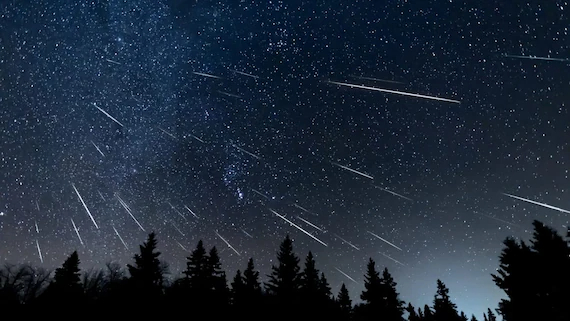
Every April, our planet passes through a cloud of cosmic dust, and tiny fragments — about the size of a grain of rice — slam into Earth’s atmosphere at staggering speeds . That friction heats them up to the point of incandescence. The result? Bright, fast-moving streaks of light we call “shooting stars.” They aren’t stars at all, of course. They’re meteors — tiny rocky debris burning up dozens of kilometers above our heads .
Now, the Lyrids typically aren’t as prolific as the famous Perseids of August or the Geminids of December . But here’s what makes them special: they’re unpredictable. In some years — 1803, 1922, 1945, 1982, and 1985 — the Lyrids stunned observers with sudden outbursts of up to 90 meteors per hour. Nobody can reliably predict when those surges will happen. That surprise factor alone is worth stepping outside tonight.
No outburst is expected this year. But nature doesn’t always follow our predictions, does it?
When Do the Lyrids Peak in 2026?
The shower is active from April 14 through April 30, but the real show happens during the peak.
In 2026, the Lyrids are expected to reach maximum activity around 19:40 GMT on April 22 That said, the exact timing can shift by several hours in either direction — the actual peak could fall anywhere between 16:40 GMT on April 22 and 00:00 GMT on April 23 So instead of fixating on a single minute, plan for a wider window.
What About the Moon?
Here’s the good news. The peak falls two days before the First Quarter Moon, which means the Moon will be a waxing crescent — only about 30% illuminated . That’s a relatively dim glow, causing only minor interference with your view of faint meteors.
Even better: the Moon sets shortly after midnight local time . So if you stay out past midnight, the sky gets darker, and your chances of catching fainter streaks go way up.
Under ideal dark-sky conditions, you can expect to see roughly 18 meteors per hour during the peak .
Best Viewing Times Around the World
Because the peak happens at a fixed moment in Universal Time, the best local viewing window depends on where you live. We’ve compiled the following tables to help you plan your night.
USA and Canada
In most of the Americas, the predicted peak falls during daylight hours. That means the best rates will appear in the pre-dawn hours of April 22, before sunrise.
| Time Zone | Example Cities | Predicted Peak | Best Viewing Window |
|---|---|---|---|
| EDT (GMT−4) | New York, Washington D.C., Toronto | Apr 22, 3:40 PM | Apr 22, 12:00–6:00 AM |
| CDT (GMT−5) | Chicago, Dallas, New Orleans | Apr 22, 2:40 PM | Apr 22, 12:00–5:30 AM |
| MDT (GMT−6) | Denver, Calgary, Albuquerque | Apr 22, 1:40 PM | Apr 22, 12:00–6:30 AM |
| PDT (GMT−7) | Los Angeles, San Francisco, Vancouver | Apr 22, 12:40 PM | Apr 22, 12:00–6:00 AM |
Europe
European observers are in luck — the predicted peak falls during the evening and nighttime hours, right when you can actually see it.
| Time Zone | Example Cities | Predicted Peak | Best Viewing Window |
|---|---|---|---|
| BST (GMT+1) | London | Apr 22, 8:40 PM | Apr 22, 8:30 PM–1:30 AM |
| CEST (GMT+2) | Paris, Berlin, Rome | Apr 22, 9:40 PM | Apr 22, 9:30 PM–2:30 AM |
| EEST (GMT+3) | Athens, Bucharest, Helsinki | Apr 22, 10:40 PM | Apr 22, 10:30 PM–3:30 AM |
If you’re in Italy, the peak arrives at approximately 9:40 PM local time (CEST), with excellent viewing from 9:30 PM until around 2:30 AM .
Asia
For observers across Asia, the peak shifts into the early morning hours of April 23.
| Time Zone | Example Cities | Predicted Peak | Best Viewing Window |
|---|---|---|---|
| IST (GMT+5:30) | New Delhi, Mumbai, Bengaluru | Apr 23, 1:10 AM | Apr 23, 1:00–6:00 AM |
| CST (GMT+8) | Beijing, Shanghai, Shenzhen | Apr 23, 3:40 AM | Apr 23, 3:30–5:30 AM |
| JST (GMT+9) | Tokyo, Osaka, Sapporo | Apr 23, 4:40 AM | Apr 23, 4:30–5:00 AM |
Southern Hemisphere
You can still watch the Lyrids from below the equator, though the radiant stays lower in the sky. Expect fewer meteors — but those that do appear tend to include some bright fireballs.
| Time Zone | Example Cities | Predicted Peak | Best Viewing Window |
|---|---|---|---|
| AEST (GMT+10) | Sydney, Melbourne, Brisbane | Apr 23, 5:40 AM | Apr 23, 5:30–6:30 AM |
| NZST (GMT+12) | Auckland, Wellington | Apr 23, 7:40 AM | Apr 23, 1:00–7:00 AM |
| SAST (GMT+2) | Johannesburg, Cape Town | Apr 22, 9:40 PM | Apr 23, 1:00–2:30 AM |
| CLT (GMT−4) | Santiago, Valparaíso | Apr 22, 3:40 PM | Apr 22, 1:00–7:00 AM |
| ART (GMT−3) | Buenos Aires, Córdoba | Apr 22, 4:40 PM | Apr 22, 1:00–7:00 AM |
| BRT (GMT−3) | São Paulo, Rio de Janeiro | Apr 22, 4:40 PM | Apr 22, 12:00–6:00 AM |
Where Can You See the Lyrids Tonight?
The Lyrids are visible from both hemispheres, but the Northern Hemisphere gets the best show Here’s why.
The radiant point — the area of the sky where the meteors appear to originate — sits in the constellation Lyra, very close to the brilliant star Vega . Vega is one of the brightest stars in our sky, so it’s easy to find. From mid-northern latitudes, the radiant rises above the horizon around 8:30 PM local time and climbs higher as the night progresses, reaching its highest point in the pre-dawn hours .
Why Does the Radiant’s Height Matter?
The higher the radiant is above your horizon, the more meteors you’ll see. When the radiant is low, most meteors streak below the horizon where you can’t see them. As it climbs toward the zenith (straight overhead), your visible “catch area” expands dramatically.
From the Southern Hemisphere, the radiant rises much later and stays lower in the sky. Fewer meteors will be visible — but keep your eyes open. Even a handful of bright Lyrid fireballs can make an evening memorable.
Here’s a practical tip: you don’t need to stare directly at the radiant . Meteors can appear anywhere across the sky. In fact, thanks to peripheral vision, the streaks often look longer and more spectacular when you’re looking slightly away from the radiant . Just face the northeast direction and let your gaze wander.
How to Watch: Pro Tips for the Best Experience
No telescope. No binoculars. No special equipment. The Lyrids are a naked-eye event — and that’s part of their beauty .
In fact, binoculars and telescopes are actually counterproductive here. They narrow your field of view, and meteors can flash across any part of the sky in a fraction of a second . Your bare eyes — with their wide field — are the best tool for this job.
Here’s our checklist for a great night:
1. Find a dark spot. Get as far from city lights as you can. Fields, beaches, hilltops, or open parks work perfectly. The darker the background sky, the more faint meteors you’ll spot.
2. Give your eyes time to adjust. This is the tip most people skip. Arrive at your observation spot 15–20 minutes early and resist the urge to check your phone . Your pupils need that time to dilate fully. Once they do, you’ll see meteors that would have been invisible moments before. One glance at a bright screen resets the process.
3. Block the Moon. Position yourself so a tree, a building, or a hill sits between you and the Moon. At 30% illumination, it won’t ruin the show — but hiding it from your direct line of sight helps you catch dimmer meteors.
4. Be patient. Meteors don’t arrive on a strict schedule. You might see three in two minutes, then nothing for ten minutes. Commit to at least an hour of watching.
5. Get comfortable. Bring a blanket or a reclining chair, wear warm layers, and carry a thermos of something hot. The ground gets cold after midnight, and comfort equals patience — which equals more meteors seen
What Causes the Lyrid Meteor Shower?
Every meteor shower has a parent body — a comet or asteroid that leaves behind a trail of debris as it orbits the Sun. For the Lyrids, that parent body is Comet C/1861 G1 (Thatcher), discovered on April 5, 1861, by the American amateur astronomer A. E. Thatcher .
How Comet Thatcher Creates Shooting Stars
Comet Thatcher is a long-period comet. Each time it swings close to the Sun, the heat partially breaks apart its surface, scattering small fragments of dust and rock along its orbital path . These particles — most no bigger than a grain of rice — stay in orbit, forming a diffuse stream of debris that circles the Sun.
Every April, Earth’s orbit carries us right through that stream. When those tiny particles hit our atmosphere at a speed of 49 kilometers per second (about 176,400 km/h or 109,600 mph), friction does the rest. The air in front of each particle compresses and heats up to thousands of degrees. The particle itself vaporizes. What we see from the ground is the glowing trail of superheated air — a meteor .
Why Are They Called “Lyrids”?
The name comes from the constellation Lyra — but the constellation isn’t the source of the meteors . It’s simply the area of the sky where the radiant is located. The radiant is a perspective effect: because the debris particles travel in roughly parallel paths, they seem to fan out from a single point when viewed from Earth, much like how parallel railroad tracks appear to converge in the distance.
Lyrid Meteor Shower 2026: Quick Facts at a Glance
| Parameter | Detail |
|---|---|
| Active Period | April 14 – April 30, 2026 |
| Peak Date & Time | April 22, ~19:40 GMT |
| Zenithal Hourly Rate (ZHR) | ~18 meteors/hour |
| Meteor Velocity | 49 km/s (≈176,400 km/h) |
| Moon Phase at Peak | Waxing Crescent (~30% illuminated) |
| Radiant Location | Constellation Lyra, near Vega |
| Parent Body | Comet C/1861 G1 (Thatcher) |
| Best Hemisphere | Northern Hemisphere |
| First Recorded Observation | 687 BC (Chinese records) |
| Known Outburst Years | 1803, 1922, 1945, 1982, 1985 |
| Outburst Expected in 2026? | No |
The Math Behind Meteor Watching
If you’re the kind of person who likes to understand the numbers behind the wonder, here’s a closer look at two concepts astronomers use when studying meteor showers.
Meteor Entry Velocity
Lyrid meteoroids enter Earth’s atmosphere at 49 km/s. To put that in perspective:
Velocity Conversion
v = 49 km/s × 3,600 s/hr = 176,400 km/h
That’s roughly 109,600 mph — about 145 times the speed of sound at sea level.
At that velocity, even a particle the size of a rice grain releases enough kinetic energy to produce a visible flash tens of kilometers above the ground .
Zenithal Hourly Rate (ZHR)
When we say the Lyrids produce “18 meteors per hour,” we’re quoting the Zenithal Hourly Rate — an idealized number. It assumes the radiant is directly overhead (at the zenith) and the sky is perfectly dark with a limiting magnitude of 6.5. In reality, most observers won’t hit those ideal conditions.
The corrected observed rate depends on the radiant’s altitude:
ZHR Correction Formula
Observed Rate ≈ ZHR × sin(hR)
Where hR = altitude of the radiant above the horizon (in degrees).
When hR = 90° (radiant at zenith), sin(90°) = 1, and you get the full ZHR.
When hR = 30°, sin(30°) = 0.5, and you see roughly half the quoted rate.
So if the radiant is only 30° above your horizon, expect about 9 meteors per hour instead of 18. That’s why watching during the pre-dawn hours — when the radiant is highest — gives you the best count .
What Other Meteor Showers Are Active This April?
The Lyrids are the headliner of April 2026, no doubt. But if you’re a dedicated meteor hunter, several minor showers overlap during the same month:
| Date | Meteor Shower |
|---|---|
| April 6 | Zeta Cygnids |
| April 10 | April Epsilon Delphinids |
| April 15 | Pi Serpentids |
| April 15 | Alpha Virginids |
| April 21 | Nu Cygnids |
| April 24 | Pi Puppids |
| April 29 | H-Virginids |
| April 30 | April Rho Cygnids |
None of these will match the Lyrids in intensity, but they remind us that our atmosphere is constantly being peppered by tiny bits of cosmic debris — a gentle, ongoing bombardment from space we rarely notice.
And here’s something to keep in mind: the next major shower for Northern Hemisphere observers after the Lyrids won’t arrive until the Perseids in August. So tonight really is the best opportunity for months to come.
Conclusion: Step Outside Tonight
We’ve covered a lot of ground — from the 2,700-year history of the Lyrids to the exact minute they peak tonight, from Comet Thatcher’s icy trail to the math that explains why radiant altitude matters. Here’s what it all comes down to:
Tonight, April 22, 2026, around 19:40 GMT, Earth will be plowing through the ancient dust stream of a comet discovered in 1861, recreating a light show that Chinese astronomers first documented in 687 BC . The Moon is dim. The sky, if the weather cooperates, will be generous. And all you need is a dark spot, a bit of patience, and your own two eyes.
Will we see 18 meteors per hour? Maybe. Maybe more. Maybe a quiet night with just a few — but even a single bright fireball tearing across the sky can take your breath away. That’s what keeps us looking up.
At FreeAstroScience.com, we believe complex science should never feel out of reach. Our mission is to explain the universe in terms everyone can grasp — because the sleep of reason breeds monsters, and a curious mind is the best antidote. We want you to never turn off your mind, to keep asking questions, keep looking up, keep wondering.
Come back soon. The sky always has something new to show us.