Kamakhya: Is Assam’s Temple of Fertility Myth or Science?
What Makes the Kamakhya Temple in Assam So Enigmatic?
Have you ever heard of a temple
that celebrates the menstruation of a goddess? It may sound unlikely, but
that’s exactly the mystery and fascination surrounding the Kamakhya Temple,
located in Assam, in northeastern India.
Welcome, dear readers of FreeAstroScience.com.
Today, we’ll cross the boundary between myth and science as we explore one of
the most enigmatic places on Earth. Get ready to uncover secrets that connect
faith, biology, archaeology, and even geology. Stay with us until the end,
because reflecting on this temple may change how you see the relationship
between science and spirituality.
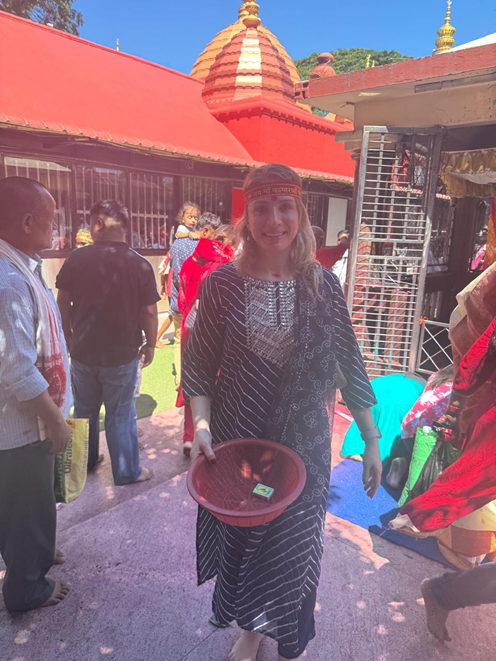
Why Is the Kamakhya Temple So Special?
The Kamakhya Temple is dedicated to the goddess Shakti,
the embodiment of feminine energy. Unlike other temples, here there is no idol.
The sacred object is a rock shaped like a yoni (symbol of the womb),
always covered by underground water.
- The
temple celebrates female fertility.
- Once
a year, for three days every June, the nearby Brahmaputra River turns
reddish. Tradition says this marks the goddess’s menstrual cycle.
- This
phenomenon is honored during the Ambubachi Mela, a festival that
draws thousands of pilgrims, mystics, and visitors.
·

What Are the Mythological Origins of the Temple?
According to Hindu mythology, the Kamakhya Temple has its
roots in the story of the goddess Sati.
- After
Sati’s death, her body was cut into 51 pieces by Vishnu to calm Shiva’s
rage.
- Each
piece fell on different parts of India, giving rise to the Shakti
Peethas.
- In
Assam, it is believed that the uterus of the goddess fell, making
Kamakhya a unique site of devotion to divine femininity.
This story is not only religious. It also shows how ancient
cultures valued the creative power of the female body, something rarely
celebrated in patriarchal traditions.

How Does Science Interpret the Temple?
The temple isn’t just about myths. Science has also tried to
explain some of its mysteries.
- Reddish
water in the Brahmaputra: modern analyses suggest mineral pigments or
iron oxides may be responsible for the coloration.
- Underground
spring: the sanctuary was built over a geological fissure from which
water constantly flows. This may symbolize fertility linked to nature
itself.
- Ambubachi
Festival: anthropologists see it as a celebration of the earth’s
fertility, coinciding with the start of the planting season in Assam.
In this way, the temple connects the cycle of women, the
cycle of nature, and the cycle of life.

What Is the Cultural and Social Impact?
Kamakhya is much more than a temple.
- It
is a major center of Tantra, a spiritual tradition seeking the
union of feminine and masculine forces.
- It
also sparks modern debates about menstruation, still a taboo in
many societies.
- Social
scientists see it as a rare example of openly honoring female biology.
Here, spirituality and science meet: the temple reminds us
that fertility and menstruation are not weaknesses but vital forces.

Conclusion: What Does Kamakhya Teach Us?
The Kamakhya Temple is a bridge between worlds. It unites
myth and geology, religion and anthropology, body and cosmos. At a time when
menstruation is still treated with silence or shame, Kamakhya reminds us that
this natural process is sacred and powerful.
At FreeAstroScience.com, we believe we should never
turn off our minds. The sleep of reason breeds monsters, but curiosity awakens
new ways to understand both science and spirituality.
So, next time you hear about Assam, remember this: at
Kamakhya, the goddess’s womb beats in stone, water, and myth — inviting us to
rethink how we look at life.
References
Assam Tourism Development Corporation. (2022). Ambubachi
Mela: Festival of Fertility. Government of Assam. – Official cultural
resource describing the festival and its socio-cultural importance. Official Assam Tourism page on Ambubachi Festival | Related PDF on festival details
Bhattacharyya, N. N. (1996). History of the Sakta
Religion. Munshiram Manoharlal. – Examines Shakti worship and the
significance of Kamakhya in the broader context of Hindu traditions. Full PDF on Archive.org | Amazon | Exotic India
Times of India. (2021, June 22). Ambubachi Mela: The Annual
Festival of Kamakhya Temple in Assam. – Media coverage on the modern festival
and its impact on pilgrims and tourism. TOI video/article on 2021 cancellation
Times of India – Readers’ Blog. (n.d.). Ambubachi: The
Festival of the Bleeding Goddess. Retrieved September 20, 2025, from https://timesofindia.indiatimes.com/readersblog/trivialtopics/ambubachi-the-festival-of-the-bleeding-goddess-55401/
Urban, H. B. (2009). The Power of Tantra: Religion,
Sexuality and the Politics of South Asian Studies. I.B. Tauris. – A
detailed exploration of Tantra traditions, including Kamakhya’s role as a
tantric hub. Publisher page | Amazon | Preview PDF
Wikipedia contributors. (n.d.). Ambubachi
Mela. In Wikipedia. Retrieved
September 20, 2025, from https://en.wikipedia.org/wiki/Ambubachi_Mela#:~:text=This%20yearly%20mela%20is%20celebrated,turns%20Red%20for%20three%20days.
Wikipedia contributors. (n.d.). Sati (Hindu goddess).
In Wikipedia. Retrieved September 20, 2025, from https://en.wikipedia.org/wiki/Sati_(Hindu_goddess)