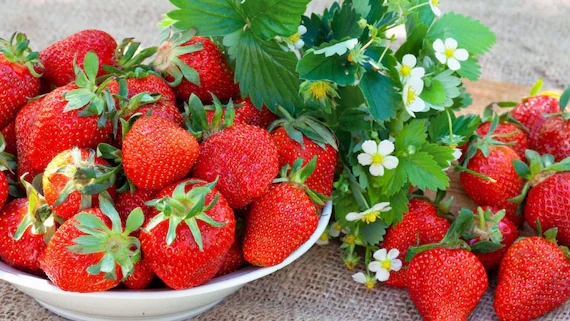
Have you ever bitten into a juicy, red strawberry and thought, “This is the perfect fruit”? What if we told you that, according to botany, you weren’t eating a fruit at all?
Welcome to FreeAstroScience.com — your home for turning complex science into something anyone can grasp. YStrawberries aren’t real fruits — they’re botanical impostors! Discover what you’re actually eating and why science says otherwise. Read the shocking truth now! Today we’re stepping out of our usual cosmic territory to explore a mystery hiding in plain sight: on your kitchen counter, in your smoothie, sitting right on top of your morning cereal.
Strawberries are liars. Beautiful, delicious liars.
Stick with us through one. By the end, you’ll never look at a strawberry — or an apple, or a peanut — the same way again. And you’ll have a fantastic fact to drop at your next dinner party.
Let’s dig in.
—
—
The Strawberry Deception: Nature’s Sweetest Trick on Your Plate
We love strawberries. The world loves strawberries. They’re one of the most important horticultural fruit crops on the planet. Farmers breed them for flavor, yield, and that gorgeous red color. Scientists study their genetics — the cultivated strawberry (*Fragaria × ananassa*) is actually an octoploid organism, meaning it carries eight sets of chromosomes. That’s four times more than we humans have.
But here’s the twist nobody warned you about: botanically speaking, a strawberry is not a fruit
It’s a false fruit. And once you understand why, a whole chain of surprises follows.
—
What Exactly Is a “False Fruit”?
Let’s start with a simple question. What *is* a fruit?
In everyday life, we call anything sweet, watery, and plant-based a “fruit.” That’s why strawberries, apples, and pears land in the fruit bowl. Makes sense, right?
Botany disagrees.
Open any botany textbook and you’ll find a stricter rule: **a true fruit develops only from the transformation and swelling of the flower’s ovary after fertilization** . Only the ovary. Nothing else.
If other flower structures join the party — the receptacle, the stem base, the outer tissues — then what you get is called a false fruit, or an accessory fruit.
That one rule changes everything.
—
The Anatomy of a Strawberry — Where’s the Real Fruit?
Here’s where it gets interesting.
The red, fleshy part of a strawberry — the bit you bite into — doesn’t come from the ovary. It comes from a different part of the flower called the receptacle (also known as the thalamus).
Think of the receptacle as a little cushion sitting at the base of the flower. It’s where all the flower’s organs attach. After pollination, hormones produced by the ovules trigger this cushion to swell, turn red, and become sweet.
So the juicy part? It’s basically an inflated flower platform. Not a fruit.
How a Strawberry Flower Becomes What You Eat
Here’s the short version of what happens:
- A strawberry flower blooms. It has many small, separate carpels (modified leaves that protect ovules).
- Pollination occurs.
- The ovules release hormones.
- The receptacle — not the ovaries — responds by expanding into the fleshy red structure we recognize.
- Each tiny ovary, from each individual carpel, develops into a small, hard structure on the surface.
That’s a false fruit in action.
—
Those Tiny Dots Aren’t Seeds — They’re the Actual Fruits
Now look closely at a strawberry. See those little yellow-brown specks dotting the surface?
Most people call them seeds. They’re not.
They’re called achenes, and each one is a true fruit. Every single achene developed from the transformation of a single ovary belonging to a separate carpel. That means what we call “one strawberry” is actually a cluster of tiny real fruits riding on a swollen receptacle.
This also makes the strawberry an **aggregate false fruit** — “aggregate” because multiple individual fruits come together on one structure .
We find this humbling. Something so familiar, so everyday, hides such a surprising identity.
—
Apples, Pears, and Other Botanical Impostors
Strawberries aren’t the only culprits. **Apples and pears are false fruits too** .
The sweet, crunchy flesh of an apple? That’s the swollen receptacle — just like a strawberry. The real fruit is the part you throw away: **the core** . Those tough chambers holding the seeds? *That’s* what developed from the ovary.
So every time you eat an apple and toss the core, you’re eating the accessory tissue and discarding the actual botanical fruit. Ironic, isn’t it?
### Pineapple: A Different Kind of Trickster
Pineapple often gets lumped in with false fruits, but it’s actually something else: an **infructescence**, or multiple fruit . A pineapple flower is really an *inflorescence* — a cluster of many individual flowers grouped along a shared axis. Each tiny flower produces its own ovary-derived fruit, and they all fuse together into one chunky structure.
### Blackberries: The Aggregate Story
Blackberries follow yet another pattern. Each little “ball” in a blackberry is a separate fruit (a drupelet), and together they form an **aggregate fruit** . The carpels in a blackberry flower are numerous and separate, and each one independently produces a small fruit.
Nature doesn’t play by one set of rules. It improvises.
—
Wait — Beans and Zucchini Are Real Fruits?
Here’s the part that tends to make people’s jaws drop.
If the definition of a true fruit is “develops solely from the ovary,” then some foods we never think of as fruits suddenly qualify. **Beans, chickpeas, corn, and zucchini are all true fruits** from a botanical perspective .
Their development follows the textbook definition perfectly: ovary transforms, seeds form inside, done.
And it doesn’t stop there. **Peanuts and chestnuts** — which we casually call “nuts” — are classified as *dry fruits* because of their low water content and tough, leathery texture .
The lesson? **Common names and scientific names don’t always agree.** And that gap between everyday language and scientific precision is exactly where confusion — and wonder — live.
—
Why Does Strawberry Science Matter?
This isn’t just a fun bar trivia fact. Understanding strawberry anatomy at a deep level has real-world consequences.
The cultivated strawberry (*Fragaria × ananassa*) is an **octoploid** — it carries eight copies of each chromosome set. That makes its genetics extraordinarily complex. Researchers working on strawberry improvement face a genuine challenge: how do you identify important genes in such a complicated genome?
One promising approach involves studying **woodland strawberry** (*Fragaria vesca*), a wild diploid species with much simpler genetics but wide natural diversity Scientists propose applying strategies already proven successful in tomato and potato research — identifying genetic variations that control fruit quality and yield — and then translating those findings to cultivated strawberry using **gene editing technologies** knowing what part of the strawberry is “real fruit” versus “receptacle tissue” isn’t academic trivia. It directly shapes how breeders target genes for flavor, size, sweetness, and disease resistance.
🧬 Quick Genetics Snapshot
- Cultivated strawberry ploidy: Octoploid (8n) — eight chromosome sets
- Woodland strawberry ploidy: Diploid (2n) — two chromosome sets
- Key breeding targets: Fruit quality, flowering control, runner production
- Research strategy: Apply solanaceous crop methods (tomato, potato) + gene editing
—
The Carpel, the Ovary, and the Bigger Picture
Let’s take one more look at the flower’s anatomy, because it ties everything together.
The arpel is a modified leaf that folds over itself to protect the ovules and seeds. It includes three parts: the stigma (where pollen lands), the style (the tube connecting stigma to ovary), and the ovary (where seeds develop). The collection of all carpels in a flower forms the gynoecium — the complete female reproductive system of the plan.

Not all flowers have just one carpel. Strawberry flowers have many separate carpels, each with its own ovary. Each of those ovaries becomes one tiny achene. That’s why the strawberry surface is dotted with dozens of them.
📐 The Botanical Fruit Rule (Simplified)
False Fruit = Ovary + other floral tissues (e.g., receptacle)
Strawberry = Swollen receptacle + many achenes (aggregate false fruit)
—
Final Thoughts: The Sleep of Reason Breeds Monsters
So here we are. The strawberry — one of the most beloved foods on Earth — isn’t a fruit. At least not in the way botany defines it. The red, sweet flesh is a transformed receptacle. The true fruits are those overlooked specks we’ve always mistaken for seeds.
Apples? Same trick — the core is the real fruit. Beans and zucchini? Genuine botanical fruits, hiding behind the label “vegetable”. And the cultivated strawberry’s complex octoploid genome continues to challenge scientists working to improve its quality and yield.
We didn’t write this to make you distrust your breakfast. We wrote it because **questioning what seems obvious is the first step toward understanding**. A strawberry looks like a fruit, tastes like a fruit, and sits in the fruit aisle. But science asks us to look deeper — past the surface, past assumptions, down to the cellular level.
At **FreeAstroScience.com**, we break down complex scientific ideas into language anyone can enjoy. Whether it’s the physics of black holes or the secret life of a strawberry flower, our goal stays the same: *never let your mind go to sleep*. Because, as Goya reminded us, **the sleep of reason breeds monsters**.
Keep asking questions. Keep being curious. And come back to FreeAstroScience.com whenever you’re hungry for more — we’ll always have something fascinating waiting for you.
—
📚 References & Sources
- Strawberry — An Overview. ScienceDirect Topics, Agricultural and Biological Sciences. sciencedirect.com
- Lombardi, M. (2025). “La fragola è un falso frutto per la botanica perché nasce dalla trasformazione del ricettacolo del fiore.” Geopop. geopop.it
- Pasqua, G., Abate, G., Forni, C. Botanica generale e diversità vegetale, IV ed. PICCIN.
- Treccani — Infiorescenza. treccani.it