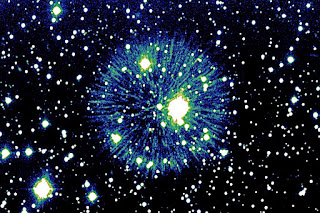
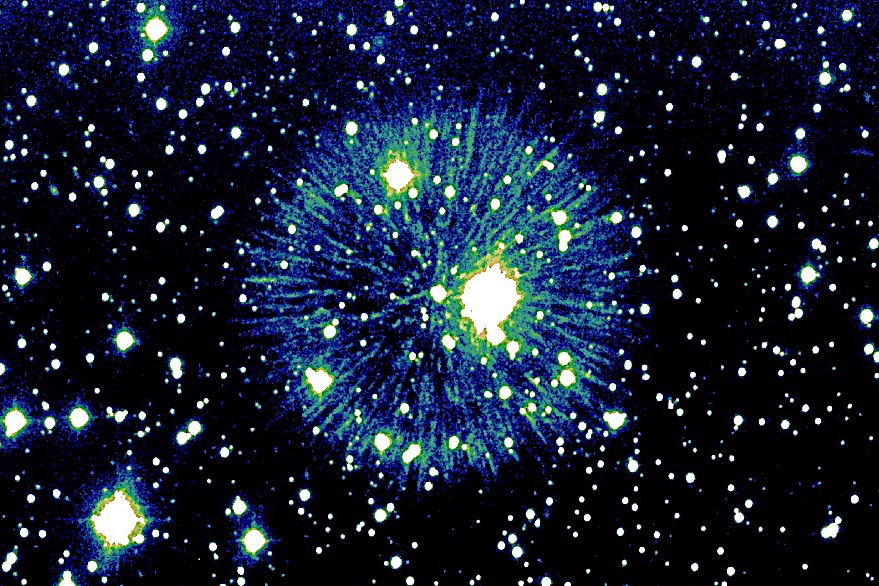
Professor of physics and astronomy at the University of Dartmouth (USA), Robert Fesen, recorded telescopic images showing an explosion similar to fireworks, radiated from an unusual star in the center of a celestial body.
The object in question is the Pa 30 nebula , which probably resulted from the collision of two dying stars, which occurred approximately 850 years ago, according to the study authors.
The episode was recorded for the first time by Chinese and Japanese astronomers in the year 1181 (12th century), being described as a sudden and brief appearance of a very bright star in the constellation of Cassiopeia.
The nebula’s unusual features suggest a collision of white dwarfs in its terminal phase, resulting in a subclass of Iax-type supernovae , in which the stars do not completely destroy each other.
Fesen’s images of the nebula’s structure and brightness not only allow for a more accurate estimate of its age, but could also improve existing models of white dwarf mergers .
According to the experts, the deeper images show that Pa 30 is not only beautiful, but also show the true structure of the nebula, as well as allowing the study of its chemical composition and how the central star generated its remarkable appearance.
Nebula Pa 30, which probably resulted from the collision of two dying stars, which occurred approximately 850 years ago
© Photo / Robert Fesen