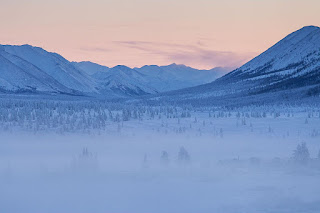
Oymyakon, a remote village in Eastern Siberia, Russia, is renowned as the coldest inhabited place on Earth. The all-time record low temperature of -71.2 degrees Celsius was unofficially recorded by scientist Sergey Obrucev on January 26, 1926. However, an official measurement of -67.7 degrees Celsius was noted in 1933. A monument commemorates the record-breaking cold from 1926.
The Coldest Place on Earth: Oymyakon vs. Other Locations
Other Siberian cities have also vied for the title of the coldest inhabited place. In 1892, Verkhoyansk recorded a temperature of -67.8 degrees Celsius. While Antarctica has experienced even colder temperatures, it lacks permanent human settlements.
Contemporary Oymyakon: Extreme Temperatures and Resilient Residents
In recent times, Oymyakon reached a temperature of -61 degrees Celsius on December 22, 2007. Interestingly, during the brief Siberian summer, temperatures can soar to 30 degrees above zero, demonstrating a temperature range of over 100 degrees between winter and summer.
With a population of just 800, Oymyakon is often referred to as the “North Pole of Cold.” Remarkably, the village is home to several centenarians, defying logic and showcasing the resilience of its inhabitants.
A Unique Experiment in Oymyakon: The Power of Siberian Cold
In 2004, extreme photographer Geoff Mackley conducted an experiment in Oymyakon. On February 1, he threw a cup of boiling water into the -47 degrees Celsius air. The water instantly transformed into ice crystals before shattering into a thousand fragments upon hitting the ground.
Conclusion
Oymyakon’s record-breaking cold temperatures and exceptional temperature range make it a fascinating and unique destination. Its resilient inhabitants, who thrive in one of the harshest climates on Earth, further add to the allure of this remote Siberian village.
Gerd Dani — Founder & Director Gerd Dani is the visionary in a wheelchair behind FreeAstroScience. An astronomy graduate and a master's in physics, he founded this blog in June 2020, driven by a passion for breaking down complex scientific and philosophical concepts into bite-sized, digestible pieces. As President, he is dedicated to making science accessible to everyone, from students to seasoned academics.
(()=>{async function handleCredentialResponse(response){try{const res=await fetch('https://freeastroscience.com/wp-login.php?action=googlesitekit_auth',{method:'POST',headers:{'Content-Type':'application/x-www-form-urlencoded'},body:new URLSearchParams(response)});/* Preserve comment text in case of redirect after login on a page with a Sign in with Google button in the WordPress comments. */ const commentText=document.querySelector('#comment')?.value;const postId=document.querySelectorAll('.googlesitekit-sign-in-with-google__comments-form-button')?.[0]?.className?.match(/googlesitekit-sign-in-with-google__comments-form-button-postid-(\d+)/)?.[1];if(!! commentText?.length){sessionStorage.setItem(`siwg-comment-text-${postId}`,commentText);}location.reload();}catch(error){console.error(error);}}if(typeof google !=='undefined'){google.accounts.id.initialize({client_id:'251104905146-eghigrtua82ec7aan4em9fle9u5f0ilc.apps.googleusercontent.com',callback:handleCredentialResponse,library_name:'Site-Kit'});}const defaultButtonOptions={"theme":"outline","text":"signin_with","shape":"rectangular"};document.querySelectorAll('.googlesitekit-sign-in-with-google__frontend-output-button').forEach((siwgButtonDiv)=>{const buttonOptions={shape:siwgButtonDiv.getAttribute('data-googlesitekit-siwg-shape')|| defaultButtonOptions.shape,text:siwgButtonDiv.getAttribute('data-googlesitekit-siwg-text')|| defaultButtonOptions.text,theme:siwgButtonDiv.getAttribute('data-googlesitekit-siwg-theme')|| defaultButtonOptions.theme,};if(typeof google !=='undefined'){google.accounts.id.renderButton(siwgButtonDiv,buttonOptions);}});/* If there is a matching saved comment text in sessionStorage,restore it to the comment field and remove it from sessionStorage. */ const postId=document.body.className.match(/postid-(\d+)/)?.[1];const commentField=document.querySelector('#comment');const commentText=sessionStorage.getItem(`siwg-comment-text-${postId}`);if(commentText?.length && commentField && !! postId){commentField.value=commentText;sessionStorage.removeItem(`siwg-comment-text-${postId}`);}})();
var astra = {"break_point":"921","isRtl":"","is_scroll_to_id":"1","is_scroll_to_top":"1","is_header_footer_builder_active":"1","responsive_cart_click":"flyout","is_dark_palette":"","revealEffectEnable":"","edit_post_url":"https://freeastroscience.com/wp-admin/post.php?post={{id}}&action=edit","ajax_url":"https://freeastroscience.com/wp-admin/admin-ajax.php","infinite_count":"2","infinite_total":"0","pagination":"number","infinite_scroll_event":"scroll","no_more_post_message":"No more posts to show.","grid_layout":{"desktop":3,"tablet":1,"mobile":1},"site_url":"https://freeastroscience.com","blogArchiveTitleLayout":"layout-2","blogArchiveTitleOn":"1","show_comments":"Show Comments","enableHistoryPushState":"1","masonryEnabled":"","blogMasonryBreakPoint":"0"};
//# sourceURL=astra-theme-js-js-extra