What if the worst nuclear accident in history wasn’t actually history at all? What if it’s still unfolding, right now, while we scroll past headlines on our phones? Welcome, dear reader. We’re glad you’re here with us at FreeAstroScience.com, where we turn tough science into stories you can actually feel. Stay with us to the very end — because this article isn’t just about a reactor that exploded 40 years ago. It’s about the choices we’re making today, and the ones our children will inherit.
📖 Table of Contents
- What really happened on April 26, 1986?
- How many lives did Chernobyl actually claim?
- Why did we need a giant arch over a reactor?
- How did war turn Chernobyl into a target?
- What does Pripyat look like four decades later?
- Can nature really thrive in a radioactive zone?
- What lessons are we still refusing to learn?
Chernobyl at 40: A Wound That Refuses to Close
We’ve spent decades calling Chernobyl “history.” We were wrong. As Italian photographer Pierpaolo Mittica put it after his fifth visit to the zone, “We are just at the beginning of the story of Chernobyl.” Forty years on, the site is still bleeding — radiation, money, and now, missiles.
So let’s sit down together and look at this honestly. Not as a relic. As a present-day warning.
What really happened on April 26, 1986?
At 1:23 a.m. local time on April 26, 1986, what should have been a routine safety test at Reactor No. 4 turned into the worst nuclear accident in history. A reactor operator pressed the scram button — the emergency shutdown — but a known design flaw in the control rods briefly increased reactivity instead of cutting it.
Heat surged. Fuel ruptured. Steam exploded. Seconds later, a second blast — its exact cause still debated — tore the reactor open.
Then came the worst part: a fire in the graphite moderator, burning at temperatures estimated as high as 5,000°C. That inferno lifted radioactive material high into the atmosphere, scattering it across northern Europe.
The Soviet Union didn’t tell the world. Sweden did. A worker at a Swedish nuclear plant set off radiation alarms walking into work — and that’s how the rest of us found out something terrible had happened.
| Figure | Value | Source |
|---|---|---|
| Date & time of accident | 26 April 1986, 1:23 a.m. | |
| People displaced | ~350,000 | |
| Liquidators (cleanup workers) | ~600,000 | |
| Official death toll | 31 (widely disputed) | |
| Exclusion zone | ~2,600 km² | |
| Graphite fire temperature | up to 5,000°C | |
| EU funding for nuclear safety in Ukraine | > €1 billion since 1991 |
How many lives did Chernobyl actually claim?
Officially? 31. Honestly? Nobody knows — and we never will.
In the months and years that followed, hundreds of liquidators who battled the disaster fell ill. Many died. Thyroid cancer rates climbed sharply in the most contaminated regions. Mikhail Gorbachev, the last Soviet president, later called Chernobyl one of the key forces that hastened the collapse of the USSR.
The Soviet government quietly evacuated more than 116,000 people in the days after the explosion while publicly denying anything serious had happened. Around 36 hours after the blasts, residents within 10 km were finally moved out. The 30-km radius evacuation didn’t begin for another five days.
Think about that delay. Five days. Children played outside. Workers went to their jobs. Buses rolled in only when radiation levels in the expanded zone hit 10–15 millirems per hour.
Why did we need a giant arch over a reactor?
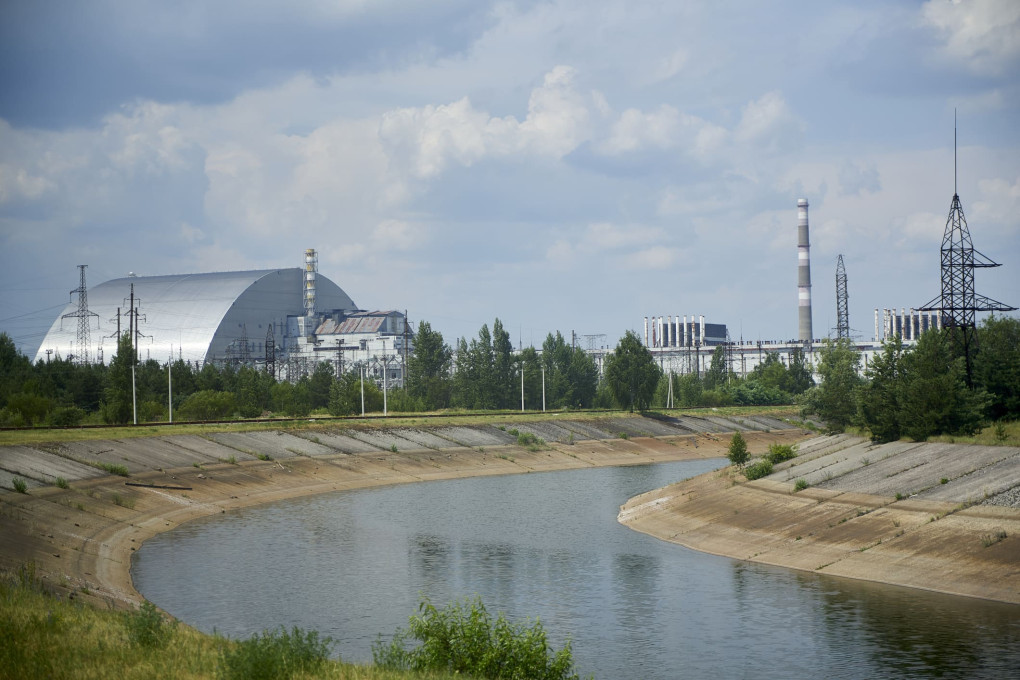
The original Soviet “sarcophagus” — a concrete shell hastily poured over the smoldering reactor — was never built to last. By the mid-1990s it was cracking, leaking, and sagging under its own weight.
So the world built something extraordinary: the New Safe Confinement (NSC).
🏗️ The New Safe Confinement at a glance
- Cost: ~€1.5 billion ($1.76 billion)
- EU contribution: €423 million
- Weight: over 31,000 tons — the world’s largest movable object
- Height: as tall as a football pitch is long
- Installed: 2016, slid into place on rails from half a kilometer away
- What it shields: ~200 tons of molten nuclear fuel, 30 tons of contaminated dust, 16 tons of uranium and plutonium
The structure has two shells, with up to 12 meters of space between them, kept at low humidity to fight corrosion. The outer shell blocks the weather. The inner shell is meant to trap radioactive dust, especially when cranes inside start tearing apart the old sarcophagus and the wrecked reactor below.
That dismantling work? It was supposed to start this year. It can’t. Here’s why.
How did war turn Chernobyl into a target?
In February 2022, Russian troops rolled into the Exclusion Zone in the opening hours of the invasion of Ukraine. Their tanks churned up radioactive dust. Their soldiers looted workshops, stole computers, dosimeters and lab tools, smashed windows, and — in a detail that’s hard to forget — left human excrement on control panels as a calling card.
They dug trenches in the Red Forest, a notoriously irradiated stretch of woodland, and set fires that scorched some 14,000 hectares. The smoke was so radioactive that firefighters couldn’t safely approach. Plant workers were held hostage on-site for nearly a month.
Russia abruptly withdrew on March 22, 2022. The European Bank for Reconstruction and Development put the damage at roughly €100 million ($117 million).
Then, in February 2025, a Russian drone punched a hole through the New Safe Confinement itself. The structure that took the world a decade and over a billion euros to build is now wounded. According to DW, it’s said to have lost its primary confinement capability.
Repairs are estimated at €500 million ($584 million) and won’t be finished until 2030. The European Commission has already committed an extra €37 million to help restore it.
Almost miraculously, no major radiation spike has been recorded since the strike. Makeshift repairs are holding. For now.
What does Pripyat look like four decades later?
Pripyat — once called “Atomgrad,” the pride of Soviet nuclear ambition — was just 3 kilometers from the plant. Built only 16 years before the disaster, it housed 160 buildings, 13,500 apartments, 15 kindergartens, and 5 schools.
Today? Trees grow through living rooms. Vines climb stairwells.
Volodymyr Vorobey, who was 18 when the reactor blew, recently walked DW reporters through his old apartment on Lesya Ukrainka Street. He found a record on the floor. He spotted his old shoes from vocational college. He remembered his padded chair on the balcony, the lamp, the preserves stored under a cover.
He still doesn’t know how much radiation he absorbed. He says he doesn’t want to know.
A slogan in giant metal letters still rusts on a Pripyat rooftop: “The atom should be a worker, not a soldier.”
Read that line again. Then think about a drone hitting a reactor shield in 2025.
Can nature really thrive in a radioactive zone?
Strangely — yes. Sort of.
By 2006, journalists were describing the Exclusion Zone as “a renewed but wild landscape, teeming with vegetation” and animal life. Wolves, lynx, wild boar, eagles. Even people — the so-called “self-settlers” — quietly returned to their old village homes and resumed gardening, raising chickens, and living out their lives.
But don’t romanticize it. Radiation hasn’t gone anywhere. Mittica reminds us: “Chernobyl is not history. Chernobyl is the present and the future of humanity.”
Roughly 600 people travel to the plant every single day to continue cleanup work that will stretch well into the 2060s. That’s three more generations of human labor before this site is anything close to “safe.”
What lessons are we still refusing to learn?
Here’s the uncomfortable truth.
After 1986, we thought we’d seen the worst a nuclear plant could suffer. Nobody — not governments, not the engineers who designed the New Safe Confinement, not the IAEA — planned for deliberate military attacks on civilian nuclear facilities. It was unthinkable.
It isn’t anymore.
Since 2022, Russian forces have:
- Occupied Chernobyl
- Bombed a research reactor at Kharkiv’s Institute of Physics and Technology
- Seized Zaporizhzhia, Europe’s largest civilian nuclear plant, with its six reactors
- Fired supersonic missiles within kilometers of the still-operating Khmelnytskyi plant
And in recent weeks, Washington targeted Iran’s Bushehr nuclear plant. The IAEA can do little but express “deep concern.” Its board includes both Russia and the United States.
The Bellona Foundation has called for a new international body with real authority to protect nuclear sites during conflicts. The EU, meanwhile, keeps funding nuclear safety in Ukraine through the European Instrument for International Nuclear Safety Cooperation (INSC) 2021–2027, supporting waste management, safety culture, and safeguards.
But the question hangs there, unanswered: how do you protect a reactor from a missile?
A final thought from us at FreeAstroScience
We wrote this piece for you, specifically — because at FreeAstroScience.com we believe complex science deserves clear words and honest emotion. Our mission is simple: never let your mind switch off. Because, as Goya warned us, the sleep of reason breeds monsters. Chernobyl is what happens when whole societies stop asking questions.
Forty years on, the reactor is still hot. The cleanup will outlive everyone reading this article. Wildlife has reclaimed the land, but radiation will linger long after our names are forgotten. And now — for the first time — nuclear sites are battlefields.
We can’t undo 1986. But we can refuse to be passive witnesses to what comes next. Demand transparency from your governments. Support the scientists, the engineers, and the journalists who keep showing up at dangerous sites with cameras and clipboards. Talk about this with your kids.
Come back to FreeAstroScience.com soon — we have so much more to share, and we’d love to keep growing curious together. Stay sharp. Stay awake. Stay human.
— Gerd Dani, President of Free AstroScience
📚 References
- European Commission — Chernobyl 40 years later: Learning from the past (April 2026)
- The Moscow Times — 40 Years Later, Chernobyl Remains a Lesson in the Unthinkable (April 26, 2026)
- American Nuclear Society — Chernobyl at 40 years: Looking back at Nuclear News
- National Geographic — Inside Chernobyl’s shadow community: a nuclear disaster 40 years on
- Deutsche Welle — 40 years after Chernobyl: Pripyat today (April 26, 2026)
- The Guardian — Inside Chornobyl: 40 years after disaster, nuclear site still at risk