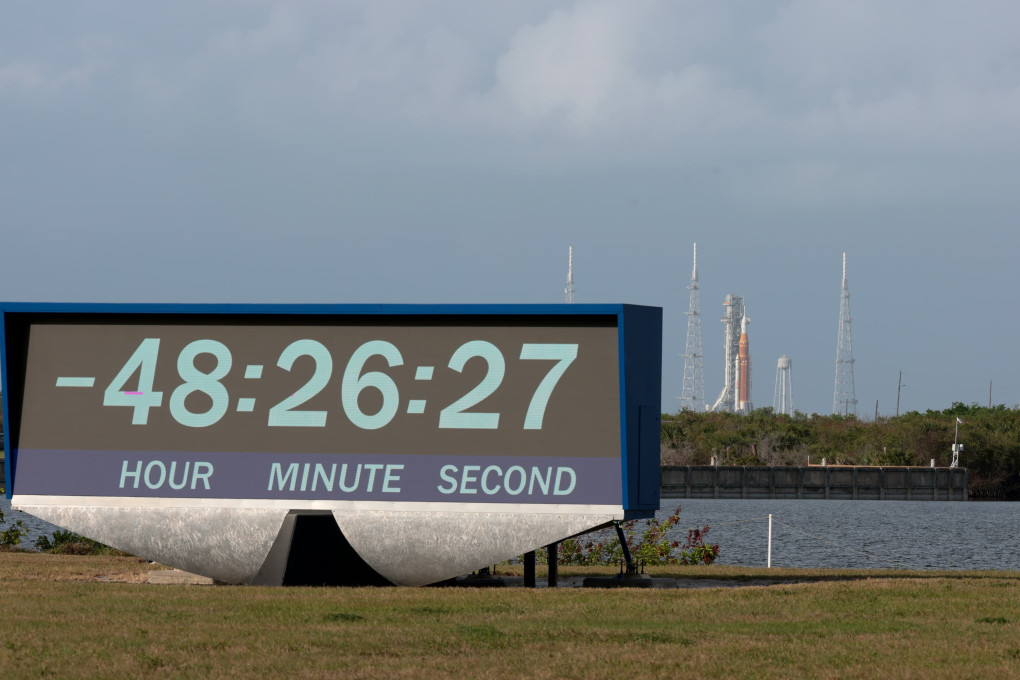
Have you ever looked up at the Moon and wondered: when will we go back? Well, the answer is right now. As you’re reading this, the countdown clock is ticking at Kennedy Space Center in Florida. Four astronauts are strapped in and ready. The most powerful rocket NASA has ever built stands tall on Launch Pad 39B. And for the first time in over fifty years, human beings are about to leave Earth’s orbit and fly toward the Moon.
Welcome to FreeAstroScience.com, where we break down complex science into clear, honest language — because we believe the sleep of reason breeds monsters. We’re Gerd Dani and the FreeAstroScience team, and we’ve written this article specifically for you: the curious mind who refuses to stop asking questions. Whether you’re a space enthusiast, a student, or someone who looked at the sky tonight and felt something stir — you’re in the right place.
Grab a coffee. Settle in. Let’s walk through every detail of this historic mission together. Stay with us to the end — there’s more to this story than a rocket launch.
Artemis 2 — Humanity’s Return to Deep Space After Half a Century
📑 Table of Contents
What Is Artemis 2, and Why Should You Care?
Let’s cut right to the heart of it. Artemis 2 is the first crewed mission to fly toward the Moon since Apollo 17 in December 1972 . That’s more than fifty years of silence between Earth’s orbit and deep space — and now, that silence is about to break.
This isn’t a landing mission. No one’s stepping onto the lunar surface this time around. Artemis 2 is strictly a lunar flyby . Think of it as the dress rehearsal before the main show. Four astronauts will ride aboard NASA’s Orion spacecraft, loop around the Moon, and come home.
Simple, right? Not exactly.
Behind that simple description hides an enormously complex engineering challenge. This mission will test every system the crew needs to survive in deep space — navigation, communication, life support — with actual human beings on board for the first time . The Artemis 1 mission in 2022 did the same loop, but without a crew. Now it’s real.
And here’s why you should care: Artemis 2 validates the technology that will put boots on the Moon again . If these systems work, we’re on track for a lunar landing later this decade. If they don’t? Better to find out now, 450,000 kilometers from Earth, than during a landing attempt.
This is personal for all of us. Every generation needs a moment that reminds them what’s possible. For our parents and grandparents, it was Apollo. For us, it’s Artemis.
Who Are the Four Astronauts Making History?
Every space mission has a human heartbeat at its center. Artemis 2 carries four.
Reid Wiseman — Commander
A U.S. Navy test pilot and NASA veteran, Wiseman leads this crew. He spent 165 days aboard the International Space Station in 2014 .
Victor Glover — Pilot
Glover is a Navy aviator who flew on SpaceX Crew-1 in 2020. He’ll become the first Black astronaut to fly beyond low Earth orbit . That sentence carries weight — read it again if you need to.
Christina Koch — Mission Specialist
Koch holds the record for the longest single spaceflight by a woman — 328 consecutive days on the ISS . She also participated in the first all-female spacewalk. On this mission, she becomes the first woman to travel beyond low Earth orbit .
Jeremy Hansen — Mission Specialist
Hansen is a Canadian Space Agency astronaut and former Royal Canadian Air Force fighter pilot. This will be his first spaceflight — and he’ll be the first Canadian, the first non-American, to fly to the Moon .
The crew received their traditional send-off at Kennedy Space Center after days of medical quarantine. Families hugged them goodbye. Technicians shook their hands . It’s a scene that reminds us: behind every rocket, there are people who love someone aboard it.
They’ll be the first humans to leave low Earth orbit since Eugene Cernan climbed back into his Apollo 17 capsule in December 1972. Let that sink in for a moment.
How Do the SLS Rocket and Orion Spacecraft Work Together?
Two machines make this mission possible. Let’s meet them.
The SLS — Space Launch System
The SLS is the most powerful rocket NASA has ever built . Standing 322 feet (about 98 meters) tall and weighing 5.75 million pounds when fueled, it generates enough thrust to push roughly 60,000 pounds of payload toward the Moon .
The design remixes technologies developed in the 1970s for the Space Shuttle . Two solid rocket boosters and four RS-25 engines — upgraded versions of the Shuttle’s workhorses — power the core stage. Its job: push the Orion spacecraft out of Earth’s gravity well and onto a path toward the Moon.
NASA led the design of both SLS and Orion, while hiring SpaceX and Blue Origin to provide the lunar landers for future Artemis missions .
The Orion Spacecraft
Sitting atop the SLS, Orion is the crew’s home for 10 days . It has two main sections:
- The Crew Module — where the four astronauts live, eat, sleep, and work. The top part returns to Earth, splashing down in the Pacific Ocean off the coast of San Diego .
- The European Service Module (ESM) — built by the European Space Agency (ESA), this cylindrical section houses the propulsion system, power generation via solar arrays, and the life support systems that keep the crew alive .
The ESM is a genuine international collaboration. It provides water, oxygen, thermal control, and the main engine that adjusts Orion’s orbit . Without it, this mission doesn’t fly.
On January 18, 2026, the integrated SLS rocket, Orion capsule, and launch tower rolled out from the Vehicle Assembly Building to Launch Complex 39B . The journey from assembly hall to launchpad is a slow-motion parade — and for anyone watching, a goosebump moment.
What Does a 10-Day Trip to the Moon Look Like?
The flight plan is elegant in concept and demanding in execution. Here’s how the roughly 10-day mission unfolds :
Day 1 — Launch. SLS lifts off from Launch Pad 39B at Kennedy Space Center. About 40 minutes after liftoff, the Interim Cryogenic Propulsion Stage (ICPS) performs a maneuver to raise the lowest point of Orion’s orbit . After further burns to raise the highest point, a system check at around 42 hours confirms the orbit ranges from 185 km at its closest to Earth to 2,600 km at its peak .
Trans-Lunar Injection. The ICPS is disposed of, and Orion fires its engine for the push toward the Moon. The trip takes about four days .
Days 2–4 — Outbound coast. Orion cruises toward the Moon across roughly 380,000 to 450,000 kilometers of empty space . The crew tests spacecraft systems, checks communication links with Mission Control, and monitors life support. During this phase, astronauts also take manual control of the spacecraft to practice proximity operations using the ESM’s engines — a skill that’ll be essential for future missions to Gateway .
Days 5–6 — Lunar flyby. Orion swings around the far side of the Moon, passing approximately 7,500 km beyond the lunar surface (with a closest approach of about 8,889 km above the surface ). For a few breathtaking minutes, the crew will gaze at the Moon’s far side. The Apollo missions were timed so the near side was sunlit, meaning the far side was largely in darkness . This time, the crew will get a view that very few humans have ever witnessed.
There’s a catch: when the Moon sits between the spacecraft and Earth, communications will be interrupted for 30 to 50 minutes . Complete radio silence. Just four people, alone, farther from home than any living human has ever been.
Days 7–9 — Return coast. The Moon’s gravity slings Orion homeward on a free-return trajectory .
Day 10 — Re-entry and splashdown. The crew module separates from the European Service Module. It hits Earth’s atmosphere at roughly 40,000 km/h (about 25,000 mph) , protected by its heat shield. Parachutes deploy. Splashdown happens in the Pacific Ocean, off San Diego, where a U.S. Navy vessel waits to recover the crew .
What Is a Free-Return Trajectory — and Why Is It a Lifesaver?
Here’s a concept that might save four lives someday.
A free-return trajectory is a flight path that uses the Moon’s gravity to swing the spacecraft back to Earth without any engine burns . If the main engine fails, if power goes down, if something goes catastrophically wrong — the laws of physics will carry the crew home.
NASA didn’t invent this idea for Artemis. It was the same principle that saved the Apollo 13 crew in 1970 after an oxygen tank exploded . The ship swung around the Moon and gravity did the rest. Artemis 2’s planned trajectory more closely resembles that flown by Apollo 13 .
The Orbital Mechanics Behind It
For those of you who love the math — and we know some of you do — here’s a peek at the physics. The velocity of any object in an elliptical orbit around a body can be described by the vis-viva equation, one of the most elegant formulas in celestial mechanics:
🔭 The Vis-Viva Equation — Orbital Velocity
| Variable | Meaning |
|---|---|
| v | Orbital velocity of the spacecraft (m/s) |
| G | Gravitational constant (6.674 × 10⁻¹¹ N·m²/kg²) |
| M | Mass of the central body (Earth or Moon) |
| r | Distance from the center of the body to the spacecraft |
| a | Semi-major axis of the orbital ellipse |
This equation tells engineers exactly how fast Orion needs to travel at any point in its orbit. On a free-return trajectory, the values of r and a are chosen so the Moon’s gravity naturally curves the path back toward Earth — no engine required.
The beauty of this equation? It ties together position and velocity in one clean line. Mission planners at NASA and ESA use it — along with far more complex three-body calculations — to design the flight path so gravity does the heavy lifting. Literally.
For Artemis 2, this isn’t just clever math. It’s a safety net sewn from physics itself .
What Are the Real Dangers of Deep Space Travel?
Let’s be honest. This mission is dangerous.
Once you leave low Earth orbit, you step beyond the protective shield of Earth’s magnetic field. Out there, the rules change.
Solar Radiation and Space Weather
Just days before launch, a significant solar flare was detected — sparking concern among scientists and space weather forecasters . NASA quickly reassured the public that the event doesn’t pose a direct threat to the mission. Orion’s radiation shielding, combined with the planned trajectory, provides adequate protection.
But the concern isn’t trivial. In deep space, a powerful solar storm can bombard a spacecraft with high-energy particles. These particles can damage electronics, disrupt communications, and — at extreme levels — pose health risks to astronauts . One of the reasons Artemis 2 matters: we need to verify that Orion’s shielding works with a live crew aboard .
The Heat Shield Question
Here’s something that doesn’t get enough attention. After Artemis 1 returned in November 2022, engineers discovered unexpected erosion of Orion’s heat shield . Post-flight inspections found areas of “char loss” in the AVCOAT ablative material — portions had worn away more than computer models predicted. Temperatures inside the crew module stayed within safe limits, but the surprise prompted months of investigation .
Close-up images of the damage weren’t made public until May 2024, when NASA’s Office of Inspector General included them in a report . For Artemis 2, the revised flight plan calls for Orion to conduct a shorter skip reentry, which further constrains the available launch windows . It’s an honest engineering response: find the problem, understand it, adjust the plan.
Weather on the Ground
Space weather isn’t the only concern. Florida weather also plays a role. As of the latest update, forecasters estimate about 80% favorable conditions for launch . The main worries? Cloud cover and upper-level winds near the pad.
Launch teams monitor conditions continuously. They’re ready to halt the countdown — even at the last second — if conditions become unsafe . There’s no rushing into space.
The Human Factor
Ten days in a capsule smaller than a studio apartment. Four people. Zero gravity. Limited privacy. The psychological pressure is real, even for trained astronauts. As NASA Chief Astronaut Joe Acaba put it: “You can imagine living in a capsule for more than 10 days — it doesn’t matter how technically capable you are, it’s how are you as a human” .
Why Is Water on the Moon a Game-Changer?
Artemis 2 won’t land. But the entire Artemis program exists because of what scientists have found on the lunar surface — and the most surprising discovery is water.
The Artemis missions aim to explore the Moon for scientific discovery and mine it for resources like frozen water for later space missions, and helium-3 for future fusion power plants . Substantial amounts of water ice sit at the lunar poles, hidden inside craters that never see sunlight. These permanently shadowed regions are among the coldest places in the solar system, and ice has been building up there for billions of years.
Why does this matter? Because water isn’t just for drinking. On the Moon, water becomes a multi-purpose survival resource:
- Drinking water for astronauts on extended stays
- Breathable oxygen, split from H₂O through electrolysis (H₂O → H₂ + ½O₂)
- Rocket fuel — liquid hydrogen and liquid oxygen are among the most efficient propellants available
If we can extract and process lunar water, we don’t have to carry everything from Earth. That changes the math on long-term habitation completely. It’s the difference between visiting the Moon and living there.
This is exactly what the Artemis program is building toward. And Artemis 2 is the mission that proves the crew vehicle works .
Artemis 2 Mission Data at a Glance
Here’s a quick reference card for the mission. Bookmark it, share it, print it out — we built this for you.
Sources: NASA , NYT , Space.com , Wikipedia , ESA
European Service Module — Specs That Keep the Crew Alive
The European Service Module deserves a closer look. ESA published detailed mass breakdowns for this hardware, and the numbers tell the story of what it takes to keep four humans alive in the void :
Think about those numbers. 240 kilograms of drinking water for four people over 10 days. 90 kilograms of oxygen. That’s the margin between life and death, packed into a module built across Europe and shipped to Florida . The ESM is, in the most literal sense, the beating heart of the Orion spacecraft.
What Comes After Artemis 2?
If Artemis 2 succeeds — and we have every reason to believe it will — the path forward opens wide.
The Revised Roadmap: Artemis 3, 4, and 5
In February 2026, NASA reshuffled its plans. Here’s the current timeline :
- Artemis 3 — rescheduled to launch mid-2027. It’ll stay in Earth orbit as a test flight for practicing rendezvous with lunar landers being developed by SpaceX and Blue Origin .
- Artemis 4 and 5 — if Artemis 3 goes well, two landing attempts are planned for 2028 . That would meet President Trump’s goal of sending NASA astronauts back to the Moon before the end of his second term .
The first actual lunar landing will target the south pole, where those ice-filled craters wait . It’s a region never visited by humans before.
Gateway and a Permanent Presence
NASA’s long-term vision goes far beyond flags and footprints. The agency plans to build Gateway — a small space station orbiting the Moon — and eventually establish permanent infrastructure on the surface . Canada’s contribution? Canadarm3, a next-generation robotic arm for Gateway, which is part of the reason a Canadian astronaut flies on Artemis 2 .
The Mars Connection
And behind all of it? Mars. Every system tested on Artemis 2 — every air filter, every navigation algorithm, every bolt in Orion’s heat shield — brings us one step closer to sending humans to the Red Planet . The Moon is our proving ground. Mars is the destination.
The Price Tag
Let’s talk money, because it matters. Over the last two decades, NASA has spent more than $50 billion developing and building SLS, Orion, and the ground systems needed to launch them . Each SLS/Orion launch costs approximately $4.1 billion, according to a 2021 NASA Inspector General report . That’s not cheap. But consider this: the entire Artemis program so far costs less than Americans spend on pizza delivery in a single year. Perspective helps.
Final Thoughts — The Moon Is Calling Again
As we write this on March 31, 2026, the Artemis 2 crew is sealed inside their Orion capsule. The countdown is running. Hundreds of engineers are watching their screens. Families are holding their breath. And somewhere, a kid is watching the live stream on a phone, eyes wide, thinking: That could be me someday.
Artemis 2 won’t land on the Moon. But it will prove that we can. It will test the machines, the math, and the people. It will carry four human beings farther from Earth than anyone has traveled in half a century — over 450,000 kilometers into the void — and bring them home.
That’s not a small thing. That’s everything.
The road to this moment has been long and winding. Years of delays — a hydrogen leak during wet dress rehearsal, a helium flow issue that forced a rollback to the VAB, unexpected heat shield erosion, a winter storm in January . Every setback taught engineers something new. Every fix made the vehicle safer. That’s how spaceflight works: you find the problems before they find you.
We wrote this article at FreeAstroScience.com because we believe everyone deserves to understand the science shaping our future. You don’t need a physics degree to appreciate what’s happening right now. You just need curiosity. And if you’ve read this far, you’ve got plenty of that.
We’ll leave you with a thought we carry with us every day: the sleep of reason breeds monsters. Keep your mind active. Keep asking questions. Keep looking up.
Come back to FreeAstroScience.com whenever you’re ready to learn something new. We’ll be here — writing, explaining, and dreaming about the stars right alongside you. 🌕