A new study explores recent scientific findings regarding the historical presence of liquid water on the Mars and the specific role of tidal forces in shaping its surface features billions of years ago. By examining computer simulations of ancient martian basins such as the Gale crater and Utopia Planitia, researchers have provided new insights into the mechanical constraints of tides within an environment characterized by low gravity and the absence of a large natural satellite.
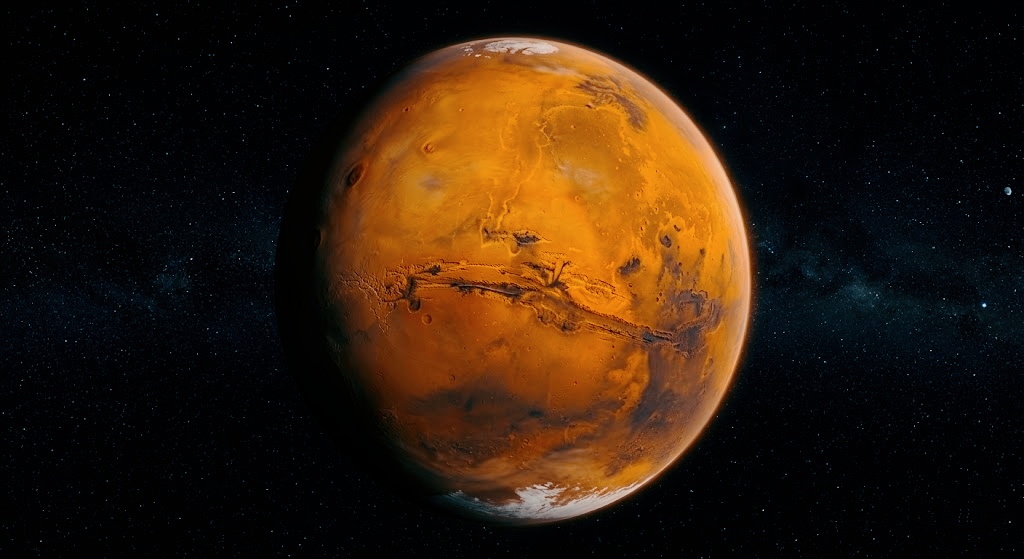
The influence of solar tides on the sedimentary landscape of ancient Mars
Scientific evidence strongly supports the existence of running liquid water on the surface of mars during its early history. It is hypothesized that the Gale crater once functioned as a localized lake, while the vast expanse of Utopia Planitia may have hosted a significant ocean. While the presence of anaerobic microorganisms remains a subject of theoretical speculation, the physical reality of aqueous environments is well-established through observations made by robotic explorers.
These explorers, including the nasa curiosity rover and the chinese zhurong rover, have identified sedimentary rock formations that indicate past water activity. The discussion among the scientific community has long focused on whether tidal movements were a primary contributor to the modeling of these specific landscapes. Understanding these dynamics is essential for reconstructing the paleoclimate and the potential habitability of the planet when it was warmer and wetter than it is today.
The results of this inquiry, recently published in the journal of geophysical research: planets, clarify the impact of tides on the martian crust. On earth, tides are fundamental for sustaining life and regulating climate by circulating vital nutrients and oxygen. On ancient mars, however, the lack of sufficient oxygen would have necessitated anaerobic survival for any potential life forms, making the mechanical role of water movement the primary area of geological interest.
Numerical simulations of tidal velocity and movement
To investigate these ancient conditions, researchers employed sophisticated computer models to simulate tidal speeds across various martian regions. These simulations incorporated the specific gravitational constant of mars, which is approximately one-third of that found on earth. The goal was to determine if tidal currents possessed sufficient energy to deposit the sedimentary structures previously observed by surface rovers in geographically distinct locations.
The findings revealed that the maximum tidal velocity in both the Gale crater and Utopia Planitia was approximately 0.01 meters per second. In contrast, terrestrial open-ocean tides reach speeds of roughly 0.05 meters per second, while coastal velocities on earth can range from 0.5 to 1.0 meter per second. This significant disparity suggests that martian tides were far less energetic than those familiar to our own planet.
Consequently, the study suggests that tidal forces should rarely be considered a primary factor in the analysis of future sedimentary structures on mars. While they may have played a secondary role in the suspension and transport of fine particles, their overall capacity to move sediment was extremely limited across most oceanic and coastal areas. Researchers emphasize that while uncertainties regarding the exact size of ancient oceans remain, the current data points toward a relatively calm aquatic environment.
Gravitational dynamics and the role of solar tides
The primary reason for the weakness of martian tides lies in the planet’s gravitational relationship with its moons. On earth, the significant diameter of the moon allows it to exert a powerful gravitational pull that facilitates synchronous rotation and creates robust tides. Mars possesses two moons, phobos and deimos, but both are far too small to exert any meaningful gravitational influence on large bodies of water.
Because phobos is approximately 300 times smaller than mars and deimos is even smaller, the planet relies almost exclusively on solar tides. These are gravitational movements caused by the sun acting upon a planetary body. On earth, solar tides are observable during specific alignments, such as syzygy tides or quadrature tides, but they are generally secondary to the influence provided by the moon.
On ancient mars, these solar tides would have been the dominant force, yet they lacked the strength to create the crashing waves or significant currents necessary to drastically reshape the coastline. This suggests a planet where the water moved with subtle shifts rather than the dramatic ebbs and flows seen in terrestrial oceans. Future geological interpretations must therefore prioritize other factors, such as wind or volcanic activity, over tidal influence when explaining martian surface evolution.
The study is published in the Journal of Geophysical Research: Planets.