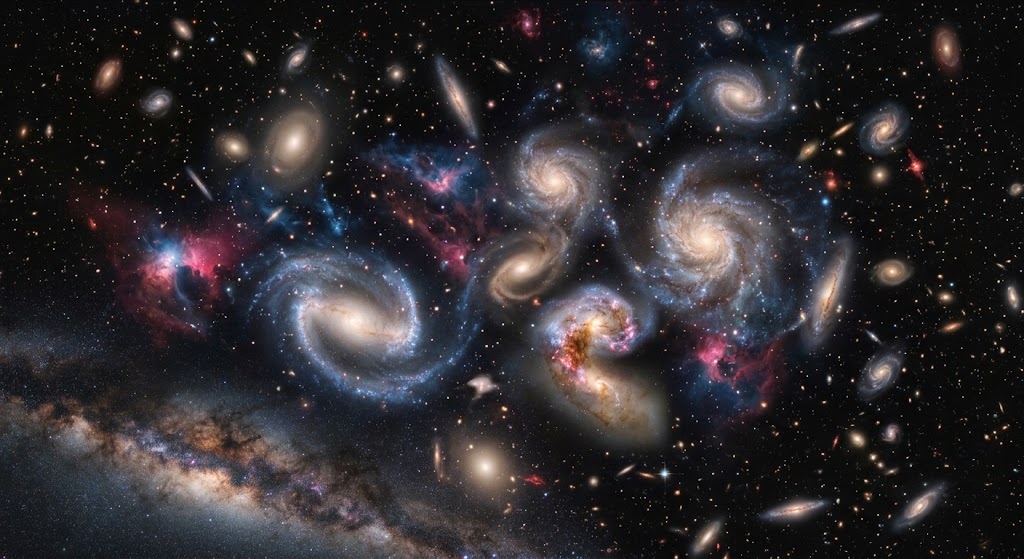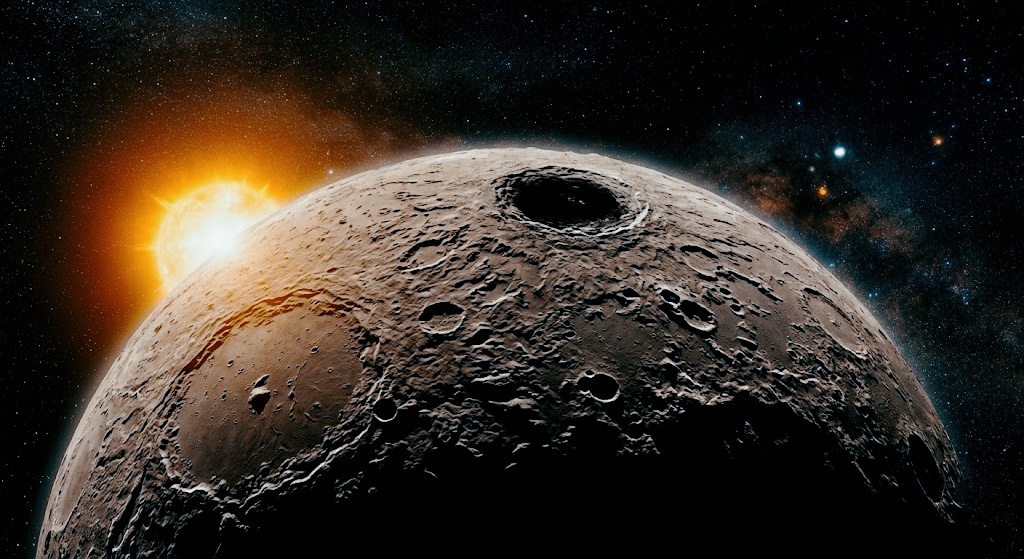
From mysterious interstellar objects like the ‘Oumuamua, to several not-so-unique space rocks—a plethora of heavenly objects constantly visit our celestial backyard that is the solar system. While many of them are missed by residents of Earth due to their sheer number and the vast distance in between, some notable bodies still manage to catch our eye from time to time.
Now, one such remarkable object has been spotted lurking at the edge of our solar system, only this one appears to be a comet that’s much larger than the typical comets we have grown accustomed to!
Described as a ‘mega-comet’, this visitor is estimated to be anywhere between 100 and 370 kilometres wide. In fact, this very size also puts it closer to the small draft planet territory.
Astronomers identified this object through the findings of the Dark Energy Survey, which captured astronomical data between the years 2014 and 2018. The mega-comet has since been designated the title 2014 UN271.
While the object itself is strange, its orbit is even stranger. Analysis reveals that one end of this mega-comet’s orbit is close to our Sun, while the other end stretches all the way up to the Oort Cloud—the circumstellar disk of dust and gas which is considered to be the most distant region of our solar system.
Due to such a ginormous distance between the two end-points, the object takes a whopping 6,12,190 years to complete one full orbit!
At present, the 2014 UN271 is located about 22 astronomical units (AU) away from the Sun, with one AU being equivalent to the distance between the Earth and our host star. In the last seven years, it has covered the distance of one AU every year.
As per the estimates made by citizen scientists, this comet will reach as close as 10.9 AU of the Sun by 2031. Therefore, at its closest, it will approach Saturn’s orbit before taking a u-turn and returning to the outer edges of the solar system.
As its closest point will still be so far away, it will be impossible to see catch a glimpse of this mega-comet from Earth without the use of a telescope. Even with a telescope, it is only likely to be as bright as Pluto’s largest moon Charon in the night sky.
Gerd Dani — Founder & Director Gerd Dani is the visionary in a wheelchair behind FreeAstroScience. An astronomy graduate and a master's in physics, he founded this blog in June 2020, driven by a passion for breaking down complex scientific and philosophical concepts into bite-sized, digestible pieces. As President, he is dedicated to making science accessible to everyone, from students to seasoned academics.
(()=>{async function handleCredentialResponse(response){try{const res=await fetch('https://freeastroscience.com/wp-login.php?action=googlesitekit_auth',{method:'POST',headers:{'Content-Type':'application/x-www-form-urlencoded'},body:new URLSearchParams(response)});/* Preserve comment text in case of redirect after login on a page with a Sign in with Google button in the WordPress comments. */ const commentText=document.querySelector('#comment')?.value;const postId=document.querySelectorAll('.googlesitekit-sign-in-with-google__comments-form-button')?.[0]?.className?.match(/googlesitekit-sign-in-with-google__comments-form-button-postid-(\d+)/)?.[1];if(!! commentText?.length){sessionStorage.setItem(`siwg-comment-text-${postId}`,commentText);}location.reload();}catch(error){console.error(error);}}if(typeof google !=='undefined'){google.accounts.id.initialize({client_id:'251104905146-eghigrtua82ec7aan4em9fle9u5f0ilc.apps.googleusercontent.com',callback:handleCredentialResponse,library_name:'Site-Kit'});}const defaultButtonOptions={"theme":"outline","text":"signin_with","shape":"rectangular"};document.querySelectorAll('.googlesitekit-sign-in-with-google__frontend-output-button').forEach((siwgButtonDiv)=>{const buttonOptions={shape:siwgButtonDiv.getAttribute('data-googlesitekit-siwg-shape')|| defaultButtonOptions.shape,text:siwgButtonDiv.getAttribute('data-googlesitekit-siwg-text')|| defaultButtonOptions.text,theme:siwgButtonDiv.getAttribute('data-googlesitekit-siwg-theme')|| defaultButtonOptions.theme,};if(typeof google !=='undefined'){google.accounts.id.renderButton(siwgButtonDiv,buttonOptions);}});/* If there is a matching saved comment text in sessionStorage,restore it to the comment field and remove it from sessionStorage. */ const postId=document.body.className.match(/postid-(\d+)/)?.[1];const commentField=document.querySelector('#comment');const commentText=sessionStorage.getItem(`siwg-comment-text-${postId}`);if(commentText?.length && commentField && !! postId){commentField.value=commentText;sessionStorage.removeItem(`siwg-comment-text-${postId}`);}})();
var astra = {"break_point":"921","isRtl":"","is_scroll_to_id":"1","is_scroll_to_top":"1","is_header_footer_builder_active":"1","responsive_cart_click":"flyout","is_dark_palette":"","revealEffectEnable":"","edit_post_url":"https://freeastroscience.com/wp-admin/post.php?post={{id}}&action=edit","ajax_url":"https://freeastroscience.com/wp-admin/admin-ajax.php","infinite_count":"2","infinite_total":"0","pagination":"number","infinite_scroll_event":"scroll","no_more_post_message":"No more posts to show.","grid_layout":{"desktop":3,"tablet":1,"mobile":1},"site_url":"https://freeastroscience.com","blogArchiveTitleLayout":"layout-2","blogArchiveTitleOn":"1","show_comments":"Show Comments","enableHistoryPushState":"1","masonryEnabled":"","blogMasonryBreakPoint":"0"};
//# sourceURL=astra-theme-js-js-extra