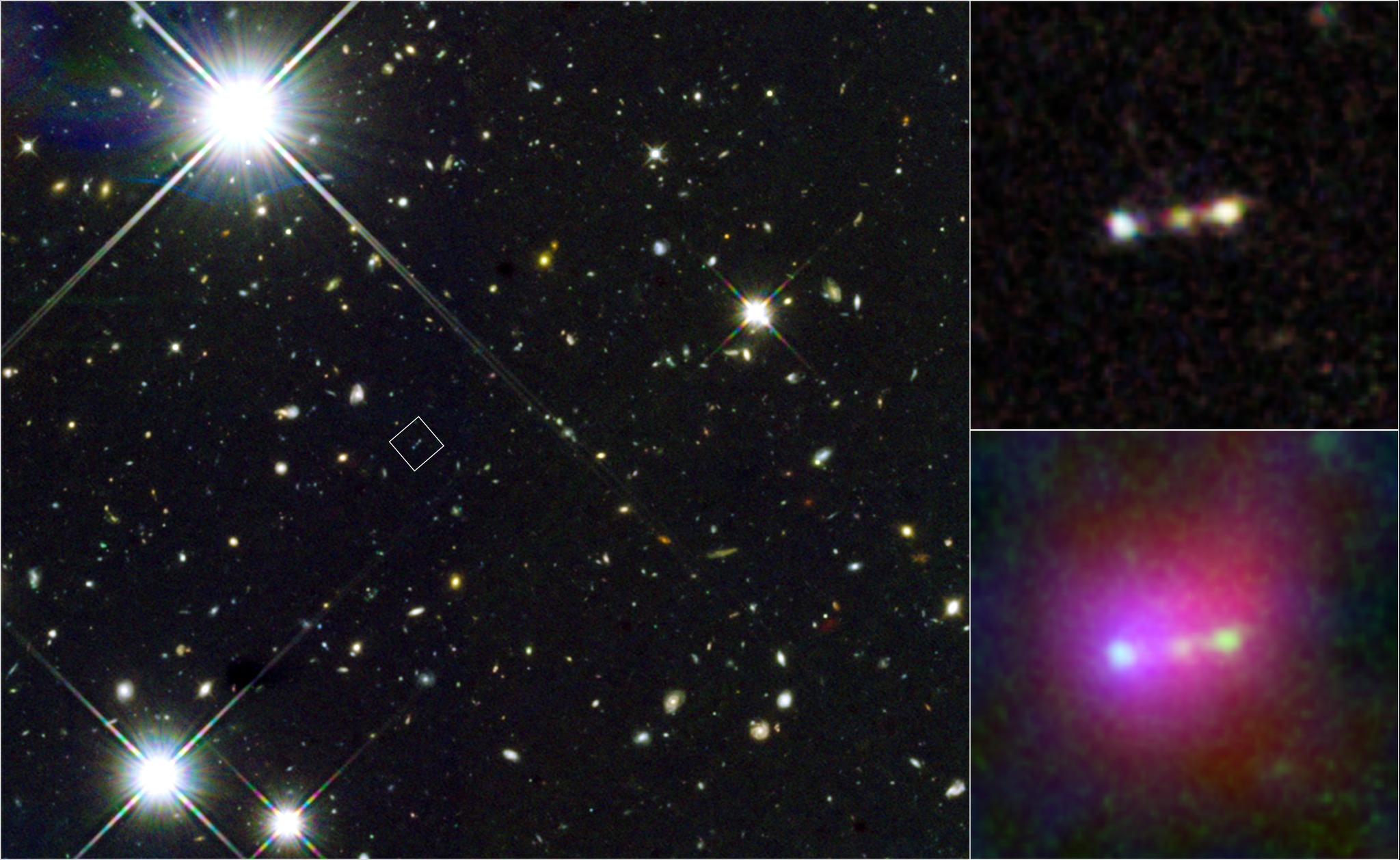
The James Webb Space Telescope has fundamentally challenged existing models of cosmic evolution by revealing an unexpected abundance of highly luminous galaxies in the early universe. Standard cosmological frameworks predicted that infant galaxies would appear faint and heavily obscured by cosmic dust. However, observations showed galaxies shining with intense ultraviolet light less than 550 million years after the Big Bang, sparking a major scientific debate. A new study offers a compelling explanation, suggesting that these ancient systems were filled with an unusual type of dust produced directly by supernova explosions, which allowed ultraviolet light to escape rather than absorbing it.
Challenging traditional models of galactic obscuration
Standard galactic models assume that young, star-forming galaxies are wrapped in a dense veil of interstellar dust. This dust typically absorbs ultraviolet radiation before it can escape into deep space, a process astronomers refer to as dust attenuation. When the James Webb Space Telescope detected numerous unexpectedly bright galaxies, scientists initially proposed several alternative hypotheses to explain the phenomenon. These theories ranged from violent bursts of star formation and highly efficient stellar nurseries to hidden black holes and anomalous dust behavior. Among these options, the unique behavior of early cosmic dust has recently emerged as the most physically natural explanation.
An alternative dust-related hypothesis suggested that intense stellar feedback, such as powerful stellar winds, might have physically ejected dust entirely from these young galaxies. However, joint observations by the space telescope and the Atacama Large Millimeter/submillimeter Array identified a specific class of objects known as galaxies with extremely low dust attenuation. These systems proved to be rich in gas, sometimes exceeding 90 percent gas fraction, yet they remained almost completely transparent to ultraviolet light. If violent stellar feedback had been strong enough to expel the dust, it inevitably would have swept away the gas reserves as well, indicating that a different mechanism was at play.
In mature galaxies, the vast majority of cosmic dust accumulates gradually through interstellar grain growth, a process where tiny particles absorb metals from surrounding gas over billions of years. In contrast, galaxies existing when the universe was less than half a billion years old simply lacked the time required for such slow accumulation. The only viable alternative source for dust production in these nascent systems was the immediate aftermath of supernovas, the explosive deaths of massive stars. This distinction in dust origin forms the foundation for understanding why early galactic environments behaved so differently from those observed in the local universe.
The unique properties of supernova stellar dust
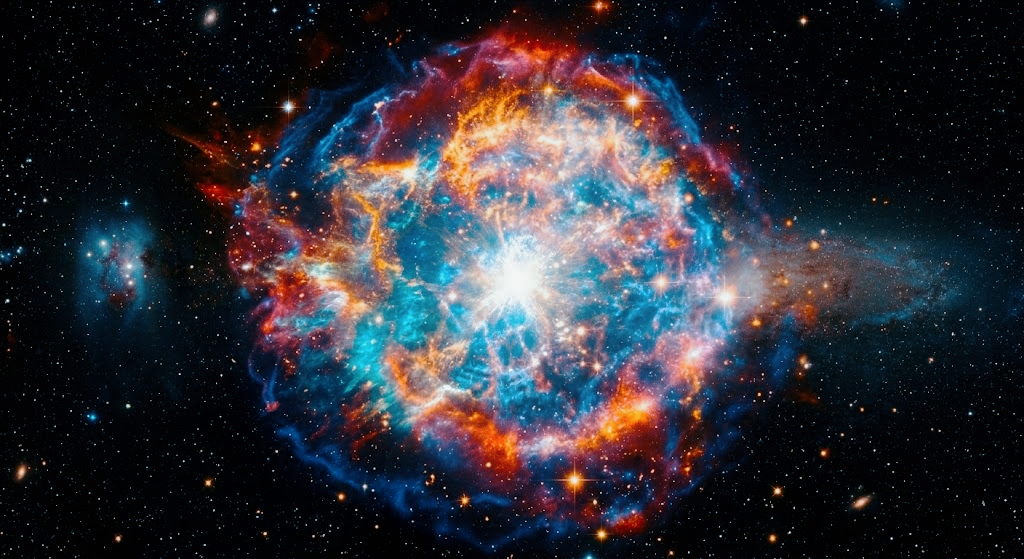
Supernova dust does not emerge into the interstellar medium entirely unaltered. Following the initial explosion, a pressure wave known as a reverse shock bounces back through the ejected material. This violent wave shatters the smaller dust grains, significantly reducing the total mass of the dust that survives the ordeal. Consequently, the remaining dust population consists almost exclusively of large grains. Because of their large physical size, these surviving grains are inherently transparent to ultraviolet light, allowing high-energy radiation to pass through them relatively unimpeded.
A research team led by Denis Burgarella from the Laboratoire d’Astrophysique de Marseille focused precisely on this specific opacity of early dust. The scientists developed a comprehensive model integrating the known optical properties of supernova-produced dust, the relationship between dust opacity and galactic metal content, and the physical geometry of stars and dust clouds. By factoring in a porous layout where light could escape through gaps in the dust distribution, they sought to determine whether this specific combination could accurately replicate the puzzling data collected by the space telescope.
When the researchers applied these stellar dust properties to simulated galactic populations, the resulting data matched the observations without requiring exotic stellar physics. The model successfully explained the presence of galaxies with extremely low dust attenuation in the early universe and their scarcity today. By linking low attenuation to the low opacity of large supernova dust grains, the study demonstrated how early galaxies could retain their massive gas reservoirs while remaining brilliantly luminous in the ultraviolet spectrum.
Tracking the transition and ancient stellar relics
The proposed model incorporates a distinct transition between two different dust regimes governed by the metal content of the galaxy. Below a critical threshold, which is approximately one-tenth of the metal content of our sun, supernova dust dominates the interstellar medium and galactic obscuration remains low. Once a galaxy evolves past this chemical threshold, interstellar grain growth becomes the dominant mechanism, causing dust opacity and attenuation to rise sharply. While this chemical boundary had been theorized previously and observed in nearby galaxies, the new data represents the first time astronomers have witnessed this transition occurring at high redshift.
In the most metal-poor galaxies within the sample, the implications of this dust model extend even deeper into cosmic history. The research team identified several primitive candidate galaxies where the dust might represent a direct relic of population three stars. These hypothetical stars represent the very first generation of stellar objects in the universe, formed purely from primordial hydrogen and helium before heavier elements existed. Although these stars have never been directly observed, their supernova explosions would produce the exact type of coarse, low-opacity dust required by the new model.
This framework successfully connects the observed population of transparent galaxies to the earliest stages of galactic evolution, offering a cohesive perspective on the cosmic dawn. However, the researchers caution against overinterpreting these initial conclusions, as the precise properties of supernova dust in the early universe still contain uncertainties. The grain populations emerging from high-redshift supernovas may vary significantly from one galaxy to another. Future observations using infrared instruments and radio telescopes will be essential to define these dust properties with greater precision.
The study is published on arXiv.